Moisture proof Polypropylene Woven Bag
CN → US| HS Code | Tariff Rate | Origin | Destination | Doc |
|---|---|---|---|---|
| 3923290000 | 38.0% | CN | US | Official Doc |
| 6305330080 | 25.9% | CN | US | Official Doc |
| 6305330010 | 25.9% | CN | US | Official Doc |
| 3923290000 | 38.0% | CN | US | Official Doc |
| 6305330080 | 25.9% | CN | US | Official Doc |
Product Images
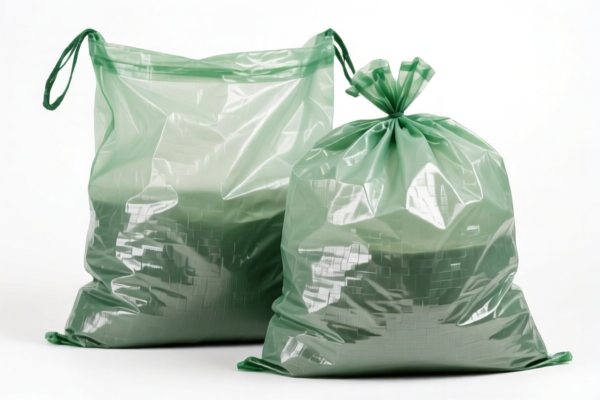
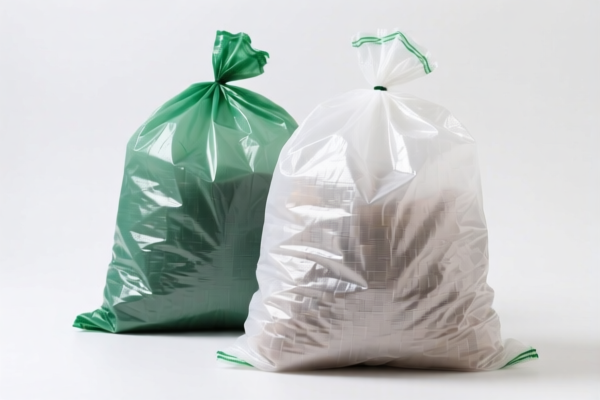
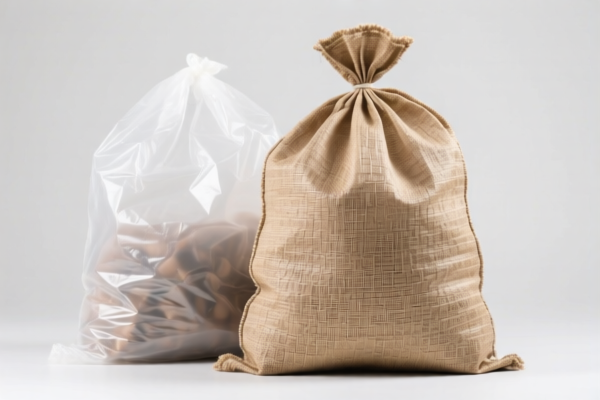
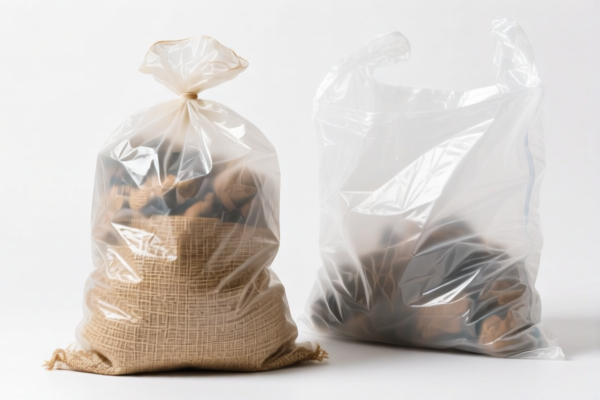
AI Analysis
🎒 Moisture-Proof Polypropylene (PP) Woven Bags: The Ultimate Packaging Solution
🌐 HS Code Reference & Customs Clearance Guide | 2026 Latest Tariff Analysis | Professional Customs Strategy
📌 I. Product Definition & Classification: Do You Really Understand "PP Woven Bags"?
Moisture-proof polypropylene woven bags are widely used in the packaging industry for agricultural products, chemicals, building materials, and foodstuffs. In international trade, these bags are generally classified into two main categories:
Plastic Bags/Sacks (HS Chapter 39): Bags made from plastic materials, including woven bags coated or laminated with plastic film to provide moisture resistance. Textile Bags/Sacks (HS Chapter 63): Bags made from textile materials (such as woven PP fabrics), which may or may not have a plastic lining or coating.
⚠️ Key Distinction Point:
- If the bag is considered a "plastic article" (e.g., coated/laminated PP woven bags often fall under Ch. 39 depending on specific manufacturing and national interpretations), it may be classified under 3923.29.00.00.
- If the bag is considered a "textile article" (woven PP fabric bags, even if moisture-proof due to lining/coating, but primarily textile structure), it may be classified under 6305.33.00.10 or 6305.33.00.80.
📦 II. HS Code Classification Details (Latest 2026 Tariff Alignment)
| HS Code | Product Description | Application Scenario | Material/Structure |
|---|---|---|---|
3923.29.00.00 |
Plastic sacks and bags (including cones), for the conveyance or packaging of goods | Moisture-proof PP woven bags, coated/laminated with plastic film | ✅ Plastic-dominated structure |
6305.33.00.10 |
Sacks and bags, of a kind used for the packing of goods, of polypropylene strip or the like | PP woven bags for packaging, moisture-proof variants | ✅ Textile-dominated (PP woven) |
6305.33.00.80 |
Sacks and bags, of a kind used for the packing of goods, of polypropylene strip or the like | Anti-tear PP woven bags, heavy-duty packaging | ✅ Textile-dominated (PP woven) |
🔍 Important Reminder:
- Moisture-proof PP woven bags are often subject to dispute between Chapter 39 (Plastics) and Chapter 63 (Textiles). The key lies in whether the primary value or function is derived from the plastic coating/lamination (Ch. 39) or the woven PP fabric (Ch. 63).
- In practice, many US customs authorities classify coated/laminated PP woven bags under3923.29.00.00due to the significant plastic content providing the moisture-proof feature.
- However, standard PP woven bags with minimal coating or those explicitly described as "woven fabric bags" may fall under6305.33.00.10or6305.33.00.80.
💰 III. 2026 Latest Tariff Rate Breakdown (Including Additional Taxes, Policy Surcharges)
✅ Applicable Country: United States (US)
✅ Origin: China (CN)
✅ Effective Date: From November 10, 2025 onwards
🎯 1. 3923.29.00.00 —— Plastic Sacks and Bags (Including Coated/Laminated PP Woven Bags)
| Item | Content |
|---|---|
| Base Duty Rate | 3.0% (ad valorem) |
| USITC Additional Duty | +25.0% (under USITC Footnote 9903.29.00.00) |
| IEEPA Additional Duty | +10.0% (for Chinese/Hong Kong products, effective Nov 10, 2025) |
| Total Duty Rate | 38.0% |
| Tax Calculation | CIF Value × 38.0% |
| De Minimis Eligibility | ❌ Not Eligible (deny_de_minimis) |
| Legal Basis Path | IEEPA:9903.01.25 → IEEPA:9903.01.24 → USITC:3923.29.00.00 → FOOTNOTE:9903.29.00.00 |
📌 Explanation:
- The 25% USITC additional duty stems from Section 301 of the US Trade Act, targeting specific plastic products.
- The 10% IEEPA additional duty is imposed under the International Emergency Economic Powers Act on Chinese imports.
- Total 38% is a high tariff rate, requiring careful pre-import planning!
🎯 2. 6305.33.00.10 & 6305.33.00.80 —— Polypropylene Woven Bags (Textile Category)
| Item | Content |
|---|---|
| Base Duty Rate | 8.4% (ad valorem) |
| USITC Additional Duty | +7.5% (under USITC Footnote 9903.33.00.10/80) |
| IEEPA Additional Duty | +10.0% (for Chinese/Hong Kong products, effective Nov 10, 2025) |
| Total Duty Rate | 25.9% |
| Tax Calculation | CIF Value × 25.9% |
| De Minimis Eligibility | ❌ Not Eligible (deny_de_minimis) |
| Legal Basis Path | IEEPA:9901.25 → IEEPA:9903.01.24 → USITC:6305.33.00.10/80 → FOOTNOTE:9903.33.00.10/80 |
📌 Note:
- These two HS codes have identical tariff rates (25.9%).
-6305.33.00.10typically refers to standard PP woven bags for packaging.
-6305.33.00.80often refers to anti-tear or heavy-duty PP woven bags.
- Even though they are "moisture-proof," if classified as textile bags, the total duty is lower (25.9%) compared to plastic bags (38.0%).
🛠️ IV. Customs Clearance Practical Advice (Field Pitfall Avoidance Guide)
✅ 1. Required Documentation Checklist (Mandatory)
| Document | Required | Description |
|---|---|---|
| ✅ Product Specification Sheet | ✔️ | Include dimensions, weight capacity, moisture-proof feature (coating/lamination details) |
| ✅ Material Composition Statement | ✔️ | Specify % of PP fabric vs. plastic coating/lamination |
| ✅ Product Photos (Label Included) | ✔️ | Clear images of the bag, showing seams, coatings, and labels |
| ✅ Commercial Invoice | ✔️ | Clearly state "Polypropylene Woven Bag, Moisture-Proof" |
| ✅ Packing List | ✔️ | Detail the number of bags per package, total weight |
| ✅ Certificate of Origin (CO) | ✔️ | If not Chinese origin, may apply for preferential rates |
| ✅ Third-Party Test Report | ✔️ | If applicable, proof of moisture-proof performance (e.g., water vapor transmission rate) |
✅ 2. Declaration Tips (Key Mantras)
🔥 "Material Dictates Code, Coating Matters, Name Precision Saves Money!"
| Scenario | Correct Declaration | Incorrect Practice |
|---|---|---|
| Heavily Coated/Laminated PP Woven Bag | 3923.29.00.00 |
Misclassified as textile → 25.9% vs 38.0% |
| Standard PP Woven Bag with Thin Coating | 6305.33.00.10 or 6305.33.00.80 |
Misclassified as plastic → 38.0% vs 25.9% |
| Anti-Tear Heavy-Duty PP Woven Bag | 6305.33.00.80 |
Misclassified as general bag → Potential scrutiny |
| Bag with Plastic Lining | 3923.29.00.00 |
Misclassified as textile → 38.0% |
✅ 3. Special Cases Handling
| Scenario | Handling Advice |
|---|---|
| OEM Custom Bags | Provide customer order + design drawings to avoid "non-standard" classification |
| Bags with Printing | Still classified under the same HS code if printing is secondary to bag function |
| Bags for Chemicals | If hazardous, ensure additional safety documentation is provided |
| Bags for Food | May require FDA compliance documentation if intended for direct food contact |
🌍 V. Global Market Customs Comparison (2026 Latest)
| Country/Region | Recommended HS Code | Duty Rate | Certification Requirements | Remarks |
|---|---|---|---|---|
| 🇺🇸 USA | 3923.29.00.00 or 6305.33.00.10/80 |
25.9% - 38.0% (CN Origin) | None Specific | High additional duties apply |
| 🇨🇳 China | 3923.29.00.00 or 6305.33.00.10/80 |
3.0% - 8.4% | None Specific | No additional duties |
| 🇪🇺 EU | 3923.29.00.00 or 6305.33.00.10/80 |
0% - 4.5% (if compliant) | REACH, RoHS | No additional duties |
| 🇦🇺 Australia | 3923.29.00.00 or 6305.33.00.10/80 |
5.0% | RCM | No additional duties |
| 🇯🇵 Japan | 3923.29.00.00 or 6305.33.00.10/80 |
0% - 6.0% | PSE (if applicable) | No additional duties |
📌 Conclusion:
- The US is the only major market imposing significant additional duties on PP woven bags.
- Chinese-origin PP woven bags face high customs costs in the US. It is advisable to assess supply chain adjustments or explore alternative origins if possible.
📌 VI. Common Errors & Pitfall Avoidance Guide (Lessons Learned)
❌ Error 1: Misclassifying "heavily coated" bags as "textile bags" (6305.33.00.10)
👉 Consequence: Underpayment of duty → Audit, Back Taxes, and Penalties!
❌ Error 2: Misclassifying "standard woven bags" as "plastic bags" (3923.29.00.00)
👉 Consequence: Overpayment of duty → Financial Loss!
❌ Error 3: Failing to provide material composition details
👉 Consequence: Customs delays, additional inspections, or misclassification → Release Delays!
❌ Error 4: Using vague names like "Bag" or "Sack"
👉 Consequence: Customs may assign a default higher rate or reject the declaration → Clearance Issues!
✅ Correct Approach:
"Polypropylene Woven Bag, Moisture-Proof, Coated with LDPE, 50kg Capacity, Model XYZ, For Chemical Packaging"
🎯 VII. Conclusion: Professional Declaration, Time-Saving, Cost-Efficient!
🎯 Remember the Mantras:
🔹 "Coated = Plastic (38%), Woven = Textile (25.9%)!"
🔹 "Material Composition is Key, Declare Precisely, Save Thousands!"
📌 Tips:
If your PP woven bags are originated from Vietnam, Mexico, Thailand, or Malaysia, you may apply for IEEPA Exemptions, with rates as low as 0%~5%.
It is recommended to apply for an Advance Ruling before shipment to avoid clearance risks.
📣 Immediate Action:
📞 Contact Professional Customs Brokers + Provide Product Photos + Apply for HS Code Advance Ruling
🚀 Ensure your PP woven bags clear customs smoothly, export efficiently, and maximize profits!
✨ Professional Customs Clearance Starts with Accurate Classification!
💼 Every Penny of Your Cost Deserves Precise Calculation!
Customer Reviews
About HS Code Classification
The Harmonized System (HS) is an internationally standardized nomenclature developed by the World Customs Organization (WCO) to classify traded products. Over 200 countries use the HS system as the basis for customs tariffs, trade statistics, and import/export regulations.
Each HS code follows a hierarchical structure:
- Chapter (2 digits) — Broad category of goods (e.g., Chapter 84: Machinery and Mechanical Appliances)
- Heading (4 digits) — More specific grouping within the chapter
- Subheading (6 digits) — Internationally standardized breakdown, used by all WCO member countries
- National subdivisions (8-10 digits) — Country-specific extensions for further classification, such as US HTSUS 10-digit codes
Correct HS code classification is essential for smooth customs clearance, accurate duty payment, and compliance with trade regulations. Misclassification can lead to customs delays, overpayment of duties, or penalties.
When importing from CN to US, the applicable tariff rates may include:
- Most-Favored-Nation (MFN) rate — The standard duty rate applied to WTO members
- General rate — Applied to countries without trade agreements
- Trade remedy duties — Additional tariffs such as Section 301 (anti-dumping), Section 232 (national security), or countervailing duties
The information provided on this page is for reference purposes only. For official classification, please consult with your local customs authority or a licensed customs broker.