Moisture proof Storage Container
CN → US| HS Code | Tariff Rate | Origin | Destination | Doc |
|---|---|---|---|---|
| 4202991000 | 38.4% | CN | US | Official Doc |
| 4202995000 | 42.8% | CN | US | Official Doc |
| 3923102000 | 35.0% | CN | US | Official Doc |
| 3923109000 | 38.0% | CN | US | Official Doc |
| 7310290065 | 85.0% | CN | US | Official Doc |
| 7310290055 | 85.0% | CN | US | Official Doc |
Product Images
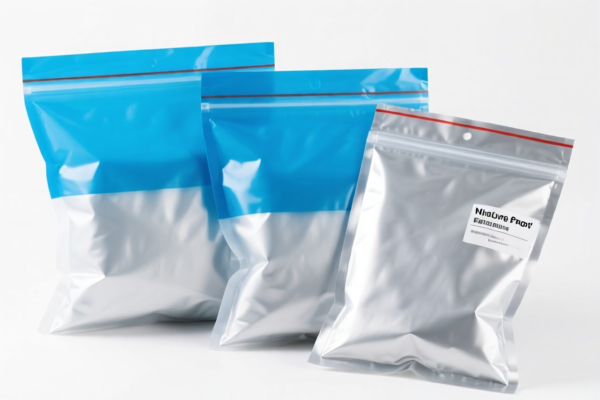
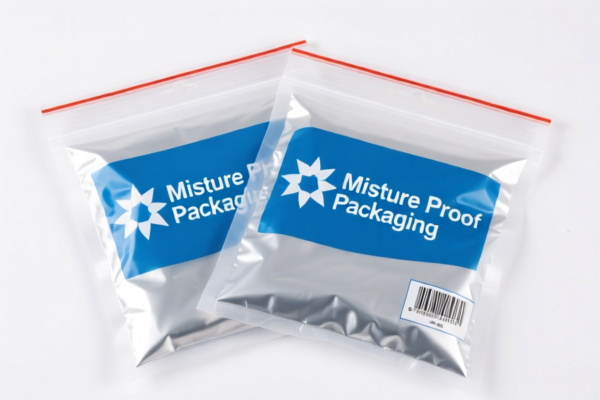
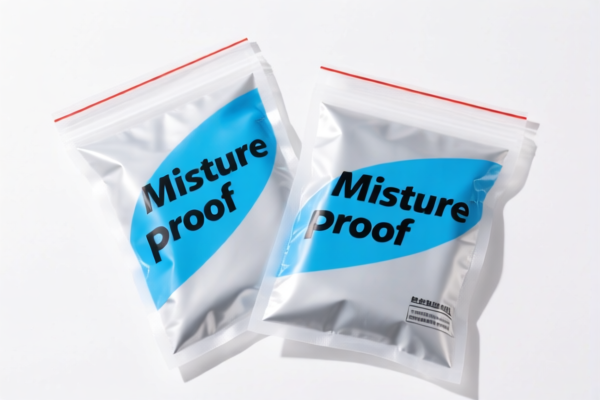
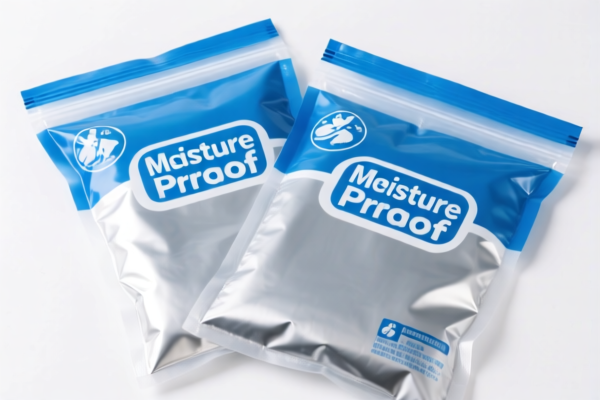
AI Analysis
💧 Moisture-Proof Storage Container (Generic Plastic & Metal Containers)
🌐 HS Code Reference & Customs Clearance Guide | 2026 Latest Tariff Analysis | Professional Clearance Strategy
📌 I. Product Definition & Classification: What Exactly Is a "Moisture-Proof Container"?
The term "Moisture Proof Storage Container" is a functional description, not a legal HS Code definition. In international trade, this term typically covers a wide range of packaging articles used for conveying or packing goods. The classification depends entirely on the material, capacity, and specific application (e.g., semiconductor wafers vs. general household goods).
Based on the provided tariff data, these products fall primarily into two categories: 1. Plastic Packaging Articles (Chapter 39): Boxes, cases, crates, and specially fitted containers for specific high-tech goods (like semiconductors). 2. Iron/Steel Containers (Chapter 73): Small tanks, casks, or drums (under 50 liters) for various materials. 3. Other Containers (Chapter 42): Cases made of plastic covered with paper or other materials (less common for "moisture-proof" industrial use, but included in the data).
⚠️ Key Distinction Point:
- If the container is specially shaped to fit semiconductor wafers, masks, or reticles → It falls under 3923.10.20.00.
- If it is a general-purpose plastic box (e.g., Tupperware-style, storage crates) → It falls under 3923.10.90.00.
- If it is a small steel drum/keg (<50L) → It falls under 7310.29.00.55 or 7310.29.00.65.
📦 II. HS Code Classification Details (2026 Latest Tariff Authority Comparison)
| HS Code | Product Description | Application Scenario | Material |
|---|---|---|---|
3923.10.20.00 |
Boxes, cases, crates... Specially shaped/fitted for conveyance/packing of semiconductor wafers, masks, or reticles | High-tech packaging for chip manufacturing, wafer transport boxes | Plastic |
3923.10.90.00 |
Boxes, cases, crates and similar articles: Other | General plastic storage boxes, food containers, industrial plastic crates | Plastic |
7310.29.00.55 |
Refillable stainless steel kegs, whether or not pressurized, of a kind described in statistical note 1 to this chapter | Small steel beer kegs, industrial gas/liquid containers (<50L) | Stainless Steel |
7310.29.00.65 |
Other tanks, casks, drums... of a capacity of less than 50 liters | General steel drums, small metal containers (<50L) | Iron/Steel |
4202.99.10.00 |
Other containers of plastics wholly or mainly covered with paper | Rare: Specialty decorative cases with plastic interior | Plastic/Paper |
4202.99.50.00 |
Other containers of materials (other than leather, textile, etc.) wholly or mainly covered with paper | General specialty cases | Paper/Other |
🔍 Focus for "Moisture-Proof" Goods:
Most industrial moisture-proof containers are Plastic (3923) or Steel (7310). The "Moisture-Proof" claim usually justifies the material quality but does not change the HS code unless it's a specialized semiconductor container.
💰 III. 2026 Latest Tariff Rate Details (Detailed Breakdown)
✅ Applicable Country: United States (US)
✅ Origin: China (CN) (Assumed based on typical tariff structures in data)
✅ Effective Time: Current rates apply (Note: Data reflects specific additive tariffs)
🎯 1. 3923.10.20.00 — Plastic Boxes for Semiconductor Conveyance
| Item | Content |
|---|---|
| Base Tariff | 0.0% |
| Additional Tariff (Section 301) | +25.0% |
| Total Tariff Rate | 25.0% |
| Tax Calculation | CIF Value × 25% |
| Legal Basis | Section 301 Tariffs on Chinese Goods |
📌 Explanation:
- Although the base duty is 0%, the 25% additional tariff applies due to the "Made in China" origin and the nature of plastic packaging articles.
- This is a high-cost category for high-tech supply chains. Ensure the container is indeed "specially shaped" for semiconductors to avoid being misclassified as general plastic boxes (which have the same rate in this data set).
🎯 2. 3923.10.90.00 — General Plastic Boxes, Cases, and Crates
| Item | Content |
|---|---|
| Base Tariff | 3.0% |
| Additional Tariff (Section 301) | +25.0% |
| Total Tariff Rate | 28.0% |
| Tax Calculation | CIF Value × 28% |
| Legal Basis | Section 301 Tariffs on Chinese Goods |
📌 Explanation:
- General plastic storage containers face a 28% total tax.
- This includes common plastic tubs, lunch boxes, and industrial plastic crates.
- Warning: Do not misdeclare a specialized wafer box as a "general box" to save on compliance checks; the function must match. If it's general use, the 28% is unavoidable for Chinese origins.
🎯 3. 7310.29.00.65 & 7310.29.00.55 — Small Steel Containers (<50 Liters)
| Item | Content |
|---|---|
| Base Tariff | 0.0% |
| Additional Tariff (Section 301) | +25.0% |
| Steel/Aluminum/Copper Additive Tariff | +50.0% |
| Total Tariff Rate | 75.0% |
| Tax Calculation | CIF Value × 75% |
| Legal Basis | Section 301 + Specific Steel/Aluminum/Copper Additive Duties |
📌 Explanation:
- Extreme Tariff Warning: Steel containers under 50 liters are subject to a massive 75% total tax (0% base + 25% general additional + 50% specific steel/additive).
- This applies to both refillable stainless steel kegs (7310.29.00.55) and other steel drums (7310.29.00.65).
- Strategic Advice: Avoid importing small steel moisture-proof containers from China if possible. The cost impact is severe. Consider plastic alternatives (3923.10) to reduce tax from 75% to 25-28%.
🎯 4. 4202.99.10.00 & 4202.99.50.00 — Other Containers (Plastic/Paper)
| Item | Content |
|---|---|
| Base Tariff | 0.0% |
| Additional Tariff | 0.0% |
| Total Tariff Rate | 0.0% |
| Tax Calculation | None |
| Legal Basis | General Preferential or Excluded Category |
📌 Explanation:
- These codes cover containers wholly or mainly covered with paper (with plastic interiors) or other non-standard materials.
- Rare for Industrial Moisture-Proof Use: Standard moisture-proof containers are rarely made of paper-covered plastic for heavy industrial use. However, if your product fits this niche (e.g., decorative or lightweight specialized packaging), the tax is 0%.
- Caution: Customs may challenge this classification if the container is clearly industrial-grade plastic. Ensure the "paper covering" is the primary outer layer.
🛠️ IV. Customs Clearance Practical Advice (Pitfall Avoidance Guide)
✅ 1. Documentation Checklist (Must-Haves)
| Document | Required? | Notes |
|---|---|---|
| ✅ Product Specification Sheet | ✔️ | Must specify material (Plastic vs. Steel), capacity (L), and intended use. |
| ✅ HS Code Justification | ✔️ | Explain why it's "specially shaped" for semiconductors if claiming 3923.10.20.00. |
| ✅ Commercial Invoice | ✔️ | Clearly state "Plastic Storage Box" or "Steel Drum" to match HS. |
| ✅ Material Certificate | ✔️ | For steel containers, confirm it's not excluded stainless steel grades (if applicable). |
| ✅ Photos of Product | ✔️ | Show the container empty and filled (if safe) to prove shape and material. |
✅ 2. Classification Strategy (Key Tips)
| Scenario | Correct HS Code | Incorrect HS Code | Consequence |
|---|---|---|---|
| Wafer Transport Box | 3923.10.20.00 (25%) |
3923.10.90.00 (28%) |
Underpayment risk if not specialized. |
| General Plastic Tote | 3923.10.90.00 (28%) |
4202.99.50.00 (0%) |
High Risk: Customs will reclassify as plastic, levy 28% + penalties. |
| Small Steel Drum (<50L) | 7310.29.00.65 (75%) |
3923.10.90.00 (28%) |
Major Error: Misdeclaring steel as plastic leads to massive back-taxes. |
| Large Steel Drum (>50L) | Not in Data* | *Check other chapters | *Data only covers <50L. Larger drums have different rates. |
🔥 "Do Not Mix Materials" Rule:
- Plastic containers never go under Steel codes.
- Steel containers never go under Plastic codes.
- If a container has a plastic interior but a steel exterior, it is still Steel.
✅ 3. Special Case Handling
| Situation | Recommendation |
|---|---|
| Importing from China | Expect 25-75% tariffs. Budget accordingly. |
| Plastic vs. Steel | If moisture-proofing is the key feature, Plastic is cheaper to import (25-28% vs 75%). |
| "Moisture-Proof" Claim | Ensure packaging data includes "Waterproof" or "Moisture-Resistant" to justify any specific functional claims, but it doesn't change the HS code. |
| Semiconductor Boxes | Must prove "special shaping" (e.g., fit for 200mm/300mm wafers) to use 3923.10.20.00. Generic plastic boxes for wafers still go to 3923.10.90.00. |
🌍 V. Global Market Comparison (2026)
| Country/Region | Recommended HS Code | Tariff (China Origin) | Notes |
|---|---|---|---|
| 🇺🇸 USA | 3923.10.90.00 |
28.0% | High tariff on plastics. |
| 🇺🇸 USA | 7310.29.00.65 |
75.0% | Prohibitively expensive for small steel containers. |
| 🇪🇺 EU | 3923.10.90 |
~3-6% | No Section 301 equivalent; lower tariffs. |
| 🇨🇳 China | 3923.10.90 |
~5-10% | Import duty into China may vary. |
📌 Conclusion:
- USA is the most expensive market for these goods due to additive tariffs.
- Plastic containers are significantly more cost-effective than steel ones for small capacities (<50L) when importing from China to the US.
📌 VI. Common Errors & Pitfalls (Blood & Tears Lessons)
❌ Error 1: Declaring a Steel Drum as a Plastic Box to save tax.
👉 Consequence: Customs inspection reveals steel. Penalty: 75% tax + fines + detention.
❌ Error 2: Declaring a General Plastic Box as a Semiconductor Wafer Box.
👉 Consequence: If not specially shaped, customs will reclassify to 3923.10.90.00 (28%). No savings, just delay.
❌ Error 3: Ignoring the 50-Liter Limit for Steel.
👉 Consequence: If your steel container is 51L, it may fall under a different, potentially lower tariff section, but it must be declared correctly. Do not fake the capacity.
✅ Correct Approach:
"Plastic Storage Container, Polypropylene, 20L, General Use, Model ABC" →
3923.10.90.00
"Stainless Steel Keg, 30L, Refillable, Beer Industry, Model DEF" →7310.29.00.55
🎯 VII. Conclusion: Professional Classification, Cost Optimization!
🎯 Remember the Golden Rule:
🔹 "Plastic is 25-28%, Steel is 75% (if <50L)."
🔹 "Semiconductor boxes must be specialized."
🔹 "Paper-covered plastic is 0%, but rare and risky."
📌 Pro Tip:
If your business relies heavily on small steel containers, consider sourcing from non-US tariff-listed countries (e.g., Vietnam, Thailand) or switching to plastic alternatives to avoid the 75% tax burden.
📣 Immediate Action:
📞 Consult a licensed customs broker for Advance Ruling if your container shape is unique.
📝 Ensure your Commercial Invoice accurately reflects the material and capacity.
🚀 Optimize your supply chain by choosing plastic over steel for US-bound shipments where possible.
✨ Precision Classification Saves Thousands!
💼 Every percent of tariff is profit lost. Don't guess, classify correctly!
Customer Reviews
About HS Code Classification
The Harmonized System (HS) is an internationally standardized nomenclature developed by the World Customs Organization (WCO) to classify traded products. Over 200 countries use the HS system as the basis for customs tariffs, trade statistics, and import/export regulations.
Each HS code follows a hierarchical structure:
- Chapter (2 digits) — Broad category of goods (e.g., Chapter 84: Machinery and Mechanical Appliances)
- Heading (4 digits) — More specific grouping within the chapter
- Subheading (6 digits) — Internationally standardized breakdown, used by all WCO member countries
- National subdivisions (8-10 digits) — Country-specific extensions for further classification, such as US HTSUS 10-digit codes
Correct HS code classification is essential for smooth customs clearance, accurate duty payment, and compliance with trade regulations. Misclassification can lead to customs delays, overpayment of duties, or penalties.
When importing from CN to US, the applicable tariff rates may include:
- Most-Favored-Nation (MFN) rate — The standard duty rate applied to WTO members
- General rate — Applied to countries without trade agreements
- Trade remedy duties — Additional tariffs such as Section 301 (anti-dumping), Section 232 (national security), or countervailing duties
The information provided on this page is for reference purposes only. For official classification, please consult with your local customs authority or a licensed customs broker.