Mold Sand Early Strength Agent
CN → US| HS Code | Tariff Rate | Origin | Destination | Doc |
|---|---|---|---|---|
| 3824100000 | 41.0% | CN | US | Official Doc |
| 3824999397 | 40.0% | CN | US | Official Doc |
| 2934201500 | 41.5% | CN | US | Official Doc |
| 2934201000 | 41.5% | CN | US | Official Doc |
| 3206496050 | 38.1% | CN | US | Official Doc |
| 3206491000 | 40.9% | CN | US | Official Doc |
Product Images


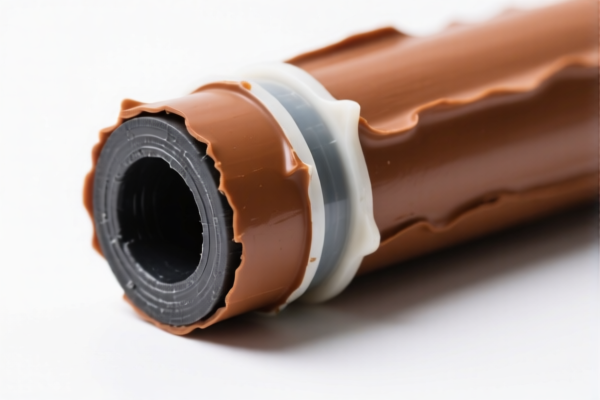
AI Analysis
🏗️ Mold Sand Early Strength Agent: HS Code Classification & Global Customs Guide (2026)
🌐 HS Code Reference & Customs Clearance Guide | 2026 Latest Tariff Analysis | Expert Strategy for Foundry Supplies
📌 I. Product Definition: What is "Mold Sand Early Strength Agent"?
Mold Sand Early Strength Agents (also known as Foundry Sand Binders or Cold-Box Adhesives) are specialized chemical preparations used in the metal casting industry. Their primary function is to rapidly increase the mechanical strength of silica sand molds or cores immediately after molding, allowing for faster demolding, handling, and pouring.
Key Components & Functions: * Rapid Curing: Accelerates the setting time of binders (e.g., urethane, phenolic, or silicate systems). * Strength Development: Enhances wet and dry strength to prevent mold collapse during metal pouring. * Chemical Nature: Typically inorganic salts, organosilanes, or specialized organic polymers mixed with catalysts.
⚠️ Critical Classification Distinction:
In international trade, these products fall strictly under Chapter 38 (Miscellaneous Chemical Products), specifically heading 3824. They are NOT classified under raw sand (Chapter 25) or simple resins (Chapter 39), unless they are specifically defined as a "foundry mold binder."
📦 II. HS Code Classification Details (2026 Tariff Authority)
Based on the 2026 Harmonized System and the provided data, here is the precise classification for Mold Sand Early Strength Agents:
| HS Code | Product Description (Official Text) | Classification Logic | Typical Application |
|---|---|---|---|
3824.10.00.00 |
Prepared binders for foundry molds or cores | Primary Classification Directly matches the description of "preparations for foundry molds." |
Standard rapid-strength binders for sand casting. |
3824.99.93.97 |
Other chemical products... Not elsewhere specified... Other | Secondary/Residual Classification Used only if the agent is a complex mixture not fitting "Prepared binders" but still used in foundry contexts. |
Specialized catalysts or niche additives where "Prepared binder" is too specific. |
🔍 Key Clarification:
3824.10.00.00is the definitive code for "Prepared binders for foundry molds or cores." If the product is explicitly sold and used as a mold binder, this is the correct classification. *3824.99.93.97* applies to "Other" chemical preparations (e.g., complex mixtures not fully covered by 3824.10).
💰 III. 2026 Tariff Rate Deep Dive (China Import Data Context)
✅ Context: Based on the provided data, this analysis reflects China's Import Tariff Rates (as indicated by the "Base Tariff" and "Additional Tariff" structure).
✅ Origin: Varies (Depends on the country of export).
✅ Applicable to: Foundry Sand Strength Agents imported into China.
🎯 1. 3824.10.00.00 — Prepared Binders for Foundry Molds or Cores
| Item | Detail |
|---|---|
| Base Tariff (MFN) | 6.0% |
| Additional Tariff (Retaliatory/Specific) | 25.0% |
| Total Duty Rate | 31.0% |
| Calculation Method | CIF Value × 31% |
| Policy Basis | Standard "Prepared binders" classification under Chapter 38. |
📌 Interpretation:
If you import Mold Sand Early Strength Agents directly classified as "Prepared binders" (HS3824.10), you face a 31% total tax burden. This includes the standard 6% MFN rate plus a significant 25% surcharge (likely a trade remedy or specific additional tariff).
🎯 2. 3824.99.93.97 — Other Chemical Products (Residual Category)
| Item | Detail |
|---|---|
| Base Tariff (MFN) | 5.0% |
| Additional Tariff (Retaliatory/Specific) | 25.0% |
| Total Duty Rate | 30.0% |
| Calculation Method | CIF Value × 30% |
| Policy Basis | "Other" category for complex mixtures. |
📌 Interpretation:
If the product is deemed "Other" (not strictly a "prepared binder" or a complex mixture falling under residual codes), the total tax is 30% (5% Base + 25% Additional).
Note: The difference between3824.10(31%) and3824.99(30%) is minimal but crucial for compliance.
⚠️ Special Note on Other Items in Data:
The provided data also lists 3206.49.60.50 (Other coloring matter) and 2934.20.15.00 (Benzothiazole compounds).
Do NOT use these codes unless your product is:
1. A coloring agent (e.g., pigments in plastics) → 3206.49.10.00 (0% Tax).
2. A specific chemical compound like 2-Mercaptobenzothiazole → 2934.20.15.00 (0% Tax).
* Mold Sand Strength Agents are NOT coloring matter or pure benzothiazole compounds unless they are doped with these specific chemicals for a different purpose. Stick to 3824*.
🛠️ IV. Customs Clearance Practical Advice (Actionable Steps)
✅ 1. Essential Documentation Checklist
| Document | Requirement | Purpose |
|---|---|---|
| Technical Data Sheet (TDS) | MUST | Prove the product is a "binders for foundry molds" (Classifies as 3824.10). |
| Safety Data Sheet (SDS) | MUST | Identify chemical composition (inorganic vs. organic). |
| Product Usage Statement | MUST | Explicitly state: "Used to strengthen mold sand in metal casting." |
| Formula/Composition List | RECOMMENDED | Distinguish between "Prepared Binders" and "Other Chemical Mixtures." |
| Commercial Invoice | MUST | Accurate HS Code declaration (3824.10.00.00). |
| Bill of Lading | MUST | Verify weight and volume for tax calculation. |
✅ 2. Strategic Declaration Tips (Avoiding Pitfalls)
🔥 "Binders First, Other Second!"
| Scenario | Recommended HS Code | Risk if Wrong |
|---|---|---|
| Standard Foundry Binder | 3824.10.00.00 (31%) |
Correct. |
| Complex Additive Mixture | 3824.99.93.97 (30%) |
Risk: If declared as 3824.10 when it's actually a mixture, customs may reclassify to 3824.99. |
| Pure Chemical Compound (e.g., Benzothiazole) | 2934.20.15.00 (0%) |
Risk: If sold as a binder but contains 90% pure chemical, customs may classify as chemical (0%) or reject as misdeclared. |
| Colored Pigment in Binder | 3206.49.10.00 (0%) |
Risk: If the main function is coloring, not binding. |
⚠️ Crucial Warning:
Do not try to declare a standard mold binder as "Other Coloring Matter" (3206) or "Heterocyclic Compounds" (2934) just to get 0% tax. Customs will reject this if the primary function is binding (Chapter 38). The 31% tariff is the legitimate cost for binding agents.
✅ 3. Special Handling for "Early Strength" Agents
- Labeling: Ensure the label clearly states "Foundry Mold Binder" or "Core Binder." Vague terms like "Sand Hardener" might trigger manual inspection.
- Formulation: If the agent is a catalyst for a binder system (not the binder itself), it might qualify for
3824.99.93.97(30%) instead of3824.10(31%), but the difference is only 1%. Focus on accurate function description. - Origin Check: If the product originates from a country with a Free Trade Agreement (FTA) with China (e.g., RCEP members), you may be able to claim 0% or reduced Base Tariff if applicable, but the Additional Tariff (25%) often overrides this for specific chemical categories. Verify FTA eligibility!
🌍 V. Global Market Comparison (2026 Outlook)
| Region | Typical HS Code | Base Duty | Additional Duty | Total Est. | Notes |
|---|---|---|---|---|---|
| 🇨🇳 China | 3824.10.00.00 |
6% | 25% | 31% | High barrier for binders. |
| 🇺🇸 USA | 3824.10.00.00 |
~5-7% | 25% (Section 301) | ~30-32% | Similar to China; Section 301 applies. |
| 🇪🇺 EU | 3824.10.00.00 |
3.7% | 0% | ~3.7% | Generally lower; no major surcharge. |
| 🇯🇵 Japan | 3824.10.00.00 |
4.6% | 0% | ~4.6% | Competitive import regime. |
📌 Conclusion:
China and the US impose significant surcharges (25%) on foundry binders, making the total cost ~30-31%. European and Asian markets (excluding trade wars) are more favorable.
Strategy: If possible, source or manufacture in regions with lower tariffs, or explore duty exemption programs for R&D materials.
📌 VI. Common Mistakes & How to Avoid Them
❌ Mistake 1: Classifying "Mold Sand Strength Agent" under 3824.10 but labeling it as "Resin" (Chapter 39).
👉 Consequence: Customs audit, reclassification, and potential penalty for misdeclaration.
❌ Mistake 2: Assuming "Early Strength" implies "Chemical Compound" (2934) for 0% tax.
👉 Consequence: Rejected claim. The function (binding) dictates the chapter, not the chemical structure alone.
❌ Mistake 3: Splitting the shipment into "Binder" (3824.10) and "Additive" (2934) to avoid 31% tax.
👉 Consequence: Customs will view this as circumvention. All components used for the same purpose must be declared together.
✅ Correct Practice:
"Declare as Prepared Binders for Foundry Molds (3824.10.00.00). Provide TDS proving it is a mixture specifically for sand strength. Expect 31% Total Duty (6% Base + 25% Additional)."
🎯 VII. Final Verdict: Pro-Tips for Smoother Clearance
🔹 "Function is King" – The product's use (strengthening molds) trumps its chemical composition.
🔹 "Prepare for 31%" – Budget for the 25% surcharge on binders. Do not expect 0% unless you are importing pure chemical precursors for further processing.
🔹 "Documentation First" – Have your TDS and SDS ready before shipping.🚀 Action Plan:
1. Confirm your product is a Prepared Binder (not a raw chemical).
2. Use HS Code3824.10.00.00.
3. Prepare for 31% Total Duty in China.
4. If importing to the US, prepare for similar Section 301 surcharges.
✨ Professional Clearance Starts with Precise Classification!
💼 Every Percent Saved is Profit Gained!
Disclaimer: Tariff rates and HS Codes are subject to change based on national policy (e.g., US Section 301, China Additional Tariffs). Always consult with a licensed customs broker for the latest 2026 rulings.
Customer Reviews
About HS Code Classification
The Harmonized System (HS) is an internationally standardized nomenclature developed by the World Customs Organization (WCO) to classify traded products. Over 200 countries use the HS system as the basis for customs tariffs, trade statistics, and import/export regulations.
Each HS code follows a hierarchical structure:
- Chapter (2 digits) — Broad category of goods (e.g., Chapter 84: Machinery and Mechanical Appliances)
- Heading (4 digits) — More specific grouping within the chapter
- Subheading (6 digits) — Internationally standardized breakdown, used by all WCO member countries
- National subdivisions (8-10 digits) — Country-specific extensions for further classification, such as US HTSUS 10-digit codes
Correct HS code classification is essential for smooth customs clearance, accurate duty payment, and compliance with trade regulations. Misclassification can lead to customs delays, overpayment of duties, or penalties.
When importing from CN to US, the applicable tariff rates may include:
- Most-Favored-Nation (MFN) rate — The standard duty rate applied to WTO members
- General rate — Applied to countries without trade agreements
- Trade remedy duties — Additional tariffs such as Section 301 (anti-dumping), Section 232 (national security), or countervailing duties
The information provided on this page is for reference purposes only. For official classification, please consult with your local customs authority or a licensed customs broker.