Molybdenum based Dehydration Reaction Catalyst
CN → US| HS Code | Tariff Rate | Origin | Destination | Doc |
|---|---|---|---|---|
| 3824993400 | 37.8% | CN | US | Official Doc |
| 3815902000 | 37.8% | CN | US | Official Doc |
| 3824992900 | 41.5% | CN | US | Official Doc |
| 3815190000 | 35.0% | CN | US | Official Doc |
| 2825700000 | 13.2% | CN | US | Official Doc |
| 2825909000 | 38.7% | CN | US | Official Doc |
Product Images
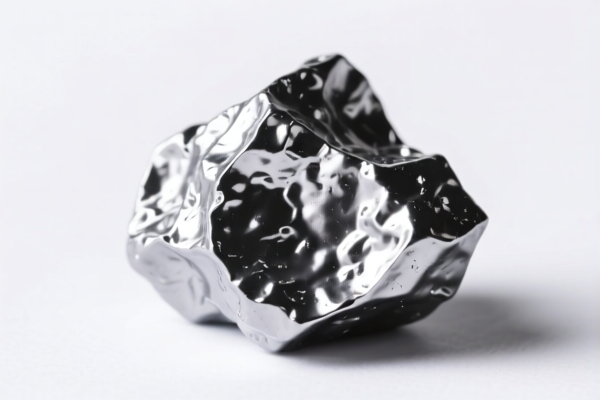
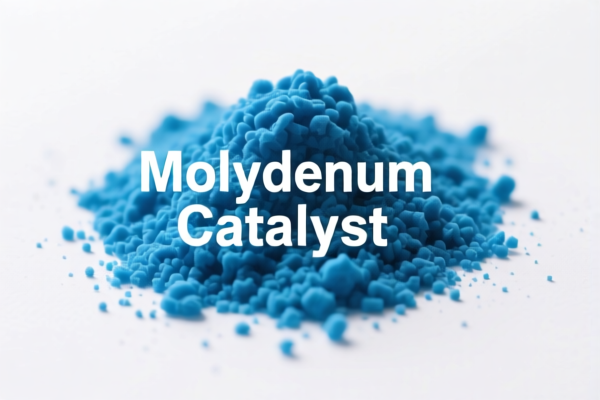
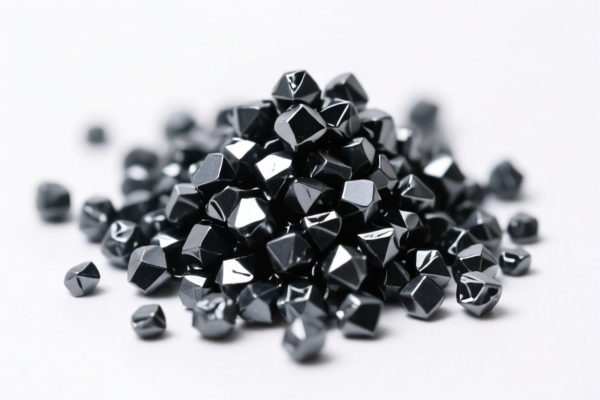

AI Analysis
🧪 Molybdenum Based Dehydration Reaction Catalyst
🌐 HS Code Reference & Customs Clearance Guide | 2026 Latest Tariff Analysis | Professional Clearance Strategy
📌 I. Product Definition & Classification: Do You Really Understand "Molybdenum Catalysts"?
A Molybdenum-Based Dehydration Catalyst is a critical chemical reagent used in industrial organic synthesis, petroleum refining, and chemical manufacturing. It accelerates the removal of water molecules from reactants (dehydration reactions). In international trade, its classification hinges on two competing criteria: Function (Is it a catalyst?) vs. Composition (Is it a metal oxide/compound?).
Category 1: Chemical Preparations & Mixtures (HS Chapter 38)
If the product is a formulated preparation containing molybdenum compounds mixed with other carriers, supports, or inhibitors, it falls under Chapter 38 (Miscellaneous Chemical Products).
Category 2: Inorganic Metal Compounds (HS Chapter 28)
If the product consists primarily of pure Molybdenum oxides or hydroxides used as the active agent, it may fall under Chapter 28 (Inorganic Chemicals).
⚠️ Key Distinction Point:
- If the product is a "Preparation" (mixed with binders/carriers) and its primary function is Catalytic → HS 3815 or HS 3824
- If the product is a Pure Compound (Molybdenum Oxide/Hydroxide) regardless of use → HS 2825
- Risk: Misclassifying a pure chemical as a "preparation" (or vice versa) leads to significant duty differences and potential audits.
📦 II. HS Code Classification Details (2026 Latest Tariff Authority Cross-Reference)
| HS Code | Product Description | Application Scenario | Material Attribute | Key Classification Logic |
|---|---|---|---|---|
3824.99.34.00 |
Other chemical products & preparations (including molybdenum-based) | Industrial catalytic mixtures, formulated preparations | Inorganic compound mixture | "Chemical Preparation": Fits the definition of miscellaneous chemical mixtures. |
3815.90.20.00 |
Other catalysts (unspecified elsewhere) | Catalysts where material is secondary to function | Catalyst preparation | "Functional Match": Name contains "Molybdenum" + "Catalyst", matches definition perfectly. |
3824.99.29.00 |
Other prepared binders & miscellaneous chemical products | General chemical additives, non-specific catalysts | Chemical substance | "General Chemical": Fits "Other chemical products" category broadly. |
3815.19.00.00 |
Other catalysts (not prepared on a support) | Pure catalyst preparations without specific material conflict | Catalyst preparation | "Catalyst Category": No material conflict; strictly defined as a catalyst preparation. |
2825.70.00.00 |
Molybdenum oxides, hydroxides & peroxides | Pure molybdenum compounds used as catalyst ingredients | Molybdenum compound | "Material Priority": Contains "Molybdenum" core material; matches oxide/hydroxide definition. |
2825.90.90.00 |
Other metal oxides, hydroxides & peroxides | Generic inorganic metal oxides/hydroxides | Inorganic metal oxide | "Generic Inorganic": Fits "Other inorganic metal oxides" material attribute. |
🔍 Key Reminder:
- HS 3815/3824 are preferred if the product is a formulated preparation (mixed with carriers like silica, alumina, etc.). - HS 2825 is preferred if the product is a pure chemical compound (e.g., Molybdenum Trioxide, MoO₃), even if used as a catalyst. - Misclassification Risk: Classifying a pure chemical as "3824" to avoid scrutiny is risky if the composition is >90% molybdenum compound. Conversely, classifying a complex mixture as "2825" may be rejected for lacking purity.
💰 III. 2026 Latest Tariff Rate Breakdown (Including Additional Duties & Policy Surcharges)
✅ Applicable Country: United States (US)
✅ Country of Origin: China (CN)
✅ Effective Date: November 10, 2025 onwards (and subsequent imports)
🎯 1. 3824.99.34.00 —— Chemical Preparations (Molybdenum-Based)
| Item | Content |
|---|---|
| Basic Tariff | 2.8% (ad valorem) |
| Section 301 Tariff | +25.0% (USITC Footnote 9903.88.01) |
| Section 122 Tariff | +10.0% (Executive Order 13817) |
| Total Rate | 37.8% |
| Tax Calculation | CIF Value × 37.8% |
| De Minimis Exemption | ❌ Not Eligible (deny_de_minimis) |
| Legal Path | USITC:3824.99.34.00 → 301:Section 301 → 122:Section 122 |
📌 Explanation:
- This code falls under "Miscellaneous Chemical Products." - Subject to both the 25% Section 301 tariff and the 10% Section 122 tariff on Chinese goods. - Total 37.8% is a high burden. Ensure the product is not misclassified to lower-duty categories.
🎯 2. 3815.90.20.00 —— Other Catalysts
| Item | Content |
|---|---|
| Basic Tariff | 2.8% (ad valorem) |
| Section 301 Tariff | +25.0% |
| Section 122 Tariff | +10.0% |
| Total Rate | 37.8% |
| Tax Calculation | CIF × 37.8% |
| De Minimis Exemption | ❌ Not Eligible |
| Legal Path | USITC:3815.90.20.00 → 301:Section 301 → 122:Section 122 |
📌 Note:
- Identical tax structure to3824.99.34.00. - The key is proving the item is a "Catalyst" in function. If customs disputes the "catalyst" label, they may reclassify it under general chemical codes with similar rates.
🎯 3. 3824.99.29.00 —— Other Prepared Binders & Chemicals
| Item | Content |
|---|---|
| Basic Tariff | 6.5% (ad valorem) |
| Section 301 Tariff | +25.0% |
| Section 122 Tariff | +10.0% |
| Total Rate | 41.5% |
| Tax Calculation | CIF × 41.5% |
| De Minimis Exemption | ❌ Not Eligible |
| Legal Path | USITC:3824.99.29.00 → 301:Section 301 → 122:Section 122 |
📌 Warning:
- This code has a higher basic rate (6.5%) compared to others (2.8% or 0%). - Total 41.5% is the highest among the "Chapter 38" options. Avoid this code if a more specific "Catalyst" (3815) or "Molybdenum Compound" (2825) code applies.
🎯 4. 3815.19.00.00 —— Other Catalysts (Unspecified)
| Item | Content |
|---|---|
| Basic Tariff | 0.0% (ad valorem) |
| Section 301 Tariff | +25.0% |
| Section 122 Tariff | +10.0% |
| Total Rate | 35.0% |
| Tax Calculation | CIF × 35.0% |
| De Minimis Exemption | ❌ Not Eligible |
| Legal Path | USITC:3815.19.00.00 → 301:Section 301 → 122:Section 122 |
📌 Strategic Insight:
- This is the lowest cost option among Chapter 38 codes due to the 0% base rate. - Applicable if the catalyst is "not prepared on a support" or doesn't fit other specific catalyst subheadings. - Crucial: Must prove it is unequivocally a "Catalyst" under HTSUS definition.
🎯 5. 2825.70.00.00 —— Molybdenum Oxides/Hydroxides
| Item | Content |
|---|---|
| Basic Tariff | 3.2% (ad valorem) |
| Section 301 Tariff | +0.0% |
| Section 122 Tariff | +10.0% |
| Total Rate | 13.2% |
| Tax Calculation | CIF × 13.2% |
| De Minimis Exemption | ❌ Not Eligible |
| Legal Path | USITC:2825.70.00.00 → 122:Section 122 |
📌 Major Advantage:
- Lowest Total Duty (13.2%). - Exempt from Section 301 Tariff (25% saved!). - Prerequisite: The product MUST be primarily Molybdenum Oxide or Hydroxide. If it is a complex mixture with >50% other chemicals, this code may be rejected.
🎯 6. 2825.90.90.00 —— Other Metal Oxides/Hydroxides
| Item | Content |
|---|---|
| Basic Tariff | 3.7% (ad valorem) |
| Section 301 Tariff | +25.0% |
| Section 122 Tariff | +10.0% |
| Total Rate | 38.7% |
| Tax Calculation | CIF × 38.7% |
| De Minimis Exemption | ❌ Not Eligible |
| Legal Path | USITC:2825.90.90.00 → 301:Section 301 → 122:Section 122 |
📌 Disadvantage:
- Falls under "Other" metal oxides, triggering Section 301 (25%). - Only applicable if the molybdenum compound doesn't fit the specific2825.70heading (e.g., peroxides or mixed metal oxides not specified as molybdenum). - High cost (38.7%); prefer2825.70if possible.
🛠️ IV. Customs Clearance Practical Advice (Avoid Pitfalls)
✅ 1. Required Documentation Checklist (Mandatory)
| Document | Must Provide | Explanation |
|---|---|---|
| ✅ Technical Data Sheet (TDS) | ✔️ | Must show chemical composition, CAS numbers, and purity. |
| ✅ MSDS (SDS) | ✔️ | Section 3 must list Molybdenum compounds specifically. |
| ✅ Product Photo (Label & Bulk) | ✔️ | Show "Catalyst" or "Dehydration" usage if visible. |
| ✅ Formulation/Recipe | ✔️ | Critical for proving if it's a "Preparation" (Ch 38) or "Pure Compound" (Ch 28). |
| ✅ Commercial Invoice | ✔️ | Accurately describe as "Molybdenum Based Catalyst" or "Molybdenum Oxide". |
| ✅ Certificate of Analysis (COA) | ✔️ | Prove molybdenum content % to support HS 2825.70 if applicable. |
| ✅ Packing List | ✔️ | Detail net/gross weight for duty calculation. |
✅ 2. Declaration Strategy (Key Rules)
🔥 "Composition First, Function Second, Pure vs. Mix is King!"
| Scenario | Correct Declaration | Wrong Practice |
|---|---|---|
| Pure MoO₃ / Mo(OH)₃ used as catalyst | 2825.70.00.00 |
Declare as "Catalyst" → 37.8% duty |
| Mixture of Mo + Carrier + Binder | 3815.19.00.00 or 3824.99.34.00 |
Declare as "Molybdenum Oxide" → Rejection/Fine |
| Complex Chemical Preparation | 3824.99.29.00 (Last resort) |
Assume 0% duty → High risk of audit |
| Unknown Mixed Oxide | 2825.90.90.00 |
Claim "Molybdenum" without proof → Section 301 applies |
📌 Critical Note:
- If you declare2825.70.00.00, Customs may ask for proof that it is primarily molybdenum oxide. If it is a 10% Mo catalyst on silica, this code is incorrect. - If you declare3815, Customs may ask for proof of catalytic function. If it's just a chemical additive with no catalytic testing, this code is incorrect.
✅ 3. Special Circumstances Handling
| Situation | Handling Advice |
|---|---|
| OEM Custom Catalyst | Provide client formula + TDS. Avoid "Generic" descriptions. |
| High-Purity Mo Oxide | Strongly push for 2825.70.00.00 to save 25% Section 301 tariff. |
| Support Catalyst (e.g., Mo on Al₂O₃) | Must use HS 3815 or 3824. Cannot use Ch 28. |
| Small Sample (De Minimis) | ❌ Not Allowed (deny_de_minimis). All shipments subject to duty. |
🌍 V. Global Market Clearance Comparison (2026 Latest)
| Country/Region | Recommended HS Code | Tariff (China Origin) | Certification | Notes |
|---|---|---|---|---|
| 🇺🇸 USA | 2825.70.00.00 (if pure) or 3815 |
13.2% or 35-41.5% | TSCA Compliance | High tariffs; Section 301 applies to Ch 38. |
| 🇨🇳 China | 2825.70.00.00 or 3815 |
0-5% | None | Low duty; prefer Ch 28 for pure chemicals. |
| 🇪🇺 EU | 2825.70.00.00 or 3815 |
0-6.5% | REACH Registration | No Section 301 equivalent, but REACH compliance required. |
| 🇯🇵 Japan | 2825.70.00.00 |
0-3.2% | JLCA | Generally low duties; no US-style Section 301. |
📌 Conclusion:
- USA is the most expensive market due to Section 301 and 122 tariffs. - Optimization Strategy: If the product is pure Molybdenum Oxide, HS 2825.70.00.00 is the best option (13.2% total). - If the product is a mixed catalyst, HS 3815.19.00.00 is the best option (35.0% total).
📌 VI. Common Errors & Pitfalls (Lessons Learned)
❌ Error 1: Declaring a supported catalyst (Mo on silica) as Molybdenum Oxide (HS 2825)
👉 Consequence: Customs rejects the classification. Reclassified to HS 3824 or 3815 → Duty jumps from 13.2% to 37.8%+!
❌ Error 2: Declaring a pure chemical as "Catalyst" (HS 3815)
👉 Consequence: Unnecessary Section 301 tariff (25%) applied. Should have been HS 2825.70 (0% Section 301).
❌ Error 3: Not providing CAS numbers
👉 Consequence: Customs delays entry for 2-4 weeks while requesting chemical identity.
❌ Error 4: Ignoring Section 122 Tariff
👉 Consequence: Even if Section 301 is avoided, 10% Section 122 still applies to most chemicals from China. Always budget for this.
✅ Correct Approach:
"Molybdenum Trioxide (MoO₃), Purity 99.9%, CAS No. 1313-27-5, For Catalyst Use" → HS 2825.70.00.00
"Molybdenum-Based Dehydration Catalyst Support Preparation, Mixed with Silica" → HS 3815.19.00.00
🎯 VII. Conclusion: Professional Declaration, Cost Optimization!
🎯 Remember the Golden Rule:
🔹 "Pure Oxide = Ch 28 (13.2%), Mixed Catalyst = Ch 38 (35-41%)"
🔹 "Section 301 is the Enemy: Avoid it by proving purity, not function."
🔹 "HS Code determines your fate: 25% difference can kill your margin."
📌 Pro Tip:
If your product is a supported catalyst (common in industry), you cannot escape the Section 301 tariff. However, choosing HS 3815.19.00.00 (35.0%) vs. HS 3824.99.29.00 (41.5%) saves you 6.5% on every shipment.
📣 Immediate Action:
📞 Consult with a customs broker to analyze your TDS/SDS.
📄 Request a Binding Ruling from CBP if the product composition is complex.
🚀 Correct Classification = Lower Duties = Higher Profit.
✨ Professional Customs Clearance Starts with Accurate Classification!
💼 Every percentage point counts in the chemical industry!
Customer Reviews
About HS Code Classification
The Harmonized System (HS) is an internationally standardized nomenclature developed by the World Customs Organization (WCO) to classify traded products. Over 200 countries use the HS system as the basis for customs tariffs, trade statistics, and import/export regulations.
Each HS code follows a hierarchical structure:
- Chapter (2 digits) — Broad category of goods (e.g., Chapter 84: Machinery and Mechanical Appliances)
- Heading (4 digits) — More specific grouping within the chapter
- Subheading (6 digits) — Internationally standardized breakdown, used by all WCO member countries
- National subdivisions (8-10 digits) — Country-specific extensions for further classification, such as US HTSUS 10-digit codes
Correct HS code classification is essential for smooth customs clearance, accurate duty payment, and compliance with trade regulations. Misclassification can lead to customs delays, overpayment of duties, or penalties.
When importing from CN to US, the applicable tariff rates may include:
- Most-Favored-Nation (MFN) rate — The standard duty rate applied to WTO members
- General rate — Applied to countries without trade agreements
- Trade remedy duties — Additional tariffs such as Section 301 (anti-dumping), Section 232 (national security), or countervailing duties
The information provided on this page is for reference purposes only. For official classification, please consult with your local customs authority or a licensed customs broker.