Monitor Dust Cover
CN → US| HS Code | Tariff Rate | Origin | Destination | Doc |
|---|---|---|---|---|
| 5603110070 | 35.0% | CN | US | Official Doc |
| 4016990500 | 20.9% | CN | US | Official Doc |
| 5603120070 | 35.0% | CN | US | Official Doc |
| 4016996050 | 37.5% | CN | US | Official Doc |
| 5603110070 | 35.0% | CN | US | Official Doc |
Product Images


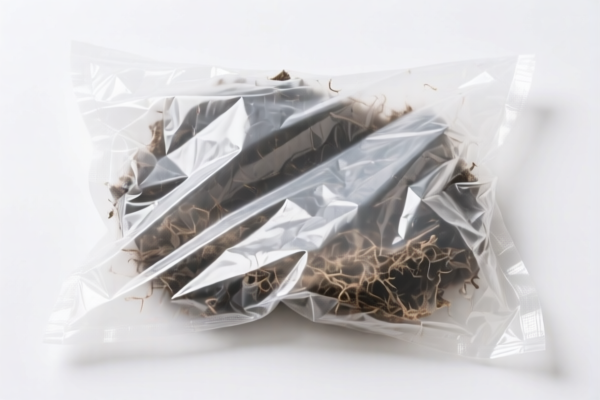
AI Analysis
🧵 Dust Cover for Protective Use (Monitor Dust Cover)
🌐 HS Code Classification & Customs Clearance Guide | 2026 Latest Tariff Analysis | Strategic Entry Protocol
📌 I. Product Definition & Categorization: What Exactly is a "Monitor Dust Cover"?
A Monitor Dust Cover is a protective accessory designed to shield electronic screens (monitors) from dust, scratches, moisture, and UV damage during storage or transport. In international trade, its classification strictly depends on the material composition and functional state:
- Non-Woven Fabric Covers (e.g., spunbond polyester): Lightweight, breathable, disposable, or reusable soft covers.
→ 归类至 Chapter 56 (Non-woven articles) - Rubber/Plastic Covers (e.g., PVC, TPU, silicone): Durable, waterproof, elastic, or molded hard covers.
→ 归类至 Chapter 40 (Rubber & Rubber Articles) or Chapter 39 (Plastics)
⚠️ Critical Classification Rule:
- If made of non-woven fabric → Use HS Codes 5603.11.00.70 or 5603.12.00.70.
- If made of rubber or plastic → Use HS Codes 4016.99.05.00 or 4016.99.60.50.
- Do NOT mix materials in a single declaration; classify by primary material.
📦 II. HS Code Classification Details (2026 Latest Tariff Schedule)
| HS Code | Product Description | Material Composition | Application Scenario |
|---|---|---|---|
| 5603.11.00.70 | Non-woven protective coverings (Heavy, needle-punched) | Non-woven fabric (heavy grade) | Industrial storage, heavy-duty dust protection |
| 5603.12.00.70 | Non-woven protective coverings (Medium-weight) | Non-woven fabric (spunbond/meltblown) | Consumer electronics, household monitor covers |
| 4016.99.05.00 | Rubber/Plastic articles (Other household/industrial) | Rubber or Plastic (e.g., PVC, TPU) | Reusable elastic covers, home/office use |
| 4016.99.60.50 | Rubber/Plastic protective articles (Other categories) | Rubber or Plastic (specialized) | Custom-molded, high-strength protective gear |
🔍 Key Insight:
- Non-woven covers (5603 series) are taxed at 35.0% total due to high "Section 301" (25%) + "Section 122" (10%) tariffs.
- Rubber/Plastic covers vary between 20.9% and 37.5%, depending on the specific sub-category and base tariff.
- Repeated Classification: The system shows5603.11.00.70twice, confirming its high probability for heavy non-woven covers.
💰 III. 2026 Tariff Rate Breakdown (USA Import, Origin: China)
✅ Target Market: United States (US)
✅ Origin: China (CN)
✅ Effective Date: Post-November 2025 (Current Regime)
🎯 1. Non-Woven Covers (5603.11.00.70 & 5603.12.00.70)
Total Tax Rate: 35.0%
| Component | Rate | Legal Basis | Explanation |
|---|---|---|---|
| Base Duty | 0.0% | General Rate | No standard tariff for non-woven protective covers. |
| Section 301 (Add-on) | +25.0% | US Trade Act 301 | Heavy tariff imposed on Chinese textile/non-woven goods. |
| Section 122 (Add-on) | +10.0% | IEEPA (China) | Additional tariff for "122" specific Chinese goods. |
| Total | 35.0% | 301 + 122 | Very High Cost – Requires strict material proof. |
📌 Why 35%?
- The 25% Section 301 is the dominant cost driver.
- The 10% Section 122 is a targeted surcharge on specific Chinese-origin textile-like items.
- Result: A $100 cover costs $35 in duties alone.
🎯 2. Rubber/Plastic Covers
A. Household/General Use (4016.99.05.00)
Total Tax Rate: 20.9%
| Component | Rate | Legal Basis | Explanation |
|---|---|---|---|
| Base Duty | 3.4% | General Rate | Standard duty for rubber/plastic articles. |
| Section 301 (Add-on) | +7.5% | US Trade Act 301 | Lowered 301 rate for specific plastic/rubber sub-items. |
| Section 122 (Add-on) | +10.0% | IEEPA (China) | Applies to this sub-category. |
| Total | 20.9% | Base + 301 + 122 | Moderate Cost – More favorable than non-woven. |
B. Specialized/Other Protection (4016.99.60.50)
Total Tax Rate: 37.5%
| Component | Rate | Legal Basis | Explanation |
|---|---|---|---|
| Base Duty | 2.5% | General Rate | Slightly lower base duty. |
| Section 301 (Add-on) | +25.0% | US Trade Act 301 | Full 301 rate applies here (higher risk category). |
| Section 122 (Add-on) | +10.0% | IEEPA (China) | Applies. |
| Total | 37.5% | Base + 301 + 122 | Highest Cost – Avoid if possible; re-evaluate material. |
🛠️ IV. Customs Clearance Strategy (Avoiding Pitfalls)
✅ 1. Preparation Checklist (Must-Haves)
| Document | Status | Purpose |
|---|---|---|
| Material Composition Certificate | ⚠️ Critical | Must explicitly state % of Non-Woven vs. Rubber/Plastic to avoid "Mixed Material" penalties. |
| Product Photos (Unpacked) | ✔️ Required | Show texture, elasticity, and packaging to prove intended use. |
| Technical Specs Sheet | ✔️ Required | Define weight, thickness, and usage (e.g., "Disposable" vs. "Reusable"). |
| Bill of Lading (B/L) | ✔️ Required | Ensure "Monitor Dust Cover" is listed, not generic "Textiles". |
| Commercial Invoice | ✔️ Required | Must match HS Code description exactly (e.g., "Non-woven protective cover"). |
✅ 2. Declaration Best Practices
🔥 Golden Rule: "Material First, Function Second!"
| Scenario | Correct Declaration | Risk of Error |
|---|---|---|
| Non-Woven Cover | 5603.12.00.70 |
Reporting as "Textile" (5811) or "Rubber" (4016) → Audit & 3x Penalties |
| PVC Plastic Cover | 4016.99.05.00 |
Reporting as "Plastic Sheet" (3921) → 37.5% vs 20.9% tax shock |
| Mixed Material | Split Declaration | Combining both in one line → System Rejection |
| Generic "Cover" | Never use | Customs may reclassify to highest tax rate → 37.5% default |
✅ 3. Special Cases & Mitigation
| Situation | Solution |
|---|---|
| De Minimis Exemption (800) | ❌ Not Applicable: All listed HS codes > $800 threshold for 301/122; No exemption for China origin. |
| Transshipment (Vietnam/Mexico) | ✅ Possible: If re-exported from non-China origin with sufficient processing, 301/122 may be waived. |
| Private Label (OEM) | ✅ Benefit: If branded by US entity, may reduce scrutiny, but tax remains same unless origin changes. |
| Sample Shipments | ❌ No: Even small samples are subject to full duties if classified under these HS codes. |
🌍 V. Global Market Comparison (2026 Tariff Snapshot)
| Market | Recommended HS Code | Base Tariff | 301/122 Add-on | Total Cost | Certification |
|---|---|---|---|---|---|
| 🇺🇸 USA | 5603.12.00.70 |
0% | +35% (301+122) | 35.0% | No special certs |
| 🇪🇺 EU | 5603.12.00 |
6.5% | 0% | 6.5% | CE (if plastic) |
| 🇯🇵 Japan | 4016.99.05 |
3.0% | 0% | 3.0% | PSE (if electrical) |
| 🇨🇦 Canada | 5603.11.00 |
5.0% | 0% | 5.0% | None |
| 🇦🇺 Australia | 4016.99.60 |
0% | 0% | 0% | None |
📌 Key Takeaway:
- USA is the only major market imposing 35%+ tariffs on these items due to Section 301/122.
- EU, Japan, Canada, Australia have significantly lower rates (0-6.5%).
- Strategy: If targeting multiple markets, consider shipping to Vietnam first for re-export to avoid US 301/122.
🚫 VI. Common Mistakes & "Blood Lessons"
❌ Mistake 1: Declaring as "Textiles" (Chapter 60/61) instead of "Non-woven" (Chapter 56).
👉 Result: Customs reclassifies to 5603 → Sudden 35% tax shock + Delay.
❌ Mistake 2: Using "Plastic" (39) instead of "Rubber/Plastic Articles" (4016).
👉 Result: Higher base duty (e.g., 4.0% vs 2.5%) + 37.5% total.
❌ Mistake 3: Ignoring "Section 122" surcharge in cost modeling.
👉 Result: Profit margin wiped out by 10% unexpected tax.
❌ Mistake 4: Claiming "De Minimis" for small shipments.
👉 Result: Denied; Section 301/122 applies regardless of value for Chinese origin.
✅ Correct Approach:
"Non-woven polyester monitor dust cover, 50% spunbond, 50% meltblown, for industrial storage, HS Code 5603.12.00.70."
🎯 VII. Conclusion: Strategic Entry for Cost Optimization
🎯 Action Plan: 1. Confirm Material: Ensure product is 100% non-woven OR 100% rubber/plastic. 2. Calculate Landed Cost: Add 35% (non-woven) or 20.9-37.5% (rubber/plastic) to unit price. 3. Check Origin: If China-origin, expect 35% minimum; consider third-party production. 4. File Accurately: Use exact HS Codes; never use generic terms like "cover" or "textile".
🔹 Pro Tip: For US imports, pre-clearance via a licensed customs broker is mandatory to avoid 301/122 penalties.
🔹 Pro Tip: If volume is high, apply for Section 301 exclusions (if applicable) before shipment.
📣 Next Steps:
📞 Contact Broker: Provide material specs + HS Code pre-analysis.
📄 File Documents: Material certs, photos, invoice, B/L.
🚀 Optimize Cost: Shift production to Vietnam/Mexico for 0-5% total tax instead of 35%!
✨ Professional Classification = Profit Protection!
💼 Every 1% of tax saved is 1% of margin gained!
Customer Reviews
About HS Code Classification
The Harmonized System (HS) is an internationally standardized nomenclature developed by the World Customs Organization (WCO) to classify traded products. Over 200 countries use the HS system as the basis for customs tariffs, trade statistics, and import/export regulations.
Each HS code follows a hierarchical structure:
- Chapter (2 digits) — Broad category of goods (e.g., Chapter 84: Machinery and Mechanical Appliances)
- Heading (4 digits) — More specific grouping within the chapter
- Subheading (6 digits) — Internationally standardized breakdown, used by all WCO member countries
- National subdivisions (8-10 digits) — Country-specific extensions for further classification, such as US HTSUS 10-digit codes
Correct HS code classification is essential for smooth customs clearance, accurate duty payment, and compliance with trade regulations. Misclassification can lead to customs delays, overpayment of duties, or penalties.
When importing from CN to US, the applicable tariff rates may include:
- Most-Favored-Nation (MFN) rate — The standard duty rate applied to WTO members
- General rate — Applied to countries without trade agreements
- Trade remedy duties — Additional tariffs such as Section 301 (anti-dumping), Section 232 (national security), or countervailing duties
The information provided on this page is for reference purposes only. For official classification, please consult with your local customs authority or a licensed customs broker.