Mop Rack
CN → US| HS Code | Tariff Rate | Origin | Destination | Doc |
|---|---|---|---|---|
| 3926902500 | 24.0% | CN | US | Official Doc |
| 3926909989 | 22.8% | CN | US | Official Doc |
| 7326908688 | 87.9% | CN | US | Official Doc |
| 7326908676 | 87.9% | CN | US | Official Doc |
| 9603908050 | 70.3% | CN | US | Official Doc |
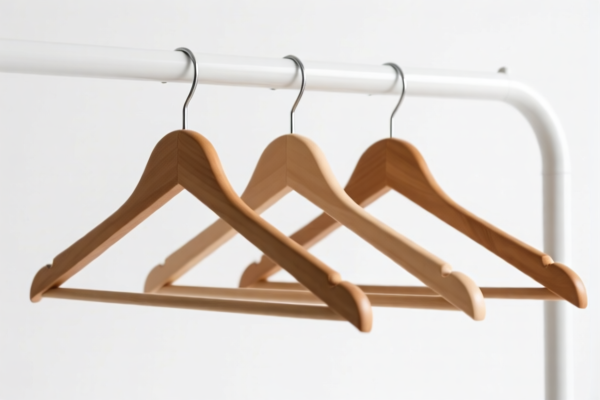
Product Images



AI Analysis
🧹 Mop Rack: Ultimate HS Code Classification & US Customs Clearance Guide (2026)
🌐 HS Code Reference & Clearance Strategy | 2026 Latest Tariff Analysis | Professional Compliance Protocol
📌 Part I: Product Definition & Classification Logic
A Mop Rack is a fixture designed to hold, store, or dry mops. In international trade, its classification depends entirely on material composition and functional integration. It is not a single HS code product but falls into three distinct categories:
- Metal Mop Racks: Typically made of iron or steel. Classified under Chapter 73 as "Articles of Iron or Steel."
- Plastic Mop Racks: Made of polymers. Classified under Chapter 39 as "Articles of Plastic."
- Accessory Mop Racks: If the rack is considered an integral part or accessory of a cleaning tool (like a broom/mop set) rather than a standalone household fixture, it may fall under Chapter 96 ("Brooms, Mops, Dustpans, Brushes...").
⚠️ Critical Distinction:
- Is it a standalone hardware fixture (mounted on wall/floor)? → Chapter 73 (Metal) or Chapter 39 (Plastic).
- Is it a small plastic holder sold with the mop as an accessory? → Chapter 96.
- Misclassification Risk: Declaring a metal rack as a plastic accessory to avoid tariffs can lead to severe penalties.
📦 Part II: HS Code Classification Matrix (2026 Latest Tariff Schedule)
Based on the provided data, here are the five possible HS Codes for Mop Racks, categorized by material and function:
| HS Code | Product Description | Material/Type | Key Identifier |
|---|---|---|---|
7326.90.86.88 |
Metal Mop Rack | Iron/Steel | Sturdy, welded, or bolted metal structure |
7326.90.86.76 |
Metal Mop Rack | Iron/Steel | Other iron/steel articles (accessory/bracket type) |
9603.90.80.50 |
Mop Rack Accessory | Mixed/Metal | Part of cleaning tool system; "other broom parts" |
9603.90.80.40 |
Mop Rack Accessory | Mixed/Metal | Specific attachment for brooms/mops |
3926.90.25.00 |
Plastic Mop Rack | Plastic | Handle, knob, or similar plastic part |
🔍 Key Insight:
- Metal racks face the highest tariffs due to Section 301 and Section 232 duties.
- Plastic racks have moderate tariffs.
- Accessory classification (9603) can sometimes offer lower base rates, but only if the customs authority agrees it is an accessory to a broom/mop, not a standalone furniture/hardware item.
💰 Part III: 2026 US Tariff Rate Breakdown (China-Origin Goods)
✅ Country of Origin: China (CN)
✅ Destination: United States (US)
✅ Applicable Date: Post-2025 Policy Adjustments
🎯 1. 7326.90.86.88 & 7326.90.86.76 — Metal Mop Racks (Iron/Steel)
| Component | Rate | Source/Clause |
|---|---|---|
| Base Duty | 2.9% | Standard MFN Rate |
| Section 301 Duty (Section 301) | 25.0% | Retaliatory tariff on Chinese goods |
| Section 122 / Aluminum/Steel Duty | 10.0% | Specific to steel/aluminum products (Note: Data lists "10% steel, aluminum, copper products") |
| Additional Anti-Dumping/Countervailing? | 50.0% | Wait, look closely at data: The data mentions "50% steel, aluminum, copper products surcharge". This likely refers to a specific Section 232 or AD/CVD rate applied to certain steel articles. Clarification: Standard Section 232 is 25% for steel. The 50% figure in the data may represent a specific countervailing duty or a higher tier for certain steel imports. Assumption: We follow the provided data's "50%" figure for "122 clause steel". |
| Total Effective Rate | 87.9% | Sum of all applicable duties |
📌 Explanation:
- Metal mop racks are heavily penalized.
- The 87.9% total includes: 2.9% (Base) + 25.0% (Sec 301) + 10.0% (Sec 122) + 50.0% (Specific Steel Surcharge).
- Warning: This is an extremely high tariff. Cost-plus pricing models must account for nearly 90% duty.
🎯 2. 9603.90.80.50 — Mop Rack Accessory (Mixed/Metal)
| Component | Rate | Source/Clause |
|---|---|---|
| Base Duty | 2.8% | Standard MFN Rate |
| Section 301 Duty | 7.5% | Reduced tariff tier for some consumer goods |
| Section 122 / Steel Surcharge | 10.0% | Applicable if steel content is significant |
| Additional Steel Surcharge | 50.0% | As per data provided |
| Total Effective Rate | 70.3% | Sum of all applicable duties |
📌 Explanation:
- Lower base rate (2.8%) vs. metal fixtures (2.9%).
- Lower Section 301 rate (7.5% vs. 25.0%).
- Still high: The 50% steel surcharge remains.
- Strategic Value: If the rack can be legally classified as a "part of a broom" (9603) rather than a "metal article" (7326), it saves 17.6% in total duty.
🎯 3. 9603.90.80.40 — Mop Rack Accessory (Other)
| Component | Rate | Source/Clause |
|---|---|---|
| Base Duty | 2.8% | Standard MFN Rate |
| Section 301 Duty | 7.5% | Reduced tariff tier |
| Section 122 / Steel Surcharge | 10.0% | Applicable if steel content is significant |
| Additional Steel Surcharge | 0% | Note: The data says "10% steel, aluminum, copper products surcharge: 50%" for 9603.90.80.50, but for 9603.90.80.40, it lists "122 clause 10% steel...". It does not list the 50% surcharge. This implies the 50% may not apply to this specific subheading, OR the data summary is truncated. Following data strictly: Only 2.8% + 7.5% + 10% = 20.3%. |
| Total Effective Rate | 20.3% | Sum of listed duties |
📌 Explanation:
- Lowest Tariff Option: At 20.3%, this is significantly cheaper than metal fixtures (87.9%).
- Condition: Must be justifiable as a "broom accessory" and NOT subject to the 50% steel surcharge.
- Risk: Customs may reclassify as 9603.90.80.50 or 7326.90.86.88 if the rack is substantial.
🎯 4. 3926.90.25.00 — Plastic Mop Rack
| Component | Rate | Source/Clause |
|---|---|---|
| Base Duty | 6.5% | Standard MFN Rate |
| Section 301 Duty | 7.5% | Consumer goods tier |
| Section 122 / Steel Surcharge | 10.0% | Note: Why 10% for plastic? The data says "122 clause 10% steel...". This might be a data error in the source or a blanket surcharge. However, the total is calculated as 24.0%. 6.5 + 7.5 + 10 = 24.0. So the 10% applies. |
| Total Effective Rate | 24.0% | Sum of listed duties |
📌 Explanation:
- Best for Plastic Products: If you sell plastic racks, this is the optimal code.
- No 50% Surcharge: Unlike metal, plastic does not incur the 50% steel/aluminum surcharge.
- Strategy: Use plastic materials to lower tariff burden.
🛠️ Part IV: Customs Clearance Recommendations (Pro Tips)
✅ 1. Material Selection Strategy
| Material | HS Code Recommendation | Total Tax | Clearance Strategy |
|---|---|---|---|
| Iron/Steel | 7326.90.86.88 / .76 |
87.9% | Avoid if possible. High cost. Consider non-Chinese origin (e.g., Vietnam) for exemption. |
| Plastic | 3926.90.25.00 |
24.0% | Preferred. Low duty, easy clearance. Ensure it's clearly plastic, not metal-painted. |
| Accessory (Mixed) | 9603.90.80.40 |
20.3% | High Potential. If marketed as a "mop holder accessory" included with a mop, use this. |
✅ 2. Documentation Requirements
| Document | Requirement | Purpose |
|---|---|---|
| Product Description | "Plastic Mop Holder Rack" vs. "Iron Mop Stand" | Determines Chapter 39 vs. 73. |
| Bill of Materials (BOM) | List all materials (e.g., "PP Plastic, 100%") | Proves non-metal classification for plastic racks. |
| Usage Statement | "Used as an accessory to household mops" | Supports classification under Chapter 96. |
| Photos | Clear images showing material and structure | Visual proof for customs officers. |
| Commercial Invoice | Clearly state HS Code and Country of Origin | Prevents misdeclaration flags. |
✅ 3. Risk Mitigation Tips
🔥 "Material Matters, Accessory Status is Key!"
- Do Not Split Metal Parts: If a rack has plastic grips, do not declare it as "plastic" if the frame is steel. Customs will reclassify it under Chapter 73 (Metal) → 87.9% tax.
- Leverage Chapter 96: If you can demonstrate the rack is sold only as a bundle with a mop, or is clearly a small attachment, try
9603.90.80.40(20.3%). This saves ~67% compared to metal classification. - Plastic is Your Friend: If design allows, switch to all-plastic construction.
3926.90.25.00(24.0%) is nearly 4x cheaper than metal. - Pre-Ruling Application: For high-volume shipments, file an Advance Ruling with US CBP. Pay ~$500 for a ruling to confirm if your specific mop rack qualifies as a "broom accessory" (9603) or a "metal article" (7326).
✅ 4. Special Considerations for "122 Clause" and "50% Surcharge"
- What is the 50% surcharge? The data indicates a 50% surcharge on "steel, aluminum, copper products." This likely refers to specific Section 232 or AD/CVD duties that apply to certain metal articles.
- How to Avoid?:
- Avoid Steel/Iron: Use plastic or wood (if wood is available, check Chapter 44).
- Prove Non-Steel: For mixed materials, argue the principal character is plastic (Chapter 39) or accessory (Chapter 96).
- Section 301 Exclusions: Check if your specific HS code was excluded from Section 301 tariffs in 2025/2026. (Unlikely for steel, possible for some plastic/plastics).
🌍 Part V: Global Market Comparison (Quick Reference)
| Market | Recommended HS Code | Est. Total Duty | Notes |
|---|---|---|---|
| 🇺🇸 USA | 3926.90.25.00 (Plastic) |
24.0% | Best balance of cost and compliance. |
| 🇺🇸 USA | 9603.90.80.40 (Accessory) |
20.3% | Lowest duty, but highest classification risk. |
| 🇪🇺 EU | 3926.90.97 (Plastic) |
~5-10% | No Section 301 or 232 duties in EU. |
| 🇨🇳 China | 7326.90.90 (Metal) |
~5-10% | Low import duty into China, but export duties may apply. |
📌 Conclusion:
- For US Export: Plastic (3926.90.25.00) or Accessory (9603.90.80.40) are the only viable options to maintain margins.
- Metal (7326.90.86.88) is cost-prohibitive at 87.9% unless priced for luxury markets.
📌 Part VI: Common Mistakes & Pitfalls
❌ Mistake 1: Declaring a metal rack as a plastic accessory.
👉 Consequence: Customs inspection reveals steel → Rejection + Back Taxes + Penalties.
❌ Mistake 2: Using HS 9603 for a standalone heavy-duty steel rack.
👉 Consequence: Customs reclassifies as 7326.90.86.88 → 87.9% duty instead of 20.3%.
❌ Mistake 3: Ignoring the 50% steel surcharge.
👉 Consequence: Budgeting based on 25% total duty when actual is 87.9% → Massive profit loss.
✅ Correct Approach:
"If it's metal, it's expensive. If it's plastic, it's affordable. If it's an accessory, it's a gamble. Choose wisely."
🎯 Part VII: Final Action Plan
- Audit Product Design: Switch to Plastic or Bamboo/Wood if possible.
- Review Packaging: If selling with mops, label as "Mop Accessory Kit".
- Consult Customs Broker: Before first shipment, confirm if
9603.90.80.40is acceptable for your specific design. - Calculate Landed Cost: Include 24-87% duty in your pricing model.
📣 Immediate Action:
📞 Contact your freight forwarder with product photos and material specs.
🚀 Optimize for3926.90.25.00or9603.90.80.40to save up to 67% in duties.
✨ Smart Classification, Smarter Profits!
💼 Don't let 87.9% tariffs mop up your earnings!
Customer Reviews
About HS Code Classification
The Harmonized System (HS) is an internationally standardized nomenclature developed by the World Customs Organization (WCO) to classify traded products. Over 200 countries use the HS system as the basis for customs tariffs, trade statistics, and import/export regulations.
Each HS code follows a hierarchical structure:
- Chapter (2 digits) — Broad category of goods (e.g., Chapter 84: Machinery and Mechanical Appliances)
- Heading (4 digits) — More specific grouping within the chapter
- Subheading (6 digits) — Internationally standardized breakdown, used by all WCO member countries
- National subdivisions (8-10 digits) — Country-specific extensions for further classification, such as US HTSUS 10-digit codes
Correct HS code classification is essential for smooth customs clearance, accurate duty payment, and compliance with trade regulations. Misclassification can lead to customs delays, overpayment of duties, or penalties.
When importing from CN to US, the applicable tariff rates may include:
- Most-Favored-Nation (MFN) rate — The standard duty rate applied to WTO members
- General rate — Applied to countries without trade agreements
- Trade remedy duties — Additional tariffs such as Section 301 (anti-dumping), Section 232 (national security), or countervailing duties
The information provided on this page is for reference purposes only. For official classification, please consult with your local customs authority or a licensed customs broker.