Mop Replacement Head
CN → US| HS Code | Tariff Rate | Origin | Destination | Doc |
|---|---|---|---|---|
| 6307101090 | 21.6% | CN | US | Official Doc |
| 6307102030 | 22.8% | CN | US | Official Doc |
| 9603908050 | 70.3% | CN | US | Official Doc |
Product Images
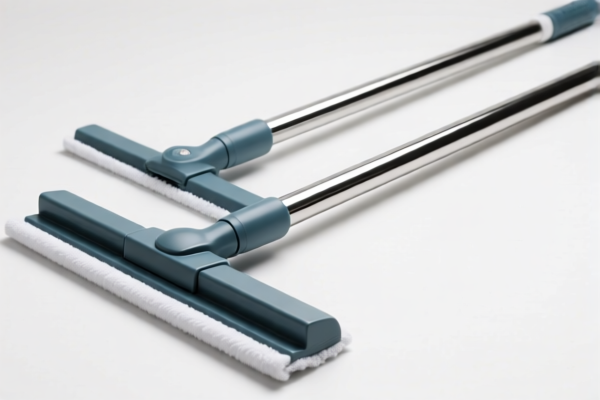
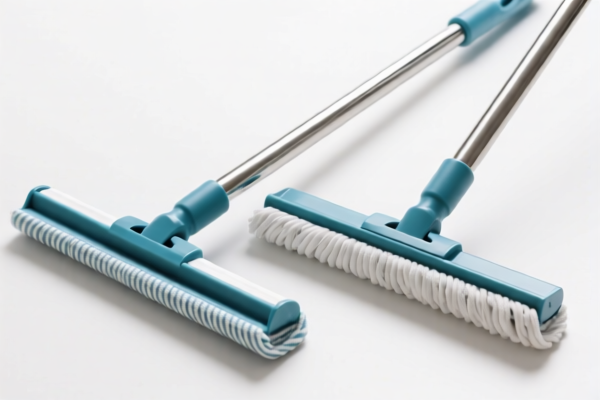
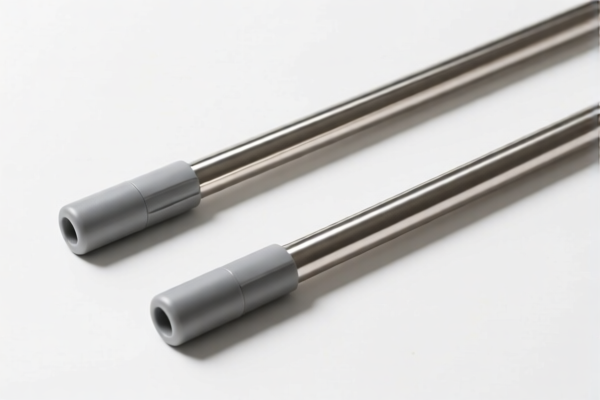
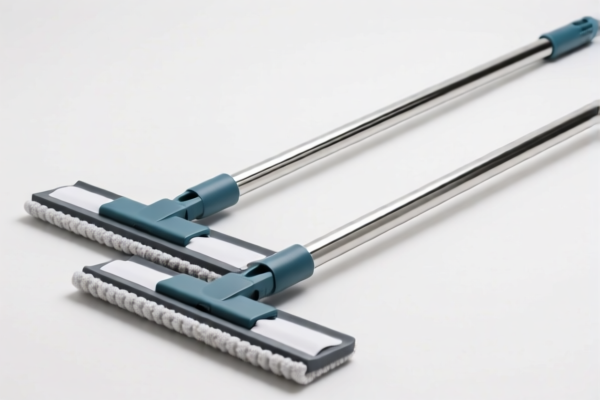
AI Analysis
🧹 Mop Replacement Heads (Cleaning Tool Accessories)
🌐 HS Code Reference & Customs Clearance Guide | 2024/2025 Latest Tariff Analysis | Professional Clearance Strategy
📌 1. Product Definition & Classification: What Exactly Are You Declaring?
Mop replacement heads are accessories designed for cleaning tools, specifically used to absorb water, dust, or cleaning solutions. In international trade, their classification depends heavily on the material composition and specific function. They are generally categorized under Chapter 63 (Other Made Up Article) or Chapter 96 (Brooms, Brushes), but the duty rates vary drastically due to Section 301 and Section 232 tariffs.
⚠️ Key Distinction Point:
- Fabric/Textile Based: If made of cotton, microfiber, or synthetic fibers, they are classified as Cleaning Cloths/Textiles under 6307.
- Accessory/Bracket Based: If considered a functional part of the mop handle mechanism (brushes, holders), they fall under 9603.
📦 2. HS Code Classification Details (Latest Tariff Rules)
| HS Code | Product Description | Applicability | Material Type | Total Tax Rate* |
|---|---|---|---|---|
6307.10.20.30 |
Other made-up articles: Cleaning cloths | Mop heads made of woven or non-woven fabric/textile | Fiber/Textile | 22.8% |
9603.90.80.50 |
Other brooms, brushes, mops: Parts/Accessories | Mop heads considered as parts of cleaning tools (e.g., sponge, specific brush types) | Cloth/Fiber/Sponge | 70.3% |
6307.10.10.90 |
Other made-up articles: Cleaning cloths (Cotton-like) | Mop heads specifically inferred as cotton or similar textile cleaning parts | Cotton/Fiber | 21.6% |
🔍 Crucial Note:
- The difference between ~22% and ~70% is massive. Misclassification can lead to significant underpayment of duties and subsequent penalties.
- Textile-based mop heads (6307) are generally viewed as "Consumables/Textiles."
- Brush/Accessory-based mop heads (9603) are viewed as "Hardware/Tool Parts," often attracting higher punitive tariffs.
💰 3. Detailed Tariff Rate Breakdown (2026 Latest Data)
✅ Applicable Country: United States (US)
✅ Origin: China (CN)
✅ Effective Date: Post-2025 policies (Section 301, Section 232, IEEPA)
🎯 1. 6307.10.20.30 —— Cleaning Cloths (Textile-Based Mop Heads)
| Item | Content |
|---|---|
| Base Duty Rate | 5.3% (General Rate) |
| Section 301 Add-on | +7.5% (Standard punitive tariff) |
| Section 122 / IEEPA Add-on | +10% (Specific trade remedy tariffs) |
| Total Effective Rate | 22.8% |
| Calculation | CIF Value × 22.8% |
| De Minimis Exemption | ❌ Not Applicable (High value threshold applies; unlikely to qualify for $800 exemption) |
| Legal Basis | Base: 6307 → Sec 301: 7.5% → Sec 122/IEEPA: 10% |
📌 Explanation:
- This classification treats the mop head as a textile cleaning product.
- The total tax burden is moderate compared to hardware.
- Strategy: Ensure your commercial invoice and product description emphasize "Textile," "Cotton," "Microfiber," or "Absorbent Fabric" rather than "Plastic Parts" or "Brush Accessories."
🎯 2. 9603.90.80.50 —— Parts of Brooms/Brushes (Hardware-Based)
| Item | Content |
|---|---|
| Base Duty Rate | 2.8% |
| Section 301 Add-on | +7.5% |
| Section 122 / IEEPA Add-on | +10% |
| Section 232 (Steel/Aluminum/Copper) Add-on | +50% |
| Total Effective Rate | 70.3% |
| Calculation | CIF Value × 70.3% |
| De Minimis Exemption | ❌ Not Applicable |
| Legal Basis | Base: 9603 → Sec 301: 7.5% → Sec 122: 10% → Sec 232: 50% |
📌 Warning:
- This high rate applies if the mop head is considered to have metal components (e.g., steel frames, aluminum clips, copper wiring) or is classified strictly as a "brush accessory" under Section 232 logic.
- Even if the head is fabric, if the fastening mechanism is metal and declared as part of the head assembly, Customs may apply the 50% metal tariff.
- Risk: This is a high-cost classification. Avoid if possible by separating metal parts or declaring purely as textile.
🎯 3. 6307.10.10.90 —— Cotton Cleaning Cloths (Specific Textile Sub-category)
| Item | Content |
|---|---|
| Base Duty Rate | 4.1% |
| Section 301 Add-on | +7.5% |
| Section 122 / IEEPA Add-on | +10% |
| Total Effective Rate | 21.6% |
| Calculation | CIF Value × 21.6% |
| De Minimis Exemption | ❌ Not Applicable |
| Legal Basis | Base: 6307.10 → Sec 301: 7.5% → Sec 122: 10% |
📌 Explanation:
- This is the most economical option if your product is made primarily of cotton or similar natural fibers.
- The base rate (4.1%) is lower than general textiles (5.3%).
- Strategy: If your mop head is 100% cotton, explicitly declare it as "Cotton Cleaning Cloth" to benefit from the lower base rate.
🛠️ 4. Customs Clearance Practical Advice (Avoid Pitfalls)
✅ 1. Required Documentation (Non-Negotiable)
| Document | Must Provide? | Purpose |
|---|---|---|
| ✅ Product Composition Statement | ✔️ | Must detail % of Cotton, Polyester, Microfiber, etc. |
| ✅ Material Declaration | ✔️ | Explicitly state "No Metal Parts" or "Plastic Frame Only" to avoid Sec 232. |
| ✅ Commercial Invoice | ✔️ | Use descriptive terms: "Textile Mop Head" not "Brush Accessory." |
| ✅ Photos | ✔️ | Show close-ups of fabric texture; highlight absence of metal. |
| ✅ Origin Certificate | ✔️ | Confirm CN origin to apply correct Section 301 rates. |
✅ 2. Classification Strategy (Key Takeaway)
🔥 “Textile is King: Avoid Metal, Choose 6307!”
| Scenario | Recommended HS Code | Why? |
|---|---|---|
| Pure Fabric/Microfiber Head | 6307.10.20.30 or 6307.10.10.90 |
Lower tax (~22%). Classified as cleaning cloth. |
| Cotton-Blend Head | 6307.10.10.90 |
Lowest base rate (4.1%). Best for cotton-heavy items. |
| Head with Metal Clip/Frame | 9603.90.80.50 |
AVOID if possible. Triggers 50% Sec 232 tariff. Total 70.3%. |
| Sponge Head (Non-Textile) | 6307.10.20.30 |
Still classified under cleaning cloths, not brushes. |
📌 Critical Tip:
- Do NOT declare metal fasteners as part of the "mop head" if they can be separated. Declare them as separate "Plastic Clips" (if applicable) or ensure the mop head is sold as a pure textile replacement.
- If the metal part is integral (e.g., a steel rod embedded in the fabric), you risk being classified under9603with the 70.3% rate.
✅ 3. Special Considerations
| Situation | Handling Advice |
|---|---|
| Mixed Materials | If >50% is textile, try to argue for 6307 classification. Provide material breakdown. |
| OEM Custom Heads | Provide design specs to Customs Broker to prove no metal is used in the absorbing part. |
| Small Parcels (De Minimis) | Check if the total value is under $800. Note: Even if under $800, highly scrutinized items may still require full declaration. |
🌍 5. Global Comparison (2024/2025 Outlook)
| Country/Region | Recommended HS Code | Approx. Duty (China Origin) | Notes |
|---|---|---|---|
| 🇺🇸 USA | 6307.10.20.30 |
22.8% | Use 6307 to avoid 70.3%. Avoid metal parts. |
| 🇺🇸 USA | 9603.90.80.50 |
70.3% | Avoid unless no textile alternative exists. |
| 🇨🇳 China | 6307.10 |
5-10% | Lower duties, but focus is on US export. |
| 🇪🇺 EU | 6307.10 |
4-6% | No Section 301/232 equivalents. Safer. |
📌 6. Common Mistakes & Pitfalls
❌ Mistake 1: Declaring a fabric mop head with a metal clip as "Mop Accessory" (9603).
👉 Consequence: Attributed 50% metal tariff → Total 70.3%.
👉 Fix: Separate the metal clip or declare the head as "Textile Cleaning Cloth" with "Plastic/Fabric only."
❌ Mistake 2: Ignoring the material composition.
👉 Consequence: Customs reclassifies based on visual inspection. If it looks like a brush, they may apply 9603.
👉 Fix: Always include a detailed material spec sheet.
❌ Mistake 3: Assuming "Replacement Part" means "Hardware."
👉 Consequence: Misclassification leads to audits and back-taxes.
👉 Fix: "Replacement Head" is a consumable textile in most cases, not a hardware part.
🎯 7. Conclusion: Smart Classification Saves Money
🎯 Remember the Rule:
🔹 “Fabric = 6307 (~22%), Metal/Brush = 9603 (~70%).”
🔹 “Avoid metal in the head. Choose cotton/fiber. Lower your taxes.”
✅ Best Practice:
- Use HS Code
6307.10.20.30for general synthetic/microfiber mop heads.- Use HS Code
6307.10.10.90for cotton mop heads.- Exclude metal components from the HS Code declaration if possible.
📌 Pro Tip:
If your mop head contains any steel or aluminum parts (e.g., wire frames, heavy metal clips), consult a customs broker immediately. The 50% Section 232 tariff can wipe out your profit margin. Consider switching to plastic or fabric-only fasteners.
📣 Immediate Action:
📞 Review your BOM (Bill of Materials).
📄 Update your Invoice Description: "Mop Replacement Head, 100% Microfiber, No Metal."
🚀 Choose6307to save ~48% in duties compared to9603.
✨ Professional clearance starts with precise classification!
💼 Every percentage point saved is pure profit!
Customer Reviews
About HS Code Classification
The Harmonized System (HS) is an internationally standardized nomenclature developed by the World Customs Organization (WCO) to classify traded products. Over 200 countries use the HS system as the basis for customs tariffs, trade statistics, and import/export regulations.
Each HS code follows a hierarchical structure:
- Chapter (2 digits) — Broad category of goods (e.g., Chapter 84: Machinery and Mechanical Appliances)
- Heading (4 digits) — More specific grouping within the chapter
- Subheading (6 digits) — Internationally standardized breakdown, used by all WCO member countries
- National subdivisions (8-10 digits) — Country-specific extensions for further classification, such as US HTSUS 10-digit codes
Correct HS code classification is essential for smooth customs clearance, accurate duty payment, and compliance with trade regulations. Misclassification can lead to customs delays, overpayment of duties, or penalties.
When importing from CN to US, the applicable tariff rates may include:
- Most-Favored-Nation (MFN) rate — The standard duty rate applied to WTO members
- General rate — Applied to countries without trade agreements
- Trade remedy duties — Additional tariffs such as Section 301 (anti-dumping), Section 232 (national security), or countervailing duties
The information provided on this page is for reference purposes only. For official classification, please consult with your local customs authority or a licensed customs broker.