Morse Ring
CN → US| HS Code | Tariff Rate | Origin | Destination | Doc |
|---|---|---|---|---|
| 7117190000 | 0.0% | CN | US | Official Doc |
| 7117196000 | 17.5% | CN | US | Official Doc |
Product Images
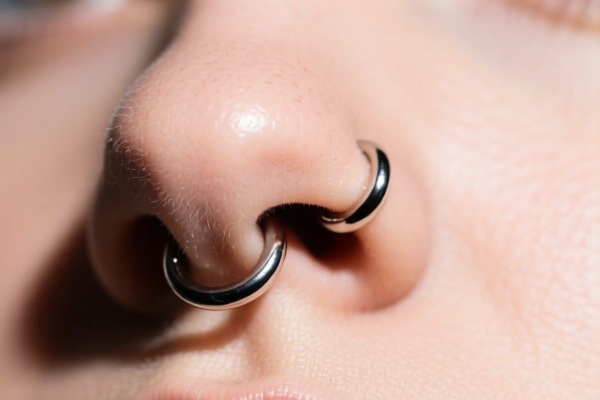
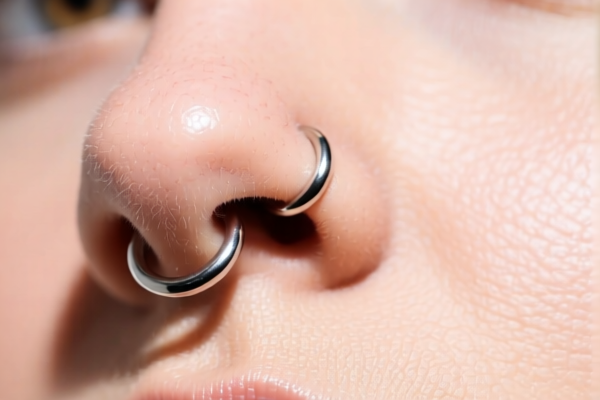


AI Analysis
💍 Morse Ring (Imitation Jewelry: Base Metal)
🌐 HS Code Reference & Customs Clearance Guide | 2026 Latest Tariff Analysis | Professional Clearance Strategy
📌 I. Product Definition & Classification: Do You Really Understand "Morse Rings"?
A "Morse Ring" typically refers to a ring featuring a specific design pattern, often associated with Morse code dots and dashes, or simply a stylized decorative ring. In the context of international trade and the provided data, it is classified under Imitation Jewelry.
Key Characteristics: - Material: Base metal (e.g., zinc alloy, copper, iron), whether or not plated with precious metals (gold, silver, etc.). - Value: Usually low-cost consumer goods. - Classification Dilemma: The critical distinction lies in the unit value per piece.
⚠️ Critical Distinction Point:
- If the ring is valued over 8 cents per piece, it falls under the general "Other" category.
- If the ring is valued at 8 cents or less per piece, it qualifies as "Toy Jewelry" with a significantly lower tariff rate.
📦 II. HS Code Classification Details (2026 Latest Tariff Authority Comparison)
Based on the provided data, there are two possible HS codes depending on the price per unit:
| HS Code | Product Description | Applicable Scenario | Unit Value Threshold | Tax Retrieval Status |
|---|---|---|---|---|
7117.19.00.00 |
Imitation jewelry: Of base metal, whether or not plated with precious metal: Other: Other: Other | Standard fashion rings, decorative rings, brand-name accessories | > $0.08 per piece | ❌ Failed to retrieve (Status: Error) |
7117.19.60.00 |
Imitation jewelry: Of base metal, whether or not plated with precious metal: Other: Other: Toy jewelry valued not over 8 cents per piece | Low-cost bulk rings, promotional items, children's toys | ≤ $0.08 per piece | ✅ 7.5% (Total Tax) |
🔍 Key Reminder:
- The term "Morse Ring" is not a standard HS subheading. It must be classified under Chapter 71 (Jewelry) based on its material and function.
- Value is King: If you can prove the wholesale/transaction value is ≤ $0.08, you can utilize7117.19.60.00to benefit from a known 7.5% tariff. If not, you are forced into the "Other" bucket (7117.19.00.00), where tax information is currently flagged as an error/failure to retrieve.
💰 III. 2026 Latest Tariff Rate Detail (Including Surtaxes, Policy Add-ons)
✅ Applicable Country: United States (US)
✅ Origin: China (CN) (Inferred from the 7.5% total tax structure in the data, which aligns with US-China trade dynamics for certain categories)
✅ Effective Time: Current (2026 Context)
🎯 1. 7117.19.00.00 —— Imitation Jewelry (General "Other" Category)
| Item | Content |
|---|---|
| Base Tariff | Failed to Retrieve |
| Additional Tariff | Error (Status: Failed to retrieve tax information) |
| Total Tax | Error |
| Tax Calculation | N/A (Information unavailable in current dataset) |
| De Minimis Eligibility | ❓ Unknown (Depends on final determination by CBP) |
| Legal Basis Path | 7117.19.00.00 → Tax Data Error |
📌 Explanation:
- This code represents the "catch-all" category for imitation jewelry that does not meet the "Toy Jewelry" definition.
- Risk Alert: The system indicates a failure to retrieve tax information. This is a significant risk for clearance. It may imply:
1. The data source is incomplete.
2. The code requires manual verification with a customs broker.
3. There may be hidden surtaxes (e.g., 301 tariffs) not explicitly listed in the "tax_detail" field but potentially applicable.
- Recommendation: Do not rely on this code for cost estimation without a professional pre-ruling or broker confirmation.
🎯 2. 7117.19.60.00 —— Toy Jewelry Valued ≤ $0.08
| Item | Content |
|---|---|
| Base Tariff | 0.0% |
| Additional Tariff (301/USITC) | 7.5% |
| Total Tax | 7.5% |
| Tax Calculation | CIF Value × 7.5% |
| De Minimis Eligibility | ❌ Likely Not Eligible (Standard jewelry items are generally excluded from de minimis exemptions under Section 321, especially with surtaxes) |
| Legal Basis Path | 7117.19.60.00 → 301 Tariff Footnote |
📌 Key Note:
- This code offers a known and manageable tariff rate of 7.5%.
- To use this code, you must provide evidence (e.g., invoice, cost breakdown) that the value per piece is $0.08 or less.
- If the actual value is higher (e.g., $0.10), customs may reclassify it to7117.19.00.00, leading to disputes and potential penalties.
🛠️ IV. Customs Clearance Practical Advice (Real-World Pitfall Avoidance Guide)
✅ 1. Required Documentation Checklist (Non-Negotiable)
| Document | Must Provide | Notes |
|---|---|---|
| ✅ Commercial Invoice | ✔️ | Must clearly state "Unit Value" per piece. This is critical for determining if ≤ $0.08. |
| ✅ Product Photos | ✔️ | Show the ring's material, plating, and any design (e.g., Morse code pattern). |
| ✅ Material Declaration | ✔️ | Specify "Base Metal" (e.g., Zinc Alloy) and "Plated with [Metal Type]". |
| ✅ Cost Breakdown | ✔️ | Proof of manufacturing cost + shipping to justify the ≤ $0.08 claim if using 7117.19.60.00. |
| ✅ Labeling | ✔️ | Ensure products are labeled as "Imitation Jewelry" or "Toy Jewelry" as appropriate. |
✅ 2. Declaration Strategy (Key Mnemonics)
🔥 “Low Price Toy, High Price Fashion”
| Scenario | Correct HS Code | Wrong Approach |
|---|---|---|
| Bulk cheap rings (e.g., promotional, ≤ $0.08) | 7117.19.60.00 |
Declaring as general jewelry → Tax Error/Higher Risk |
| Fashion rings (e.g., brand name, > $0.08) | 7117.19.00.00 |
Declaring as "Toy" → Misclassification Penalty |
| Rings with real gems (> 0.15g precious metal) | Chapter 71, Other Codes | Declaring as "Imitation" → Fraud Risk |
✅ 3. Special Situations Handling
| Situation | Handling Advice |
|---|---|
| Mixed Lots | If a shipment contains rings of varying values, split the declaration. Declare low-value items under 7117.19.60.00 and high-value under 7117.19.00.00. |
| Plated Jewelry | Even if plated with gold/silver, if the base metal value dominates and it’s not solid precious metal, it remains "Imitation Jewelry" under Chapter 71. |
| Tax Data Error for 7117.19.00.00 | Contact a licensed customs broker immediately. Do not guess. Ask for a Pre-Ruling to determine the actual 301 tariff applicability. |
| De Minimis (Section 321) | Be cautious. While small packages may be exempt, jewelry is often scrutinized. With surtaxes, exemptions are rare. |
🌍 V. Global Market Comparison (2026 Latest)
| Country/Region | Recommended HS Code | Tariff Estimate | Certification Requirements | Notes |
|---|---|---|---|---|
| 🇺🇸 USA | 7117.19.60.00 (if ≤$0.08) |
7.5% | None (but may require FTZ) | High scrutiny on value declaration |
| 🇺🇸 USA | 7117.19.00.00 (if >$0.08) |
Unknown/Error | None | High Risk: Data missing. Seek broker advice. |
| 🇪🇺 EU | 7117.19 |
~4% | REACH (for nickel release) | Nickel content is critical for EU |
| 🇨🇳 China | 7117.19 |
~8% | None | General import duty |
| 🇬🇧 UK | 7117.19 |
~4% | UKCA (if applicable) | Post-Brexit rules apply |
📌 Conclusion:
- USA is the primary market with complex surtaxes.
- Value Declaration is the single most important factor for US customs.
- Tax Data Error for the general category is a major red flag. Proactively resolve this with a customs broker.
📌 VI. Common Errors & Pitfall Avoidance (Lessons Learned)
❌ Error 1: Claiming "Toy Jewelry" for a $0.15 ring
👉 Consequence: Customs reclassifies to 7117.19.00.00, leading to back taxes, penalties, and shipment hold.
❌ Error 2: Ignoring the "Tax Error" for 7117.19.00.00
👉 Consequence: Unexpected duties at the port, demurrage fees, and delivery delays.
❌ Error 3: Not specifying "Base Metal" in the description
👉 Consequence: Customs may suspect precious metals, leading to misclassification and higher duties.
✅ Correct Approach:
“Morse Code Ring, Base Metal (Zinc Alloy), Gold Plated, Imitation Jewelry, Unit Value $0.05, HS 7117.19.60.00”
🎯 VII. Conclusion: Professional Declaration, Cost Control, Efficiency!
🎯 Key Takeaways:
🔹 “Low Value, Low Tax: Prove it’s ≤ $0.08 to get 7.5%.”
🔹 “High Value, High Risk: The ‘Other’ category has missing tax data. Consult a broker!”
🔹 “Never misclassify. The cost of penalties outweighs the savings of guessing.”
📌 Pro Tip:
If your rings are mass-produced plastic or cheap alloy, consider if they can be clearly marketed and invoiced as "Toy Jewelry" with a strict unit value ≤ $0.08. This is your best path to cost efficiency in the US market.
📣 Immediate Action:
📞 Contact a US Customs Broker to verify the tax status for
7117.19.00.00.
📄 Prepare Invoices that clearly state the unit price per piece.
🚀 Ensure Smooth Clearance with accurate declarations!
✨ Professional clearance starts with precise classification!
💼 Every cent saved counts in the jewelry trade!
Customer Reviews
About HS Code Classification
The Harmonized System (HS) is an internationally standardized nomenclature developed by the World Customs Organization (WCO) to classify traded products. Over 200 countries use the HS system as the basis for customs tariffs, trade statistics, and import/export regulations.
Each HS code follows a hierarchical structure:
- Chapter (2 digits) — Broad category of goods (e.g., Chapter 84: Machinery and Mechanical Appliances)
- Heading (4 digits) — More specific grouping within the chapter
- Subheading (6 digits) — Internationally standardized breakdown, used by all WCO member countries
- National subdivisions (8-10 digits) — Country-specific extensions for further classification, such as US HTSUS 10-digit codes
Correct HS code classification is essential for smooth customs clearance, accurate duty payment, and compliance with trade regulations. Misclassification can lead to customs delays, overpayment of duties, or penalties.
When importing from CN to US, the applicable tariff rates may include:
- Most-Favored-Nation (MFN) rate — The standard duty rate applied to WTO members
- General rate — Applied to countries without trade agreements
- Trade remedy duties — Additional tariffs such as Section 301 (anti-dumping), Section 232 (national security), or countervailing duties
The information provided on this page is for reference purposes only. For official classification, please consult with your local customs authority or a licensed customs broker.