Mortar Anti freeze Additive
CN → US| HS Code | Tariff Rate | Origin | Destination | Doc |
|---|---|---|---|---|
| 3816002010 | 38.0% | CN | US | Official Doc |
| 3816002050 | 38.0% | CN | US | Official Doc |
| 3824405000 | 40.0% | CN | US | Official Doc |
| 3824401000 | 41.5% | CN | US | Official Doc |
Product Images
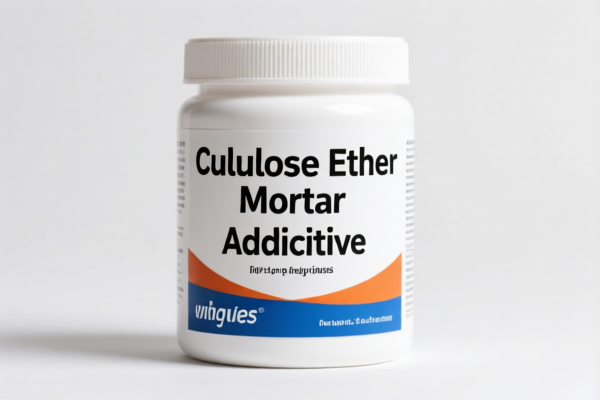
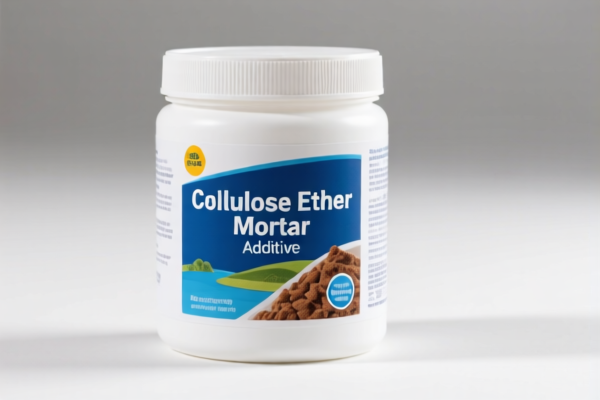
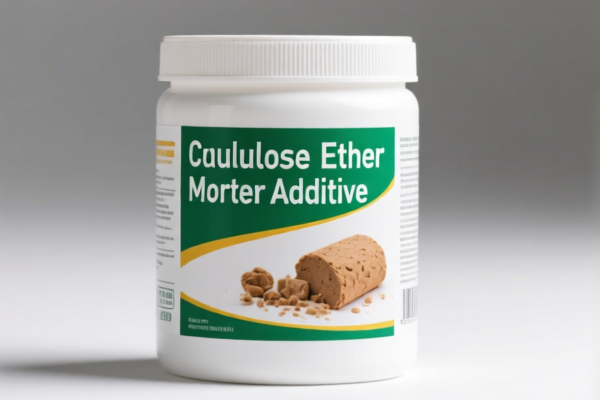
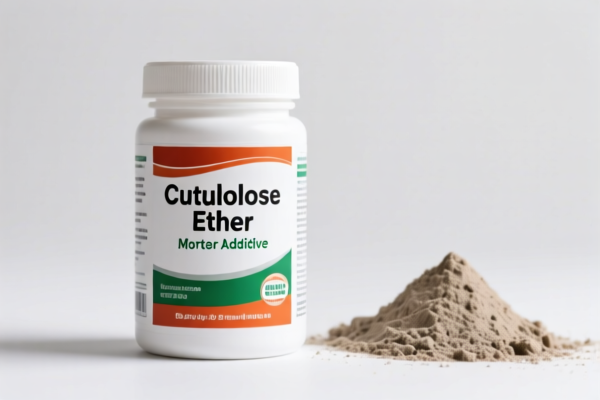
AI Analysis
🧊 Mortar Anti-Freeze Additives (Chemical Preparations for Concretes)
🌐 HS Code Reference & Customs Clearance Guide | 2024/2025 Latest Tariff Analysis | Professional Clearance Strategy
📌 1. Product Definition and Classification: Do You Really Understand "Anti-Freeze Additives"?
Mortar Anti-Freeze Additives are chemical preparations designed to lower the freezing point of water in cementitious mixtures, allowing construction to proceed in sub-zero temperatures. In international trade, these are not classified under Chapter 38 as "Refractory Cements" but rather as "Chemical Products and Preparations... Prepared Additives for Cements, Mortars or Concretes" under Heading 3824.
The critical classification distinction lies in the chemical composition, specifically the presence of aromatic substances:
Aromatic-Containing Additives: Preparations where 5% or more by weight consists of aromatic or modified aromatic substances (e.g., certain lignosulfonates, naphthalene derivatives, or specific organic accelerators).
Non-Aromatic/Other Additives: Standard chemical mixes (e.g., calcium chloride, sodium nitrite, non-aromatic polymers) that do not meet the 5% aromatic threshold.
⚠️ Key Distinction Point:
- If the formulation contains ≥5% aromatic substances → Classify under 3824.40.10.00
- If the formulation contains <5% aromatic substances or is non-aromatic → Classify under 3824.40.50.00
- Incorrectly classifying under Chapter 3816 (Refractory Cements) will lead to severe penalties, as these are liquid/powder chemical additives, not structural refractory bonds.
📦 2. HS Code Classification Details (2024/2025 Latest Tariff Authority Comparison)
| HS Code | Product Description | Applicable Scenario | Aromatic Content |
|---|---|---|---|
3816.00.20.10 |
Refractory cements, mortars, concretes... Other Clay | ❌ Incorrect for Anti-Freeze Additives. This heading is for high-temp refractory binders (e.g., furnace linings), not construction chemical additives. | N/A |
3816.00.20.50 |
Refractory cements... Other | ❌ Incorrect. Same as above. Misclassification risk: High. | N/A |
3824.40.10.00 |
Prepared additives for cements/mortars/concretes: Containing ≥5% aromatic/mod aromatic substances | Liquid antifreeze agents with high organic solvent content, naphthalene-based superplasticizers, or lignin-based additives meeting the threshold. | ✅ ≥ 5% |
3824.40.50.00 |
Prepared additives for cements/mortars/concretes: Other | Standard chloride-free anti-freeze salts (e.g., calcium nitrite), non-aromatic polyols, or general chemical accelerators not meeting the aromatic threshold. | ❌ < 5% |
🔍 Key Reminder:
- All chemical preparations specifically for mixing with cement/mortar fall under 3824, NOT 3816.
- The 5% aromatic threshold is the decisive factor for tariff rates between3824.40.10.00and3824.40.50.00.
- If declared as "Refractory Cement" (3816), customs may reject the entry because anti-freeze additives are not refractory materials.
💰 3. 2024/2025 Latest Tariff Rate Details (Including Additional Taxes, Policy Surcharges)
✅ Applicable Country: United States (US)
✅ Origin: China (CN)
✅ Effective Date: Current Trade Regime (Section 301 & IEEPA measures active)
🎯 1. 3816.00.20.10 —— Refractory Cements (Other Clay)
⚠️ WARNING: Likely Misclassification for Anti-Freeze Additives
| Item | Content | |------|---------| | Base Duty | 0.0% | | Additional Duty (Section 301/USITC) | 0.0% | | Total Duty | 0.0% | | Risk Assessment | ❌ HIGH RISK. If Customs determines the product is NOT a refractory cement but a chemical additive, this classification is invalid. Penalties for misdeclaration apply. |
🎯 2. 3816.00.20.50 —— Refractory Cements (Other)
⚠️ WARNING: Likely Misclassification for Anti-Freeze Additives
| Item | Content | |------|---------| | Base Duty | 3.0% | | Additional Duty (Section 301/USITC) | 25.0% | | Total Duty | 28.0% | | Risk Assessment | ❌ HIGH RISK. Same as above. The product description "Mortar Anti-Freeze Additive" does not match "Refractory Cement." |
🎯 3. 3824.40.50.00 —— Prepared Additives for Cements (Other)
✅ Correct Classification for Most Standard Anti-Freeze Additives (Non-Aromatic or <5% Aromatic)
| Item | Content | |------|---------| | Base Duty | 5.0% (ad valorem) | | USITC Additional Duty | +25.0% (Section 301) | | Total Duty | 30.0% | | Tax Calculation | CIF Value × 30% | | De Minimis Exemption | ❌ Not Available (Subject to Section 301) | | Legal Basis Path |HTSUS:3824.40.50→USITC:301 Footnote→ 30% Total |📌 Explanation:
- The base rate for general chemical additives is 5%.
- The 25% additional duty is applied due to Section 301 tariffs on Chinese-origin chemical products.
- Total 30% is the standard duty for non-aromatic anti-freeze additives.
🎯 4. 3824.40.10.00 —— Prepared Additives Containing ≥5% Aromatic Substances
✅ Correct Classification for Aromatic-Rich Anti-Freeze Additives
| Item | Content | |------|---------| | Base Duty | 6.5% (ad valorem) | | USITC Additional Duty | +25.0% (Section 301) | | Total Duty | 31.5% | | Tax Calculation | CIF Value × 31.5% | | De Minimis Exemption | ❌ Not Available | | Legal Basis Path |HTSUS:3824.40.10→USITC:301 Footnote→ 31.5% Total |📌 Note:
- If your product contains 5% or more aromatic compounds (e.g., naphthalene, formaldehyde condensates), it falls here.
- The tariff is 1.5% higher than non-aromatic versions due to the higher base rate for aromatic chemical preparations.
- Proof of Composition: You must provide a Certificate of Analysis (COA) or formulation breakdown to prove the aromatic content is <5% to qualify for the lower 30% rate.
🛠️ 4. Customs Clearance Practical Advice (实战避坑指南)
✅ 1. Documentation Checklist (All Are Mandatory)
| Document | Must Provide | Description |
|---|---|---|
| ✅ Formula/Composition Sheet | ✔️ | Critical for distinguishing 3824.40.10.00 vs 3824.40.50.00. Must show % of aromatic substances. |
| ✅ Technical Data Sheet (TDS) | ✔️ | Shows freezing point depression, chemical nature (acidic/alkaline), and active ingredients. |
| ✅ Product Photos (Including Label) | ✔️ | Must clearly show "Mortar Anti-Freeze Additive" and avoid words like "Refractory Cement" or "Furnace Binder." |
| ✅ Safety Data Sheet (SDS) | ✔️ | Required for chemical transport. Confirms chemical hazards and classification. |
| ✅ Commercial Invoice | ✔️ | Description must be precise: "Chemical Preparation for Mortar, Model XYZ, Containing [List Main Ingredients], Aromatic Content: X%". |
| ✅ Packing List | ✔️ | Net/Gross weight, container type (drums/ton bags). |
✅ 2. Declaration Tips (Key Mantras)
🔥 “Specify Aromatic %, Avoid 'Refractory', Declare 'Chemical Preparation’!”
| Scenario | Correct Declaration | Wrong Declaration |
|---|---|---|
| Standard Anti-Freeze (e.g., Calcium Nitrite) | 3824.40.50.00 Description: Chemical Additive for Mortar, Non-Aromatic |
3816.00.20.50 Description: Refractory Cement |
| Aromatic-Rich Anti-Freeze (e.g., Naphthalene-based) | 3824.40.10.00 Description: Chemical Additive for Mortar, Containing 6% Aromatics |
3816.00.20.10 Description: Refractory Mix |
| Liquid Admixture in Drums | 3824.40.50.00 |
3816.00.20.50 |
📌 Crucial Point:
- Never use the word "Refractory" unless the product is literally for high-temperature furnace lining.
- Always explicitly state "Prepared Additive for Cements/Mortars" to align with Heading 3824.
- If the aromatic content is borderline, provide a third-party lab report proving it is <5% to secure the 30% rate instead of 31.5%.
✅ 3. Special Case Handling
| Situation | Handling Advice |
|---|---|
| OEM Custom Formulation | Provide the customer’s formula sheet. If it’s a mix, calculate the weighted average of aromatic content. |
| "Anti-Freeze" vs. "Accelerator" | If the primary function is acceleration (not freezing point reduction), it may still fall under 3824.40, but the description must reflect the primary function. |
| Mixed Shipments | Do not mix 3824 goods with 3816 goods in one HS Code line. They have different duties and descriptions. |
| Origin Marking | Ensure the product label says "Made in China" to trigger the correct Section 301 duties. |
🌍 5. Global Market Clearance Comparison (2024/2025 Latest)
| Country/Region | Recommended HS Code | Tariff Rate (China Origin) | Certification Requirements | Notes |
|---|---|---|---|---|
| 🇺🇸 United States | 3824.40.50.00 |
30.0% (5% Base + 25% 301) | SDS, TDS | 3824.40.10.00 is 31.5%. Avoid 3816. |
| 🇨🇳 China | 3824.40.50.00 |
5.0% | GB Standards | No additional duties. |
| 🇪🇺 European Union | 3824.90.97 |
0% - 4.5% | CLP/GHS Labeling, REACH Registration | EU has different sub-headings for chemical mixtures. |
| 🇬🇧 United Kingdom | 3824.90.97 |
0% - 4.5% | UKCA Marking | Post-Brexit regulations apply. |
| 🇦🇺 Australia | 3824.90.90 |
5.0% | GHS Labeling | Standard MFN rate applies. |
📌 Conclusion:
- USA is the most complex market due to Section 301 additional tariffs.
- EU/UK rates are generally lower, but REACH/CLP compliance is strict for chemical additives.
- Misclassifying as "Refractory" (3816) in the US is a major compliance risk and should be avoided.
📌 6. Common Mistakes & Pitfalls Guide (Lessons from Blood and Tears)
❌ Mistake 1: Declaring "Mortar Anti-Freeze Additive" as "Refractory Cement" (3816)
👉 Consequence: Customs may reject the entry or issue a penalty for misdeclaration. The product is not refractory.
❌ Mistake 2: Failing to specify Aromatic Content when it is close to 5%
👉 Consequence: Customs may assume ≥5% and charge 31.5% instead of 30%, or demand further testing.
❌ Mistake 3: Using vague descriptions like "Chemical for Concrete"
👉 Consequence: Delays in clearance. Customs will ask for formula breakdown.
❌ Mistake 4: Mixing "Anti-Freeze" with "Waterproofing Agent" in one line item
👉 Consequence: If functions differ significantly, they should be separated. Waterproofing may have different sub-headings.
✅ Correct Practice:
"Chemical Preparation for Mortar, Model AF-100, Liquid, Net Weight 20kg/drum, Contains Calcium Nitrite and Non-Aromatic Polymers, Aromatic Content <1%, for Use in Sub-Zero Construction."
🎯 7. Conclusion: Precise Declaration, Safe Clearance, Cost Control!
🎯 Remember the Mantra:
🔹 "Not Refractory, But Chemical (3824); <5% Aromatic is 30%, ≥5% is 31.5%; Formula Proof is Key!"
🔹 "HS Code Determines Duty, 301 Adds 25%, Misdeclaration Costs More!"
📌 Pro Tip:
- If your product is originally from Vietnam, India, or Malaysia, it may be exempt from Section 301 duties, reducing the total tax to just the Base Rate (5% or 6.5%).
- Apply for an Advance Ruling if you have a unique formulation that sits exactly at the 5% aromatic threshold.
📣 Immediate Action:
📞 Contact your Customs Broker + Provide Formula Breakdown + Confirm Origin
🚀 Ensure Smooth Clearance, Avoid Penalties, Maximize Profit Margins!
✨ Professional Clearance Starts with Accurate Classification!
💼 Every Percent of Duty Saved is Pure Profit!
Customer Reviews
About HS Code Classification
The Harmonized System (HS) is an internationally standardized nomenclature developed by the World Customs Organization (WCO) to classify traded products. Over 200 countries use the HS system as the basis for customs tariffs, trade statistics, and import/export regulations.
Each HS code follows a hierarchical structure:
- Chapter (2 digits) — Broad category of goods (e.g., Chapter 84: Machinery and Mechanical Appliances)
- Heading (4 digits) — More specific grouping within the chapter
- Subheading (6 digits) — Internationally standardized breakdown, used by all WCO member countries
- National subdivisions (8-10 digits) — Country-specific extensions for further classification, such as US HTSUS 10-digit codes
Correct HS code classification is essential for smooth customs clearance, accurate duty payment, and compliance with trade regulations. Misclassification can lead to customs delays, overpayment of duties, or penalties.
When importing from CN to US, the applicable tariff rates may include:
- Most-Favored-Nation (MFN) rate — The standard duty rate applied to WTO members
- General rate — Applied to countries without trade agreements
- Trade remedy duties — Additional tariffs such as Section 301 (anti-dumping), Section 232 (national security), or countervailing duties
The information provided on this page is for reference purposes only. For official classification, please consult with your local customs authority or a licensed customs broker.