Mortar Anti freezing Agent
CN → US| HS Code | Tariff Rate | Origin | Destination | Doc |
|---|---|---|---|---|
| 3824500050 | 35.0% | CN | US | Official Doc |
| 3824994900 | 41.5% | CN | US | Official Doc |
| 38089490 | 0.0% | CN | US | Official Doc |
| 38119090 | 0.0% | CN | US | Official Doc |
Product Images
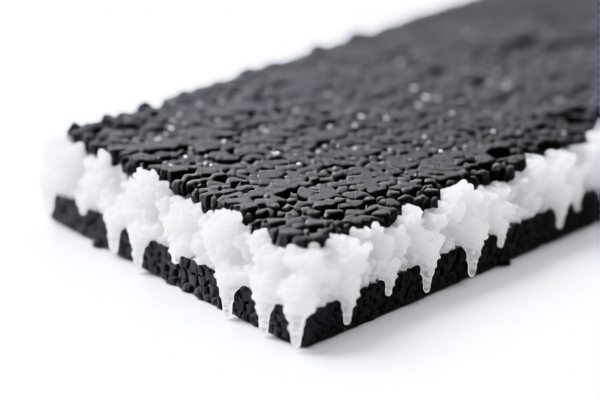
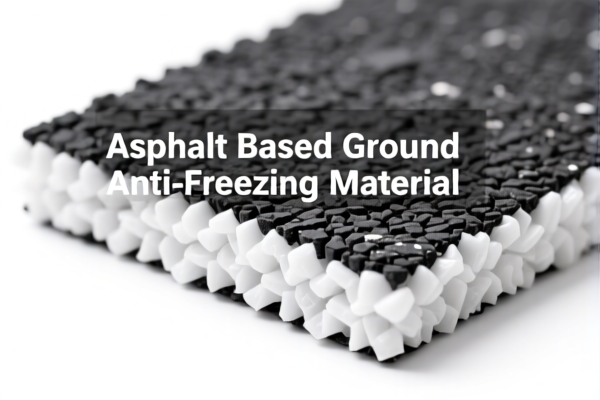
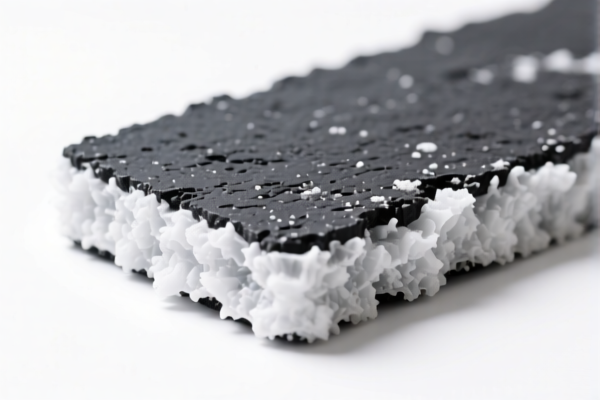
AI Analysis
❄️ Mortar Anti-freezing Agent (Construction Chemicals)
🌐 HS Code Reference & Customs Clearance Guide | 2026 Latest Tariff Analysis | Professional Clearance Strategy
📌 I. Product Definition & Classification: Do You Really Know "Mortar Anti-freezing Agent"?
Mortar anti-freezing agents are chemical additives used in construction to prevent water in mortar from freezing during cold weather curing. In international trade, these products fall under Chemical Products of the Chemical or Allied Industries. They are generally classified based on their primary function (binding vs. anti-freezing) and composition.
⚠️ Key Distinction Point:
- If the product is primarily an anti-freezing agent specifically for mortar/concrete → Consider 3808.94.90 or 3811.90.90 (Note: Tax retrieval failed in source data).
- If the product is a prepared binder or non-refractory mortar mixture → Consider 3824.50.00.50.
- If the product contains hydrocarbon mixtures derived from petroleum/natural gas → Consider 3824.99.49.00.
📦 II. HS Code Classification Details (2026 Latest Tariff Authority Comparison)
| HS Code | Product Description | Application Scenario | Tax Status |
|---|---|---|---|
3808.94.90 |
Other chemical products not elsewhere specified, including anti-freezing agents for mortar | General chemical anti-freeze for construction | ❌ Error/Failed to Retrieve |
3811.90.90 |
Other chemical products for use in construction, including additives for concrete/mortar (e.g., anti-freezing agents) | Specific construction chemical additives | ❌ Error/Failed to Retrieve |
3824.50.00.50 |
Prepared binders for foundry molds/cores; Chemical products... Nonrefractory mortars and concretes Other | Mixed mortar preparations, binders, or specific non-refractory concrete mixes | ✅ 25.0% Total Tax |
3824.99.49.00 |
Mixtures that are in whole or in part of hydrocarbons derived from petroleum/shale oil/natural gas | Chemical mixtures containing petroleum-based hydrocarbons | ✅ 31.5% Total Tax |
🔍 Critical Warning:
- HS 3808 & 3811: These codes directly mention "anti-freezing agents for mortar" and "additives for concrete." However, the source data indicates Tax Retrieval Failed. This implies either incomplete tariff data or specific country restrictions. Caution is advised when using these codes without verifying local customs database.
- HS 3824.50: If the anti-freezing agent is sold as a pre-mixed mortar binder or non-refractory concrete preparation, it falls here. The tax is clear: 25.0%.
- HS 3824.99.49: If the agent contains significant hydrocarbon components (petroleum/natural gas derivatives), it falls here. The tax is higher: 31.5%.
💰 III. 2026 Latest Tariff Rate Details (Including Additional Taxes)
✅ Applicable Market: USA (US)
✅ Origin: China (CN)
✅ Effective Date: 2025 onwards (Subject to trade policy updates)
🎯 1. 3824.50.00.50 — Prepared Binders / Non-refractory Mortars
| Item | Content |
|---|---|
| Base Tariff | 0.0% |
| Section 301 Additional Tariff | +25.0% |
| Total Tax Rate | 25.0% |
| Tax Calculation | CIF Value × 25.0% |
| De Minimis Exemption | ❌ Not Eligible (Usually subject to strict chemical scrutiny) |
| Legal Basis | USITC:3824.50.00.50 → FOOTNOTE:301_3824 |
📌 Explanation:
- This code captures prepared binders and non-refractory mortar preparations. If your anti-freezing agent is part of a pre-mixed mortar system or acts as a binder, it likely falls here.
- The 25% additional tariff is applied on top of the 0% base rate, resulting in a flat 25% total duty.
🎯 2. 3824.99.49.00 — Hydrocarbon-Based Chemical Mixtures
| Item | Content |
|---|---|
| Base Tariff | 6.5% |
| Section 301 Additional Tariff | +25.0% |
| Total Tax Rate | 31.5% |
| Tax Calculation | CIF Value × 31.5% |
| De Minimis Exemption | ❌ Not Eligible |
| Legal Basis | USITC:3824.99.49.00 → FOOTNOTE:301_3824 |
📌 Explanation:
- If the anti-freezing agent contains petroleum-derived hydrocarbons (common in some chemical accelerators or organic additives), it falls under this "Other" chemical products category.
- The base rate is 6.5%, plus 25% additional tariff, totaling 31.5%.
- Higher cost implication: This is the most expensive classification in the dataset.
🚫 3. 3808.94.90 & 3811.90.90 — Direct Anti-freezing Agents (Tax Data Error)
| Item | Content |
|---|---|
| Base Tariff | ❓ Failed to Retrieve |
| Additional Tariff | ❓ Failed to Retrieve |
| Total Tax Rate | Error |
| Action Required | Verify with Customs Broker |
⚠️ Critical Alert:
- These codes are the most accurate description for "Mortar Anti-freezing Agent."
- However, the source data shows "Failed to retrieve tax information."
- Risk: If you use these codes, you must manually verify the current HS Code tariff schedule for your specific import country. Do not assume 0% or standard rates.
- Recommendation: Use this data as a reference, but always confirm with a licensed customs broker before declaring.
🛠️ IV. Customs Clearance Practical Advice (Pitfall Avoidance Guide)
✅ 1. Required Documentation Checklist
| Document | Required | Notes |
|---|---|---|
| ✅ SDS (Safety Data Sheet) | Mandatory | Chemical products require SDS for hazardous material classification. |
| ✅ COA (Certificate of Analysis) | Highly Recommended | Proves composition, especially hydrocarbon content for HS 3824.99.49.00. |
| ✅ Commercial Invoice | Mandatory | Clearly state: "Mortar Anti-freezing Agent, Chemical Additive, Model X." |
| ✅ Packing List | Mandatory | Detail net/gross weight, volume, and packaging type. |
| ✅ MSDS/SDS Translation | Mandatory | If importing to non-English speaking countries, translation is required. |
| ✅ Origin Certificate | Conditional | If claiming preferential treatment under FTAs (if applicable). |
✅ 2. Declaration Tips (Key Mantra)
🔥 "Chemical Identity First, Hydrocarbon Check, Tax Error Verify, Binder or Additive?"
| Scenario | Correct Declaration | Wrong Practice |
|---|---|---|
| Product is a pre-mixed mortar binder | 3824.50.00.50 (25% tax) |
Declaring as 3808.94.90 → Risk of tax error/rejection |
| Product contains petroleum hydrocarbons | 3824.99.49.00 (31.5% tax) |
Declaring as 3811.90.90 → Risk of underpayment + penalties |
| Product is a pure anti-freeze additive | 3808.94.90 / 3811.90.90 |
Must verify tax manually due to data error |
| Product is a foundry binder | 3824.50.00.50 |
Misdeclaring as construction chemical → Wrong HS Code |
✅ 3. Special Case Handling
| Case | Handling Advice |
|---|---|
| Hydrocarbon Content > 50% | Likely 3824.99.49.00 (31.5% tax). Provide COA to prove composition. |
| Pre-mixed with Cement/Sand | Consider if it’s a "mortar" under 3824.50.00.50. Check if it’s a "preparation" or "mixture." |
| Hazardous Chemicals | If SDS indicates flammability or toxicity, additional safety fees and inspections apply. |
| Tax Data Error for 3808/3811 | DO NOT use these codes without verification. Contact a customs broker to get the current tax rate. |
🌍 V. Global Market Clearance Comparison (2026 Latest)
| Country/Region | Recommended HS Code | Estimated Tax | Certification Requirement | Notes |
|---|---|---|---|---|
| 🇺🇸 USA | 3824.50.00.50 or 3824.99.49.00 |
25% - 31.5% | SDS, EPA (if pesticide) | High scrutiny on chemical composition. |
| 🇨🇳 China | 3824.50.00.50 |
~5% - 10% | GB Standards | Lower tariffs, but strict environmental compliance. |
| 🇪🇺 EU | 3824.50.00.50 or 3824.99.49.00 |
6.5% - 12% | REACH, CLP Labeling | REACH registration is critical for chemical imports. |
| 🇦🇺 Australia | 3824.50.00.50 |
5% | GHS Labeling | Standard chemical import controls. |
📌 Conclusion:
- USA has the highest and most complex tax structure for these chemicals, with Section 301 tariffs adding 25%.
- EU requires REACH compliance, which is a significant barrier for new exporters.
- China offers lower tariffs but strict environmental and safety standards.
📌 VI. Common Errors & Pitfall Guide (Lessons Learned)
❌ Error 1: Using 3808.94.90 without verifying tax rate
👉 Consequence: Customs may reject the declaration due to "Failed to Retrieve Tax" error, causing delays.
👉 Solution: Confirm tax rate with a local customs broker.
❌ Error 2: Misclassifying a hydrocarbon-based agent as a simple "chemical mixture"
👉 Consequence: Paying 25% instead of 31.5% → Customs Audit & Penalties.
👉 Solution: Provide detailed COA to prove hydrocarbon content.
❌ Error 3: Ignoring SDS requirements
👉 Consequence: Shipment held at port for hazardous material inspection.
👉 Solution: Always provide up-to-date SDS.
❌ Error 4: Declaring "Anti-freezing Agent" without specifying composition
👉 Consequence: Customs may reclassify to a higher tax code.
👉 Solution: Be specific: "Mortar Anti-freezing Agent, Hydrocarbon-based, Non-refractory."
✅ Correct Declaration Example:
"Mortar Anti-freezing Agent, Chemical Preparation, Non-refractory, Model XYZ, SDS Provided, Contains Hydrocarbons Derived from Petroleum, HS Code 3824.50.00.50"
🎯 VII. Conclusion: Precise Classification Saves Money!
🎯 Remember the Mantra:
🔹 "Hydrocarbons? Pay 31.5%. Binders? Pay 25%. Pure Additives? Verify Tax First!"
🔹 "SDS is Mandatory, COA is Key, Don't Guess the Tax!"
📌 Pro Tip:
If your product falls under 3808.94.90 or 3811.90.90, DO NOT assume the tax rate. The source data shows an Error.
👉 Action: Contact a customs broker to get the current, accurate tax rate for these specific codes before shipping.
📣 Immediate Action:
📞 Verify HS Code with a licensed customs broker.
📄 Prepare SDS & COA.
🚀 Ensure Smooth Clearance & Maximize Profit!
✨ Professional Clearance Starts with Accurate Classification!
💼 Every Percent of Tax Matters!
Customer Reviews
About HS Code Classification
The Harmonized System (HS) is an internationally standardized nomenclature developed by the World Customs Organization (WCO) to classify traded products. Over 200 countries use the HS system as the basis for customs tariffs, trade statistics, and import/export regulations.
Each HS code follows a hierarchical structure:
- Chapter (2 digits) — Broad category of goods (e.g., Chapter 84: Machinery and Mechanical Appliances)
- Heading (4 digits) — More specific grouping within the chapter
- Subheading (6 digits) — Internationally standardized breakdown, used by all WCO member countries
- National subdivisions (8-10 digits) — Country-specific extensions for further classification, such as US HTSUS 10-digit codes
Correct HS code classification is essential for smooth customs clearance, accurate duty payment, and compliance with trade regulations. Misclassification can lead to customs delays, overpayment of duties, or penalties.
When importing from CN to US, the applicable tariff rates may include:
- Most-Favored-Nation (MFN) rate — The standard duty rate applied to WTO members
- General rate — Applied to countries without trade agreements
- Trade remedy duties — Additional tariffs such as Section 301 (anti-dumping), Section 232 (national security), or countervailing duties
The information provided on this page is for reference purposes only. For official classification, please consult with your local customs authority or a licensed customs broker.