Mosquito Killer Lamp
CN → US| HS Code | Tariff Rate | Origin | Destination | Doc |
|---|---|---|---|---|
| 8509805080 | 14.2% | CN | US | Official Doc |
| 9405418440 | 13.9% | CN | US | Official Doc |
| 9405490000 | 38.9% | CN | US | Official Doc |
| 8509805095 | 14.2% | CN | US | Official Doc |
Product Images
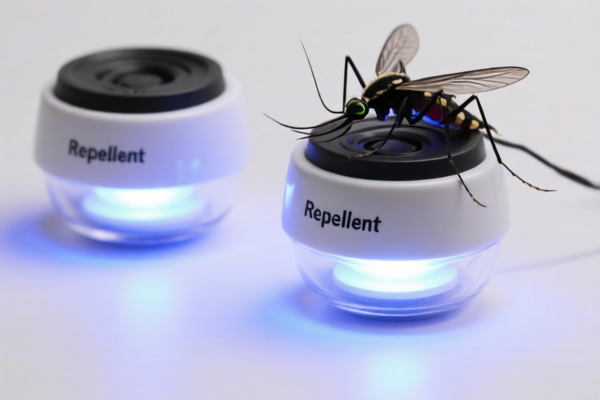
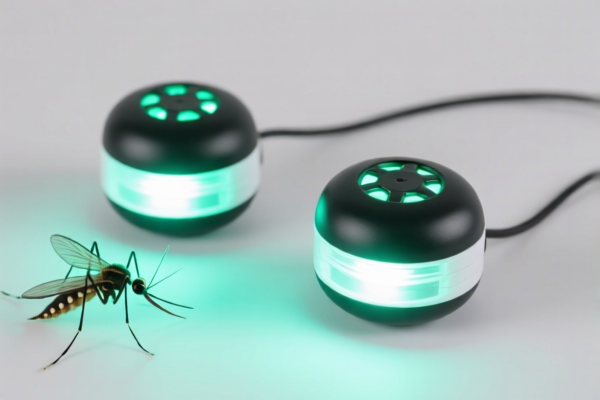
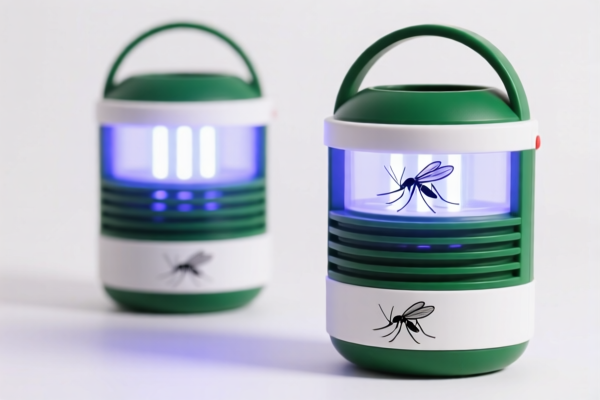
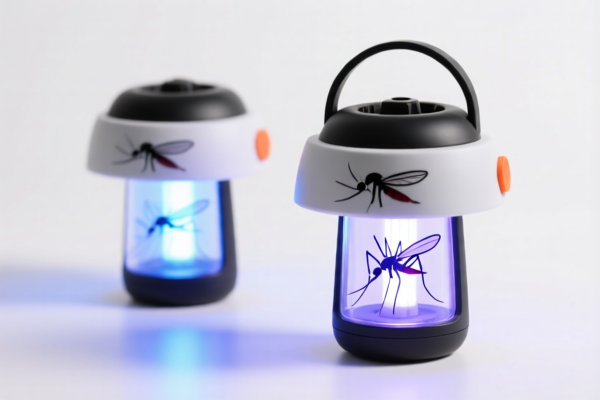
AI Analysis
🦟 Mosquito Killer Lamp (灭蚊灯)
🌐 HS Code Reference & Customs Clearance Guide | 2026 Latest Tariff Analysis | Professional Classification Strategy
📌 I. Product Definition & Classification: Is It a Lamp or a Machine?
A Mosquito Killer Lamp is a dual-function device. It can be viewed in two ways: 1. As a Household Appliance: It contains a self-contained electric motor or circuit control to drive the fan/lamp, fitting the category of "Other electrically operated appliances." 2. As a Lighting Fixture: It emits light (often UV/Blue) to attract insects, fitting the category of "Electric lamps and lighting fittings." 3. As a Chemical/Trap Device: In some interpretations, it is seen as a tool for pest control, similar to insecticides.
⚠️ Key Distinction:
- If classified as an Appliance (8509): It focuses on the motor/circuit mechanism. Tax is generally lower.
- If classified as a Lighting Fixture (9405): It focuses on the light-emitting function. Tax varies significantly based on trade policy (especially US 122 Clause).
- If classified as a Pest Control Tool (3808): Rare for electric lamps, usually applies to traps/chemicals, but listed in reference data as a "candle-like" form.
📦 II. HS Code Classification Details (Based on Provided Data)
The following HS Codes are derived from the provided dataset. Note that the tax implications vary drastically.
| HS Code | Summary/Reasoning | Total Tax Rate | Tax Breakdown |
|---|---|---|---|
| 8509.80.50.80 | Appliance Category: Mosquito killer lamps are considered electrically operated household appliances with self-contained motors or circuit controls, fitting the "Other appliances" category. | 14.2% | Base: 4.2%, Section 301: 0%, Section 122: 10% |
| 9405.41.84.40 | Lighting Category: Classified as electric lamps and lighting devices. By common sense, it has light-emitting functions, fitting "Lighting fittings." | 13.9% | Base: 3.9%, Section 301: 0%, Section 122: 10% |
| 9405.49.00.00 | Lighting Category (High Risk): Classified as "Other electric lamps and lighting fittings." This category is subject to higher trade restrictions. | 38.9% | Base: 3.9%, Section 301: 25.0%, Section 122: 10% |
| 8509.80.50.95 | Appliance Category (Variant): Similar to 8509.80.50.80, classified as other household appliances with integrated motors/circuits. | 14.2% | Base: 4.2%, Section 301: 0%, Section 122: 10% |
| 3808.52.00.00 | Pest Control Category: Classified under "Insecticides, fungicides, etc." It is viewed as a "repellent" tool, specifically in the form of a candle or similar item. | 24.0% | Base: 6.5%, Section 301: 7.5%, Section 122: 10% |
🔍 Critical Observation:
- The lowest tax rate is 13.9% (HS 9405.41.84.40).
- The highest tax rate is 38.9% (HS 9405.49.00.00) due to the 25% Section 301 tariff.
- Section 122 Tariff (10%) applies to ALL classifications in this dataset.
💰 III. 2026 Latest Tariff Rate Breakdown (Detailed Clause Analysis)
✅ Applicable Country: USA (US)
✅ Origin: China (CN)
✅ Key Policy: Section 122 Tariff (10%) is universally applied. Section 301 varies by HS Code.
🎯 1. 8509.80.50.80 / 8509.80.50.95 – Household Appliances (Low Tax)
These codes classify the device as a home appliance.
| Item | Detail |
|---|---|
| Base Duty | 4.2% (Ad Valorem) |
| Section 301 Duty | 0% (Exempt or not applicable for this specific subheading in this dataset) |
| Section 122 Duty | +10% (Mandatory for all Chinese goods under this specific clause) |
| Total Tax Rate | 14.2% |
| Calculation | CIF Value × 14.2% |
| Legal Path | HTSUS:8509.80.50 → Sec 122: 10% |
📌 Why this is attractive: Avoids the heavy 25% Section 301 tariff found in lighting codes. Focuses on the "motor/circuit" aspect rather than the "light" aspect.
🎯 2. 9405.41.84.40 – Electric Lamps (Optimal Tax)
Classified as a lighting fitting with specific sub-category advantages.
| Item | Detail |
|---|---|
| Base Duty | 3.9% (Ad Valorem) |
| Section 301 Duty | 0% |
| Section 122 Duty | +10% |
| Total Tax Rate | 13.9% (⭐ Lowest Rate) |
| Calculation | CIF Value × 13.9% |
| Legal Path | HTSUS:9405.41 → Sec 122: 10% |
📌 Strategy: If the product is primarily marketed as a "UV Light Trap," this code offers the lowest duty burden.
🎯 3. 9405.49.00.00 – Other Electric Lamps (High Risk)
This is a generic "Other" lighting category, which attracts punitive tariffs.
| Item | Detail |
|---|---|
| Base Duty | 3.9% |
| Section 301 Duty | +25% (High tariff for Chinese lighting goods) |
| Section 122 Duty | +10% |
| Total Tax Rate | 38.9% (⭐ Highest Rate) |
| Calculation | CIF Value × 38.9% |
| Legal Path | HTSUS:9405.49 → Sec 301: 25% → Sec 122: 10% |
⚠️ Warning: Avoid this code unless necessary. The 25% penalty makes it uncompetitive.
🎯 4. 3808.52.00.00 – Insecticides/Repellents (Mid-Range)
Classified based on the "purpose" (killing mosquitoes) rather than the "mechanism" (motor/light).
| Item | Detail |
|---|---|
| Base Duty | 6.5% |
| Section 301 Duty | +7.5% |
| Section 122 Duty | +10% |
| Total Tax Rate | 24.0% |
| Calculation | CIF Value × 24.0% |
| Legal Path | HTSUS:3808.52 → Sec 301: 7.5% → Sec 122: 10% |
📌 Note: This classification is unusual for electric lamps but included in the data. It implies a "trap" function. Higher than appliance/light codes but lower than the generic lighting code.
🛠️ IV. Customs Clearance Practical Advice (Avoiding Pitfalls)
✅ 1. Documentation Checklist
| Document | Required? | Notes |
|---|---|---|
| Product Description | ✔️ | Clearly state: "Electric Mosquito Killer Lamp, UV Light, Motor-driven." |
| Technical Specs | ✔️ | Include wattage, voltage, frequency, and whether it has a fan/motor. |
| Usage Description | ✔️ | Emphasize "Household Appliance" or "Lighting Device" to support 8509/9405 codes. |
| Test Reports | ✔️ | UL, ETL, FCC (for electronics) are crucial for customs verification. |
| Commercial Invoice | ✔️ | Must match the HS Code claimed. |
✅ 2. Classification Strategy (Which Code to Choose?)
| Goal | Recommended HS Code | Reason |
|---|---|---|
| Minimize Duty | 9405.41.84.40 or 8509.80.50.80 | Total tax ~14%. Avoids Section 301 penalties. |
| Avoid High Tariffs | DO NOT USE 9405.49.00.00 | Tax is 38.9% due to 25% Section 301. |
| Marketing as Pest Control | 3808.52.00.00 | Tax 24%. Only use if legally justifiable as a "trap." |
✅ 3. Key Clarification for Customs Brokers
🔥 Mantra:
"Motor & Circuit = Appliance (8509); Light Source = Lamp (9405); Trap = Pesticide (3808)."
"Choose 8509 or 9405.41 to save 25% in Section 301!"
- If you claim 9405.49.00.00: Customs may argue it's a standard lighting fixture, applying the 25% penalty.
- If you claim 8509.80.50.80: Provide circuit diagrams to prove it's an "electrically operated appliance" with a motor/circuit, not just a bulb.
- Section 122 is Universal: No matter which code you pick, add 10% to your cost calculation.
🌍 V. Global Market Comparison (2026 Snapshot)
| Market | Recommended HS | Estimated Duty | Notes |
|---|---|---|---|
| 🇺🇸 USA | 8509.80.50.80 or 9405.41.84.40 | 13.9% - 14.2% | Best for cost efficiency. Avoid 9405.49. |
| 🇨🇳 China (Export) | N/A | Varies | Check local export rebates. |
| 🇪🇺 EU | 8509 or 9405 | 0-4% | No Section 122/301 equivalent for China in most cases. |
| 🇬🇧 UK | 8509 or 9405 | 0-4% | Post-Brexit tariffs may apply. |
📌 Conclusion:
- The US market is the most complex due to Section 122 (10%) and variable Section 301 rates.
- Proper classification is critical: A 25% difference between 14% and 39% can destroy profit margins.
📌 VI. Common Mistakes & Pitfalls
❌ Mistake 1: Using 9405.49.00.00
👉 Result: 38.9% tax. Too expensive.
💡 Fix: Use 9405.41.84.40 (13.9%) or 8509.80.50.80 (14.2%).
❌ Mistake 2: Ignoring Section 122
👉 Result: Underestimating landed cost.
💡 Fix: Always add 10% to any classification.
❌ Mistake 3: Misdeclaring as "Pest Control" (3808) without justification
👉 Result: 24% tax + potential customs inquiry for misclassification.
💡 Fix: Only use 3808 if the device is purely a trap (no light/motor focus), but 8509/9405 is more common for electric lamps.
✅ Correct Approach:
"UV Mosquito Killer Lamp, AC 110V, 15W, Plastic Housing, Fan-Driven. HS: 8509.80.50.80. Duty: 14.2%."
🎯 VII. Conclusion: Smart Classification Saves Money
🎯 Key Takeaway:
🔹 Lowest Duty: 13.9% (HS 9405.41.84.40)
🔹 Second Lowest: 14.2% (HS 8509.80.50.80 / 8509.80.50.95)
🔹 Avoid: 38.9% (HS 9405.49.00.00)📌 Pro Tip:
- Negotiate with your supplier to ensure the product description emphasizes "Electric Appliance" or "UV Lighting Fitting" rather than generic "Lamp" to support lower-duty HS codes.
- Always apply the 10% Section 122 tariff in your cost model.
📣 Action Step:
📞 Consult a Customs Broker to pre-classify your specific model.
🚀 Choose 8509 or 9405.41 to keep duties under 15% and maintain competitiveness in the US market!
✨ Precision in Classification = Precision in Profit!
💼 Don't let a 25% tariff surprise you. Plan ahead.
Customer Reviews
About HS Code Classification
The Harmonized System (HS) is an internationally standardized nomenclature developed by the World Customs Organization (WCO) to classify traded products. Over 200 countries use the HS system as the basis for customs tariffs, trade statistics, and import/export regulations.
Each HS code follows a hierarchical structure:
- Chapter (2 digits) — Broad category of goods (e.g., Chapter 84: Machinery and Mechanical Appliances)
- Heading (4 digits) — More specific grouping within the chapter
- Subheading (6 digits) — Internationally standardized breakdown, used by all WCO member countries
- National subdivisions (8-10 digits) — Country-specific extensions for further classification, such as US HTSUS 10-digit codes
Correct HS code classification is essential for smooth customs clearance, accurate duty payment, and compliance with trade regulations. Misclassification can lead to customs delays, overpayment of duties, or penalties.
When importing from CN to US, the applicable tariff rates may include:
- Most-Favored-Nation (MFN) rate — The standard duty rate applied to WTO members
- General rate — Applied to countries without trade agreements
- Trade remedy duties — Additional tariffs such as Section 301 (anti-dumping), Section 232 (national security), or countervailing duties
The information provided on this page is for reference purposes only. For official classification, please consult with your local customs authority or a licensed customs broker.