Mosquito Killing Lamp
CN → US| HS Code | Tariff Rate | Origin | Destination | Doc |
|---|---|---|---|---|
| 8509805080 | 14.2% | CN | US | Official Doc |
| 9405418440 | 13.9% | CN | US | Official Doc |
| 9405490000 | 38.9% | CN | US | Official Doc |
| 8509805095 | 14.2% | CN | US | Official Doc |
Product Images
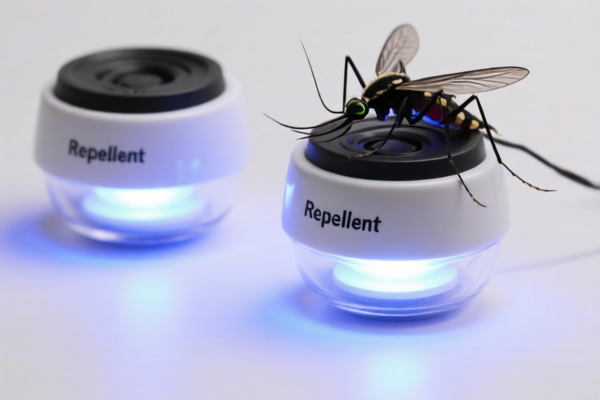
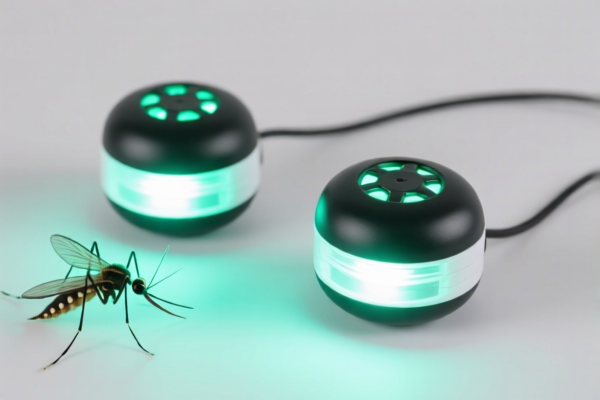
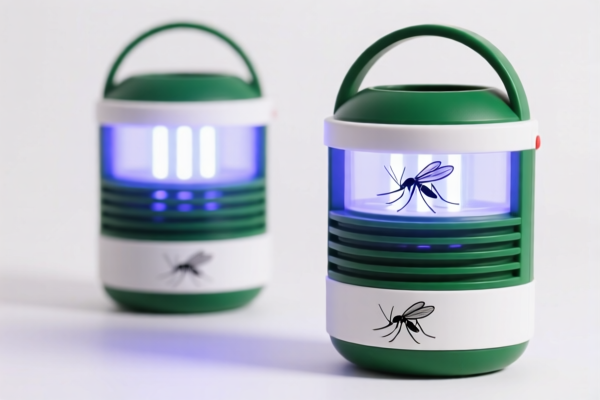
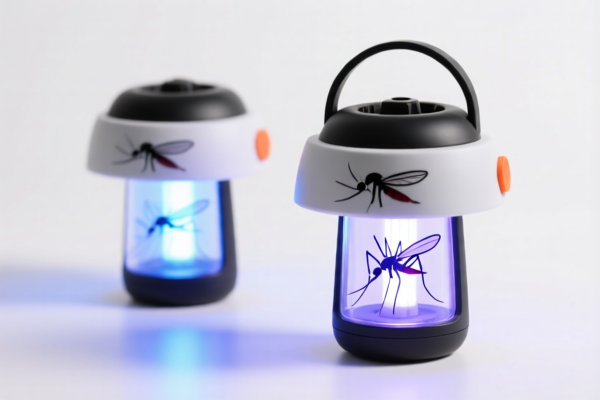
AI Analysis
🦟 Mosquito Killing Lamp (Electric Zapper)
🌐 HS Code Reference & Customs Clearance Guide | 2024 Latest Tariff Analysis | Professional Clearance Strategy
📌 1. Product Definition and Classification: What is a "Mosquito Killing Lamp"?
A Mosquito Killing Lamp (often called an Electric Mosquito Killer or Zapper) is a household appliance designed to attract and eliminate insects. In international trade, its classification is controversial because it straddles two main categories: Electrical Household Appliances and Electric Lighting Devices.
Key Distinction: - As an Appliance: If the primary function is seen as "killing insects" via an electric grid or mechanism, it falls under Household Appliances. - As a Lighting Device: If the primary attraction is UV light (which emits light), it falls under Electric Lighting Fixtures. - As a Pesticide Tool: If it contains chemical repellents (like coils/candles), it falls under Chemical Products.
⚠️ Critical Classification Point:
- Electric Grid Zappers (with UV light) → Usually classified as Household Appliances (HS 8509) or Lighting (HS 9405).
- Chemical Repellents (Coils/Candles) → Classified as Pesticides (HS 3808).
📦 2. HS Code Classification Details (Based on Provided Data)
Below is the authoritative classification analysis based on the provided dataset. Note that different interpretations lead to vastly different tax outcomes.
| HS Code | Product Description | Rationale from Data | Total Tax Rate |
|---|---|---|---|
8509.80.50.80 |
Electromechanical Household Appliance | "Other appliances" with self-contained motor or circuit control. Fits the "killing mechanism" aspect. | 14.2% |
8509.80.50.95 |
Other Household Appliances | Integrates motor or circuit drive; falls under "Other Household Appliances". | 14.2% |
9405.41.84.40 |
Electric Lamp/fixture | Recognizes UV light as "illumination/lamp". Fits under "Electric Lamps and Lighting Fittings". | 13.9% |
9405.49.00.00 |
Other Electric Lamps | Specific use category for electric lamps. Fits "Other Electric Lamps and Lighting Fittings". | 38.9% |
3808.52.00.00 |
Pesticide/Insect Repellent (Chemical) | Applies if the device uses chemical forms (e.g., coils, candles, repellents) rather than pure electric zapping. | 24.0% |
🔍 Key Insight:
- Lowest Risk/Tax:9405.41.84.40(13.9%) or8509.80.50.80(14.2%).
- Highest Risk/Tax:9405.49.00.00(38.9%) due to additional 25% punitive tariffs.
- Chemical vs. Electric: Ensure you are not misclassifying a chemical coil/candle as an electric lamp. If it burns, it’s HS 3808.
💰 3. Detailed Tariff Breakdown (2024 US Import from China)
✅ Applicable Country: USA (US)
✅ Origin: China (CN)
✅ Effective Date: Current 2024 Tariff Schedule (Including Section 301 & IEEPA measures)
🎯 1. 8509.80.50.80 & 8509.80.50.95 —— Household Appliances
Why this HS?: These codes classify the device as an electromechanical appliance. The "zapping" mechanism is viewed as the primary function, supported by a motor or circuit.
| Item | Details |
|---|---|
| Base Tariff | 4.2% |
| Section 301 Tariff | 0.0% (Note: Some appliance codes may have been exempted or adjusted, but data shows 0% for this specific breakdown) |
| IEEPA 122 Clause Tariff | 10.0% (Additional tariff under Executive Order 14032/122 provisions for specific Chinese goods) |
| Total Effective Rate | 14.2% |
| Calculation | CIF Value × 14.2% |
| Legal Reference | 8509.80.50.80 + IEEPA:10% |
📌 Explanation:
- This is a favorable classification if the device is purely electric.
- The 10% IEEPA tariff is a specific add-on for Chinese-origin goods under recent executive orders.
🎯 2. 9405.41.84.40 —— Electric Lighting Fixture (UV Lamp)
Why this HS?: Customs may view the UV bulb as the primary component, classifying it as a "lamp" rather than an appliance.
| Item | Details |
|---|---|
| Base Tariff | 3.9% |
| Section 301 Tariff | 0.0% |
| IEEPA 122 Clause Tariff | 10.0% |
| Total Effective Rate | 13.9% |
| Calculation | CIF Value × 13.9% |
| Legal Reference | 9405.41.84.40 + IEEPA:10% |
📌 Explanation:
- Slightly cheaper than the appliance code due to a lower base rate (3.9% vs 4.2%).
- Risk: If Customs determines it’s NOT a "standard lamp" but a specialized "killing device," they may shift you to HS 9405.49.
🎯 3. 9405.49.00.00 —— Other Electric Lamps (High Risk)
Why this HS?: If the product doesn’t fit the specific "lighting" sub-categories, it falls into "Other." This category often attracts higher punitive tariffs.
| Item | Details |
|---|---|
| Base Tariff | 3.9% |
| Section 301 Tariff | 25.0% (Standard punitive tariff on many Chinese electronics/lighting) |
| IEEPA 122 Clause Tariff | 10.0% |
| Total Effective Rate | 38.9% |
| Calculation | CIF Value × 38.9% |
| Legal Reference | 9405.49.00.00 + Section 301:25% + IEEPA:10% |
⚠️ Warning:
- DO NOT use this code unless you have no other option.
- The 25% Section 301 tariff makes this category prohibitively expensive for most exporters.
🎯 4. 3808.52.00.00 —— Chemical Pesticide/Repellent
Why this HS?: Applies ONLY if the product is a chemical form (e.g., mosquito coil, liquid vaporizer, candle).
| Item | Details |
|---|---|
| Base Tariff | 6.5% |
| Section 301 Tariff | 7.5% |
| IEEPA 122 Clause Tariff | 10.0% |
| Total Effective Rate | 24.0% |
| Calculation | CIF Value × 24.0% |
| Legal Reference | 3808.52.00.00 + Section 301:7.5% + IEEPA:10% |
📌 Explanation:
- Use this ONLY for chemical-based repellents.
- If you misdeclare an electric zapper as a chemical product, you risk penalties for misclassification.
🛠️ 4. Customs Clearance Recommendations (Practical Guide)
✅ 1. Prepare Required Documentation
| Document | Required | Purpose |
|---|---|---|
| Product Spec Sheet | ✔️ | Must clearly state: "Electric Mosquito Killer," "UV Lamp," "Voltage," "Power," "No Chemical Components." |
| Product Photos | ✔️ | Show the device clearly. If it has an electric grid, highlight it. If it has no chemicals, highlight it. |
| Commercial Invoice | ✔️ | Describe as: "Electric Mosquito Killing Lamp, UV Light, No Chemicals." Avoid vague terms like "Insect Repeller." |
| FCC Certification | ✔️ | Since it’s an electronic device emitting light/radio frequency, FCC is usually required. |
| UL/ETL Report | ✔️ | Safety standard for household appliances/lights. |
✅ 2. Classification Strategy (How to Avoid 38.9% Tax)
| Scenario | Recommended HS Code | Reason |
|---|---|---|
| Pure Electric Zapper (UV + Grid) | 8509.80.50.80 or 9405.41.84.40 |
Both are ~14%. Choose based on whether Customs views it as an "appliance" or "lamp." |
| Chemical Coil/Candle | 3808.52.00.00 |
Clearly chemical. Tax is 24%. |
| Ambiguous/Mixed Product | Avoid 9405.49.00.00 |
The 38.9% tax is too high. Provide technical data to support 8509 or 9405.41. |
🔥 Pro Tip:
If the product is primarily a lamp (UV-B source) with a simple grid,9405.41.84.40is defensible.
If it has complex circuitry/motors,8509.80.50.80is safer.
Never declare an electric device as3808(pesticide) unless it contains chemicals.
✅ 3. Common Mistakes & Pitfalls
❌ Mistake 1: Declaring an Electric Zapper as 3808 (Pesticide).
👉 Consequence: Customs inspection will reveal no chemicals. Penalty for misclassification.
❌ Mistake 2: Using 9405.49.00.00 without justification.
👉 Consequence: 38.9% tax. You can save ~25% by proving it fits 9405.41 or 8509.
❌ Mistake 3: Vague Description: "Mosquito Repeller."
👉 Consequence: Customs will guess. If they guess wrong, they apply the highest applicable tariff or delay shipment.
✅ Fix: Use "Electric Mosquito Killing Lamp, UV Spectrum, Household Use."
🌍 5. Global Market Comparison (2024 Snapshot)
| Market | Recommended HS | Est. Tariff (China Origin) | Notes |
|---|---|---|---|
| 🇺🇸 USA | 8509.80.50.80 |
14.2% | Includes 10% IEEPA tariff. |
| 🇺🇸 USA | 9405.41.84.40 |
13.9% | Slightly lower base rate. |
| 🇺🇸 USA | 9405.49.00.00 |
38.9% | High risk. Avoid if possible. |
| 🇨🇳 China | 8509.80.50.80 |
~4.2% | Lower base rate, no Section 301. |
| 🇪🇺 EU | 8509.40 or 9405 |
~4-6% | No IEEPA tariffs. CE Marking required. |
📌 Conclusion:
- The USA is the most complex market due to Section 301 and IEEPA tariffs.
- Aim for 14% tax range by selecting8509or9405.41.
- Avoid9405.49at all costs unless the product is truly "other" and doesn't fit sub-categories.
📌 6. Final Checklist for Exporters
- Is it Electric or Chemical?
- Electric →
8509or9405. -
Chemical →
3808. -
Does it fit Specific Sub-Category?
- Yes →
8509.80.50.80(14.2%) or9405.41.84.40(13.9%). -
No (Fallback) →
9405.49.00.00(38.9%) → Try to avoid. -
Documentation Ready?
- FCC? ✔️
- Spec Sheet showing "No Chemicals"? ✔️
- Clear Invoice Description? ✔️
🎯 Conclusion: Smart Classification Saves Money!
💡 Key Takeaway:
"Electric Zapper is NOT a Pesticide (3808). It is either an Appliance (8509) or a Lamp (9405). Avoid the 'Other' category (9405.49) to dodge the 38.9% tax!"
📞 Action Item:
Before shipping, submit Product Technical Data to your customs broker to pre-approve
8509.80.50.80or9405.41.84.40. This ensures a smooth clearance at ~14% tax instead of 38.9%.
✨ Professional Clearance Starts with Precise Classification!
💼 Every percentage point counts in your profit margin!
Customer Reviews
About HS Code Classification
The Harmonized System (HS) is an internationally standardized nomenclature developed by the World Customs Organization (WCO) to classify traded products. Over 200 countries use the HS system as the basis for customs tariffs, trade statistics, and import/export regulations.
Each HS code follows a hierarchical structure:
- Chapter (2 digits) — Broad category of goods (e.g., Chapter 84: Machinery and Mechanical Appliances)
- Heading (4 digits) — More specific grouping within the chapter
- Subheading (6 digits) — Internationally standardized breakdown, used by all WCO member countries
- National subdivisions (8-10 digits) — Country-specific extensions for further classification, such as US HTSUS 10-digit codes
Correct HS code classification is essential for smooth customs clearance, accurate duty payment, and compliance with trade regulations. Misclassification can lead to customs delays, overpayment of duties, or penalties.
When importing from CN to US, the applicable tariff rates may include:
- Most-Favored-Nation (MFN) rate — The standard duty rate applied to WTO members
- General rate — Applied to countries without trade agreements
- Trade remedy duties — Additional tariffs such as Section 301 (anti-dumping), Section 232 (national security), or countervailing duties
The information provided on this page is for reference purposes only. For official classification, please consult with your local customs authority or a licensed customs broker.