Mosquito Trap
CN → US| HS Code | Tariff Rate | Origin | Destination | Doc |
|---|---|---|---|---|
| 8509805080 | 14.2% | CN | US | Official Doc |
| 9405418440 | 38.9% | CN | US | Official Doc |
| 9405490000 | 38.9% | CN | US | Official Doc |
| 8509805095 | 14.2% | CN | US | Official Doc |
| 3808520000 | 24.0% | CN | US | Official Doc |
Product Images
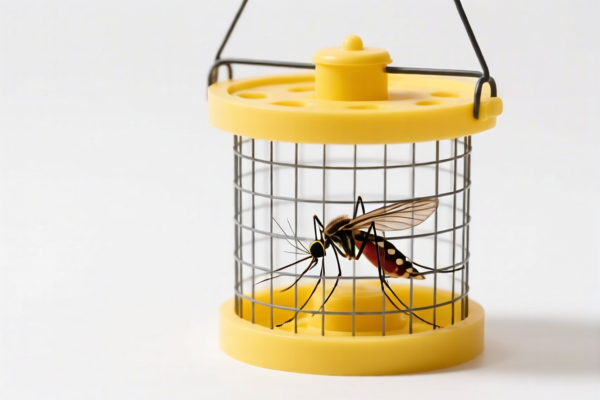
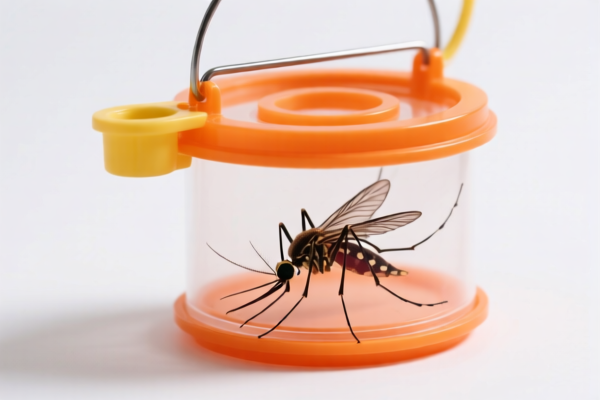
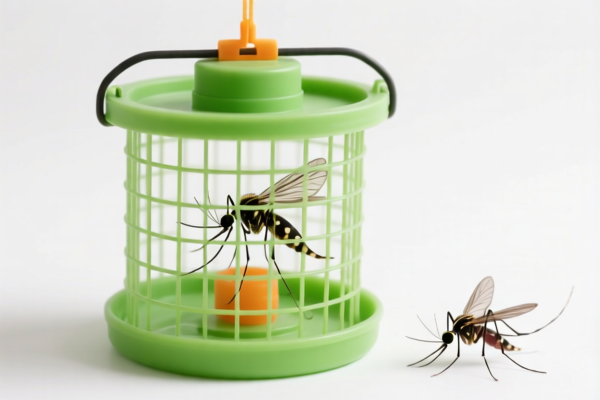
AI Analysis
🦟 Mosquito Trap (Electric Kill & Repellent Devices)
🌐 HS Code Reference & Clearance Guide | 2026 Latest Tariff Analysis | Professional Clearance Strategy
📌 I. Product Definition & Classification: Do You Really Understand "Mosquito Traps"?
Mosquito traps are consumer devices designed to eliminate or repel insects, primarily through electrical attraction (UV light + fan) or chemical scent. In international trade, they fall into two distinct categories depending on their primary function: 1. Electric Kill Traps (灭蚊灯): Devices using UV light to attract and kill mosquitoes via electric grids or fans. Classified primarily under Chapter 85 (Electrical Machinery) or Chapter 94 (Furniture/Lighting). 2. Chemical/Repellent Products (驱蚊蜡烛/驱蚊剂): Products relying on insecticides or repellent substances. Classified under Chapter 38 (Chemical Products).
⚠️ Key Distinction:
- If the device uses electricity/motors to kill/contain mosquitoes → HS 8509 or 9405.
- If the product is a candle/liquid releasing insecticides → HS 3808.
- Misclassification leads to massive tariff differences (e.g., 14.2% vs. 38.9% vs. 24.0%).
📦 II. HS Code Classification Details (2026 Latest Tariff Authority)
Based on the provided data, here are the valid HS Codes for Mosquito Traps/Repellents:
| HS Code | Product Description | Application Scenario | Tax Rate | Key Reason |
|---|---|---|---|---|
8509.80.50.80 |
Electric Mosquito Killer (Self-Contained Motor) | UV light + electric grid/fan device; home appliance | 14.2% | Fits "Other electro-mechanical household appliances with self-contained motor" |
8509.80.50.95 |
Electric Mosquito Killer (Household Appliance) | General electric mosquito zappers; integrated circuit/motor | 14.2% | Classified as "Other household electrical appliances" |
9405.41.84.40 |
Electric Lighting Apparatus (Mosquito Trap) | Device primarily viewed as a lamp/light fixture; UV emission | 38.9% | Classified as "Electric lamps and lighting fittings" |
9405.49.00.00 |
Other Electric Lighting Devices | Mosquito trap categorized under "Other electric lamps" | 38.9% | "Other electric lamps and lighting fittings" category |
3808.52.00.00 |
Insect Repellent (Candle/Form) | Mosquito coils, repellent candles, chemical-based products | 24.0% | Fits "Insecticides, fungicides, herbicides... of a kind used for retail sale" |
🔍 Critical Note:
- Electric Traps: Can be classified under 8509 (Appliances) or 9405 (Lighting).
- 8509 is preferred for cost efficiency (14.2% total tax).
- 9405 incurs high additional tariffs (38.9% total tax).
- Chemical Traps: Strictly 3808.52.00.00 (24.0% total tax).
- Do NOT misclassify electric traps as "lighting" if they are clearly "appliances," as this increases costs by ~25%.
💰 III. 2026 Latest Tariff Rate Breakdown (Including Additional Duties)
✅ Applicable Country: United States (US)
✅ Origin: China (CN)
✅ Effective Date: From 2025-11-10 onwards
🎯 1. 8509.80.50.80 / 8509.80.50.95 —— Electric Mosquito Killers (Appliances)
| Item | Content |
|---|---|
| Base Duty | 4.2% |
| Section 301 Additional Duty | 0.0% |
| Section 122 Duty (IEEPA) | 10.0% |
| Total Effective Rate | 14.2% |
| Calculation | CIF Value × 14.2% |
| De Minimis Eligibility | ❌ No (subject to Section 301/122 rules) |
| Legal Path | HTSUS:8509.80.50.80 → Section 301 Footnote → IEEPA:9903.01.24 |
📌 Explanation:
- These codes are classified as electro-mechanical household appliances.
- No Section 301 (25%) additional tariff applies to this specific subheading, which is a significant advantage.
- Only the 10% IEEPA (Section 122) tariff is added.
- Total: 14.2% is the most cost-effective classification for electric traps.
🎯 2. 9405.41.84.40 / 9405.49.00.00 —— Electric Mosquito Traps (Lighting Category)
| Item | Content |
|---|---|
| Base Duty | 3.9% |
| Section 301 Additional Duty | 25.0% |
| Section 122 Duty (IEEPA) | 10.0% |
| Total Effective Rate | 38.9% |
| Calculation | CIF Value × 38.9% |
| De Minimis Eligibility | ❌ No |
| Legal Path | HTSUS:9405.41.84.40 → Section 301 Footnote → IEEPA:9903.01.24 |
📌 Explanation:
- If customs classifies your electric mosquito trap as a "Lighting Apparatus" (due to UV lamps), you face the 25% Section 301 tariff.
- This results in a 38.9% total tax burden, which is ~25% higher than the appliance classification.
- Risk: High. Ensure product documentation emphasizes "Appliance/Motor Function" over "Lighting Function."
🎯 3. 3808.52.00.00 —— Chemical Mosquito Repellents (Candles/Coils)
| Item | Content |
|---|---|
| Base Duty | 6.5% |
| Section 301 Additional Duty | 7.5% |
| Section 122 Duty (IEEPA) | 10.0% |
| Total Effective Rate | 24.0% |
| Calculation | CIF Value × 24.0% |
| De Minimis Eligibility | ❌ No |
| Legal Path | HTSUS:3808.52.00.00 → Section 301 Footnote → IEEPA:9903.01.24 |
📌 Explanation:
- Applies to non-electric repellents like mosquito coils, candles, or liquid refills.
- Subject to 7.5% Section 301 + 10% IEEPA.
- Total 24.0% is moderate compared to lighting-category electric traps.
🛠️ IV. Clearance Practical Advice (Practical Pitfall Guide)
✅ 1. Required Documentation Checklist (Mandatory)
| Document | Required? | Description |
|---|---|---|
| ✅ Product Specification Sheet | ✔️ | Must detail: Power source (AC/DC), Motor/Wattage, UV wavelength, Kill mechanism. |
| ✅ Circuit Diagram/Structure Photo | ✔️ | Critical: Proves presence of motor/circuit control to support HS 8509. |
| ✅ Product Photos (Label) | ✔️ | Clear view of model number, input voltage, safety certifications. |
| ✅ Certifications | ✔️ | UL, ETL, FCC (for electric), EPA (for chemical repellents). |
| ✅ Commercial Invoice | ✔️ | Describe as "Electric Mosquito Killer Machine" or "Mosquito Repellent Candle" precisely. |
| ✅ Packing List | ✔️ | List components separately if applicable (e.g., bulbs, grids). |
✅ 2. Declaration Tips (Key Mnemonics)
🔥 "Emphasize Motor, Not Lamp; Appliance is Cheaper than Lighting!"
| Scenario | Correct Declaration | Risky/Wrong Declaration |
|---|---|---|
| Electric Zapper with Grid/Fan | HS 8509.80.50.80 (Appliance) | HS 9405.41.84.40 (Lighting) → Costs $25 extra per $100 value |
| UV Bulb-only Replacement | HS 9405.41.84.40 (Lighting) | Misclassifying as appliance → Customs audit/reclassification |
| Mosquito Coils/Candles | HS 3808.52.00.00 (Chemical) | Misclassifying as appliance → Product safety violation |
✅ 3. Special Circumstances Handling
| Scenario | Handling Advice |
|---|---|
| Hybrid Device (UV Light + Fan + Chemical Pad) | Declare based on primary function. If motor/kill mechanism dominates, argue for 8509. If chemical pad is the main selling point, argue for 3808. |
| OEM Custom Branding | Provide contract + design specs. Ensure invoice description matches physical product functionality. |
| Chemical Repellents with Electric Device | If the device burns a chemical coil, it may still be 3808 if the chemical is the primary active ingredient. If it kills by shock/fan, it is 8509. |
🌍 V. Global Market Clearance Comparison (2026 Latest)
| Country/Region | Recommended HS Code | Tariff (China Origin) | Certification Required | Notes |
|---|---|---|---|---|
| 🇺🇸 USA | 8509.80.50.80 |
14.2% | UL/ETL + FCC | Avoid 9405 (38.9%) unless unavoidable. |
| 🇺🇸 USA | 3808.52.00.00 |
24.0% | EPA Registration | Mandatory for chemical repellents. |
| 🇨🇳 China | 8509.80.50.80 |
5-10% (Import) | CCC (if applicable) | No additional Section 301. |
| 🇪🇺 EU | 8509.80.90 |
0-3% | CE + RoHS + EN 60335 | No heavy additional duties. |
| 🇦🇺 Australia | 8509.80.90 |
5% | RCM + Electrical Safety | Moderate duty. |
📌 Conclusion:
- USA is the most complex market due to Section 301 and Section 122 tariffs.
- Choosing HS 8509 over 9405 saves 25% in duty for electric traps.
- Chemical products are subject to EPA regulations and different tariff structures.
📌 VI. Common Errors & Pitfalls (Lessons from Blood & Tears)
❌ Mistake 1: Classifying Electric Mosquito Zappers as Lighting (9405)
👉 Consequence: Pay 38.9% instead of 14.2%. Overpaying ~$25 per $100!
❌ Mistake 2: Declaring Chemical Coils as Appliances (8509)
👉 Consequence: Customs rejection due to lack of electrical safety compliance; product seized.
❌ Mistake 3: Vague Description ("Bug Killer")
👉 Consequence: Customs assigns default higher duty rate or requests re-classification, causing delays.
❌ Mistake 4: Ignoring Section 122 (10% IEEPA)
👉 Consequence: Underpaying taxes leads to penalties and back-tariffs upon audit.
✅ Correct Action:
"Electric Mosquito Killer, Model XYZ, with Motor and UV Lamp, AC 110V, UL Certified"
→ Declares as Appliance (8509) to secure 14.2% rate.
🎯 VII. Conclusion: Precise Classification Saves Money!
🎯 Remember the Mnemonic:
🔹 "Electric Trap? Choose 8509, Not 9405!"
🔹 "Chemical Coil? Use 3808, Don't Use Electricity Codes!"
🔹 "14.2% vs 38.9%: The Difference is 25% Duty!"
📌 Pro Tip:
If your electric mosquito trap has strong lighting characteristics (e.g., main function is ambient lighting with bug zapping as secondary), customs may force HS 9405. To avoid this:
- Highlight motor/fan/grill in product photos.
- Use "Electric Killer" not "UV Lamp" in marketing.
- Apply for Advance Ruling if volume is high.
📣 Immediate Action:
📞 Consult Customs Broker + Provide Circuit Diagram + Declare as 8509 if possible.
🚀 Optimize costs, ensure compliance, and clear goods smoothly!
✨ Professional Clearance Starts with Accurate HS Codes!
💼 Every Cent Saved is Profit Gained!
Customer Reviews
About HS Code Classification
The Harmonized System (HS) is an internationally standardized nomenclature developed by the World Customs Organization (WCO) to classify traded products. Over 200 countries use the HS system as the basis for customs tariffs, trade statistics, and import/export regulations.
Each HS code follows a hierarchical structure:
- Chapter (2 digits) — Broad category of goods (e.g., Chapter 84: Machinery and Mechanical Appliances)
- Heading (4 digits) — More specific grouping within the chapter
- Subheading (6 digits) — Internationally standardized breakdown, used by all WCO member countries
- National subdivisions (8-10 digits) — Country-specific extensions for further classification, such as US HTSUS 10-digit codes
Correct HS code classification is essential for smooth customs clearance, accurate duty payment, and compliance with trade regulations. Misclassification can lead to customs delays, overpayment of duties, or penalties.
When importing from CN to US, the applicable tariff rates may include:
- Most-Favored-Nation (MFN) rate — The standard duty rate applied to WTO members
- General rate — Applied to countries without trade agreements
- Trade remedy duties — Additional tariffs such as Section 301 (anti-dumping), Section 232 (national security), or countervailing duties
The information provided on this page is for reference purposes only. For official classification, please consult with your local customs authority or a licensed customs broker.