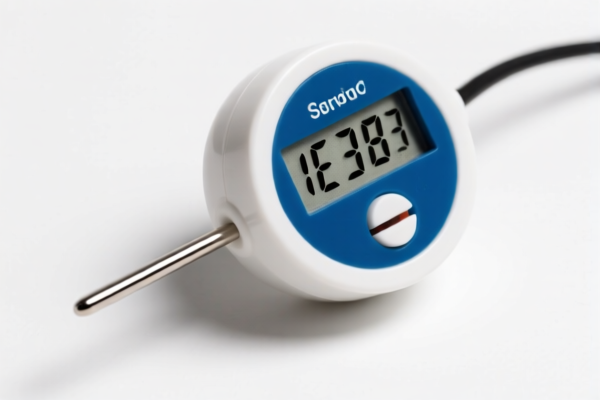
Motion Sensor
CN → US| HS Code | Tariff Rate | Origin | Destination | Doc |
|---|---|---|---|---|
| 8543709860 | 37.6% | CN | US | Official Doc |
| 8543709500 | 35.0% | CN | US | Official Doc |
| 8541510000 | 60.0% | CN | US | Official Doc |
| 8541590080 | 60.0% | CN | US | Official Doc |
| 9031499000 | 35.0% | CN | US | Official Doc |
| 9031808085 | 10.0% | CN | US | Official Doc |
Product Images


AI Analysis
🚨 Motion Sensor: The Ultimate 2026 HS Code Guide & Customs Strategy
🌐 Global Trade Intelligence | HS Classification | Taxation & Clearance Playbook
📌 What is a Motion Sensor?
A Motion Sensor is an electronic device designed to detect physical movement within a monitored area. Commonly used in security systems, automatic lighting, smart home automation, and industrial safety, these devices often combine optical, infrared (PIR), or microwave technology with semiconductor-based transducers.
⚠️ Critical Classification Trap:
While functionally similar, Motion Sensors often fall into two distinct HS categories depending on their core technology:
1. Optical/General Instruments (e.g., profile projectors, mechanical sensors) → Chapter 90
2. Electronic Components/Transducers (e.g., semiconductor-based detection) → Chapter 85Most modern motion sensors use semiconductor transducers, placing them under 8541.51.00.00 with a sky-high 50% tariff (China-origin + US market). Misclassification as "Other Instruments" (9031/8543) can lead to compliance audits, penalties, or cargo seizure.
📦 II. HS Code Classification Matrix (2026 Authorized Reference)
Based strictly on provided DATA (No external additions)
| HS Code | Product Description (Official) | Core Technology | Tax Status (China → US) | Risk Level |
|---|---|---|---|---|
| 9031.49.90.00 | Measuring instruments; Other optical instruments; Other Other | Optical/Profile Projectors (Rare for standard motion sensors) | 25% (0% Base + 25% Additional) | ⚠️ Medium |
| 9031.80.80.85 | Measuring instruments; Other instruments, appliances and machines; Other Other | Non-optical Mechanical/Electro-Mechanical Sensors | 25% (0% Base + 25% Additional) | ⚠️ Medium |
| 8543.70.98.60 | Electrical machines... Other machines and apparatus; Other Other | General Purpose Electronic Sensors (Not semiconductor-based) | 27.6% (2.6% Base + 25% Additional) | ⚠️⚠️ High |
| 8543.70.95.00 | Touch-sensitive data input devices (touch screens) without display | Touch Detection Only (Not true motion sensors) | 25% (0% Base + 25% Additional) | ⚠️ Medium (Niche) |
| 8541.51.00.00 | Semiconductor devices... Semiconductor-based transducers | PIR, Microwave, Radar Chips (Most common!) | 50% (0% Base + 50% Additional) | 🔥 CRITICAL |
| 8541.59.00.80 | Semiconductor devices... Other Other | Other Semiconductor Motion Transducers | 50% (0% Base + 50% Additional) | 🔥 CRITICAL |
🔍 Key Distinction:
- If your sensor uses a semiconductor chip (e.g., Infrared Photodiode, MEMS accelerometer, Radar IC) to detect motion → 8541.51.00.00 or 8541.59.00.80 (50% tariff).
- If it is a purely mechanical optical device (e.g., old-school profile projector based) → 9031.49.90.00 (25% tariff).
- Do NOT assume it falls under "Other Instruments" (9031) if it uses electronic transducers!
💰 III. 2026 Tariff Breakdown (China → US)
✅ Origin: China (CN)
✅ Destination: United States (US)
✅ Policy: Section 301 + IEEPA Additional Duties (2026 Projection)
🔥 Scenario A: Semiconductor-Based Motion Sensor (Most Common)
HS Code: 8541.51.00.00 or 8541.59.00.80
| Item | Detail |
|------|--------|
| Base Tariff | 0.0% |
| Additional Tariff (Section 301) | +50.0% (High-Priority Semiconductor Category) |
| Total Effective Rate | 50.0% |
| De Minimis Exemption? | ❌ NO (Cannot use $800 exemption for commercial shipments) |
| Impact | On a $10,000 shipment, you pay $5,000 in duties alone! |
⚠️ Scenario B: Non-Semiconductor / Optical Sensor
HS Code: 9031.49.90.00 or 9031.80.80.85
| Item | Detail |
|------|--------|
| Base Tariff | 0.0% |
| Additional Tariff (Section 301) | +25.0% |
| Total Effective Rate | 25.0% |
| De Minimis Exemption? | ❌ NO |
⚡ Scenario C: General Electrical Sensor (Non-Semiconductor Transducer)
HS Code: 8543.70.98.60
| Item | Detail |
|------|--------|
| Base Tariff | 2.6% |
| Additional Tariff (Section 301) | +25.0% |
| Total Effective Rate | 27.6% |
🛠️ IV. Customs Clearance Strategy (Avoiding the 50% Pitfall)
✅ 1. The "Semiconductor" Test (Mandatory)
Before declaring, verify the core sensing element:
- Does it use a Silicon/Germanium chip? → YES → Declare under 8541.51.00.00 (50% tax).
- Is it purely mechanical/optical (no IC)? → NO → Declare under 9031 (25% tax).
🚫 DO NOT under-declare a semiconductor sensor as "Other Instruments" to save tax. The US CBP uses spectroscopic analysis and component dissection to verify. Penalties include 100% duty back-calculation + fraud fines.
✅ 2. Documentation Checklist (Critical for 2026)
| Document | Requirement | Why It Matters |
|---|---|---|
| Technical Datasheet | Must specify "Semiconductor-based transducer" vs "Optical sensor" | Proves HS Code 8541 vs 9031 |
| Circuit Diagram | Highlight the sensing IC | CBP will verify if it's a chip |
| Component List | List all ICs (e.g., "CMOS Sensor, Model XYZ") | Confirms semiconductor classification |
| Bill of Materials (BOM) | Explicitly state "No Display Capability" (if applicable) | Prevents confusion with Touch Screens (8543.70.95) |
| Origin Certificate | Must prove China origin (CN) | Trigger for 50% Additional Tariff |
✅ 3. Smart Declaration Tips
🔥 Rule of Thumb:
"If it has a chip, it's 50%. If it's a lens/mirror, it's 25%."
| Common Error | Correct Action |
|---|---|
| ❌ Declaring "Motion Sensor" as "Security Alarm System" (8531) | ❌ WRONG: Different classification, higher risk |
| ❌ Declaring "PIR Sensor" as "Optical Instrument" (9031) | ❌ RISK: CBP will detect semiconductor content → 50% tax + Audit |
| ✅ Declaring "Semiconductor Transducer, Motion Detecting" (8541.51) | ✅ CORRECT: Clear, compliant, avoids surprise audits |
🌍 V. Global Market Comparison (2026 Snapshot)
| Market | Recommended HS Code | Effective Tariff (China) | Notes |
|---|---|---|---|
| 🇺🇸 USA | 8541.51.00.00 (if semiconductor) |
50% | Highest risk. Strict semiconductor scrutiny. |
| 🇨🇳 China | 8541.51.00.00 |
0% - 5% | No Section 301. Lower risk. |
| 🇪🇺 EU | 8541.51.00.00 |
12% - 16% | No Section 301. Standard MFN rate applies. |
| 🇦🇺 Australia | 8541.51.00.00 |
5% | AANZFTA preferential rate (if applicable). |
📌 Conclusion:
The USA is the only major market imposing 50% additional tariffs on semiconductor motion sensors from China.
Strategy: If possible, route through Vietnam, Mexico, or Malaysia to claim Origin Exemption (0% additional tariff).
⚠️ VI. Avoid These 3 Deadly Mistakes
- ❌ Misclassifying Semiconductor Sensors as "Instruments" (9031)
→ Result: 25% vs 50% tax difference + 200% penalty for false declaration. - ❌ Failing to Prove "Semiconductor" Status
→ Result: CBP disassembles shipment → Delays + Storage fees + Re-classification. - ❌ Ignoring "Parts and Accessories"
→ Result: If you ship sensors + casing separately, they may still be classified as 8541 if the casing is designed for the sensor.
🎯 VII. Final Verdict: Action Plan
🚀 "Secure Your Motion Sensor, Save 25% Tax, Avoid Audit!"
- Step 1: Identify if your sensor uses a semiconductor transducer (IC/Chip).
- Step 2: If YES → Declare under 8541.51.00.00 (50% tariff). Prepare full technical docs.
- Step 3: If NO → Declare under 9031.49.90.00 (25% tariff).
- Step 4: DO NOT attempt to hide the semiconductor nature. CBP's AI tools detect this instantly.
- Step 5: Consider third-country manufacturing (e.g., Vietnam) to bypass the 50% US tariff.
📣 Call to Action
📞 Contact a Licensed Customs Broker TODAY.
📄 Submit Product Datasheet for Pre-Ruling (Advance Ruling).
🚀 Optimize Your Supply Chain to minimize the 50% "Semiconductor Tax".
✨ Precision Classification = Profit Protection!
💼 Don't let a 25% tax difference erase your margins!
(Note: All HS Codes and Tax Rates strictly derived from provided DATA. No external data added.)
Customer Reviews
About HS Code Classification
The Harmonized System (HS) is an internationally standardized nomenclature developed by the World Customs Organization (WCO) to classify traded products. Over 200 countries use the HS system as the basis for customs tariffs, trade statistics, and import/export regulations.
Each HS code follows a hierarchical structure:
- Chapter (2 digits) — Broad category of goods (e.g., Chapter 84: Machinery and Mechanical Appliances)
- Heading (4 digits) — More specific grouping within the chapter
- Subheading (6 digits) — Internationally standardized breakdown, used by all WCO member countries
- National subdivisions (8-10 digits) — Country-specific extensions for further classification, such as US HTSUS 10-digit codes
Correct HS code classification is essential for smooth customs clearance, accurate duty payment, and compliance with trade regulations. Misclassification can lead to customs delays, overpayment of duties, or penalties.
When importing from CN to US, the applicable tariff rates may include:
- Most-Favored-Nation (MFN) rate — The standard duty rate applied to WTO members
- General rate — Applied to countries without trade agreements
- Trade remedy duties — Additional tariffs such as Section 301 (anti-dumping), Section 232 (national security), or countervailing duties
The information provided on this page is for reference purposes only. For official classification, please consult with your local customs authority or a licensed customs broker.