Motor Parts
CN → US| HS Code | Tariff Rate | Origin | Destination | Doc |
|---|---|---|---|---|
| 8409915081 | 37.5% | CN | US | Official Doc |
| 8409915085 | 37.5% | CN | US | Official Doc |
| 8512202080 | 35.0% | CN | US | Official Doc |
| 8708295160 | 0.0% | CN | US | Official Doc |
| 8708106050 | 87.5% | CN | US | Official Doc |
Product Images
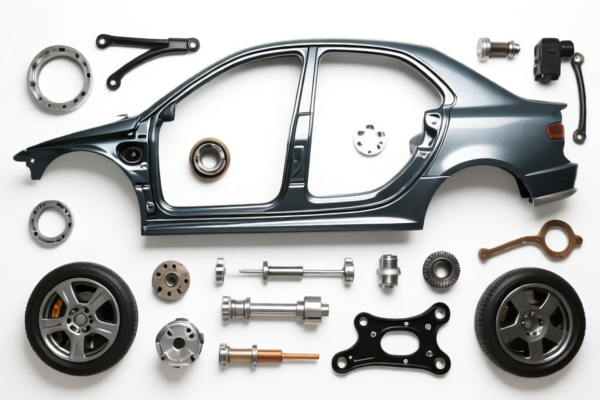
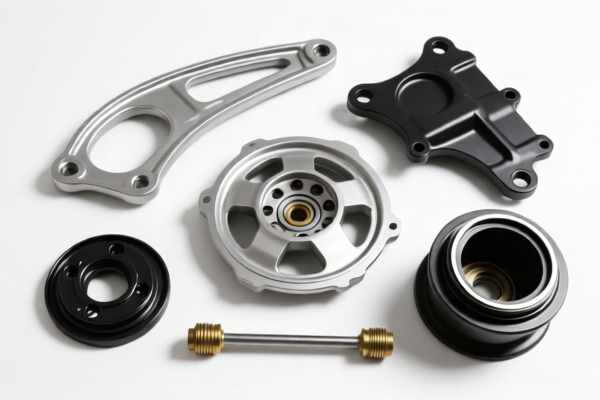
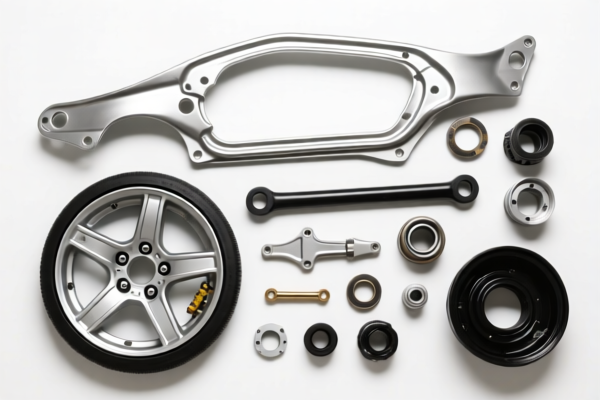
AI Analysis
⚙️ Motor Parts (Engine Components & Automotive Accessories)
🌐 HS Code Reference & Clearance Guide | 2026 Latest Tariff Analysis | Professional Custom Strategy
📌 I. Product Definition: What Exactly Are "Motor Parts"?
"Motor Parts" is a broad term in international trade. To ensure accurate customs clearance and avoid excessive tariffs, it is crucial to distinguish between Internal Combustion Engine Components and Vehicle Body/Signal Accessories. Misclassification can lead to severe financial penalties or shipment delays.
1. Engine Parts (Internal Combustion Engines): Components specifically designed for gasoline or diesel engines (e.g., pistons, crankshafts, cylinder heads). * Key Identification: Functional link to the power generation unit itself.
2. Automotive Accessories & Body Parts: Parts belonging to the vehicle body, lighting, signaling, or general chassis (e.g., bumper covers, headlights, door locks). * Key Identification: Functional link to the vehicle structure or external systems.
⚠️ Critical Distinction:
- If the part is integral to the engine's operation (fuel injection, ignition, compression) →归类 to Chapter 84 (8409).
- If the part is for the vehicle body, lighting, or signaling →归类 to Chapter 87 (8708) or Chapter 85 (8512).
- Material matters: Steel, aluminum, and copper parts often attract additional 50% tariffs under specific US trade provisions.
📦 II. HS Code Classification Details (2026 Latest Tariff Authority)
The following HS Codes are derived from your specific data set, covering the most common scenarios for "Motor Parts."
| HS Code | Product Description | Applicability | Material/Structure Note |
|---|---|---|---|
8409.91.50.85 |
Engine parts: Accessories/Components, no obvious material conflict. | General engine components. | Default tendency to match; assume standard alloy unless specified. |
8409.91.50.81 |
Engine parts: Use-matched, no clear material specified. | General engine components. | Fallback category principle; may apply if other specifics are missing. |
8512.20.20.80 |
Vehicle accessories: Lighting/Signal equipment parts. | Headlights, taillights, turn signals. | No conflict with vehicle lighting/signal usage. |
8708.29.51.60 |
Vehicle accessories: Body parts & accessories (Other). | Bumpers, body panels, trim. | High match for "Other parts & accessories." ⚠️ Steel/Alu/Copper +50% |
8708.10.60.50 |
Vehicle accessories: Body parts (Fallback). | General vehicle body parts. | No specific form/material; fallback category applies. ⚠️ Steel/Alu/Copper +50% |
🔍 Key Reminder:
- 8409 Series: Strictly for engine internals.
- 8512 Series: Specifically for electrical lighting/signaling.
- 8708 Series: Broad range for vehicle body/chassis.
- Material Surcharge: Codes8708.29.51.60and8708.10.60.50explicitly mention 50% additional tariff for Steel, Aluminum, and Copper products. This is a critical cost driver!
💰 III. 2026 Latest Tariff Rate Breakdown (Including Surcharges & Policy Add-ons)
✅ Applicable Country: United States (US)
✅ Origin: China (CN)
✅ Effective Time: 2025/2026 (Current Trade Policy)
🎯 1. 8409.91.50.85 & 8409.91.50.81 —— Engine Parts
| Item | Content |
|---|---|
| Base Rate | 2.5% (ad valorem) |
| Section 301 Surcharge | +25.0% |
| Section 122 Tariff | +10.0% |
| Total Tax Rate | 37.5% |
| Calculation | CIF Value × 37.5% |
| De Minimis Exemption | ❌ Not Applicable (High tax rate disqualifies) |
| Legal Basis Path | Base Tariff → USITC Footnote 9903 → Section 301 → Section 122 |
📌 Explanation:
- These parts are classified as "Engine Parts."
- The 37.5% total includes the base duty (2.5%), the heavy Section 301 penalty (25%), and the Section 122 surcharge (10%).
- No additional material surcharge is listed for these specific codes in the provided data, implying they may not be pure steel/aluminum/copper bulk items, or the surcharge is already embedded/alternative.
🎯 2. 8512.20.20.80 —— Lighting/Signal Equipment Parts
| Item | Content |
|---|---|
| Base Rate | 0.0% |
| Section 301 Surcharge | +25.0% |
| Section 122 Tariff | +10.0% |
| Total Tax Rate | 35.0% |
| Calculation | CIF Value × 35.0% |
| De Minimis Exemption | ❌ Not Applicable |
| Legal Basis Path | Base Tariff → USITC → Section 301 → Section 122 |
📌 Explanation:
- Lighting parts often have lower base duties (0%), but the 35% total is still significant due to US-China trade tensions.
- This category is distinct from general body parts.
🎯 3. 8708.29.51.60 & 8708.10.60.50 —— Vehicle Body Parts (⚠️ High Risk)
| Item | Content |
|---|---|
| Base Rate | 2.5% |
| Section 301 Surcharge | +25.0% |
| Section 122 Tariff | +10.0% |
| Material Surcharge (Steel/Alu/Cu) | +50.0% |
| Total Tax Rate | 2.5% + 85.0% = 87.5% |
| Calculation | CIF Value × 87.5% |
| De Minimis Exemption | ❌ Not Applicable |
| Legal Basis Path | Base Tariff → USITC → Section 301 → Section 122 → Material Specific Footnote |
📌 Critical Warning:
- If your "Motor Parts" include body panels, bumpers, or brackets made of Steel, Aluminum, or Copper, you face a catastrophic 87.5% tax rate.
- Code8708.10.60.50explicitly states "Steel, Aluminum, Copper Products Additional Tariff: 50%".
- Even if the code8708.29.51.60lists "2.5% +85.0%", the 85.0% is composed of the 35% (301+122) + 50% (Material).
🛠️ IV. Clearance Operational Advice (Practical Pitfall Guide)
✅ 1. Preparation Checklist (Non-negotiable)
| Document | Must Provide | Purpose |
|---|---|---|
| ✅ Product Specification Sheet | ✔️ | Detail material composition (Steel? Alu? Plastic? Ceramic?). Crucial for 50% surcharge check. |
| ✅ Engineering Drawings | ✔️ | Prove if it is an "Engine Part" (8409) or "Body Part" (8708). |
| ✅ Product Photos | ✔️ | Show branding, model numbers, and physical structure. |
| ✅ Commercial Invoice | ✔️ | Must clearly state: "Motor Part," "Engine Component," or "Vehicle Body Part." |
| ✅ Material Certificate | ✔️ | If claiming exemption from material surcharge, prove it is not steel/alu/copper. |
| ✅ Packing List | ✔️ | Ensure packaging does not suggest "complete vehicle" or "complete engine." |
✅ 2. Declaration Strategy (Key Mnemonic)
🔥 "Engine vs. Body, Material is King!"
| Scenario | Correct Declaration | Wrong Practice | Consequence |
|---|---|---|---|
| Piston/Crankshaft | 8409.91.50.85 |
Declaring as "Vehicle Part" | Risk of misclassification; potential 87.5% if misread as body part. |
| Headlight/Signal Light | 8512.20.20.80 |
Declaring as "General Accessory" | Missed specific HS code; potential audit delay. |
| Steel Bumper/Brace | 8708.29.51.60 |
Hiding material | 87.5% Tax! Plus penalties for undeclared material. |
| Plastic Trim Cover | 8708.29.51.60 |
Declaring as Steel | Lower tax if correctly identified as non-metal, but must prove material. |
| OEM Engine Kit | Split by function | Bundling all in one | Complexity increases; risk of partial rejection. |
✅ 3. Special Handling Cases
| Case | Handling Advice |
|---|---|
| Mixed Material Parts | If a part contains both steel and plastic, customs may assess the whole item by its primary material or most significant component. Provide a material breakdown! |
| Aluminum Engine Blocks | Falls under 8409 (37.5%)? Or 8708 (87.5%)? Crucial: Engine blocks are 8409. But if it's an aluminum mount for the engine, it might be 8708. Clarify function first. |
| Used vs. New | New parts are standard. Used parts may require additional inspection or different codes. Assume New unless stated otherwise. |
| Kit Assemblies | If selling a "Headlight Kit" with bulbs and wires, declare as the primary item (Lighting 8512). Do not split unless necessary for logistics. |
🌍 V. Global Market Comparison (2026 Latest)
| Region | Recommended HS Code | Estimated Tax | Certification | Notes |
|---|---|---|---|---|
| 🇺🇸 USA | 8409.91.50.85 / 8708.xx |
37.5% - 87.5% | FCC (if electronic), DOT (if lighting) | Highest risk zone. Material surcharge is the killer. |
| 🇨🇳 China | 8409.91 / 8708.xx |
5% - 10% | CCC (if applicable) | No Section 301/122 surcharges. |
| 🇪🇺 EU | 8409.91 / 8708.xx |
0% - 4.5% | CE, E-Mark (lighting) | Favorable for automotive parts. |
| 🇲🇽 Mexico | 8409.91 / 8708.xx |
0% - 5% | NOM (safety) | USMCA benefits may apply if origin rules met. |
📌 Conclusion:
- USA is the most expensive market for Chinese-made motor parts due to Section 301 (25%) + Section 122 (10%) and Material Surcharges (50%).
- Body parts (8708) are significantly more expensive to import into the US than Engine parts (8409) if made of steel/alu.
- Lighting parts (8512) are mid-range (35%).
📌 VI. Common Errors & Pitfall Guide (Blood Lessons)
❌ Error 1: Declaring a Steel Engine Mount as 8409 (37.5%) instead of 8708 (87.5%).
👉 Consequence: Customs may reclassify it as a "vehicle body accessory" if it's not directly inside the combustion chamber, leading to 47.5% extra tax + penalties.
❌ Error 2: Ignoring the Material Surcharge for 8708 codes.
👉 Consequence: You budget for 37.5%, but the actual tax is 87.5%. Profit margin wiped out.
❌ Error 3: Vague Description: "Motor Parts."
👉 Consequence: Customs asks for clarification → Delay → Storage fees.
✅ Correct: "Aluminum Cylinder Head for Gasoline Engine" or "Steel Bumper Bracket."
❌ Error 4: Assuming "Engine Part" exempts you from Material Surcharge.
👉 Fact: 8409 codes in your data do not list the 50% surcharge, but 8708 does. However, if you misclassify a 8708 steel part as 8409, you are committing fraud.
🎯 VII. Conclusion: Precision is Profit!
🎯 Remember the Mnemonic:
🔹 "Engine 37.5, Body 87.5, Lighting 35. Material Steel is the Devil!"
🔹 "If it's Steel/Alu in Chapter 87, expect to Pay 87.5%!"
📌 Tips:
- If your parts are Aluminum, try to verify if they qualify for 8409 (Engine) rather than 8708 (Body), as the latter carries the heavier burden.
- Always declare the exact material. "Steel," "Aluminum," and "Copper" trigger the +50% penalty in Chapter 87.
- Consider Advanced Customs Rulings in the US to get a binding determination on HS Code and tax rate before shipping.
📣 Immediate Action:
📞 Contact a Customs Broker + Provide Material Specs + Request HS Code Ruling
🚀 Save up to 50% on tariffs by correct classification!
✨ Professional Clearance Starts with Accurate Classification!
💼 Every percentage point counts in your profit margin!
Customer Reviews
About HS Code Classification
The Harmonized System (HS) is an internationally standardized nomenclature developed by the World Customs Organization (WCO) to classify traded products. Over 200 countries use the HS system as the basis for customs tariffs, trade statistics, and import/export regulations.
Each HS code follows a hierarchical structure:
- Chapter (2 digits) — Broad category of goods (e.g., Chapter 84: Machinery and Mechanical Appliances)
- Heading (4 digits) — More specific grouping within the chapter
- Subheading (6 digits) — Internationally standardized breakdown, used by all WCO member countries
- National subdivisions (8-10 digits) — Country-specific extensions for further classification, such as US HTSUS 10-digit codes
Correct HS code classification is essential for smooth customs clearance, accurate duty payment, and compliance with trade regulations. Misclassification can lead to customs delays, overpayment of duties, or penalties.
When importing from CN to US, the applicable tariff rates may include:
- Most-Favored-Nation (MFN) rate — The standard duty rate applied to WTO members
- General rate — Applied to countries without trade agreements
- Trade remedy duties — Additional tariffs such as Section 301 (anti-dumping), Section 232 (national security), or countervailing duties
The information provided on this page is for reference purposes only. For official classification, please consult with your local customs authority or a licensed customs broker.