Motor Parts: Stator
CN → US| HS Code | Tariff Rate | Origin | Destination | Doc |
|---|---|---|---|---|
| 8503003500 | 41.5% | CN | US | Official Doc |
| 8503007500 | 41.5% | CN | US | Official Doc |
Product Images
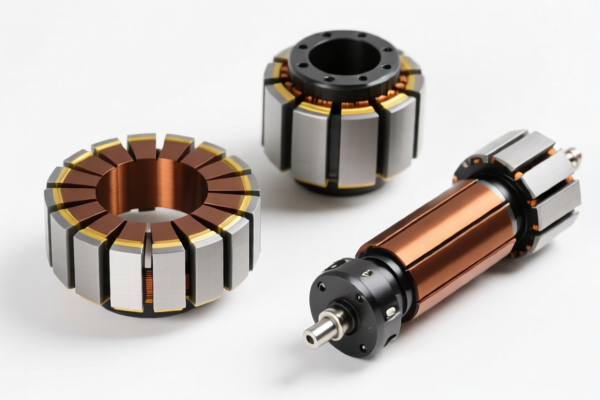
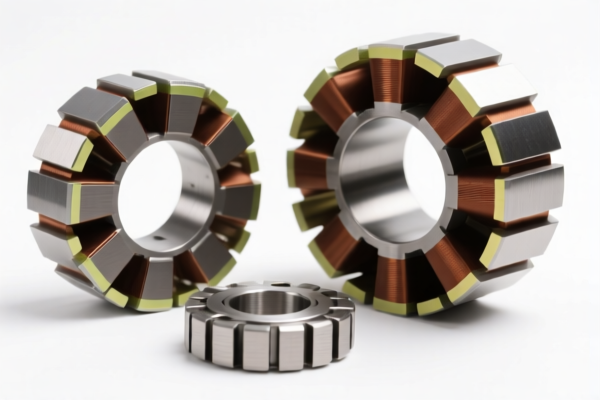
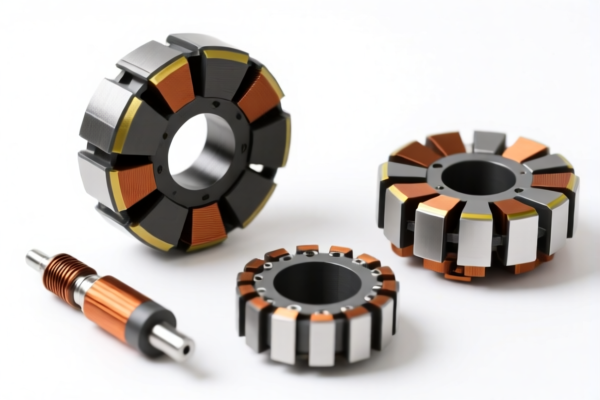
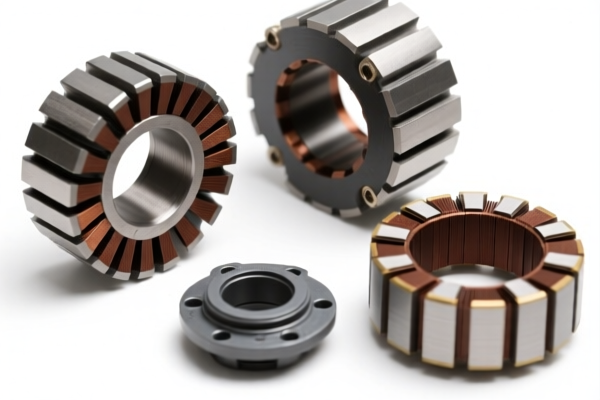
AI Analysis
⚙️ Motor Parts: Stators & Rotors for Low-Power Motors (<18.65 W)
🌐 HS Code Reference & Customs Clearance Guide | 2026 Latest Tariff Analysis | Professional Strategy
📌 I. Product Definition & Classification: What Exactly is a "Stator" in This Context?
In international trade, "Motor Parts" are not a monolithic category. The classification depends heavily on the specific function and the power rating of the motor they serve.
For this data set, we are focusing on Headings 8501 or 8502 (Electrical Rotating Machines, Generators, and Parts Thereof). Specifically, these are parts suitable for use solely or principally with machines of those headings.
Key Distinction: * Stators/Rotors (8503.00.35.00): These are the core electromagnetic components. They are critical for the machine's function. * Other Parts (8503.00.75.00): This includes casings, bearings, brackets, or other non-electromagnetic components suitable for motors under 18.65 W.
⚠️ Critical Threshold:
- Power Rating: Must be under 18.65 W (approx. 1/50 HP).
- Component Type: Is it an electromagnetic core (Stator/Rotor) or a structural part (Case/Housing)?
- Usage: Must be for Heading 8501/8502 goods.
📦 II. HS Code Classification Details (2026 Latest Tariff Authority对照)
| HS Code | Product Description | Application Scenario | Tariff Profile |
|---|---|---|---|
8503.00.35.00 |
Stators and Rotors for motors < 18.65 W | Electric motor cores, laminations, windings for small DC/AC motors | 0.0% Total Tax |
8503.00.75.00 |
Other Parts for motors < 18.65 W | Housings, end bells, shafts, bearings for small motors | 31.5% Total Tax |
🔍 Key Distinction:
- If you are shipping Stators or Rotors (the magnetic core parts), you fall under 8503.00.35.00 with 0% tax.
- If you are shipping Other Parts (anything else for these small motors), you fall under 8503.00.75.00 with 31.5% tax.
- Do not confuse "Other Parts" with "Stators/Rotors". The former attracts high tariffs; the latter is duty-free.
💰 III. 2026 Latest Tariff Rate Breakdown (Detailed Tax Clauses)
✅ Applicable Region: United States (US)
✅ Origin: China (CN) (Implied by the specific tax details provided in data: 0% vs 6.5%+25%)
✅ Effective Date: Current as per provided data structure
🎯 1. 8503.00.35.00 —— Stators and Rotors for Motors < 18.65 W
| Item | Details |
|---|---|
| Base Tariff | 0.0% (ad valorem) |
| Additional Tariff (Section 301) | 0.0% |
| Total Effective Tax Rate | 0.0% |
| Tax Calculation | CIF Value × 0% = $0 |
| Key Advantage | Duty-Free Entry. This is a highly favorable classification for high-volume small motor parts. |
📌 Explanation:
- Stators and rotors are considered essential functional components but are classified specifically under 8503.00.35.00.
- Zero tariff means no base duty and no Section 301 surcharge for this specific sub-heading.
- Note: This applies only if the motor is under 18.65 W. If the motor is ≥ 18.65 W, different HS codes and rates apply.
🎯 2. 8503.00.75.00 —— Other Parts for Motors < 18.65 W
| Item | Details |
|---|---|
| Base Tariff | 6.5% (ad valorem) |
| Additional Tariff (Section 301) | 25.0% |
| Total Effective Tax Rate | 31.5% |
| Tax Calculation | CIF Value × 31.5% |
| Penalty Risk | High if misclassified as 8503.00.35.00 |
📌 Explanation:
- "Other Parts" is a catch-all for non-electromagnetic components (e.g., plastic housings, metal brackets, shafts) for motors under 18.65 W.
- Base Duty: 6.5% is standard for many motor parts.
- Section 301 Surcharge: An additional 25% is applied to Chinese-origin goods under this HTSUS code.
- Total: 6.5% + 25.0% = 31.5%. This is a significant cost driver.
🛠️ IV. Customs Clearance Practical Advice (Real-World Pitfall Guide)
✅ 1. Preparation Checklist (Must-Have Documents)
| Document | Required? | Purpose |
|---|---|---|
| ✅ Product Specifications | ✔️ | Must clearly state "Motor Power: < 18.65 W" and "Part Type: Stator/Rotor" |
| ✅ Technical Drawings | ✔️ | To prove the part is a stator/rotor (electromagnetic core) and not a housing/bracket |
| ✅ Commercial Invoice | ✔️ | Must match HS Code description exactly: "Stator for Motor < 18.65 W" |
| ✅ Certificate of Origin | ✔️ | If claiming duty-free status, ensure no origin issues complicate Section 301 exemptions (none currently exist for this code) |
| ✅ Packaging List | ✔️ | Ensure parts are not mixed with "Other Parts" (e.g., housings) in the same shipment unless declared separately |
✅ 2. Classification Strategy (Key Tips)
🔥 “Stator/Rotor = 0%; Other Parts = 31.5%! Classify Correctly!”
| Scenario | Correct HS Code | Tax Rate | Why? |
|---|---|---|---|
| Stator Core Only | 8503.00.35.00 |
0.0% | Explicitly listed as "Stators and Rotors" |
| Rotor Laminations | 8503.00.35.00 |
0.0% | Core electromagnetic component |
| Motor Housing/Casing | 8503.00.75.00 |
31.5% | Classified as "Other Parts" |
| Motor Shaft | 8503.00.75.00 |
31.5% | Classified as "Other Parts" |
| Bearing Set | 8503.00.75.00 |
31.5% | Classified as "Other Parts" |
⚠️ Critical Warning:
- Do NOT bundle stators and housings in the same HS Code declaration without splitting.
- If a shipment contains both stators and housings, you must declare them separately:
- Stators →8503.00.35.00(0%)
- Housings →8503.00.75.00(31.5%)
- Mixing them or mislabeling housings as stators is considered misclassification, leading to penalties, back duties, and potential audits.
✅ 3. Special Cases & Handling
| Situation | Recommendation |
|---|---|
| Mixed Shipment | Split the commercial invoice. Clearly separate "Stators" and "Other Parts" in the line items. |
| Power Rating Ambiguity | Provide manufacturer specs proving < 18.65 W. If the motor is ≥ 18.65 W, these HS codes do not apply. |
| Customs Examination | Be ready to show a cross-section or technical diagram of the stator/rotor to prove it’s an electromagnetic component, not a structural part. |
| Section 301 Exemptions | Currently, no exemption exists for HS 8503.00.75.00. Plan for the 31.5% cost. |
📌 V. Common Mistakes & Pitfalls (Lessons Learned)
❌ Mistake 1: Declaring "Motor Parts" vaguely
👉 Consequence: Customs will default to the highest applicable rate or require reclassification → Delays + Potential 31.5% tax on everything.
👉 Fix: Specify "Stators and Rotors" vs. "Other Parts".
❌ Mistake 2: Assuming all motor parts are 0%
👉 Consequence: Misclassifying housings as stators → Back taxes + Penalties.
👉 Fix: Understand that only Stators/Rotors are 0%. Everything else is 31.5%.
❌ Mistake 3: Ignoring the Power Threshold
👉 Consequence: If the motor is ≥ 18.65 W, HS 8503.00.35.00/75.00 are incorrect.
👉 Fix: Verify motor power rating. For ≥ 18.65 W, look at other 8503 subheadings (e.g., 8503.00.10, 8503.00.90).
🎯 VI. Conclusion: Optimize Your Classification for Zero Duty
🎯 Remember the Rule:
🔹 "Stator/Rotor = 0% Tax"
🔹 "Other Parts = 31.5% Tax (6.5% Base + 25% Section 301)"
🔹 "Under 18.65 W is Mandatory"
📌 Actionable Advice:
1. Audit your BOM: Separate stators/rotors from all other components.
2. Document Power Rating: Keep specs that prove < 18.65 W.
3. Split Invoices: If shipping mixed parts, declare them under different HS codes.
4. Pre-Ruling: Consider filing a Binding Ruling with US CBP if you have high volume, to confirm the 0% status for your specific stator design.
📣 Immediate Next Step:
📞 Contact your freight forwarder to ensure the commercial invoice clearly distinguishes between Stators/Rotors and Other Parts.
📄 Provide technical drawings to justify the 0% classification for stators.
✨ Precision in Classification Saves 31.5% on Non-Stator Parts!
💼 Every Cent Counts in Motor Parts Trade.
Customer Reviews
About HS Code Classification
The Harmonized System (HS) is an internationally standardized nomenclature developed by the World Customs Organization (WCO) to classify traded products. Over 200 countries use the HS system as the basis for customs tariffs, trade statistics, and import/export regulations.
Each HS code follows a hierarchical structure:
- Chapter (2 digits) — Broad category of goods (e.g., Chapter 84: Machinery and Mechanical Appliances)
- Heading (4 digits) — More specific grouping within the chapter
- Subheading (6 digits) — Internationally standardized breakdown, used by all WCO member countries
- National subdivisions (8-10 digits) — Country-specific extensions for further classification, such as US HTSUS 10-digit codes
Correct HS code classification is essential for smooth customs clearance, accurate duty payment, and compliance with trade regulations. Misclassification can lead to customs delays, overpayment of duties, or penalties.
When importing from CN to US, the applicable tariff rates may include:
- Most-Favored-Nation (MFN) rate — The standard duty rate applied to WTO members
- General rate — Applied to countries without trade agreements
- Trade remedy duties — Additional tariffs such as Section 301 (anti-dumping), Section 232 (national security), or countervailing duties
The information provided on this page is for reference purposes only. For official classification, please consult with your local customs authority or a licensed customs broker.