Motor Speed Controller
CN → US| HS Code | Tariff Rate | Origin | Destination | Doc |
|---|---|---|---|---|
| 9031200000 | 36.7% | CN | US | Official Doc |
| 9029908040 | 35.0% | CN | US | Official Doc |
| 9029204080 | 35.0% | CN | US | Official Doc |
| 8543709860 | 37.6% | CN | US | Official Doc |
| 8543908885 | 85.0% | CN | US | Official Doc |
Product Images
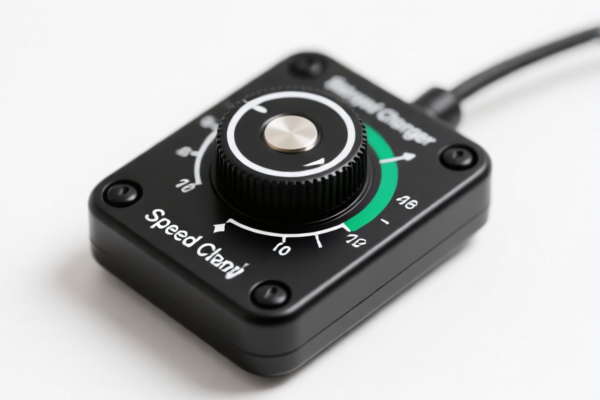
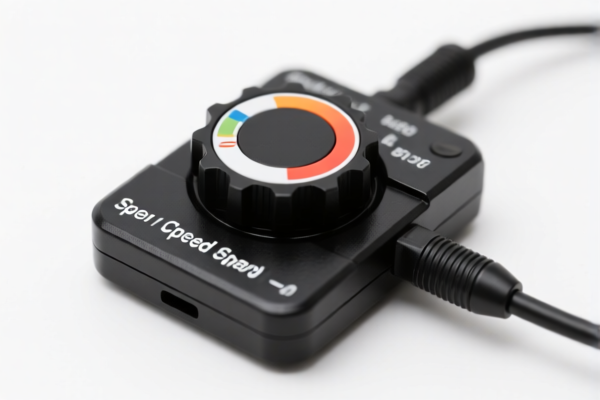
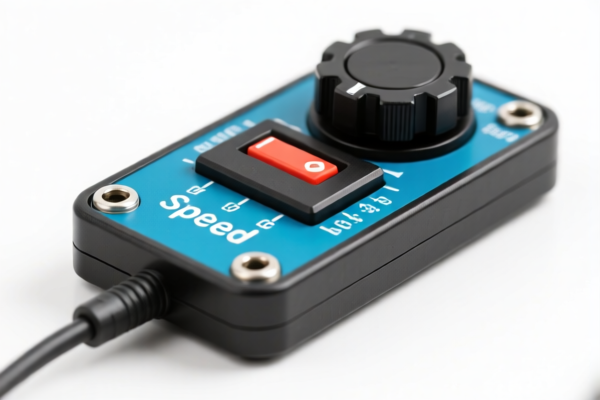
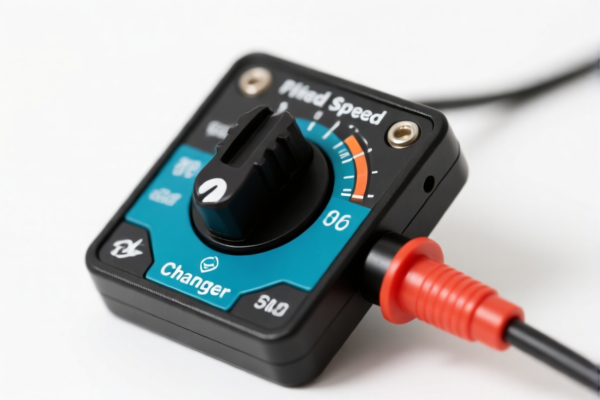
AI Analysis
🏎️ Motor Speed Controller / Measurement Module
(Motor Speed Control & Monitoring Devices)
🌐 HS Code Reference & Customs Clearance Guide | 2026 Latest Tariff Analysis | Professional Level Customs Strategy
📌 I. Product Definition & Classification: Do You Truly Understand "Motor Speed Controllers"?
A Motor Speed Controller (or Module) is a critical component in industrial automation, electric vehicles, and smart machinery. Its primary function is to regulate, monitor, or measure the rotational speed of electric motors. In international trade, classification depends heavily on whether the device is a standalone measuring instrument, a part of a larger system, or a general electrical appliance component.
⚠️ Key Distinction Point:
- Is it a dedicated instrument for measurement/inspection? → Chapter 90 (Instruments)
- Is it a module functioning as a specific electrical component without standalone measurement certification? → Chapter 85 (Electrical Machinery)
- Material Check: Ensure no conflict with special materials (steel/aluminum/copper) which may incur additional tariffs.
📦 II. HS Code Classification Details (2026 Latest Tariff Authority Comparison)
| HS Code | Product Description | Application Scenario | Classification Logic |
|---|---|---|---|
9031.20.00.00 |
Benchwork, Laboratory or Navigation Instruments; Optical Instruments (Specifically: Testing Tables & Measuring Instruments) | Standalone testing benches, precision laboratory speed measurement tools | ✅ Functional Match: Fits "Measurement/Inspection Instruments." No material conflict. |
9029.90.80.40 |
Parts and Accessories of Instruments (Specifically for Speed Measurement) | Modules attached to speedometers, tachometers, or industrial measurement systems | ✅ Functional Match: "Speed Measurement" aligns with reference codes. "Module" treated as a part/attachment. |
9029.20.40.80 |
Speed Indicators and Tachometers; Revolution Counters (Electronic Speed/Rotation Counters) | Electronic modules specifically designed to measure motor speed (Tachometers) | ✅ Functional Match: Directly falls under "Speed/Rotational Speed Measurement." Electronic module nature is compatible. |
8543.70.98.60 |
Electrical Machines and Apparatus, Having Individual Functions, Not Specified or Included Elsewhere | General purpose motor-related measurement devices, generic electronic control modules | ✅ Fallback Category: "Other machines/apparatus." Based on "module" form, inferred as electronic/circuit components. |
8543.90.88.85 |
Parts and Accessories of Electrical Machines (Other Electrical Equipment Parts) | Electrical components for motors, generic speed control circuit boards | ✅ Functional Match: Part of electrical equipment. "Speed measurement" function fits "specific function electrical module." ⚠️ Note: Potential for higher tariffs on steel/aluminum/copper. |
🔍 Key Reminder:
- If the device is a standalone precision instrument with a display and calibration capability, Chapter 90 (9031.20 or 9029.x) is preferred for accuracy.
- If it is a raw control board/module integrated into a larger system without standalone utility, Chapter 85 (8543.70 or 8543.90) may be used.
- Material Conflict Check: Ensure the module casing/inner components are not primarily steel, aluminum, or copper, as this triggers specific additional tariffs under8543.90.88.85.
💰 III. 2026 Latest Tariff Rate Breakdown (Including Surtaxes & Policy Surcharges)
✅ Applicable Country: USA (US)
✅ Origin: China (CN)
✅ Effective Date: Ongoing (Includes subsequent imports post-2025 policies)
🎯 1. 9031.20.00.00 —— Precision Measuring/Testing Instruments
| Item | Content |
|---|---|
| Base Tariff | 1.7% |
| Section 301 Surtax | +25.0% |
| Section 122 Tariff | +10.0% |
| Total Rate | 36.7% |
| Calculation | CIF Value × 36.7% |
| De Minimis Exemption | ❌ No (Not eligible) |
| Legal Basis Path | USITC:9031.20.00.00 → 301:Footnote9903.88.01 → 122:Section122 |
📌 Explanation:
- 1.7% Base: Standard MFN rate for precision instruments.
- 25% Section 301: Retaliatory tariff on Chinese goods.
- 10% Section 122: Specific surtax for certain industrial products.
- Total 36.7%: High but standard for precision Chinese-made instruments.
🎯 2. 9029.90.80.40 —— Parts/Accessories for Speed Measuring Instruments
| Item | Content |
|---|---|
| Base Tariff | 0.0% |
| Section 301 Surtax | +25.0% |
| Section 122 Tariff | +10.0% |
| Total Rate | 35.0% |
| Calculation | CIF Value × 35.0% |
| De Minimis Exemption | ❌ No |
| Legal Basis Path | USITC:9029.90.80.40 → 301:Footnote → 122:Section122 |
📌 Note:
- 0% Base makes this slightly cheaper than9031.20.
- Suitable for modules that are components of larger speed-measuring systems.
🎯 3. 9029.20.40.80 —— Speed Indicators/Tachometers (Electronic)
| Item | Content |
|---|---|
| Base Tariff | 0.0% |
| Section 301 Surtax | +25.0% |
| Section 122 Tariff | +10.0% |
| Total Rate | 35.0% |
| Calculation | CIF Value × 35.0% |
| De Minimis Exemption | ❌ No |
| Legal Basis Path | USITC:9029.20.40.80 → 301 → 122 |
📌 Note:
- Identical tax structure to9029.90.80.40.
- Best fit for dedicated electronic speed measurement modules.
🎯 4. 8543.70.98.60 —— Electrical Machines/Apparatus (Individual Function)
| Item | Content |
|---|---|
| Base Tariff | 2.6% |
| Section 301 Surtax | +25.0% |
| Section 122 Tariff | +10.0% |
| Total Rate | 37.6% |
| Calculation | CIF Value × 37.6% |
| De Minimis Exemption | ❌ No |
| Legal Basis Path | USITC:8543.70.98.60 → 301 → 122 |
📌 Note:
- Slightly higher than Chapter 90 due to higher base rate (2.6%).
- Use as a fallback if the product doesn't strictly fit "instruments" but is a specialized electrical device.
🎯 5. 8543.90.88.85 —— Parts of Electrical Machines (Other)
| Item | Content |
|---|---|
| Base Tariff | 0.0% |
| Section 301 Surtax | +25.0% |
| Section 122 Tariff | +10.0% |
| Special Material Surtax | +50.0% (If Steel, Aluminum, or Copper) |
| Total Rate (Standard) | 35.0% |
| Total Rate (Metal) | 85.0% |
| Calculation | CIF Value × Rate |
| De Minimis Exemption | ❌ No |
| Legal Basis Path | USITC:8543.90.88.85 → 301 → 122 → Metal Tariff Rule |
📌 Critical Warning:
- Base is 0%, but this category is a "catch-all" for electrical parts.
- ⚠️ HIGH RISK: If the module housing or internal components are made of steel, aluminum, or copper, a 50% additional tariff applies.
- Total can reach 85%. Ensure material composition is verified (e.g., plastic casing, PCB board) to avoid this penalty.
🛠️ IV. Customs Clearance Operational Advice (Practical Pitfall Avoidance Guide)
✅ 1. Documentation Checklist (Mandatory)
| Document | Must Provide | Description |
|---|---|---|
| ✅ Product Specification Sheet | ✔️ | Details: Input/Output voltage, frequency, measurement range, accuracy, interface type (USB/RS485/Analog). |
| ✅ Circuit Diagram/Block Diagram | ✔️ | Essential to prove it is a "measurement module" or "control part," not a generic power supply. |
| ✅ Product Photos (with Nameplate) | ✔️ | Clear view of model number, brand, input/output parameters, and material labels (to avoid metal surtax). |
| ✅ Third-Party Test Reports | ✔️ | FCC, CE, RoHS, UL (if applicable). Proves compliance for electrical safety. |
| ✅ Commercial Invoice | ✔️ | Description must be precise: "Electronic Motor Speed Measurement Module," not just "Controller." |
| ✅ Packing List | ✔️ | Separate accessories from main unit if claimed as parts. |
✅ 2. Declaration Tips (Key Mantras)
🔥 “Function First, Material Second, Name Precise, Tariff Optimized!”
| Scenario | Correct Declaration | Wrong Practice |
|---|---|---|
| Dedicated Speed Meter Module | 9029.20.40.80 or 9029.90.80.40 |
Declare as "Part of Motor" → Risk of 8543.90 with 85% tax if metal. |
| General Control Board (No Display) | 8543.70.98.60 |
Declare as "Instrument" → Potential reclassification dispute. |
| Module with Steel Housing | Avoid 8543.90.88.85 |
If declared as 8543.90, declare materials accurately or choose 9031/9029 if functionally valid. |
| Complete System | Group under main function | Splitting a complete controller into "housing + board" → Higher aggregate tax. |
✅ 3. Special Case Handling
| Scenario | Handling Advice |
|---|---|
| OEM Custom Module | Provide client order + design specs. Avoid generic names. |
| Electronic vs. Mechanical | Electronic modules generally favor 9029 or 8543. Mechanical tachometers may differ. |
| Material Composition | If using 8543.90.88.85, ensure plastic/non-metal construction to avoid the 50% surtax. |
| Dual-Use (Control + Measure) | If it controls speed AND measures it, 9029 (Instrument) is often safer if measurement is the primary declared function. |
🌍 V. Global Market Comparison (2026 Latest)
| Country/Region | Recommended HS Code | Tariff (China Origin) | Certification | Remarks |
|---|---|---|---|---|
| 🇺🇸 USA | 9029.20.40.80 / 9031.20.00.00 |
35.0% - 36.7% | FCC + RoHS | Avoid 8543.90.88.85 if metal. High surtaxes apply. |
| 🇨🇳 China | 9029.20.40.80 |
~5% | CCC + RoHS | Lower base rates, no Section 301/122. |
| 🇪🇺 EU | 9029.20 / 8543.70 |
0% - 5% | CE + ErP | Generally favorable for electronics. |
| 🇦🇺 Australia | 9029.20 |
~5% | RCM | No major surtaxes. |
| 🇯🇵 Japan | 9029.20 |
0% - 5% | PSE | Favorable for precision instruments. |
📌 Conclusion:
- USA is the most costly market due to Section 301 and Section 122 tariffs.
- Chapter 90 codes (9029,9031) are generally safer and more predictable than8543.90.88.85due to the risk of the 50% metal surtax.
- Consider supply chain diversification or Pre-Ruling Applications to mitigate US tax risks.
📌 VI. Common Errors & Pitfall Guide (Lessons Learned)
❌ Error 1: Declaring a speed measurement module as a "Motor Part" under 8543.90.88.85 without checking materials.
👉 Consequence: If the casing is aluminum, tax jumps to 85%.
Fix: Verify material or classify under 9029 if functionally a measurement device.
❌ Error 2: Using vague terms like "Controller" in the invoice.
👉 Consequence: Customs may misclassify, leading to delays, re-inspection, or penalties.
Fix: Use precise terms: "Electronic Motor Speed Measurement Module."
❌ Error 3: Ignoring Section 122 Tariff.
👉 Consequence: Unexpected 10% surtax added to customs duty.
Fix: Ensure all tariff calculations include the 10% Section 122 component for Chinese goods.
✅ Correct Practice:
"Electronic Motor Speed Measurement Module, Model XYZ, Plastic Housing, PCB Internal, FCC Certified, For Industrial Automation Use"
🎯 VII. Conclusion: Precision Classification, Cost Optimization
🎯 Remember the Mantra:
🔹 "Instruments First (9029/9031), Electrical Parts Second (8543)."
🔹 "Check Metal! 85% Tax Lurks in 8543.90 if Aluminum/Steel."
🔹 "35%-37% is the US Baseline for Electronics/Instruments from China."
📌 Pro Tip:
If your product is functionally a measurement device, always try to classify under Chapter 90 (9029 or 9031) to avoid the volatile 50% material surtax in Chapter 85.
Recommend applying for a US CBP Advance Ruling before shipment to secure the correct HS Code and tariff liability.
📣 Immediate Action:
📞 Consult with a licensed customs broker + Provide detailed specs + Request HS Code Pre-Ruling
🚀 Ensure smooth clearance, accurate cost control, and efficient global trade!
✨ Professional Customs Clearance Starts with Accurate Classification!
💼 Every Percentage Point of Tariff Matters!
Customer Reviews
About HS Code Classification
The Harmonized System (HS) is an internationally standardized nomenclature developed by the World Customs Organization (WCO) to classify traded products. Over 200 countries use the HS system as the basis for customs tariffs, trade statistics, and import/export regulations.
Each HS code follows a hierarchical structure:
- Chapter (2 digits) — Broad category of goods (e.g., Chapter 84: Machinery and Mechanical Appliances)
- Heading (4 digits) — More specific grouping within the chapter
- Subheading (6 digits) — Internationally standardized breakdown, used by all WCO member countries
- National subdivisions (8-10 digits) — Country-specific extensions for further classification, such as US HTSUS 10-digit codes
Correct HS code classification is essential for smooth customs clearance, accurate duty payment, and compliance with trade regulations. Misclassification can lead to customs delays, overpayment of duties, or penalties.
When importing from CN to US, the applicable tariff rates may include:
- Most-Favored-Nation (MFN) rate — The standard duty rate applied to WTO members
- General rate — Applied to countries without trade agreements
- Trade remedy duties — Additional tariffs such as Section 301 (anti-dumping), Section 232 (national security), or countervailing duties
The information provided on this page is for reference purposes only. For official classification, please consult with your local customs authority or a licensed customs broker.