Motor Vehicle (HS 8702906100)
CN → US| HS Code | Tariff Rate | Origin | Destination | Doc |
|---|---|---|---|---|
| 8702906100 | 112.0% | CN | US | Official Doc |
| 8703900100 | 112.5% | CN | US | Official Doc |
| 8708295110 | 0.0% | CN | US | Official Doc |
| 8708292500 | 0.0% | CN | US | Official Doc |
| 8707905060 | 39.0% | CN | US | Official Doc |
Product Images
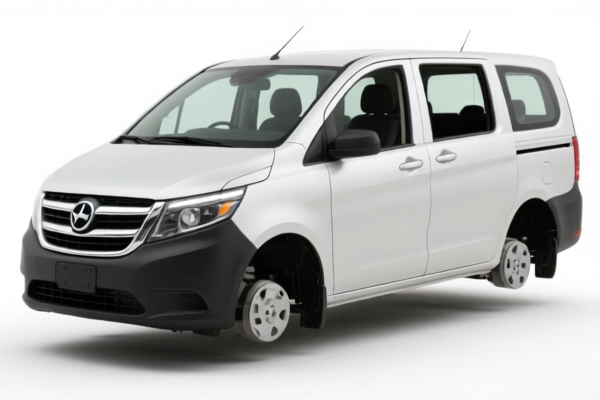
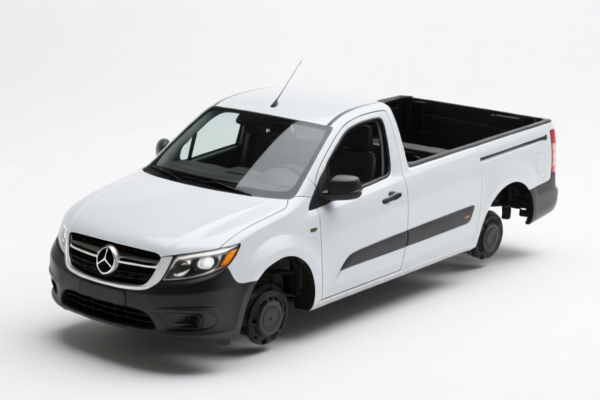
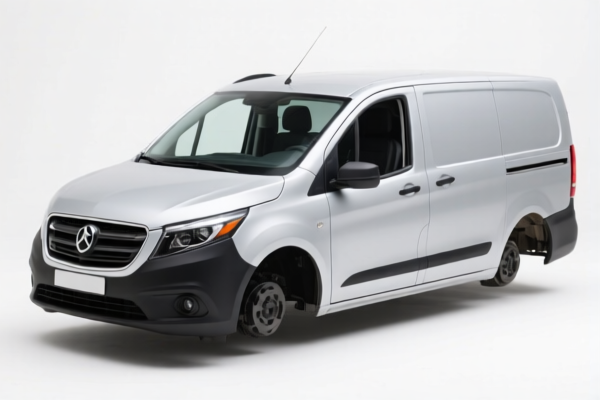
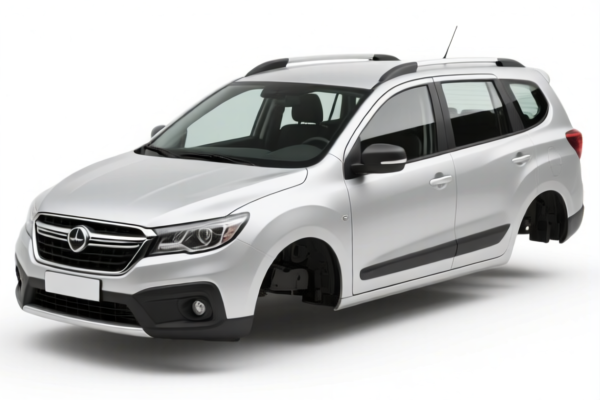
AI Analysis
🚛 Motor Vehicles for Transport of 10+ Persons (HS 8702.90.61.00)
🌐 HS Code Reference & Customs Clearance Guide | 2026 Latest Tariff Analysis | Professional Strategy
📌 I. Product Definition: What Exactly Are We Classifying?
This HS Code specifically targets heavy-duty motor vehicles designed to transport ten (10) or more persons. In the international trade of automotive goods, this is distinct from private passenger cars (which fall under 8703) or trucks for cargo (8704).
Key Characteristics: * Passenger Capacity: Must be ≥ 10 seats (including the driver, usually interpreted as seating for 9 passengers + 1 driver, or explicitly stated as "10 persons and above"). * Type: Motor vehicles primarily designed for the transport of persons. * Common Applications: Buses, minibuses, shuttle vans, large SUVs (if capacity ≥10), and public transport vehicles.
⚠️ Critical Distinction:
- If the vehicle transports ≤ 9 persons → It typically falls under HS 8703 (Passenger Cars).
- If it is for cargo → It falls under HS 8704 (Motor Vehicles for the Transport of Goods).
- Only vehicles with a designed capacity of 10 or more people qualify for 8702.90.61.00.
📦 II. HS Code Classification Details (Based on Provided Data)
According to the provided dataset, here is the precise classification for this specific vehicle type:
| HS Code | Product Description | Capacity | Key Tax Structure |
|---|---|---|---|
8702.90.61.00 |
Motor vehicles for the transport of ten or more persons | ≥ 10 Persons | Total Tax: 112.0% |
🔍 Note on Other Related Codes in Data:
-8703.90.01.00: Passenger vehicles (typically <10 persons). Not applicable if your vehicle holds 10+ people.
-8707.90.50.60: Bodies for vehicles of 8704 (trucks). Not applicable (this is for bodies, not whole vehicles).
-8708...: Parts and accessories. Not applicable for whole vehicle import.
💰 III. Detailed Tariff Rate Breakdown (2026 Analysis)
✅ Applicable Scenario: Importing Motor Vehicles (≥10 passengers)
✅ Origin: China (CN) (Based on "Section 122" and high tax rate context in data)
✅ Total Effective Tax Rate: 112.0%
🎯 1. 8702.90.61.00 —— Motor Vehicles (10+ Persons)
This code attracts the highest tax burden among all vehicle categories in the provided dataset due to multiple layers of tariffs.
| Item | Content | Details |
|---|---|---|
| Base Customs Duty | 2.0% | Standard Most-Favored-Nation (MFN) rate for vehicles. |
| Section 301 Add-on Tariff | 100.0% | Significant punitive tariff imposed on Chinese-origin vehicles. |
| Section 122 Tariff | 10.0% | Additional tariff applied to specific automotive components or vehicles under current regulations. |
| Total Tax Rate | 112.0% | Sum of all applicable rates. |
| Tax Calculation | CIF Value × 112% | Extremely high cost; effectively doubles the landed cost. |
| De Minimis Exemption | ❌ Not Eligible | High-value goods do not qualify for $800 (or local equivalent) de minimis thresholds. |
| Legal Basis Path | Base: 2% → Section 301: 100% → Section 122: 10% |
Cumulative application. |
📌 Explanation:
- The 100% Section 301 tariff is the dominant cost driver. This is a retaliatory or protective tariff often applied to Chinese-manufactured vehicles.
- The Section 122 tariff (10%) is an additional layer, making the total duty extremely prohibitive.
- Total 112% means for every $10,000 CIF value, you pay $11,200 in duties alone.
🛠️ IV. Customs Clearance Practical Advice (Real-World Pitfall Guide)
✅ 1. Preparation Checklist (Must-Haves)
| Document | Required | Explanation |
|---|---|---|
| ✅ Vehicle Identification Number (VIN) | ✔️ | Essential for customs verification and registration. |
| ✅ EPA & DOT Compliance Certificates | ✔️ | For US import: Must prove environmental and safety standards are met. |
| ✅ Commercial Invoice | ✔️ | Must clearly state "Motor Vehicle for Transport of 10+ Persons" and CIF value. |
| ✅ Bill of Lading | ✔️ | Confirm origin and freight costs. |
| ✅ Import License / Form HS-7 | ✔️ | For US: EPA form HS-7 is mandatory for vehicle import. |
| ✅ Odometer Disclosure Statement | ✔️ | Federal requirement for used/new vehicles. |
✅ 2. Classification Strategy (Critical!)
🔥 “Capacity is King: 10 Passengers or Bust!”
| Scenario | Correct HS Code | Tax Rate | Risk if Wrong |
|---|---|---|---|
| Bus/Minibus (10+ seats) | 8702.90.61.00 |
112.0% | If misclassified as 8703 (<10 seats), penalty for incorrect declaration. |
| Private SUV (5-9 seats) | 8703.90.01.00 |
112.5% | Note: 8703 has a slightly higher total (112.5%) due to 2.5% base. |
| Truck for Cargo | 8704.21... |
Not in Data | Do not mix up passenger vs. cargo. |
| Vehicle Parts (e.g., Doors) | 8708.29.25.00 |
37.5% | If importing bodies/parts separately, tax is lower (~37.5%), but whole vehicle is 112%. |
⚠️ Key Insight:
- Do not attempt to classify a whole vehicle as "parts" (8708) to save on tax. Customs will inspect the VIN and assembly status.
- If importing disassembled vehicles (CKD/SKD), check if they still meet the definition of "complete vehicle" under customs rules. Often, even disassembled vehicles are classified as 8702 if they are essentially complete.
✅ 3. Special Cases & Mitigation
| Case | Strategy |
|---|---|
| OEM Shuttles for Hotels/Airlines | Even if for commercial use, if it’s a motor vehicle for 10+ persons, it’s 8702.90.61.00. No exemption from Section 301 unless specific trade agreement applies (unlikely for China origin). |
| Electric Vehicles (EVs) | If classified under 8702, the 112% tax still applies. EVs are not automatically exempt from Section 301 unless specifically listed in exclusion lists (check current list). |
| Used Vehicles | US generally prohibits import of used motor vehicles unless they are 25+ years old. If 25+ years, they may be exempt from EPA/DOT but still subject to customs duties. Verify VIN age carefully. |
🌍 V. Global Market Comparison (2026 Context)
| Country/Region | Recommended HS Code | Tariff (China Origin) | Notes |
|---|---|---|---|
| 🇺🇸 USA | 8702.90.61.00 |
112.0% | Highest cost: 2% Base + 100% Sec 301 + 10% Sec 122. |
| 🇨🇳 China | 8702.90.61.00 |
~15-25% (Varies) | Lower base, no Sec 301. Data not provided, but generally lower than US. |
| 🇪🇺 EU | 8702 (Various) |
10% Base | No Section 301/122 equivalent. But may have anti-subsidy duties. |
| 🇲🇽 Mexico | 8702 |
Varies (USMCA) | If meeting rules of origin, duty-free for US export. |
📌 Conclusion for US Importers:
- Importing Chinese-made vehicles with 10+ seats into the US is financially challenging due to the 112% total tariff.
- Consider local assembly (if possible) or sourcing from non-China origins (e.g., Europe, Korea, US) to avoid Section 301 and 122 tariffs.
📌 VI. Common Errors & Pitfalls (Lessons Learned)
❌ Error 1: Misclassifying a 10-seater van as a "Passenger Car" (8703).
👉 Consequence: While 8703 also has 112.5% tax, the wrong code leads to fines, delays, and potential seizure for misdeclaration. Consistency in description is key.
❌ Error 2: Ignoring Section 122 Tariff.
👉 Consequence: Under-declaring tax. The 10% Sec 122 is mandatory for many auto-related items from China. Missing it triggers audits.
❌ Error 3: Assuming "Electric" means "Exempt."
👉 Consequence: EVs from China are not exempt from Section 301 unless specifically excluded. Check the latest USITC exclusion list.
❌ Error 4: Importing Body Parts vs. Whole Vehicle.
👉 Consequence: If you import a "body" for a truck, it’s 8707 (39% tax). If you import the whole vehicle, it’s 8702 (112% tax). Don’t try to ship a whole vehicle as "parts" to save money—customs will reclassify and penalize.
✅ Correct Declaration Example:
"Motor Vehicle, Bus, 12 Seats, Diesel, Model XYZ, VIN: 1HGCM82633A004352, Country of Origin: China. HS Code: 8702.90.61.00."
🎯 VII. Conclusion: Strategic Recommendation
🎯 Remember This Rule:
🔹 "10+ Passengers = 8702.90.61.00"
🔹 "China Origin = 112% Total Tax (2% + 100% + 10%)"
🔹 "Whole Vehicle ≠ Parts"
💡 Actionable Advice:
1. Verify Seat Capacity: Ensure the vehicle officially seats 10 or more. If it seats 9, it’s 8703 (112.5%), which is similar but technically different.
2. Cost-Benefit Analysis: With a 112% tariff, the landed cost is more than double the CIF value. Is the product margin high enough?
3. Explore Alternatives:
- Source from non-China countries to avoid 100% Sec 301 + 10% Sec 122.
- Check if your vehicle qualifies for any specific exemptions (e.g., if it’s a specialized emergency vehicle, though unlikely for general transport).
4. Pre-Ruling: File for an Advance Ruling with US Customs and Border Protection (CBP) to confirm the HS code and tariff applicability before shipping.
📣 Immediate Next Steps:
📞 Contact a Licensed Customs Broker: To verify VIN compliance and EPA/DOT requirements.
📄 Request Supplier’s HS Code Declaration: Confirm they are using 8702.90.61.00.
💰 Calculate Landed Cost: CIF + 112% Duty + Freight + Insurance + Port Fees.
✨ Precision in Classification Saves Millions!
💼 With a 112% tariff, every percentage point matters. Don’t guess—classify correctly.
Customer Reviews
About HS Code Classification
The Harmonized System (HS) is an internationally standardized nomenclature developed by the World Customs Organization (WCO) to classify traded products. Over 200 countries use the HS system as the basis for customs tariffs, trade statistics, and import/export regulations.
Each HS code follows a hierarchical structure:
- Chapter (2 digits) — Broad category of goods (e.g., Chapter 84: Machinery and Mechanical Appliances)
- Heading (4 digits) — More specific grouping within the chapter
- Subheading (6 digits) — Internationally standardized breakdown, used by all WCO member countries
- National subdivisions (8-10 digits) — Country-specific extensions for further classification, such as US HTSUS 10-digit codes
Correct HS code classification is essential for smooth customs clearance, accurate duty payment, and compliance with trade regulations. Misclassification can lead to customs delays, overpayment of duties, or penalties.
When importing from CN to US, the applicable tariff rates may include:
- Most-Favored-Nation (MFN) rate — The standard duty rate applied to WTO members
- General rate — Applied to countries without trade agreements
- Trade remedy duties — Additional tariffs such as Section 301 (anti-dumping), Section 232 (national security), or countervailing duties
The information provided on this page is for reference purposes only. For official classification, please consult with your local customs authority or a licensed customs broker.