Motor Vehicle Chassis
CN → US| HS Code | Tariff Rate | Origin | Destination | Doc |
|---|---|---|---|---|
| 8706001540 | 37.5% | CN | US | Official Doc |
| 8708806590 | 0.0% | CN | US | Official Doc |
| 8708801600 | 12.5% | CN | US | Official Doc |
| 8706001520 | 37.5% | CN | US | Official Doc |
Product Images
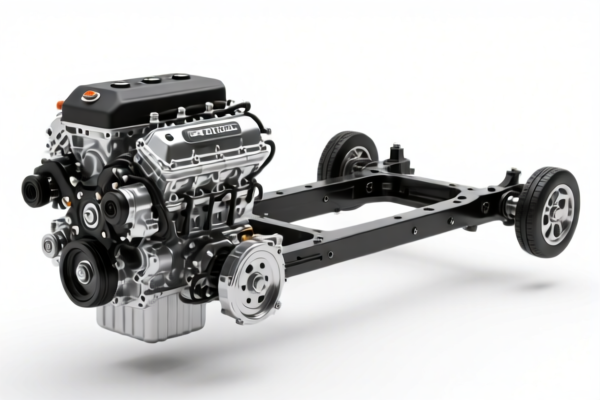
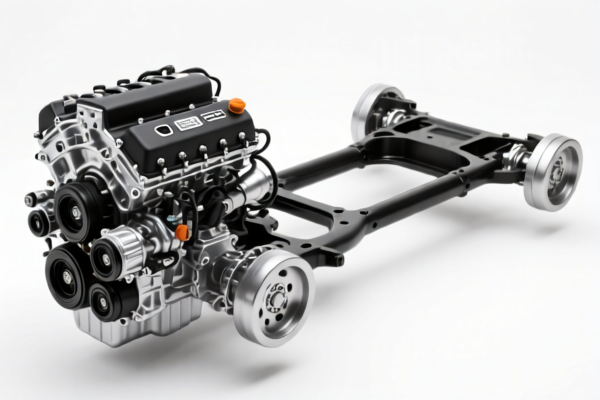
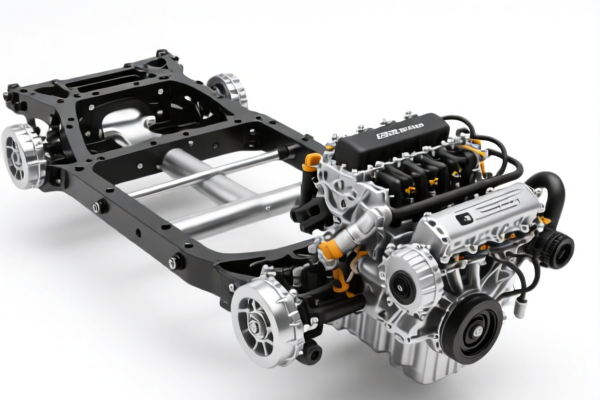
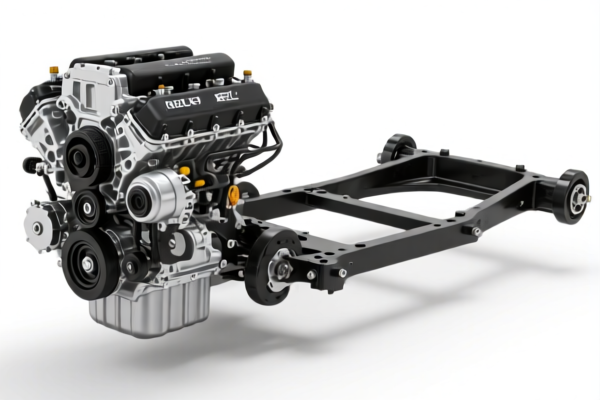
AI Analysis
🚗 Motor Vehicle Chassis: HS Code Classification & Customs Clearance Guide 2026
🌐 Global Trade Compliance | Strategic Tariff Analysis | Expert Customs Strategy
📌 I. Product Definition & Classification: Understanding the "Heart" of the Vehicle
The Motor Vehicle Chassis is the structural backbone of any automobile, supporting the engine, suspension, steering, and braking systems. In international trade, classification depends heavily on whether the chassis includes an engine and its specific application.
Core Distinction:
- Chassis with Engine: Classified under Heading 8706 (Chassis fitted with engines).
- Chassis without Engine / Parts: Classified under Heading 8708 (Parts and accessories of motor vehicles).
⚠️ Critical Classification Point:
- If the chassis includes the engine, it is a "complete chassis" → 8706 series.
- If the chassis is bare (frame, suspension, axles only) → 8708 series.
- Misclassification Risk: Declaring a bare chassis as "with engine" can lead to massive duty penalties due to the high additional tariffs on 8706 items.
📦 II. HS Code Detailed Classification (Based on Provided Data)
| HS Code | Product Description | Key Features | Typical Application |
|---|---|---|---|
8706.00.15.40 |
Chassis fitted with an engine | ✅ Includes Engine | Vehicles classified under 8703 (Passenger Cars) |
8706.00.15.20 |
Chassis fitted with an engine | ✅ Includes Engine | Vehicles classified under 8703 (Passenger Cars) |
8708.80.65.90 |
Parts and accessories of motor vehicles | ❌ No Engine | Steel, Aluminum, or Copper chassis parts |
8708.80.16.00 |
Parts and accessories of motor vehicles | ❌ No Engine | General vehicle chassis components |
🔍 Key Insight:
- The 8706 codes apply when the engine is already mounted on the chassis.
- The 8708 codes apply when the chassis is unpowered (just the frame and mechanical systems).
- Material Matters: For 8708.65.90, specific surcharges apply to Steel, Aluminum, and Copper products.
💰 III. 2026 Latest Tariff Rate Breakdown (Including Additional Duties)
✅ Applicable Country: USA (US)
✅ Origin: China (CN)
✅ Effective Date: Current trade rules apply (Section 301 & IEEPA surcharges)
🎯 1. 8706.00.15.40 & 8706.00.15.20 —— Chassis Fitted with Engine
| Item | Detail |
|---|---|
| Base Duty | 2.5% |
| Section 301 Surcharge | 25.0% |
| IEEPA Surcharge (122 Clause) | 10.0% |
| Total Effective Tax Rate | 37.5% |
| Calculation Basis | CIF Value × 37.5% |
| De Minimis Exemption | ❌ NOT Eligible (High duty risk) |
| Legal Basis | Base Rate + 301 Footnote + IEEPA 9903.01.24/25 |
📌 Explanation:
- These codes carry the highest combined tariff at 37.5% because they are classified as "Chassis with Engine," which is heavily scrutinized for trade war impacts.
- No de minimis exemption applies; all shipments are subject to full duty calculation.
🎯 2. 8708.80.65.90 —— Parts of Motor Vehicles (Steel/Aluminum/Copper)
| Item | Detail |
|---|---|
| Base Duty | 2.5% |
| Section 301 Surcharge | 25.0% |
| IEEPA Surcharge (122 Clause) | 10.0% |
| Metal-Specific Surcharge | +50% (For Steel, Aluminum, Copper products) |
| Total Effective Tax Rate | 2.5% + 85.0% (i.e., 87.5% total for metal components) |
| Calculation Basis | CIF Value × (2.5% + 25% + 10% + 50%) |
| De Minimis Exemption | ❌ NOT Eligible |
| Legal Basis | Base Rate + 301 + IEEPA + Metal Sector Specifics |
📌 Critical Warning:
- If your chassis is made of Steel, Aluminum, or Copper, an additional 50% tariff is added on top of the standard 35% (25%+10%).
- This results in a staggering 87.5% total duty for metal chassis parts.
- Non-metal components (e.g., plastic/rubber sub-assemblies) may fall under different sub-headings with lower surcharges, but8708.80.65.90specifically triggers the metal penalty.
🎯 3. 8708.80.16.00 —— Parts of Motor Vehicles (General)
| Item | Detail |
|---|---|
| Base Duty | 2.5% |
| Section 301 Surcharge | 0.0% |
| IEEPA Surcharge (122 Clause) | 10.0% |
| Total Effective Tax Rate | 12.5% |
| Calculation Basis | CIF Value × 12.5% |
| De Minimis Exemption | ❌ NOT Eligible |
| Legal Basis | Base Rate + IEEPA |
📌 Advantage:
- This code has a significantly lower total duty (12.5%) compared to 8706 or metal-heavy 8708 codes.
- It is ideal for non-metal chassis components or vehicles that do not fall under the high-tariff 8703 engine category.
🛠️ IV. Customs Clearance Practical Advice (Avoiding Pitfalls)
✅ 1. Documentation Checklist (Essential)
| Document | Required? | Purpose |
|---|---|---|
| ✅ Product Specification Sheet | ✔️ | Must detail: Engine presence, weight, material (Steel/Al), dimensions |
| ✅ Engineering Drawings | ✔️ | To prove if chassis is "fitted with engine" (8706) or "bare" (8708) |
| ✅ Material Composition Report | ✔️ | Critical to avoid the +50% metal surcharge under 8708.80.65.90 |
| ✅ Commercial Invoice | ✔️ | Clear description: "Motor Vehicle Chassis, Bare Frame, No Engine" |
| ✅ Packing List | ✔️ | Separate engines if shipped separately to avoid accidental classification under 8706 |
| ✅ Certificate of Origin | ✔️ | To confirm origin and verify surcharge applicability |
✅ 2. Declaration Strategy (Key Mantras)
🔥 "Engine? 8706 (High Tax). No Engine? 8708. Metal? Check Surcharge!"
| Scenario | Correct Declaration | Wrong Declaration | Consequence |
|---|---|---|---|
| Chassis + Engine | 8706.00.15.40 |
8708.80.16.00 |
Underpayment penalty + Back duties |
| Bare Chassis (Steel) | 8708.80.65.90 |
8708.80.16.00 |
Overpayment? No, Underpayment if metal surcharge missed → Fine! |
| Bare Chassis (Plastic/Non-Metal) | 8708.80.16.00 |
8708.80.65.90 |
Savings: 12.5% vs 87.5% |
| Engine Shipped Separately | Declare Engine + Chassis separately | Declare together as "Chassis with Engine" | Unnecessary 37.5% duty on engine |
✅ 3. Special Handling Tips
| Situation | Recommendation |
|---|---|
| Mixed Materials | If chassis has steel frame but plastic/rubber parts, consult customs broker to see if parts can be classified separately to avoid the 50% metal surcharge. |
| Kit Assembly | If shipping as a "kit" for assembly in the US, ensure the engine is not installed to stay under 8708 (if possible) to avoid 8706 classification. |
| Pre-Clearance | Apply for an Advance Ruling if the product is complex (e.g., semi-assembled chassis). |
🌍 V. Global Market Comparison (2026)
| Country/Region | Recommended HS Code | Total Duty (Est.) | Key Requirement | Notes |
|---|---|---|---|---|
| 🇺🇸 USA | 8706.00.15.40 or 8708.80.16.00 |
12.5% – 87.5% | FCC/SAE Compliance | Highest Surcharges globally |
| 🇨🇳 China | 8706.00.15.40 or 8708.80.16.00 |
5% – 10% | CCC Certification | Lower duties, no trade war surcharges |
| 🇪🇺 EU | 8706.00.15.40 or 8708.80.16.00 |
4% – 10% | ECE/UN Regulation | No additional Section 301 tariffs |
| 🇲🇽 Mexico | 8706.00.15.40 or 8708.80.16.00 |
0% – 5% | USMCA Compliance | Zero duty if rules of origin met |
📌 Conclusion:
- The USA imposes the highest barriers due to Section 301 and IEEPA tariffs.
- Metal content is the biggest cost driver for 8708 classifications.
- Consider assembly in non-US countries (e.g., Mexico, Canada) to leverage USMCA benefits if sourcing from China.
📌 VI. Common Mistakes & Pitfalls (Blood Lessons)
❌ Mistake 1: Declaring a bare steel chassis as 8708.80.16.00 to avoid the 50% metal surcharge.
👉 Result: Customs audit detects steel content → Back duties + 25% penalty.
❌ Mistake 2: Shipping engine and chassis separately but declaring them as one "Chassis" unit.
👉 Result: Misclassified as 8706 (37.5%) instead of potentially lower combined rates.
❌ Mistake 3: Ignoring IEEPA 122 Clause surcharges.
👉 Result: Missing the 10% add-on leads to customs holds and delays.
✅ Correct Practice:
"Motor Vehicle Chassis, Unpowered, Steel Frame, Suspension System Installed, No Engine, Model XYZ"
→ Use8708.80.16.00if non-metal parts dominate, or accept8708.80.65.90if metal-heavy, but declare accurately.
🎯 VII. Conclusion: Precision in Classification Saves Millions
🎯 Key Takeaways:
1. Engine Presence is King: Determines if you pay 37.5% (8706) or less (8708).
2. Material Matters: Steel/Aluminum/Copper chassis parts face a 50% extra tariff.
3. No De Minimis: All chassis shipments are subject to full duty scrutiny.
📌 Pro Tip:
For high-volume shipments, consider modular assembly in Mexico or Canada to utilize USMCA zero-tariff benefits, bypassing US Section 301 and IEEPA penalties entirely.
📣 Action Required:
📞 Contact a Licensed Customs Broker immediately.
📄 Provide Engineering Drawings and Material Breakdown.
📝 Apply for Advance Ruling to lock in the correct HS Code and avoid post-clearance audits.
✨ Smart Classification, Lower Duties, Faster Clearance!
💼 Your Supply Chain's Competitive Edge Starts Here!
Customer Reviews
About HS Code Classification
The Harmonized System (HS) is an internationally standardized nomenclature developed by the World Customs Organization (WCO) to classify traded products. Over 200 countries use the HS system as the basis for customs tariffs, trade statistics, and import/export regulations.
Each HS code follows a hierarchical structure:
- Chapter (2 digits) — Broad category of goods (e.g., Chapter 84: Machinery and Mechanical Appliances)
- Heading (4 digits) — More specific grouping within the chapter
- Subheading (6 digits) — Internationally standardized breakdown, used by all WCO member countries
- National subdivisions (8-10 digits) — Country-specific extensions for further classification, such as US HTSUS 10-digit codes
Correct HS code classification is essential for smooth customs clearance, accurate duty payment, and compliance with trade regulations. Misclassification can lead to customs delays, overpayment of duties, or penalties.
When importing from CN to US, the applicable tariff rates may include:
- Most-Favored-Nation (MFN) rate — The standard duty rate applied to WTO members
- General rate — Applied to countries without trade agreements
- Trade remedy duties — Additional tariffs such as Section 301 (anti-dumping), Section 232 (national security), or countervailing duties
The information provided on this page is for reference purposes only. For official classification, please consult with your local customs authority or a licensed customs broker.