Motor or Generator Parts
CN → US| HS Code | Tariff Rate | Origin | Destination | Doc |
|---|---|---|---|---|
| 8503009550 | 38.0% | CN | US | Official Doc |
| 8503009520 | 88.0% | CN | US | Official Doc |
| 8483908080 | 37.8% | CN | US | Official Doc |
| 8483903000 | 39.5% | CN | US | Official Doc |
Product Images
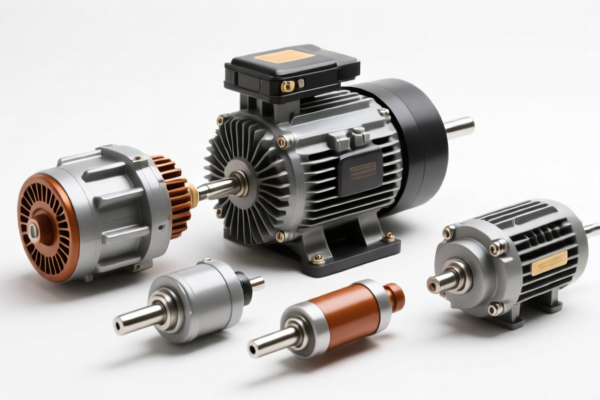
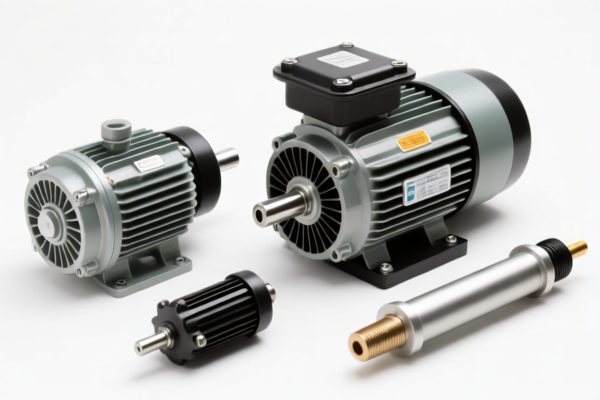
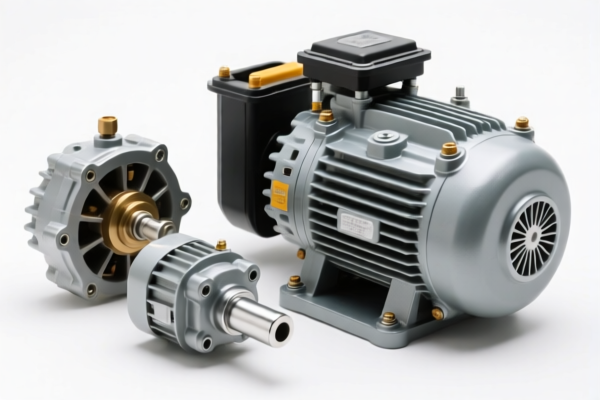
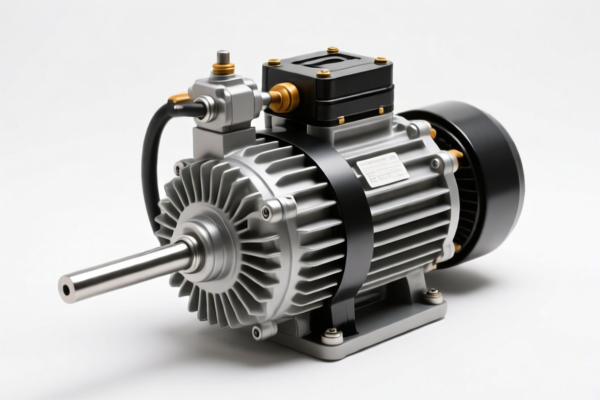
AI Analysis
⚙️ Motor or Generator Parts (Components for Electric Motors & Generators)
🌐 HS Code Reference & Customs Clearance Guide | 2026 Latest Tariff Analysis | Strategic Clearance Protocol
📌 1. Product Definition & Classification: Do You Truly Understand "Motor Parts"?
"Motor or Generator Parts" is a broad category in international trade, covering components essential for the operation, transmission, and maintenance of electric motors and generators (typically classified under Heading 85.01 or 85.02). In customs clearance, precision is critical because these parts are often subject to high punitive tariffs due to their strategic importance in industrial and energy sectors.
The classification depends heavily on function and material composition:
- Generic Mechanical Parts: Components like shafts, bearings, housings, or fans that do not have a specific electrical function but are integral to the machine.
- Electrical/Magnetic Components: Stators, rotors, armatures, or commutators that are specific to the electromagnetic operation of the motor.
- Material-Specific Add-ons: Parts made of steel, aluminum, or copper may trigger additional "122 Clause" tariffs if they are specific metal products.
⚠️ Key Distinction Point:
- If the part is a generic mechanical component (e.g., a simple steel bracket or shaft) without specific electromagnetic functionality → It often falls under 8503.00.95 (General parts).
- If the part is specifically designed for motor/generator function but doesn't fit other precise subheadings → It may fall under the "residual" or "other" categories, potentially attracting higher rates if material restrictions apply.
📦 2. HS Code Classification Details (Based on Provided Data)
According to the provided dataset, there are two primary HS Code categories for Motor/Generator parts, both carrying significant tariff burdens.
| HS Code | Product Description & Logic | Tax Rate | Key Tariff Components |
|---|---|---|---|
| 8503.00.95.50 | Generic Parts for 85.01/85.02 Machines Used for parts of machines in heading 85.01 (Motors) or 85.02 (Generators). Logic: Default match when there is no material conflict. |
38.0% | • Base: 3.0% • Surcharge: 25.0% • Section 122: 10% |
| 8503.00.95.20 | Specific Motor/Generator Parts (Residual Category) Parts fitting the residual classification for motors/generators. Logic: Applies if specific material rules (Steel/Aluminum/Copper) trigger higher penalties. |
88.0% | • Base: 3.0% • Surcharge: 25.0% • Section 122: 10% • Steel/Aluminum/Copper Surcharge: 50% |
🔍 Critical Insight:
- 8503.00.95.50 is the standard classification for general motor parts (e.g., plastic housings, generic steel shafts not classified as specific metal products) where no specific material conflict exists.
- 8503.00.95.20 is the high-risk classification. It applies when the parts are made of Steel, Aluminum, or Copper and are subject to additional 50% surcharges under specific trade clauses. This leads to a massive 88% total tariff.
💰 3. Detailed Tariff Rate Breakdown (2026 Latest)
✅ Applicable Country: United States (US)
✅ Origin: China (CN)
✅ Effective Time: 2025 onwards (Current Data)
🎯 1. 8503.00.95.50 —— Generic Motor/Generator Parts (No Material Conflict)
| Item | Detail |
|---|---|
| Base Tariff | 3.0% |
| Section 301 Surcharge | 25.0% |
| Section 122 Tariff | 10.0% |
| Total Tariff | 38.0% |
| Calculation Basis | CIF Value × 38% |
| De Minimis Exemption | ❌ Not Eligible (Value exceeds $800 threshold for duty-free entry; high tariff rates usually void this) |
| Legal Basis | Harmonized Tariff Schedule of the United States (HTSUS) |
📌 Explanation:
- This is the "safer" route for generic parts.
- The 10% Section 122 tariff suggests these items may be related to energy or critical infrastructure components, which are monitored closely.
- 38% is high but manageable compared to the alternative.
🎯 2. 8503.00.95.20 —— Specific Motor/Generator Parts (With Material Surcharge)
| Item | Detail |
|---|---|
| Base Tariff | 3.0% |
| Section 301 Surcharge | 25.0% |
| Section 122 Tariff | 10.0% |
| Steel/Aluminum/Copper Surcharge | 50.0% |
| Total Tariff | 88.0% |
| Calculation Basis | CIF Value × 88% |
| De Minimis Exemption | ❌ Not Eligible |
| Legal Basis | HTSUS with specific metal product restrictions |
📌 Warning:
- This rate applies if the parts are Steel, Aluminum, or Copper products.
- The 50% additional surcharge is devastating for profit margins.
- Common parts affected: Steel shafts, Copper windings, Aluminum heat sinks, Steel end bells.
🛠️ 4. Customs Clearance Practical Advice (Best Practices)
✅ 1. Preparation Checklist (Mandatory)
| Document | Required? | Notes |
|---|---|---|
| ✅ Product Specification Sheet | ✔️ | Must detail material composition (e.g., "Steel Grade X", "Copper Alloy Y"). |
| ✅ Material Composition Report | ✔️ | Crucial to prove if parts are Steel/Aluminum/Copper to avoid the 88% rate if possible. |
| ✅ Photographs | ✔️ | Clear images showing part number, material labels, and assembly context. |
| ✅ Commercial Invoice | ✔️ | Describe goods as "Part for Electric Motor, Model ABC, Not Steel/Copper Product" if applicable. |
| ✅ Proof of Non-Conflict | ✔️ | If claiming 8503.00.95.50, provide evidence that parts do not fall under specific metal product definitions. |
✅ 2. Classification Strategy (Risk Mitigation)
| Scenario | Recommended HS Code | Risk Level | Action |
|---|---|---|---|
| Plastic/Mixed Material Parts | 8503.00.95.50 |
🟢 Low/Medium | Emphasize "Plastic" or "Non-Steel" in description. |
| Generic Steel Brackets | 8503.00.95.50 |
🟡 Medium | Verify if the specific steel product falls under the 50% surcharge list. |
| Copper Windings/Rotors | 8503.00.95.20 |
🔴 High | Accept 88% tariff or consider sourcing from non-subject regions. |
| Aluminum Housings | 8503.00.95.20 |
🔴 High | Check if aluminum products are exempt; likely not. |
🔥 Key Tip:
"Material is King!"
- If you can prove the part is not a primary Steel/Aluminum/Copper product (e.g., it's a plastic part with a metal coating, or a complex composite), you may argue for 8503.00.95.50 (38%).
- However, if it is a substantial transformation of steel/aluminum/copper, you will face 8503.00.95.20 (88%).
✅ 3. Special Cases & Pitfalls
| Case | Advice |
|---|---|
| OEM Custom Parts | Provide detailed engineering drawings to prove functionality. If the part is unique and not a standard steel/copper product, argue for 38%. |
| Mixed Shipments | Do not mix high-tariff (88%) and low-tariff (38%) parts in one declaration unless clearly separated. Misdeclaration can lead to penalties. |
| Parts for Repair | Same tariffs apply. No special exemption for "repair parts" unless specifically listed. |
| Components vs. Whole Machines | Ensure the motor/generator itself is not being misdeclared as a part to avoid higher整机 tariffs. |
🌍 5. Global Market Comparison (2026)
| Country/Region | Recommended HS Code | Estimated Tariff | Notes |
|---|---|---|---|
| 🇺🇸 USA | 8503.00.95.50 / .20 |
38% / 88% | High punitive tariffs. Material origin is critical. |
| 🇨🇳 China | 8503.00.95.50 |
~3-5% | Low import tariff. Focus on domestic consumption. |
| 🇪🇺 EU | 8503.00.95 |
~0-5% | No Section 122 or 301 equivalents. Much cheaper for EU market. |
| 🇦🇺 Australia | 8503.00.95 |
~5% | No major surcharges. |
📌 Conclusion:
- The USA market is highly prohibitive for Motor/Generator parts from China due to the 38%-88% tariff range.
- Cost-Benefit Analysis: For high-value motor parts, consider supply chain diversification (e.g., Vietnam, Mexico, India) to avoid Section 301 and Section 122 tariffs.
- If shipping to the US is unavoidable, optimize material usage (e.g., use more plastic/composites) to aim for the 38% bracket instead of 88%.
📌 6. Common Errors & Pitfalls (Blood Lessons)
❌ Error 1: Declaring Steel Rotors as "Generic Parts"
👉 Consequence: Customs reclassification to 8503.00.95.20 → Back taxes + Penalties.
👉 Solution: Be honest about material. Plan for 88% tariff or redesign.
❌ Error 2: Mixing Plastic and Copper Parts in One Package
👉 Consequence: Customs may tax the entire shipment at the highest rate (88%) if not clearly separated.
👉 Solution: Separate shipments or clearly itemize in the invoice with different HS codes.
❌ Error 3: Ignoring "Section 122" (10%)
👉 Consequence: Underestimating cost by 10%.
👉 Solution: Always include the 10% in your cost model, even for "generic" parts.
✅ Correct Approach:
"Electric Motor Part, Model XYZ, 100% Plastic Housing, No Steel/Aluminum/Copper Content. HS Code: 8503.00.95.50."
🎯 7. Conclusion: Strategic Cost Management
🎯 Remember:
🔹 "Material Determines Destiny"
🔹 "Plastic = 38%, Steel/Al/Cu = 88%"
🔹 "Separate Mixed Shipments to Save Money"
📌 Pro Tip:
If your motor parts are critical and you cannot avoid the US market:
1. Apply for an Exclusion (if available) for specific parts.
2. Restructure Supply Chain: Source raw materials from non-China countries or assemble in a third country (Rules of Origin apply).
3. Pre-Ruling: Request a Customs Binding Ruling to confirm the 38% classification for non-metal parts.
📣 Immediate Action:
📞 Audit Your Bill of Materials (BOM) to identify Steel/Aluminum/Copper content.
📦 Negotiate Incoterms to include tariff costs in your pricing strategy.
🚀 Optimize Design: Where possible, replace metal parts with high-performance composites to reduce tariff burden.
✨ Precision Classification Saves Millions!
💼 Don't let an 88% tariff erase your profit margin!
Customer Reviews
About HS Code Classification
The Harmonized System (HS) is an internationally standardized nomenclature developed by the World Customs Organization (WCO) to classify traded products. Over 200 countries use the HS system as the basis for customs tariffs, trade statistics, and import/export regulations.
Each HS code follows a hierarchical structure:
- Chapter (2 digits) — Broad category of goods (e.g., Chapter 84: Machinery and Mechanical Appliances)
- Heading (4 digits) — More specific grouping within the chapter
- Subheading (6 digits) — Internationally standardized breakdown, used by all WCO member countries
- National subdivisions (8-10 digits) — Country-specific extensions for further classification, such as US HTSUS 10-digit codes
Correct HS code classification is essential for smooth customs clearance, accurate duty payment, and compliance with trade regulations. Misclassification can lead to customs delays, overpayment of duties, or penalties.
When importing from CN to US, the applicable tariff rates may include:
- Most-Favored-Nation (MFN) rate — The standard duty rate applied to WTO members
- General rate — Applied to countries without trade agreements
- Trade remedy duties — Additional tariffs such as Section 301 (anti-dumping), Section 232 (national security), or countervailing duties
The information provided on this page is for reference purposes only. For official classification, please consult with your local customs authority or a licensed customs broker.