Motorcycle Lock
CN → US| HS Code | Tariff Rate | Origin | Destination | Doc |
|---|---|---|---|---|
| 8301108000 | 22.3% | CN | US | Official Doc |
| 7326200090 | 88.9% | CN | US | Official Doc |
| 7326908688 | 87.9% | CN | US | Official Doc |
| 8301106080 | 23.6% | CN | US | Official Doc |
Product Images
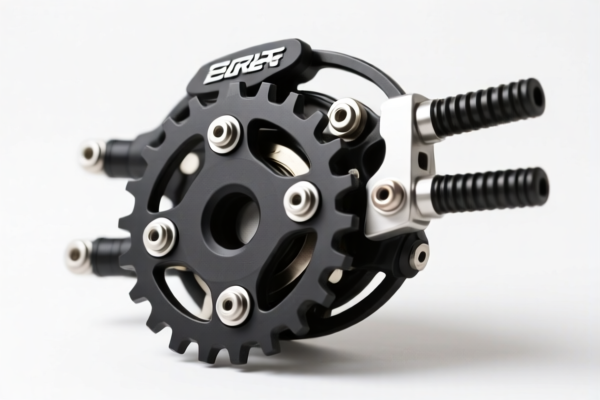
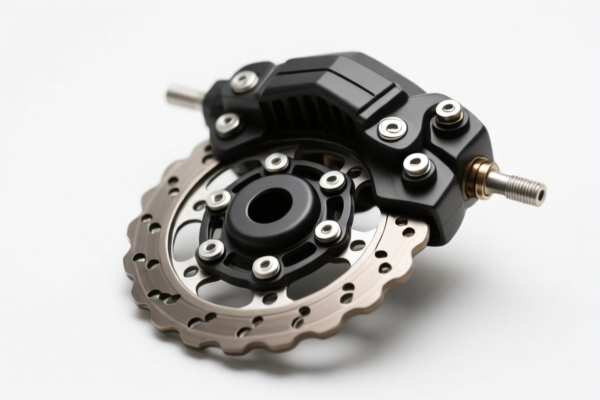
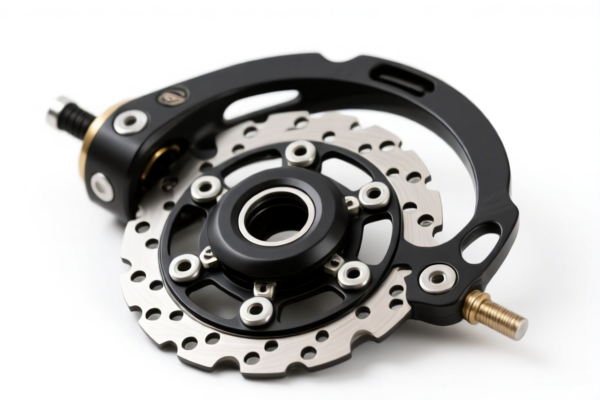
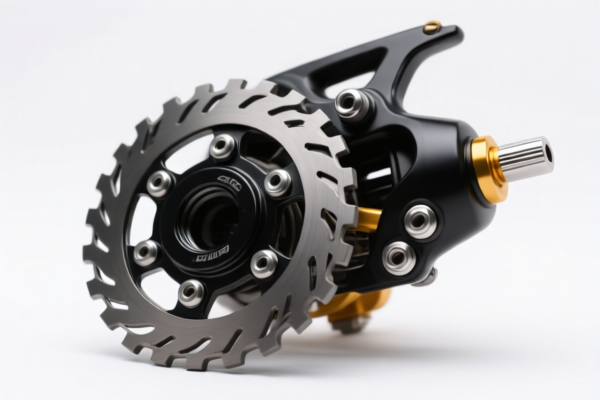
AI Analysis
🔒 Motorcycle Locks (Vehicle Security Locks)
🌐 HS Code Reference & Customs Clearance Guide | 2026 Latest Tariff Analysis | Professional Clearance Strategy
📌 I. Product Definition & Classification: What Exactly is a "Motorcycle Lock"?
A motorcycle lock is a security device designed to immobilize or secure a motorcycle. In international trade, classification often hinges on two factors:
1. Function: Is it a "padlock" (hanging lock) or a general "metal article"?
2. Material: Is it classified as a specific lock (Chapter 83) or a generic metal product (Chapter 73)?
⚠️ Key Distinction Point:
- If the lock functions primarily as a hanging padlock made of base metal → It falls under Chapter 83 (8301).
- If it is considered a generic metal fastener or article (often used for cable locks or disc locks treated as general metal goods) → It may fall under Chapter 73 (7326) (Articles of Iron/Steel).
📦 II. HS Code Classification Details (2026 Latest Tariff Authoritative Comparison)
| HS Code | Product Description | Applicability Scenario | Tax Rate Impact |
|---|---|---|---|
8301.10.80.00 |
Padlocks and locks; of base metal. | Common Padlocks: Traditional key locks, U-locks that function as padlocks. | Lowest (22.3%) |
8301.10.60.80 |
Padlocks and locks; of base metal. | Alternative Padlock Category: Similar to above, but different sub-heading for specific base metal padlocks. | Low (23.6%) |
7326.20.00.90 |
Other articles of iron or steel. | General Metal Locks: Disc locks, cable locks, or locks classified as "other iron/steel articles" rather than specific "padlocks". | Very High (88.9%) |
7326.90.86.88 |
Other articles of iron or steel. | Generic Metal Goods: Broad category for other iron/steel articles, often used for complex or non-standard metal locking mechanisms. | Very High (87.9%) |
🔍 Crucial Reminder:
- Misclassification Risk: Classifying a standard padlock as "Other Articles of Iron or Steel" (Chapter 73) leads to massive tariff increases (from ~22% to ~88%).
- Best Practice: If the item is a recognizable padlock, prioritize Chapter 83. If it is a specialized disc lock or cable lock with complex mechanisms, customs might argue for Chapter 73, but you should argue for Chapter 83 if functionally equivalent to a padlock.
💰 III. 2026 Latest Tariff Rate Details (Including Additional Duties & Policy Add-ons)
✅ Applicable Country: United States (US)
✅ Origin: China (CN)
✅ Effective Date: Current rates include Section 301 and IEEPA surcharges.
🎯 1. 8301.10.80.00 —— Padlocks of Base Metal (Recommended)
| Item | Detail |
|---|---|
| Base Tariff | 4.8% |
| Section 301 (Additional) | 7.5% |
| IEEPA (Section 1223 Surcharge) | 10% |
| Total Tariff Rate | 22.3% |
| Calculation Basis | CIF Value × 22.3% |
| De Minimis Eligibility | ❌ No (Subject to high duties) |
| Legal Basis Path | HTSUS:8301.10.80.00 → Section 301: 4.8%+7.5% → IEEPA: 10% |
📌 Explanation:
- This is the most favorable classification for standard motorcycle padlocks.
- The total burden is manageable at 22.3%.
- Key Argument: Emphasize that the product is a "padlock" (hanging lock) made of base metal.
🎯 2. 8301.10.60.80 —— Alternative Padlock Classification
| Item | Detail |
|---|---|
| Base Tariff | 6.1% |
| Section 301 (Additional) | 7.5% |
| IEEPA (Section 1223 Surcharge) | 10% |
| Total Tariff Rate | 23.6% |
| Calculation Basis | CIF Value × 23.6% |
| De Minimis Eligibility | ❌ No |
| Legal Basis Path | HTSUS:8301.10.60.80 → Section 301 → IEEPA |
📌 Note:
- Slightly higher than8301.10.80.00due to a higher base tariff (6.1% vs 4.8%).
- Still significantly better than Chapter 73 classifications.
🎯 3. 7326.20.00.90 —— Other Articles of Iron or Steel (High Risk)
| Item | Detail |
|---|---|
| Base Tariff | 3.9% |
| Section 301 (Additional) | 25.0% |
| IEEPA (Section 1223 Surcharge) | 10% |
| USITC Footnote (Steel/Aluminum) | 50% |
| Total Tariff Rate | 88.9% |
| Calculation Basis | CIF Value × 88.9% |
| De Minimis Eligibility | ❌ No |
| Legal Basis Path | HTSUS:7326.20.00.90 → Section 301: 25% → IEEPA: 10% → USITC Footnote: 50% |
📌 Warning:
- This classification incurs a 50% additional duty specifically for "Steel, Aluminum, and Copper Products" under USITC footnote regulations.
- Avoid this unless absolutely necessary (e.g., if the lock is entirely non-functional as a lock but just a metal bracket).
🎯 4. 7326.90.86.88 —— Other Articles of Iron or Steel (High Risk)
| Item | Detail |
|---|---|
| Base Tariff | 2.9% |
| Section 301 (Additional) | 25.0% |
| IEEPA (Section 1223 Surcharge) | 10% |
| USITC Footnote (Steel/Aluminum) | 50% |
| Total Tariff Rate | 87.9% |
| Calculation Basis | CIF Value × 87.9% |
| De Minimis Eligibility | ❌ No |
| Legal Basis Path | HTSUS:7326.90.86.88 → Section 301 → IEEPA → USITC Footnote |
📌 Note:
- Very similar to7326.20.00.90in terms of punitive taxation.
- The 50% steel/aluminum surcharge is the primary driver of this high cost.
🛠️ IV. Customs Clearance Practical Advice (Combat-Ready Pitfall Avoidance Guide)
✅ 1. Documentation Checklist (Non-Negotiable)
| Document | Required | Purpose |
|---|---|---|
| ✅ Product Specifications | ✔️ | Must explicitly state "Padlock" or "Lock," material (Base Metal), and dimensions. |
| ✅ Product Photos | ✔️ | Show the shackle, keyway, and locking mechanism to prove it functions as a padlock. |
| ✅ Bill of Lading / Commercial Invoice | ✔️ | Description must align with HS Code (e.g., "Steel Padlock for Motorcycle"). |
| ✅ Material Declaration | ✔️ | Confirm base metal composition (iron/steel) to justify Chapter 83 or 73. |
| ✅ Certificate of Origin | ✔️ | For origin verification and potential tariff exemptions (if applicable). |
✅ 2. Declaration Tips (Key Mnemonics)
🔥 "Lock is Padlock, Chapter 83, Save 60% Tax!"
| Scenario | Correct Declaration | Wrong Declaration | Consequence |
|---|---|---|---|
| Standard U-Lock / Disc Lock (with key) | Padlock → 8301.10.80.00 (22.3%) |
"Metal Lock Part" → 7326.90.86.88 (87.9%) |
Overpay ~65% in tariffs! |
| Cable Lock (with casing) | Argue for Padlock function | "Wire Product" → 7326 |
Risk of audit and back-taxes |
| Lock Body Only (No Key/Shackle) | 8301.10.80.00 (if complete assembly) |
"Hardware Fitting" → 7326 |
Unclear function leads to higher duty |
📌 Critical Argument:
- Even if the lock is attached to a cable, if the primary function is to lock via a shackle/key mechanism, it is a padlock.
- Do not describe it as "metal article" or "fastener" in the invoice if it is clearly a lock.
✅ 3. Special Handling Scenarios
| Scenario | Handling Advice |
|---|---|
| Disc Locks (U-Lock Style) | Argue they are Padlocks because they have a rigid shackle and key cylinder. Use 8301.10.80.00. |
| Cable Locks | If the cable is integral and the lock head is a padlock, classify as Padlock. If the cable is the main component and the lock is trivial, customs might accept Chapter 73, but fighting for Chapter 83 is worth the savings. |
| Smart/Electronic Locks | If it has electronic components (GPS, Bluetooth), it might fall under Chapter 85 (Electrical), but many simple "smart" locks are still classified as Base Metal Locks if the locking mechanism is physical. Consult a specialist. |
| OEM Custom Locks | Provide design drawings to prove the "padlock" functionality. |
🌍 V. Global Market Clearance Comparison (2026 Latest)
| Country/Region | Recommended HS Code | Tariff Rate (China Origin) | Certification | Notes |
|---|---|---|---|---|
| 🇺🇸 USA | 8301.10.80.00 |
22.3% | No specific | Avoid Chapter 73 (88.9%) due to steel surcharges. |
| 🇨🇳 China | 8301.10.80.00 |
5-6% | CCC (if applicable) | Standard import duty. |
| 🇪🇺 EU | 8301.10.00 |
~2.7% + VAT | CE (if electronic) | Low base duty, but high VAT. |
| 🇬🇧 UK | 8301.10.00 |
~2.7% + VAT | UKCA (if electronic) | Post-Brexit rules apply. |
| 🇯🇵 Japan | 8301.10.00 |
~3-5% | PSE (if electronic) | Stable tariff. |
📌 Conclusion:
- USA is the critical market: The difference between Chapter 83 (22.3%) and Chapter 73 (88.9%) is 66.6%.
- Always prioritize Chapter 83 for motorcycle locks that function as padlocks.
- Chapter 73 is a trap due to the 50% steel/aluminum additional duty.
📌 VI. Common Mistakes & Pitfall Guide (Lessons from Blood and Tears)
❌ Mistake 1: Describing the product as "Metal Locking Hardware" or "Steel Article"
👉 Result: Customs classifies it under 7326 → 88.9% tariff.
👉 Fix: Use the word "Padlock" in the description.
❌ Mistake 2: Ignoring the "Steel/Aluminum" Surcharge
👉 Result: Even if base duty is low, the 50% USITC Footnote adds up.
👉 Fix: Ensure classification is under 8301, which is exempt from the steel/aluminum surcharge.
❌ Mistake 3: Splitting the Lock and Cable into Separate Shipments
👉 Result: If declared separately, the cable might be seen as a "wire article" (Chapter 73) and the lock as a "padlock" (Chapter 83), causing inconsistency.
👉 Fix: Declare as a complete set ("Motorcycle Lock with Cable") under 8301.10.80.00.
✅ Correct Declaration Example:
"Motorcycle Padlock, Base Metal, with Cable, Model XYZ, Key Included, For Vehicle Security"
🎯 VII. Conclusion: Precise Classification, Maximize Profit!
🎯 Remember the Mnemonic:
🔹 "Padlock is 83, Metal is 73, 83 is Cheap, 73 is Heavy Debt!"
🔹 "22% vs 89%, Don't Let Greed Be Your Downfall!"
📌 Pro Tip:
If your supplier insists on "other metal articles" to save cost in their home country, push back. In the US market, the 22.3% tariff for 8301.10.80.00 is far more cost-effective than the 88.9% for 7326.
📣 Immediate Action:
📞 Contact your customs broker with product photos and insist on HS 8301.10.80.00.
🚀 Ensure your commercial invoice clearly states "PADLOCK" to avoid misclassification.
✨ Professional Clearance, Start with Accurate Classification!
💼 Your Profit Margin Depends on the HS Code!
Customer Reviews
About HS Code Classification
The Harmonized System (HS) is an internationally standardized nomenclature developed by the World Customs Organization (WCO) to classify traded products. Over 200 countries use the HS system as the basis for customs tariffs, trade statistics, and import/export regulations.
Each HS code follows a hierarchical structure:
- Chapter (2 digits) — Broad category of goods (e.g., Chapter 84: Machinery and Mechanical Appliances)
- Heading (4 digits) — More specific grouping within the chapter
- Subheading (6 digits) — Internationally standardized breakdown, used by all WCO member countries
- National subdivisions (8-10 digits) — Country-specific extensions for further classification, such as US HTSUS 10-digit codes
Correct HS code classification is essential for smooth customs clearance, accurate duty payment, and compliance with trade regulations. Misclassification can lead to customs delays, overpayment of duties, or penalties.
When importing from CN to US, the applicable tariff rates may include:
- Most-Favored-Nation (MFN) rate — The standard duty rate applied to WTO members
- General rate — Applied to countries without trade agreements
- Trade remedy duties — Additional tariffs such as Section 301 (anti-dumping), Section 232 (national security), or countervailing duties
The information provided on this page is for reference purposes only. For official classification, please consult with your local customs authority or a licensed customs broker.