Motorcycle rubber inner tubes
CN → US| HS Code | Tariff Rate | Origin | Destination | Doc |
|---|---|---|---|---|
| 4013905010 | 38.7% | CN | US | Official Doc |
| 8714998000 | 27.5% | CN | US | Official Doc |
| 8714100050 | 17.5% | CN | US | Official Doc |
| 4002390000 | 35.0% | CN | US | Official Doc |
| 4013200000 | 12.0% | CN | US | Official Doc |
Product Images
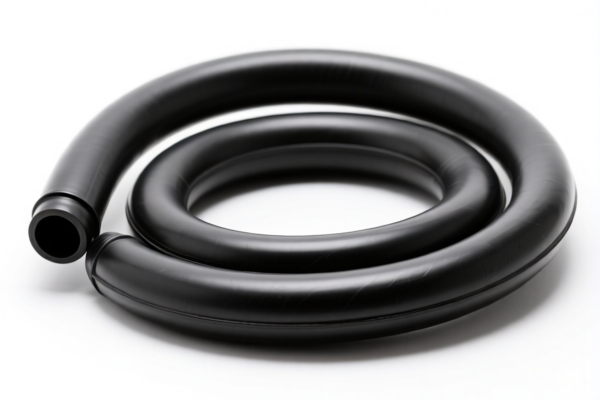
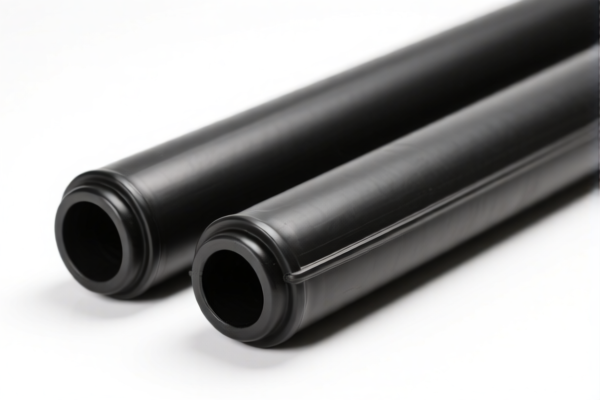
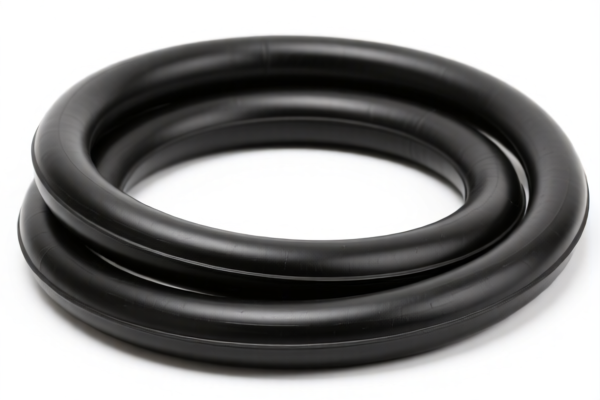
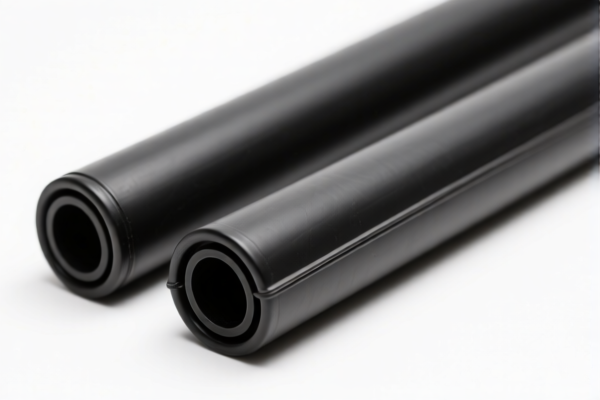
AI Analysis
🏍️ Motorcycle Rubber Inner Tubes (Duck-Boot Style / Butyl Rubber)
🌐 HS Code Reference & Customs Clearance Guide | 2026 Latest Tariff Analysis | Professional Transit Strategy
📌 I. Product Definition & Classification: Do You Truly Understand "Inner Tubes"?
Motorcycle inner tubes are critical pneumatic components installed inside tire casings to retain air pressure. In international trade, the classification depends heavily on the specific HS Code definition and the material composition (primarily Butyl Rubber). Unlike bicycle inner tubes (which often enjoy lower tariffs), motorcycle inner tubes face significant trade barriers due to their classification under vehicle parts or specific rubber articles.
Based on the provided dataset, there are four distinct HS Code classifications for motorcycle inner tubes, leading to vastly different tax implications. The choice depends on how the customs authority views the item: as a dedicated "inner tube article," a general "motorcycle part," or a raw "rubber compound."
⚠️ Key Distinction:
- If declared as a dedicated inner tube (4013.90.50.10) → Highest Tax (38.7%);
- If declared as a general motorcycle part (8714.10.00.50) → Lowest Tax (17.5%);
- If declared as a non-specific motorcycle part (8714.99.80.00) → Medium-High Tax (27.5%);
- If declared as Butyl Rubber Articles (4002.39.00.00) → High Tax (35.0%).
📦 II. HS Code Classification Details (2026 Latest Tariff Authority对照)
| HS Code | Product Description | Scenario | Total Tax Rate |
|---|---|---|---|
4013.90.50.10 |
Inner Tubes of Butyl Rubber for Motorcycles Material: Butyl Rubber Form: Inner Tube Use: Motorcycle |
Dedicated inner tube, clearly identified as such in documentation | 38.7% |
8714.10.00.50 |
Motorcycle Parts & Accessories Material: Butyl Rubber Use: Motorcycle Inner Tube Category: Part of Motorcycle |
Declared broadly as a "motorcycle part/accessory" rather than a specific rubber article | 17.5% |
8714.99.80.00 |
Other Motorcycle Parts Material: Butyl Rubber Category: Other Parts under Chapter 87 |
General "other parts" category, less specific than 8714.10 | 27.5% |
4002.39.00.00 |
Butyl Rubber Articles Material: Butyl Rubber (Isobutylene-isoprene) Note: Inner Tube belongs to this rubber article class |
Declared primarily as a rubber product/compound rather than a vehicle part | 35.0% |
🔍 Important Reminder:
-4013.90.50.10is the most direct description but carries the highest tariff burden (38.7%).
-8714.10.00.50offers the lowest duty (17.5%) by leveraging the "Parts & Accessories" category.
-4013.20.00.00(Bicycle Inner Tubes, 12.0% tax) is NOT applicable to motorcycles; do not misdeclare motorcycle tubes as bicycle tubes to avoid severe penalties.
💰 III. 2026 Latest Tariff Rate Breakdown (Including Surtaxes & Policy Add-ons)
✅ Applicable Country: United States (US)
✅ Origin: China (CN)
✅ Effective Date: Current tariffs apply (Subject to 301/122 provisions)
🎯 1. 4013.90.50.10 —— Dedicated Motorcycle Inner Tube (Butyl Rubber)
| Item | Content |
|---|---|
| Base Tariff | 3.7% |
| Surtax (Section 301) | +25.0% |
| Section 122 Tariff | +10.0% |
| Total Rate | 38.7% |
| Tax Calculation | CIF Value × 38.7% |
| De Minimis Exemption | ❌ Not Applicable (High value, high risk) |
| Legal Path | Base: 4013 → Surtax: 301/25% → Section 122: 10% |
📌 Explanation:
- This code is for specific rubber inner tubes.
- The 25% Section 301 tariff is the dominant cost driver.
- Section 122 adds an extra 10%.
- Result: One of the highest rates among rubber articles due to the combination of base + trade remedies.
🎯 2. 8714.10.00.50 —— Motorcycle Parts & Accessories (Lower Tax Strategy)
| Item | Content |
|---|---|
| Base Tariff | 0.0% |
| Surtax (Section 301) | +7.5% |
| Section 122 Tariff | +10.0% |
| Total Rate | 17.5% |
| Tax Calculation | CIF Value × 17.5% |
| De Minimis Exemption | ❌ Not Applicable |
| Legal Path | Base: 8714 → Surtax: 301/7.5% → Section 122: 10% |
📌 Explanation:
- This is the most tax-efficient classification for motorcycles.
- Base tariff is 0% for motorcycle parts/accessories.
- Surtax is only 7.5% (vs 25% for rubber articles).
- Result: Saves 21.2% in total tax compared to4013.90.50.10.
- Caution: Must be clearly declared as a "Motorcycle Part" to qualify.
🎯 3. 8714.99.80.00 —— Other Motorcycle Parts (Medium Tax)
| Item | Content |
|---|---|
| Base Tariff | 10.0% |
| Surtax (Section 301) | +7.5% |
| Section 122 Tariff | +10.0% |
| Total Rate | 27.5% |
| Tax Calculation | CIF Value × 27.5% |
| De Minimis Exemption | ❌ Not Applicable |
| Legal Path | Base: 8714 → Surtax: 301/7.5% → Section 122: 10% |
📌 Explanation:
- Used when the part doesn't fit the specific "Inner Tube" or "Accessories" sub-categories.
- Base tariff is 10%, which is higher than8714.10.
- Result: A middle-ground option, but still cheaper than the rubber-specific codes.
🎯 4. 4002.39.00.00 —— Butyl Rubber Articles (High Tax)
| Item | Content |
|---|---|
| Base Tariff | 0.0% |
| Surtax (Section 301) | +25.0% |
| Section 122 Tariff | +10.0% |
| Total Rate | 35.0% |
| Tax Calculation | CIF Value × 35.0% |
| De Minimis Exemption | ❌ Not Applicable |
| Legal Path | Base: 4002 → Surtax: 301/25% → Section 122: 10% |
📌 Explanation:
- This code classifies the item as a rubber product rather than a vehicle part.
- While base tariff is 0%, the 25% Section 301 surtax kicks in fully.
- Result: Very high effective tax rate, similar to dedicated rubber articles.
🛠️ IV. Customs Clearance Practical Advice (Real-World Pitfall Avoidance)
✅ 1. Documentation Checklist (Non-Negotiable)
| Document | Required? | Notes |
|---|---|---|
| ✅ Product Specifications | ✔️ | Must specify: Material (Butyl Rubber), Size (e.g., 18x2.125), Valve Type (Schrader/Dunlop). |
| ✅ Commercial Invoice | ✔️ | Clearly state "Motorcycle Inner Tube" OR "Motorcycle Part". Do not write "Bicycle Part". |
| ✅ Packing List | ✔️ | Include quantity, net weight, and packaging details. |
| ✅ Material Declaration | ✔️ | Confirm it is Butyl Rubber (Isobutylene-isoprene). Natural rubber may have different codes. |
| ✅ Photo of Product/Label | ✔️ | Show the stamp on the tube (size, brand, material). |
✅ 2. Classification Strategy (Key Rules)
🔥 “Part vs. Article: Choose Wisely, Save Thousands!”
| Scenario | Correct HS Code | Tax Rate | Error Risk |
|---|---|---|---|
| Declared as "Motorcycle Part" | 8714.10.00.50 |
17.5% | Low (if documented well) |
| Declared as "Inner Tube (Rubber)" | 4013.90.50.10 |
38.7% | High (over-taxation) |
| Declared as "Rubber Article" | 4002.39.00.00 |
35.0% | Medium (higher than part) |
| Declared as "Bicycle Inner Tube" | 4013.20.00.00 |
12.0% | CRITICAL ERROR (Misdeclaration) |
📌 Warning:
- Never declare motorcycle inner tubes as4013.20.00.00(Bicycle). This is a common but dangerous error.
- If you declare as8714.10.00.50, ensure your commercial invoice highlights "Motorcycle Parts" to justify the 17.5% rate.
- If customs challenges you, you may need to provide evidence that the tube is specifically shaped for a motorcycle tire (e.g., valve stem length, thickness).
✅ 3. Special Cases
| Scenario | Handling Advice |
|---|---|
| OEM Custom Tubes | Provide design specs showing it fits a specific motorcycle model. Supports 8714.10 classification. |
| Mixed Containers (Parts + Tubes) | Declare tubes separately. Do not bundle into "General Spare Parts" if you want the 17.5% rate. |
| Small Samples (De Minimis) | For shipments under $800, check if de minimis applies. However, 301 tariffs often negate de minimis benefits for Chinese origin. Verify current policy. |
| Valve Type Change | Schrader vs. Dunlop valves do not change the HS Code, but must be declared for clarity. |
🌍 V. Global Market Comparison (2026)
| Country/Region | Recommended HS Code | Total Tax (China Origin) | Key Requirement | Note |
|---|---|---|---|---|
| 🇺🇸 USA | 8714.10.00.50 |
17.5% | Clear "Motorcycle Part" description | Best Rate for US |
| 🇺🇸 USA | 4013.90.50.10 |
38.7% | "Inner Tube" description | Avoid if possible |
| 🇨🇳 China | 4013.90.50.10 |
~10-15% (EST) | CCC Certification (if applicable) | Domestic trade |
| 🇪🇺 EU | 4013.90 |
3.5% - 6% | CE Compliance (if applicable) | No Section 122/301 |
| 🇦🇺 Australia | 8714.99 |
5% | GSR Standards | Low base tariff |
📌 Conclusion:
- USA has the most complex tariff structure due to Section 301 and 122.
- Choosing8714.10.00.50can save you over 20% in taxes compared to4013.90.50.10.
- Europe and Australia have simpler, lower tariffs for rubber articles.
📌 VI. Common Mistakes & Pitfalls (Blood Lessons)
❌ Mistake 1: Declaring Motorcycle Inner Tubes as 4013.20.00.00 (Bicycle)
👉 Consequence: Customs rejection, fines, and possible detention. Never do this.
❌ Mistake 2: Using "Rubber Tube" without specifying "Motorcycle"
👉 Consequence: Customs may default to 4002.39.00.00 (35.0%) or 4013.90.50.10 (38.7%). Always specify end-use.
❌ Mistake 3: Failing to disclose "Section 122" Impact
👉 Consequence: Unexpected 10% surcharge at border. Always budget for Total Tax (Base + 301 + 122).
❌ Mistake 4: Ignoring Material Composition
👉 Consequence: If natural rubber is used instead of butyl, the HS Code might change. Always confirm material.
✅ Correct Practice:
"Motorcycle Inner Tube, Butyl Rubber, 18x2.125, Schrader Valve, Model XYZ, Made in China"
🎯 VII. Conclusion: Smart Classification, Lower Costs!
🎯 Remember the Mantra:
🔹 "Part vs. Article: 17.5% vs 38.7% – Think Before You Ship!"
🔹 "Don’t call it a bicycle part, or you’ll pay the price!"
🔹 "Butyl Rubber is key, Section 122 is free money lost."
📌 Pro Tip:
If your inner tubes are shipped with other motorcycle parts (e.g., brake pads, chains), ensure they are separately listed in the invoice to justify the 8714.10.00.50 classification. Mixing them into a "General Hardware" box may trigger a reclassification to higher-tariff rubber articles.
📣 Immediate Action:
📞 Contact a Licensed Customs Broker + Provide Product Specs + Request HS Code Pre-Ruling
🚀 Save 21% in Taxes by Choosing the Right HS Code!
✨ Professional Clearance Starts with Precise Classification!
💼 Every Percent Saved is Pure Profit!
Customer Reviews
About HS Code Classification
The Harmonized System (HS) is an internationally standardized nomenclature developed by the World Customs Organization (WCO) to classify traded products. Over 200 countries use the HS system as the basis for customs tariffs, trade statistics, and import/export regulations.
Each HS code follows a hierarchical structure:
- Chapter (2 digits) — Broad category of goods (e.g., Chapter 84: Machinery and Mechanical Appliances)
- Heading (4 digits) — More specific grouping within the chapter
- Subheading (6 digits) — Internationally standardized breakdown, used by all WCO member countries
- National subdivisions (8-10 digits) — Country-specific extensions for further classification, such as US HTSUS 10-digit codes
Correct HS code classification is essential for smooth customs clearance, accurate duty payment, and compliance with trade regulations. Misclassification can lead to customs delays, overpayment of duties, or penalties.
When importing from CN to US, the applicable tariff rates may include:
- Most-Favored-Nation (MFN) rate — The standard duty rate applied to WTO members
- General rate — Applied to countries without trade agreements
- Trade remedy duties — Additional tariffs such as Section 301 (anti-dumping), Section 232 (national security), or countervailing duties
The information provided on this page is for reference purposes only. For official classification, please consult with your local customs authority or a licensed customs broker.