Moulds for metal or metal carbides
CN → US| HS Code | Tariff Rate | Origin | Destination | Doc |
|---|---|---|---|---|
| 8480410000 | 13.1% | CN | US | Official Doc |
| 8480490090 | 13.1% | CN | US | Official Doc |
| 8207306062 | 37.9% | CN | US | Official Doc |
Product Images
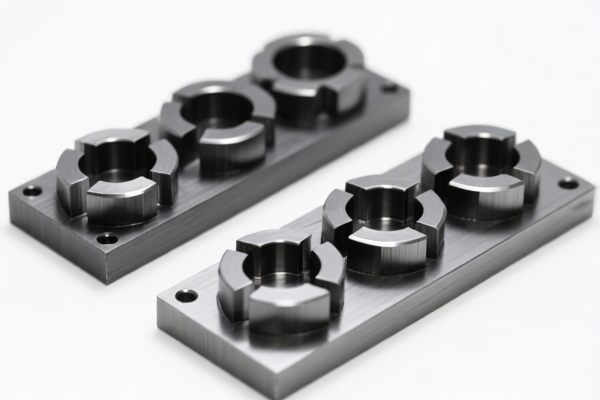
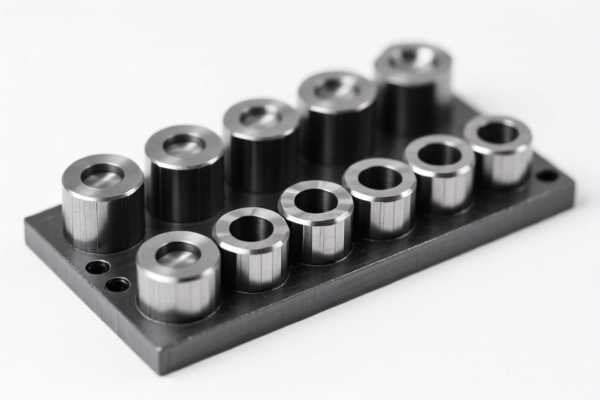
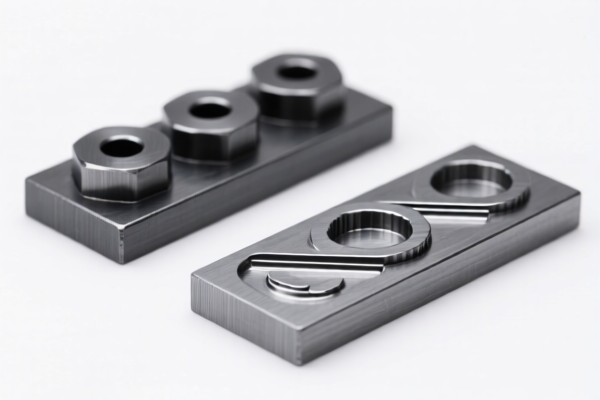
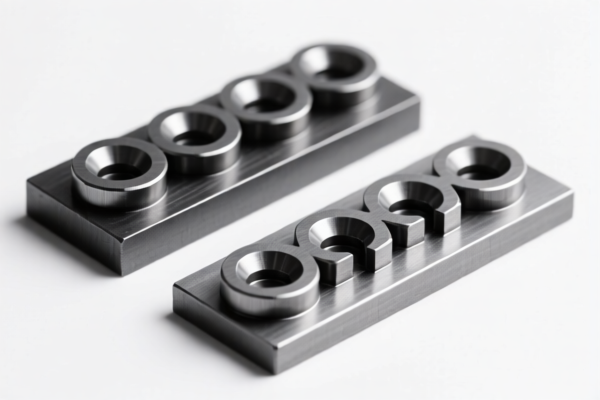
AI Analysis
🛠️ Moulds for Metal or Metal Carbides (Industrial Tooling)
🌐 HS Code Reference & Customs Clearance Guide | 2026 Latest Tariff Analysis | Professional Clearance Strategy
📌 I. Product Definition & Classification: Do You Truly Understand "Metal Moulds"?
Moulds for metal or metal carbides are the backbone of modern manufacturing, used in forging, stamping, pressing, and extraging processes. In international trade, these industrial tools are not a single uniform category but are classified based on their material composition, method of operation, and specific application.
The core distinction lies in: 1. Material Base: Are they made of base metals (Steel/Aluminum) or hard metals/carbides (Tungsten Carbide)? 2. Operational Mechanism: Are they for cold/hot working (pressing/stamping) or for specific processes like injection molding (even if for metal)?
⚠️ Key Classification Distinction:
- Standard Metal Moulds (Steel/Aluminum bodies, standard steel inserts): Generally fall under 8480.41 or 8480.49.
- Carbide-Specific/High-Performance Moulds: If the tooling core is specifically defined as metal carbide or fits specialized pressing categories, it may fall under 8207.30.
- The "122 Clause" Trap: Most of these items are subject to additional U.S. trade remedies, drastically altering the landed cost.
📦 II. HS Code Classification Details (2026 Authoritative Mapping)
Based on the provided data, the classification splits into three distinct HS Codes with significant tariff implications.
| HS Code | Product Description | Application Scenario | Material/Type Specifics |
|---|---|---|---|
8480.41.00.00 |
Moulds for metal or metal carbides, specific type 1 | Precision stamping, pressing, or forging dies | ✅ Summary: Material and usage fully align with classification explanations for standard metal moulds. |
8480.49.00.90 |
Moulds for metal or metal carbides, specific type 2 | General-purpose metal forming, other pressing moulds | ✅ Summary: Core material is consistent, meets mould morphology requirements. |
8207.30.60.62 |
Interchangeable tools for machine-tools, metal forming | High-hardness carbide tools, specialized pressing inserts | ✅ Summary: Meets classification requirements for metal forming moulds, likely involving hardmetal/carbide inserts. |
🔍 Critical Note:
- The first two codes (8480.4x) are the standard chapters for moulds.
- The third code (8207.30) falls under Chapter 82 (Tools), often applied to interchangeable tools or specialized carbide-tipped forming tools rather than full mould assemblies.
- Do not assume low tariffs: The presence of the "122 Clause" and Section 301 tariffs significantly impacts all three categories.
💰 III. 2026 Latest Tariff Rate Breakdown (Including Surtaxes & Policy Add-ons)
✅ Applicable Country: United States (US)
✅ Origin: China (CN)
✅ Effective Date: Current 2026 Tariff Regime
🎯 1. 8480.41.00.00 & 8480.49.00.90 —— Standard Metal Moulds
These two codes share the same tariff structure, representing the most common classification for metal moulds.
| Item | Content |
|---|---|
| Base Duty Rate | 3.1% (Ad Valorem) |
| Section 301 Surcharge | 0.0% (No additional Section 301 tax applied to these specific sub-headings in this dataset) |
| 122 Clause Surcharge | 10.0% (Retaliatory/Specific Trade Measure) |
| Total Effective Rate | 13.1% |
| Tax Calculation | CIF Value × 13.1% |
| De Minimis Eligibility | ❌ Not Applicable (Commercial shipment) |
| Legal Basis Path | HTSUS 8480.41/49 → 122 Clause Regulations → USCBP Rulings |
📌 Explanation:
- The 3.1% is the standard Most Favored Nation (MFN) rate.
- The 10% is explicitly labeled as the "122 Clause Tariff". This typically refers to specific U.S. trade provisions (often linked to Countervailing Duties or specific anti-dumping/administrative orders under Section 122 or related trade acts).
- Total Cost Impact: A $10,000 shipment incurs $1,310 in duties. While lower than the 45% seen on electronics, it is still a significant overhead for high-value tooling.
🎯 2. 8207.30.60.62 —— Carbide/High-Performance Forming Tools
This classification carries a drastically higher tariff burden due to the "25% Surtax" (likely Section 301) on top of the base and 122 clause rates.
| Item | Content |
|---|---|
| Base Duty Rate | 2.9% |
| Section 301 Surtax | 25.0% (High punitive tariff on metal working tools) |
| 122 Clause Surcharge | 10.0% |
| Total Effective Rate | 37.9% |
| Tax Calculation | CIF Value × 37.9% |
| De Minimis Eligibility | ❌ Not Applicable |
| Legal Basis Path | HTSUS 8207.30 → Section 301 List 4/Specific Tooling → 122 Clause |
📌 Warning:
- Why is this so expensive? The 25% Section 301 tax is applied to a broad range of Chinese-made metalworking tools and machinery parts.
- If your product is a solid carbide die or a carbide-tipped pressing tool, customs may prefer8207.30over8480.4x, triggering this 37.9% rate.
- Cost Impact: A $10,000 shipment incurs $3,790 in duties.
🛠️ IV. Customs Clearance Practical Advice (Pitfall Avoidance Guide)
✅ 1. Essential Documentation Checklist
| Document | Required? | Purpose |
|---|---|---|
| ✅ Product Specifications | ✔️ | Must detail material (e.g., "Steel Core with Tungsten Carbide Insert"), dimensions, and intended metal (e.g., "For Aluminum Stamping"). |
| ✅ Material Certificate | ✔️ | Crucial for distinguishing between 8480 (Steel Mould) and 8207 (Carbide Tool). |
| ✅ Commercial Invoice | ✔️ | Clearly state "Mould for Metal Forming" – avoid vague terms like "Tool". |
| ✅ Packing List | ✔️ | Detail all components (base, inserts, bolts). |
| ✅ Prior Ruling (If Available) | ✔️ | Highly recommended to lock in the 8480 vs. 8207 classification. |
✅ 2. Classification Strategy (Key Mnemonic)
🔥 "Material Defines Code, Carbide Spikes Cost!"
| Scenario | Recommended HS Code | Reason |
|---|---|---|
| Steel Base + Steel Insert | 8480.41.00.00 or 8480.49.00.90 |
Standard mould classification. Lower tariff (13.1%). |
| Solid Carbide Forming Tool | 8207.30.60.62 |
Classified as interchangeable tool. High tariff (37.9%). |
| Hybrid (Steel Mould w/ Carbide Tip) | Argue for 8480.4x |
If the carbide is just an insert in a larger mould assembly, argue for Chapter 84 (Moulds) to avoid the 25% surcharge. |
| Incomplete Mould Parts | Check Sub-heading | Ensure parts are specifically identifiable as mould parts. |
⚠️ Critical Optimization Tip:
For Steel Moulds with Carbide Inserts, ensure the declaration emphasizes the "Mould" function (Chapter 84) rather than the "Tool" function (Chapter 82). If classified under8207, you pay 37.9%. If correctly classified under8480, you pay only 13.1%. The difference is 24.8% of the CIF value!
✅ 3. Special Cases & Handling
| Situation | Handling Advice |
|---|---|
| Carbide Inserts Sold Separately | May fall under 8207.30. High risk of 37.9% tax. |
| Moulds for Specific Metals (e.g., Aluminum vs. Steel) | Ensure the summary matches the "Metal or Metal Carbides" definition. Some specific alloys might have different rulings. |
| Used Moulds | Still subject to duty based on the new value. Ensure condition is stated. |
| Sample Shipments | Even samples are subject to these tariffs. Do not assume "No Value" = "No Tax". |
🌍 V. Global Market Comparison (2026 Snapshot)
| Region | Recommended HS Code | Tariff (China Origin) | Key Requirement |
|---|---|---|---|
| 🇺🇸 USA | 8480.41.00.00 / 8480.49.00.90 |
13.1% | 122 Clause Compliance |
| 🇺🇸 USA (Carbide Tools) | 8207.30.60.62 |
37.9% | Section 301 + 122 Clause |
| 🇪🇺 EU | 8480.41 / 8480.49 |
Varies (Usually 0-4.5%) | CE Marking (if machinery), REACH |
| 🇨🇳 China (Import) | 8480.41 / 8480.49 |
3-10% (MFN) | CCC Certification (if applicable) |
| 🇬🇧 UK | 8480.41 / 8480.49 |
0-5% | UKCA Marking |
📌 Conclusion:
The USA remains the highest-cost market due to the layered "122 Clause" and "Section 301" taxes.
The EU and UK offer significantly lower duty barriers, making them more attractive for exporting high-end metal moulds unless trade restrictions apply.
📌 VI. Common Errors & Pitfall Guide (Lessons Learned)
❌ Error 1: Misclassifying a Steel Mould with Carbide Inserts as 8207.30
👉 Consequence: Paying 37.9% instead of 13.1%.
👉 Fix: Provide diagrams showing the carbide is merely an insert in a larger mould assembly (Chapter 84).
❌ Error 2: Vague Description "Metal Tool"
👉 Consequence: Customs flags the shipment, demanding extra documentation, causing delays.
👉 Fix: Use precise terms: "Steel Mould for Pressing Aluminum Parts".
❌ Error 3: Ignoring the "122 Clause" in Cost Calculations
👉 Consequence: Profit margin erosion due to unexpected 10% charge.
👉 Fix: Include the 10% 122 Clause fee in all quotes to US buyers.
✅ Correct Declaration Example:
"Steel Mould Set for Metal Stamping, Core Material: P20 Steel, Insert Material: Tungsten Carbide, Model: XYZ-100, Made in China"
🎯 VII. Conclusion: Precision in Classification Saves Money
🎯 Remember the Golden Rule:
🔹 "Moulds are 13%, Tools are 38%. Define it as a Mould, Keep Your Cash!"
🔹 "Carbide Inserts are okay if they are part of a Mould. Separate Carbide Tools are expensive."
📌 Pro Tip:
If you are importing high-value precision moulds, consider applying for an HTSUS Advance Ruling from US Customs. This legally binds the customs service to your chosen code (8480), protecting you from retroactive claims of misclassification and the associated 24.8% rate difference.
📣 Immediate Action:
📞 Contact a licensed customs broker
📄 Provide material specs and assembly drawings
🚀 Optimize your HS Code to8480if possible, and budget for the 13.1% total duty.
✨ Professional Clearance Starts with Accurate Classification!
💼 Every percentage point saved is pure profit!
Customer Reviews
About HS Code Classification
The Harmonized System (HS) is an internationally standardized nomenclature developed by the World Customs Organization (WCO) to classify traded products. Over 200 countries use the HS system as the basis for customs tariffs, trade statistics, and import/export regulations.
Each HS code follows a hierarchical structure:
- Chapter (2 digits) — Broad category of goods (e.g., Chapter 84: Machinery and Mechanical Appliances)
- Heading (4 digits) — More specific grouping within the chapter
- Subheading (6 digits) — Internationally standardized breakdown, used by all WCO member countries
- National subdivisions (8-10 digits) — Country-specific extensions for further classification, such as US HTSUS 10-digit codes
Correct HS code classification is essential for smooth customs clearance, accurate duty payment, and compliance with trade regulations. Misclassification can lead to customs delays, overpayment of duties, or penalties.
When importing from CN to US, the applicable tariff rates may include:
- Most-Favored-Nation (MFN) rate — The standard duty rate applied to WTO members
- General rate — Applied to countries without trade agreements
- Trade remedy duties — Additional tariffs such as Section 301 (anti-dumping), Section 232 (national security), or countervailing duties
The information provided on this page is for reference purposes only. For official classification, please consult with your local customs authority or a licensed customs broker.