Mountaineering Backpack
CN → US| HS Code | Tariff Rate | Origin | Destination | Doc |
|---|---|---|---|---|
| 4202923900 | 52.6% | CN | US | Official Doc |
| 4202923120 | 52.6% | CN | US | Official Doc |
| 9506996040 | 21.5% | CN | US | Official Doc |
Product Images
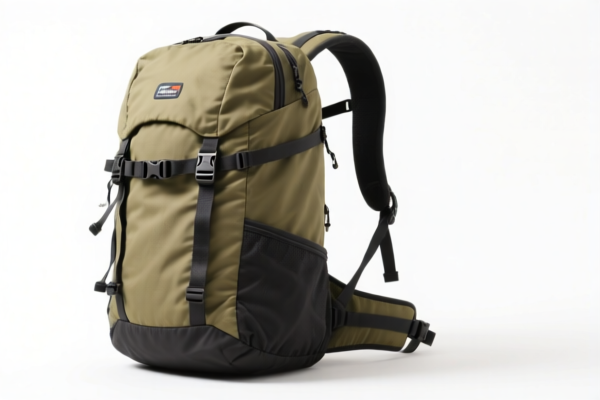
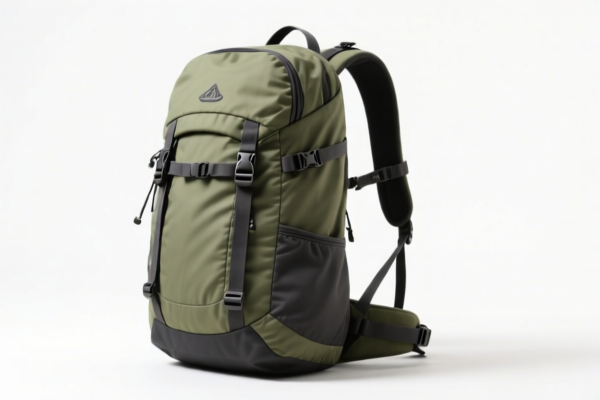
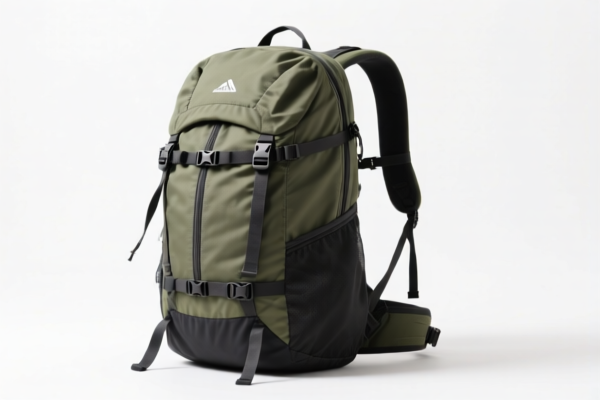
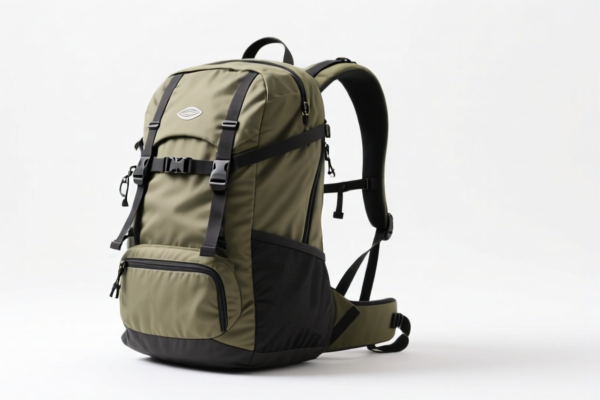
AI Analysis
🎒 Mountaineering Backpacks: HS Code Classification & US Tariff Analysis (2026)
🌐 HS Code Reference & Customs Clearance Guide | 2026 Latest Tariff Breakdown | Professional Clearance Strategy
📌 1. Product Definition & Classification: Do You Really Understand "Mountaineering Backpack"?
A Mountaineering Backpack is a specialized bag designed for outdoor sports, trekking, and mountaineering. In international trade, it is generally classified under Chapter 42 (Articles of Leather; Saddle and Harness Works; Travel Goods, Handbags, etc.) or Chapter 95 (Toys, Games, Sports Equipment), depending on its specific design, material, and primary function.
Two Main Categories in International Trade:
-
Travel/Luggage Category (Chapter 42):
- Backpacks made of textile materials (nylon, polyester) primarily used for carrying personal items during travel or sports.
- Classified under HS 4202 (Trunks, suitcases, vanity cases, etc.).
- Key Characteristic: Focuses on "luggage" function, often with rigid frames, heavy-duty zippers, and specific compartments for gear.
-
Sports Equipment Category (Chapter 95):
- Backpacks considered part of "outdoor sports equipment" or "games/sports articles."
- Classified under HS 9506 (Articles and equipment for general physical exercise, gymnastics, athletics, or other sports).
- Key Characteristic: Specifically designed for mountaineering/hiking as an accessory to the sport itself, sometimes lighter or more integrated with climbing gear.
⚠️ Critical Distinction Point: - If the backpack is primarily a travel bag/luggage item (carrying clothes, personal items) → Chapter 42 - If the backpack is specifically categorized as sports equipment/outdoor gear → Chapter 95 - Misclassification Risk: Declaring a Chapter 42 item as Chapter 95 (or vice versa) can lead to significant tariff differences due to additional punitive tariffs (Section 301 & 122).
📦 2. HS Code Classification Details (2026 Latest Tariff Authority对照)
| HS Code | Product Description | Application Scenario | Material/Type |
|---|---|---|---|
4202.92.39.00 |
Other travel goods, handbags, etc., with outer surface of textile materials | General mountaineering backpacks, travel packs | Nylon/Polyester textile |
4202.92.31.20 |
Other travel goods, handbags, etc., with outer surface of synthetic fibers | Mountaineering backpacks, specifically made of polyester/nylon | Synthetic fiber (Polyester/Nylon) |
9506.99.60.40 |
Other equipment for general physical exercise, sports, or outdoor games | Mountaineering backpacks classified as outdoor sports equipment | Outdoor gear/sporting accessory |
🔍 Key Reminder: - Chapter 42 (4202.92.xxxx): The most common classification for backpacks. If the backpack is a "travel good" made of textiles, it falls here. - Chapter 95 (9506.99.60.40): A less common but valid classification if the item is explicitly marketed and designed as "sports equipment" rather than "luggage." - Tariff Implication: The duty rates differ significantly between these two chapters, especially with additional US tariffs.
💰 3. 2026 Latest Tariff Rate Breakdown (Including Additional Taxes)
✅ Applicable Country: United States (US)
✅ Country of Origin: China (CN)
✅ Effective Date: From November 10, 2025 (and subsequent imports)
🎯 1. 4202.92.39.00 & 4202.92.31.20 —— Travel Goods / Backpacks (Textile/Synthetic)
| Item | Content |
|---|---|
| Base Duty Rate | 17.6% (Ad Valorem) |
| Section 301 Additional Duty | +25.0% (From USITC Footnote 9903.88.01 / Section 301) |
| Section 122 Duty | +10.0% (Specific provision for certain goods, often applied to textiles/travel goods in some contexts) |
| Total Duty Rate | 52.6% |
| Tax Calculation | CIF Value × 52.6% |
| De Minimis Exemption | ❌ Not Eligible (deny_de_minimis) |
| Legal Basis Path | IEEPA:9903.01.25 → IEEPA:9903.01.24 → USITC:4202.92.31.20 → FOOTNOTE:9903.88.01 (Section 301) + Section 122 |
📌 Explanation: - "Base Duty 17.6%": Standard MFN (Most Favored Nation) duty for travel goods of textile materials under Chapter 42. - "Section 301 Additional Duty 25%": Imposed under the Trade Act of 1974, Section 301, targeting Chinese imports. - "Section 122 Duty 10%": An additional tariff provision that may apply depending on the specific trade action; combined with Section 301, the burden is heavy. - Total 52.6%: This is a very high tariff. Importers must account for this in pricing strategies.
🎯 2. 9506.99.60.40 —— Outdoor Sports Equipment / Mountaineering Backpacks
| Item | Content |
|---|---|
| Base Duty Rate | 4.0% (Ad Valorem) |
| Section 301 Additional Duty | +7.5% (From USITC Footnote 9903.88.01 / Section 301) |
| Section 122 Duty | +10.0% |
| Total Duty Rate | 21.5% |
| Tax Calculation | CIF Value × 21.5% |
| De Minimis Exemption | ❌ Not Eligible (deny_de_minimis) |
| Legal Basis Path | IEEPA:9903.01.25 → IEEPA:9903.01.24 → USITC:9506.99.60.40 → FOOTNOTE:9903.88.01 (Section 301) + Section 122 |
📌 Note: - "Base Duty 4.0%": Lower base rate for sports equipment under Chapter 95. - "Section 301 Additional Duty 7.5%": Still applicable under Section 301 for Chinese-origin goods, but at a lower percentage than for travel goods. - "Section 122 Duty 10%": Still applies. - Total 21.5%: This is significantly lower than the 52.6% for Chapter 42 classification. - Strategic Implication: If your product can be legitimately classified under 9506.99.60.40 as "sports equipment," you can save ~31% in duties. However, this requires strong justification that the item is "sports equipment" and not just "luggage."
🛠️ 4. Customs Clearance Practical Advice (Field Pitfall Avoidance Guide)
✅ 1. Preparation Document Checklist (None Can Be Omitted)
| Document | Mandatory | Description |
|---|---|---|
| ✅ Product Specification Sheet | ✔️ | Must include material composition (e.g., 100% Polyester), dimensions, weight, intended use (sports vs. travel). |
| ✅ Product Photos (With Label) | ✔️ | Clear photos showing the backpack, brand, model, and any "outdoor/sports" branding. |
| ✅ Commercial Invoice | ✔️ | Must clearly state "Mountaineering Backpack" and specify if it is for "Sports Use." |
| ✅ Packing List | ✔️ | Detail the contents to avoid being treated as a kit with separate high-tariff items. |
| ✅ Origin Certificate (CO) | ✔️ | If not China-origin, apply for preferential tariffs. |
| ✅ Third-Party Test Report | ✔️ | If claiming Chapter 95, provide evidence of sports/outdoor functionality (e.g., load-bearing tests, weather resistance). |
✅ 2. Declaration Tips (Key Mantra)
🔥 “Classify as Sports, Not Luggage; Save 30% in Tariffs!”
| Scenario | Correct Declaration | Wrong Action |
|---|---|---|
| Heavy-duty backpack with frame, for climbing/mountaineering | 9506.99.60.40 (Sports Equipment) |
Declaring as 4202.92.xxxx (Travel Goods) → 52.6% |
| General travel backpack for hiking/travel | 4202.92.31.20 (Travel Goods) |
Declaring as 9506.99.60.40 → Risk of penalty for misclassification |
| Backpack with electronic components | Separate declaration for electronics + backpack | Mixing electronics may change HS code entirely |
✅ 3. Special Case Handling
| Scenario | Handling Advice |
|---|---|
| OEM Custom Backpacks | Provide client orders and design drawings. If designed specifically for mountaineering (e.g., with ice axe loops, helmet carry), argue for 9506.99.60.40. |
| Backpacks Sold as "Travel Bags" | If marketed primarily for travel, airport transport, or daily commute, classify as 4202.92.xxxx. Do not force Chapter 95 classification. |
| Mixed Shipments | Declare each item separately. Do not bundle high-tariff travel bags with low-tariff sports gear to "average out" the duty. Customs will scrutinize. |
| Pre-Ruling Request | Highly Recommended: Apply for an Advance Ruling from US Customs (CBP) before shipment if unsure about the classification. |
🌍 5. Global Market Comparison (2026 Latest)
| Country/Region | Recommended HS Code | Tariff (China Origin) | Certification | Remarks |
|---|---|---|---|---|
| 🇺🇸 USA | 9506.99.60.40 (if sports) |
21.5% | CE, CPSC (if toy) | Best Option: If qualifies as sports equipment. 4202.92.xxxx → 52.6% |
| 🇨🇳 China | 4202.92.xxxx |
5-10% | CCC (if applicable) | Lower import duties into China. |
| 🇪🇺 EU | 4202.92.xxxx |
4% | CE, REACH | No Section 301/122 analogs. |
| 🇬🇧 UK | 4202.92.xxxx |
4% | UKCA | Post-Brexit rules apply. |
| 🇦🇺 Australia | 4202.92.xxxx |
5% | RCM | No major punitive tariffs. |
📌 Conclusion: - The USA is the critical market due to Section 301 and 122 tariffs. - Classification is key: For the US market, attempting to classify mountaineering backpacks under Chapter 95 (9506.99.60.40) can reduce total duties from 52.6% to 21.5%. - Justification is mandatory: You must provide evidence that the product is "sports equipment" and not merely a "travel bag."
📌 6. Common Errors & Pitfall Guide (Blood Lessons)
❌ Error 1: Classifying a general travel backpack as "Sports Equipment" (9506) |
👉 Consequence: Customs rejects the claim, imposes 52.6% duty + penalties for misdeclaration.
❌ Error 2: Declaring "Mountaineering Backpack" without specifying material | 👉 Consequence: Customs may default to the highest duty rate or request additional documents, causing delays.
❌ Error 3: Using "Travel Bag" or "Suitcase" in the description for a sports backpack | 👉 Consequence: Forces classification under 4202, leading to 52.6% duty.
❌ Error 4: Ignoring Section 122 and 301 tariffs | 👉 Consequence: Underestimating landed cost by ~30%, leading to loss of profitability.
✅ Correct Approach:
"Mountaineering Backpack, 40L, Nylon Shell, Frameless, Designed for Outdoor Sports, Model XYZ, No Electronics"
🎯 7. Conclusion: Professional Classification, Cost Efficiency
🎯 Remember the Mantra:
🔹 "If it’s for Sports, Use Ch 95 (21.5%); If it’s for Travel, Use Ch 42 (52.6%)." 🔹 "Classify correctly, save 30% in duties. Misclassify, pay double."
📌 Pro Tip:
If your backpacks are originally from Vietnam, Mexico, or Thailand, you may qualify for IEEPA exemptions or lower tariffs due to FTAs. Recommendation: Always request an Advance Ruling (CBP) before shipping to the US to confirm the HS Code classification.
📣 Immediate Action:
📞 Contact a professional customs broker + Provide product photos + Apply for HS Code Advance Ruling. 🚀 Ensure your Mountaineering Backpacks clear customs smoothly, control costs, and maximize profits!
✨ Professional Clearance Starts with Precise Classification! 💼 Every Cent of Duty is Worth Calculating Precisely!
Customer Reviews
About HS Code Classification
The Harmonized System (HS) is an internationally standardized nomenclature developed by the World Customs Organization (WCO) to classify traded products. Over 200 countries use the HS system as the basis for customs tariffs, trade statistics, and import/export regulations.
Each HS code follows a hierarchical structure:
- Chapter (2 digits) — Broad category of goods (e.g., Chapter 84: Machinery and Mechanical Appliances)
- Heading (4 digits) — More specific grouping within the chapter
- Subheading (6 digits) — Internationally standardized breakdown, used by all WCO member countries
- National subdivisions (8-10 digits) — Country-specific extensions for further classification, such as US HTSUS 10-digit codes
Correct HS code classification is essential for smooth customs clearance, accurate duty payment, and compliance with trade regulations. Misclassification can lead to customs delays, overpayment of duties, or penalties.
When importing from CN to US, the applicable tariff rates may include:
- Most-Favored-Nation (MFN) rate — The standard duty rate applied to WTO members
- General rate — Applied to countries without trade agreements
- Trade remedy duties — Additional tariffs such as Section 301 (anti-dumping), Section 232 (national security), or countervailing duties
The information provided on this page is for reference purposes only. For official classification, please consult with your local customs authority or a licensed customs broker.