Mouse Pad
CN → US| HS Code | Tariff Rate | Origin | Destination | Doc |
|---|---|---|---|---|
| 4016910000 | 37.7% | CN | US | Official Doc |
| 3926100000 | 15.3% | CN | US | Official Doc |
| 4016990500 | 20.9% | CN | US | Official Doc |
| 8473309100 | 35.0% | CN | US | Official Doc |
| 3926901000 | 20.9% | CN | US | Official Doc |
Product Images
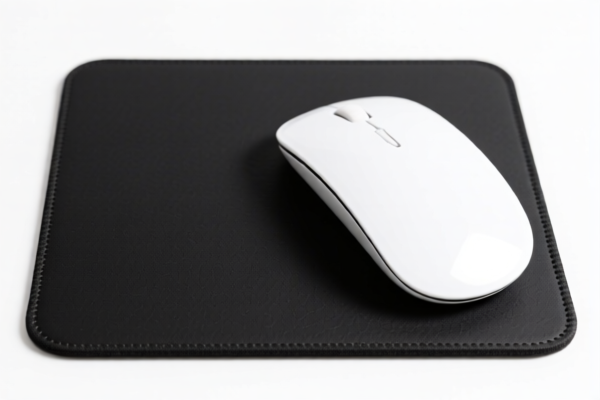
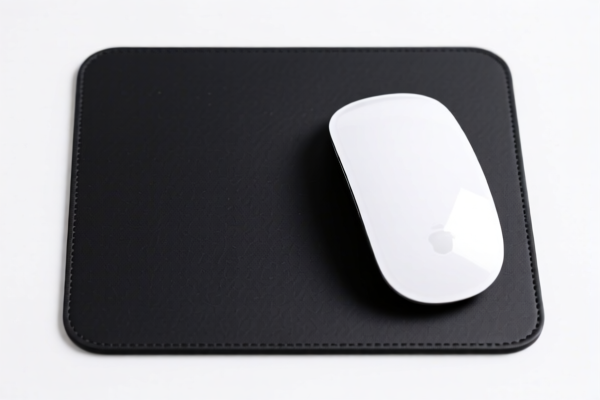
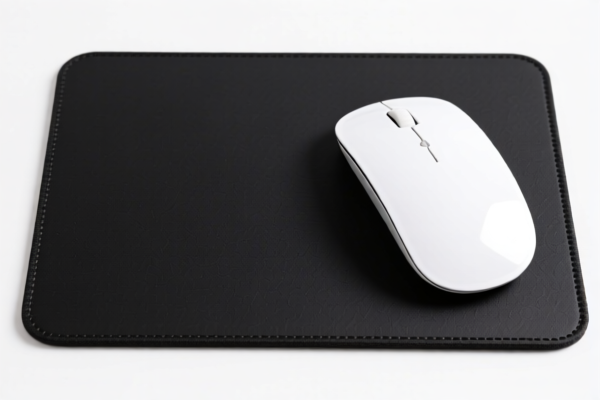

AI Analysis
🖱️ Mouse Pad (Computer Accessory)
🌐 HS Code Reference & Customs Clearance Guide | 2026 Latest Tariff Analysis | Professional Clearance Strategy
📌 I. Product Definition and Classification: Do You Really Understand the "Mouse Pad"?
A mouse pad is an essential accessory for computer operators, providing a stable surface for the optical or laser sensors of a computer mouse. In international trade, classification depends heavily on material composition (Rubber vs. Plastic/Synthetic) and functional intent (Office Equipment vs. General Consumer Good).
Material Distinction: * Rubber-Based: Traditional non-slip base with a fabric top. Classified under Chapter 40 (Rubber). * Plastic/Synthetic-Based: Often used for gaming or specialty pads. Classified under Chapter 39 (Plastics).
⚠️ Critical Distinction Point:
- If the item is clearly identified as a "Rubber Mat" or "Sulfurized Rubber Product" → Classify under 4016.91 or 4016.99.
- If the material is ambiguous or explicitly Plastic/Synthetic → Classify under 3926.10 or 3926.90.
- If intended strictly as a part/attachment for an Automatic Data Processing (ADP) Machine → Potential argument for 8473.30, though rare for simple pads.
📦 II. HS Code Classification Details (2026 Latest Tariff Authority Comparison)
Based on the provided data, here are the 5 most relevant HS Codes for Mouse Pads, sorted by risk and tax impact:
| HS Code | Product Description | Material/Usage Logic | Total Tax Rate |
|---|---|---|---|
4016.91.00.00 |
Sulfurized Rubber Mats | Name explicitly contains "Rubber" and "Mat/Matting". Matches Chapter 40 definition perfectly. | 37.7% |
8473.30.91.00 |
Parts/Accessories for ADP Machines | Morphology is a mouse pad (accessory for ADP). Matches "Other parts" of Chapter 84. | 35.0% |
3926.10.00.00 |
Office/School Supplies | Inferred as Rubber/Plastic. Purpose matches "Office Supplies". | 15.3% |
4016.99.05.00 |
Other Household Rubber Articles | Material "Rubber" matches. Usage as "Mouse Pad" fits "Other Household Items". | 20.9% |
3926.90.10.00 |
Other Plastic/Synthetic Articles | Common sense inference: Rubber/Synthetic. Fits "Other" category under Chapter 39. | 20.9% |
🔍 Key Insight:
- The highest risk code is 4016.91 due to high additional tariffs.
- The most "defensible" low-tax code is 3926.10 (Office Supplies), but it relies on the assumption that the material is perceived as office-grade plastic/synthetic.
- 8473.30 is technically attractive (lower base tariff) but risky if Customs argues a mouse pad is a "consumer good" rather than a "machine part."
💰 III. 2026 Latest Tariff Rate Breakdown (Including Surcharges & Policy Add-ons)
✅ Applicable Country: United States (US)
✅ Country of Origin: China (CN)
✅ Effective Date: 2025/2026 (Current Trade Environment)
🎯 1. 4016.91.00.00 — Sulfurized Rubber Mats
| Item | Details |
|---|---|
| Base Tariff | 2.7% (ad valorem) |
| Section 301 Surcharge | +25.0% (USITC Footnote 9903.88.01) |
| Section 122 / IEEPA Surcharge | +10.0% (China-specific emergency powers) |
| Total Effective Rate | 37.7% |
| Calculation | CIF Value × 37.7% |
| De Minimis Exemption? | ❌ NO (Denied under current trade restrictions) |
| Legal Path | IEEPA:9903.01.25 → USITC:4016.91.00.00 → FOOTNOTE:9903.88.01 |
📌 Explanation:
This is the most direct classification if the product is physically rubber. However, the 37.7% total tax is extremely high. The 25% Section 301 tariff applies because rubber products are often targeted, and the 10% IEEPA tariff adds further cost for Chinese origin.
🎯 2. 8473.30.91.00 — Parts and Accessories for ADP Machines
| Item | Details |
|---|---|
| Base Tariff | 0.0% (ad valorem) |
| Section 301 Surcharge | +25.0% |
| Section 122 / IEEPA Surcharge | +10.0% |
| Total Effective Rate | 35.0% |
| Calculation | CIF Value × 35.0% |
| De Minimis Exemption? | ❌ NO |
| Legal Path | IEEPA:9903.01.24 → USITC:8473.30.91.00 → FOOTNOTE:9903.88.01 |
📌 Explanation:
While the base tariff is 0%, the additional tariffs bring the total to 35.0%. The risk here is misclassification. Customs may argue a mouse pad is a "general consumer good" (Ch 40 or 39) rather than a specific "part" of the computer itself. If challenged, you face penalties for misdeclaration.
🎯 3. 3926.10.00.00 — Office or School Supplies (Plastic/Synthetic)
| Item | Details |
|---|---|
| Base Tariff | 5.3% (ad valorem) |
| Section 301 Surcharge | +0.0% (Exempt or Lower Priority) |
| Section 122 / IEEPA Surcharge | +10.0% |
| Total Effective Rate | 15.3% |
| Calculation | CIF Value × 15.3% |
| De Minimis Exemption? | ❌ NO |
| Legal Path | IEEPA:9901.25 → USITC:3926.10.00.00 → FOOTNOTE:9903.88.01 (Note: Base rate varies, but surcharge logic applies) |
📌 Explanation:
This is the LOWEST COST option (15.3%) IF the product can be legitimately classified as an "Office Supply" made of plastic/synthetic materials. This requires strong documentation stating the material is not primarily natural rubber but a synthetic polymer designed for office use.
🎯 4. 4016.99.05.00 & 3926.90.10.00 — Other Household/Plastic Articles
| Item | Details |
|---|---|
| Base Tariff | 3.4% |
| Section 301 Surcharge | +7.5% |
| Section 122 / IEEPA Surcharge | +10.0% |
| Total Effective Rate | 20.9% |
| Calculation | CIF Value × 20.9% |
| De Minimis Exemption? | ❌ NO |
📌 Explanation:
These are middle-ground options.
- 4016.99.05.00: Best if the product is Rubber but not a "Mat" (e.g., a specialized industrial rubber pad used as a mouse pad).
- 3926.90.10.00: Best if the product is Plastic/Synthetic but not clearly an "Office Supply."
🛠️ IV. Customs Clearance Practical Advice (Battle-Tested Pitfall Guide)
✅ 1. Preparation Checklist (Non-Negotiable)
| Document | Required | Purpose |
|---|---|---|
| ✅ Product Specification Sheet | ✔️ | Must detail Material Composition (% Rubber vs. % Plastic). Crucial for Ch 39 vs. Ch 40. |
| ✅ Composition Analysis Report | ✔️ | Third-party lab report proving synthetic vs. natural rubber. |
| ✅ Product Photos (Labeled) | ✔️ | Show brand, model, and any "Office" or "Gaming" branding. |
| ✅ Commercial Invoice | ✔️ | Description should match the HS Code intent (e.g., "Synthetic Office Pad" vs. "Rubber Mat"). |
| ✅ Packaging Label | ✔️ | Ensure no misleading labels like "For Medical Use" or "Industrial Safety" unless true. |
✅ 2. Declaration Strategy (Critical Mantra)
🔥 “Material Defines Chapter, Use Defines Subheading! Don’t guess!”
| Scenario | Recommended HS Code | Reasoning | Risk |
|---|---|---|---|
| Clearly Rubber, Sold as "Mat" | 4016.91.00.00 |
Most accurate physical match. | High Tax (37.7%) |
| Synthetic/Plastic, Sold for Office | 3926.10.00.00 |
Best tax benefit (15.3%) if material is plastic. | Medium (Must prove material) |
| Gaming Pad, High-End Synthetic | 3926.90.10.00 |
Not strictly "Office," but not "Industrial." | Low-Medium Tax (20.9%) |
| Claiming "Computer Part" | 8473.30.91.00 |
Lowest base tariff, but High Audit Risk. | Very High (Customs likely to reject) |
📌 Warning:
- Do NOT arbitrarily claim8473.30(Computer Parts) for a simple mouse pad. Customs has strict rules: a mouse pad is often considered a "consumer accessory," not a functional "part" required for the machine to operate (unlike a keyboard or mouse sensor).
- If you use3926.10, ensure the invoice does NOT say "100% Natural Rubber." Use terms like "Polyurethane Composite" or "Synthetic Polymer Base."
✅ 3. Special Situation Handling
| Situation | Advice |
|---|---|
| OEM for Big Tech (e.g., Logitech, Razer) | Provide OEM contracts and technical specs showing the pad is a branded accessory. May support 8473 or 3926 depending on brand guidelines. |
| Mixed Materials (Rubber Back + Cloth Top) | Declare based on essential character. If rubber base is dominant, Ch 40. If cloth/plastic top is dominant, Ch 39 or 63. |
| Small Quantity (De Minimis) | ❌ Do NOT rely on De Minimis. Current regulations (Section 321) exclude goods subject to Section 301 or IEEPA tariffs from de minimis exemption. Expect full tax. |
🌍 V. Global Market Comparison (2026 Outlook)
| Region | Recommended HS Code | Est. Total Tax | Key Certification | Note |
|---|---|---|---|---|
| 🇺🇸 USA | 3926.10.00.00 (if Plastic) |
15.3% | FCC (if electronic), RoHS | Avoid 4016.91 due to 37.7% tax. |
| 🇪🇺 EU | 4016.90 or 3926.90 |
4% - 6.5% | CE, REACH | No Section 301 tariffs. |
| 🇨🇳 China | 4016.99 or 3926.90 |
5% - 10% | CCC (if applicable) | Stable rates. |
| 🇬🇧 UK | 4016.90 or 3926.90 |
4% - 6% | UKCA | Post-Brexit standards apply. |
📌 Conclusion for USA Importers:
The 37.7% tax on4016.91is a significant cost driver. If your supply chain allows, shifting material specification to Synthetic/Plastic-based to qualify for3926.10(15.3%) or3926.90(20.9%) can save 17-22% in duties. However, this must be truthful to the product's physical composition.
📌 VI. Common Errors & Pitfalls (Lessons Learned)
❌ Error 1: Mislabeling a Rubber Mat as "Office Supply" to get lower tax.
👉 Consequence: Customs audit reveals rubber composition → Retrospective Tax + Penalties.
❌ Error 2: Claiming "Computer Part" (8473) for a generic mouse pad.
👉 Consequence: Classification error → Delays, Storage Fees, Possible Seizure.
❌ Error 3: Assuming De Minimis applies.
👉 Consequence: Package held at border → Demurrage charges and return shipping costs.
✅ Correct Approach:
"Synthetic Polymer Mouse Pad, Office Grade, Model XYZ, Made in China, Compliant with US Tariff Code 3926.10.00.00."
🎯 VII. Conclusion: Precise Classification = Maximized Profit
🎯 Key Takeaways:
1. Material is King: Rubber → Ch 40 (High Tax). Plastic/Synthetic → Ch 39 (Lower Tax).
2. Avoid "Parts" Claim: Unless it's a complex electronic accessory, avoid 8473.30 for simple pads.
3. Transparency is Key: Use accurate material descriptions on invoices to support the chosen HS Code.
4. Budget for 15-38%: Factor in the IEEPA and Section 301 surcharges in your cost model.
📌 Pro Tip:
For high-volume imports, consider applying for an Advance Ruling (CBP Ruling) before shipment. This provides legal certainty on whether your specific mouse pad qualifies for 3926.10 or must be 4016.91, saving you from post-clearance audits.
📣 Immediate Action:
📞 Verify Material Composition with your supplier.
📄 Update Product Descriptions on invoices to match the HS Code intent.
🚀 Consult a Licensed Customs Broker to file for an Advance Ruling if volumes are high.
✨ Professional Clearance Starts with Accurate Classification!
💼 Every Percentage Point of Duty Saved is Pure Profit!
Customer Reviews
About HS Code Classification
The Harmonized System (HS) is an internationally standardized nomenclature developed by the World Customs Organization (WCO) to classify traded products. Over 200 countries use the HS system as the basis for customs tariffs, trade statistics, and import/export regulations.
Each HS code follows a hierarchical structure:
- Chapter (2 digits) — Broad category of goods (e.g., Chapter 84: Machinery and Mechanical Appliances)
- Heading (4 digits) — More specific grouping within the chapter
- Subheading (6 digits) — Internationally standardized breakdown, used by all WCO member countries
- National subdivisions (8-10 digits) — Country-specific extensions for further classification, such as US HTSUS 10-digit codes
Correct HS code classification is essential for smooth customs clearance, accurate duty payment, and compliance with trade regulations. Misclassification can lead to customs delays, overpayment of duties, or penalties.
When importing from CN to US, the applicable tariff rates may include:
- Most-Favored-Nation (MFN) rate — The standard duty rate applied to WTO members
- General rate — Applied to countries without trade agreements
- Trade remedy duties — Additional tariffs such as Section 301 (anti-dumping), Section 232 (national security), or countervailing duties
The information provided on this page is for reference purposes only. For official classification, please consult with your local customs authority or a licensed customs broker.