Mouse Wrist Rest
CN → US| HS Code | Tariff Rate | Origin | Destination | Doc |
|---|---|---|---|---|
| 4016910000 | 37.7% | CN | US | Official Doc |
| 3926100000 | 15.3% | CN | US | Official Doc |
| 4016990500 | 20.9% | CN | US | Official Doc |
| 8473309100 | 35.0% | CN | US | Official Doc |
| 3926901000 | 20.9% | CN | US | Official Doc |
Product Images
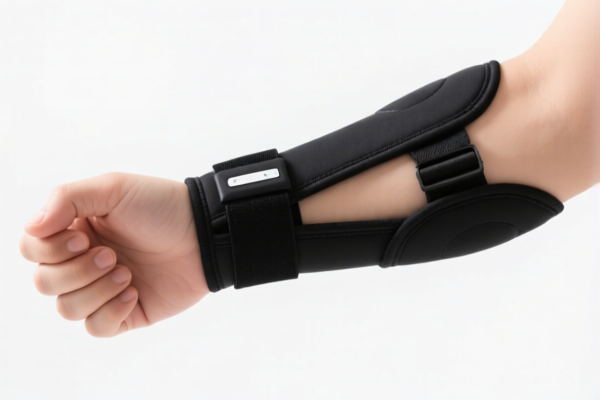
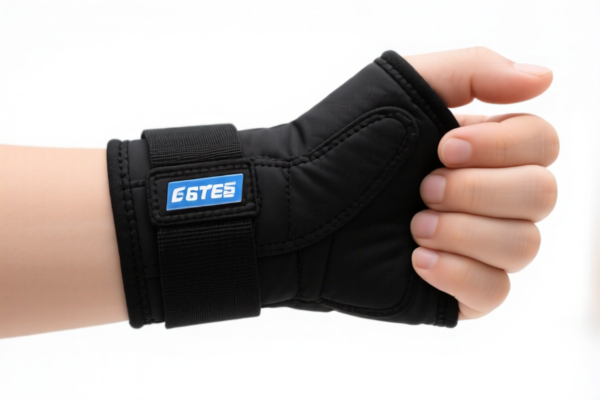
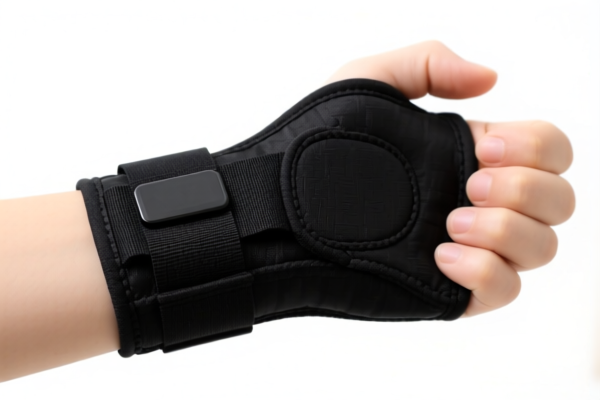
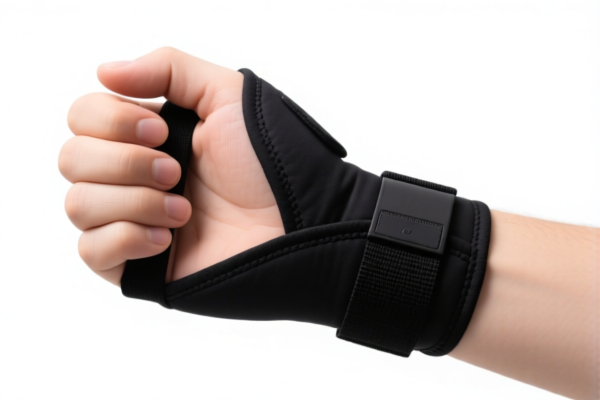
AI Analysis
🖱️ Mouse Wrist Rest (Mouse Pad with Wrist Support)
🌐 HS Code Reference & Customs Clearance Guide | 2024/2025 Latest Tariff Analysis | Professional Compliance Strategy
📌 I. Product Definition & Classification: Do You Really Understand "Mouse Wrist Rest"?
A Mouse Wrist Rest is an ergonomic accessory designed to support the user's wrist during computer usage, reducing strain and preventing Repetitive Strain Injury (RSI). In international trade, these products are often misclassified due to ambiguity between "rubber goods," "plastic articles," and "computer accessories."
In the provided data, the product is identified as a "Rubber Mouse Pad" (often sold with or integrated into wrist rests). The classification hinges on two main factors: 1. Material Composition: Is it primarily vulcanized rubber, synthetic rubber, or plastic/polymer? 2. Function/Use: Is it classified as a general rubber good, a plastic household item, or a specific component of data processing machines?
⚠️ Key Distinction Point:
- If it is made of vulcanized rubber and used as a general mat/pad → May fall under Chapter 40. - If it is made of plastic/synthetic rubber and used as an office/school supply → May fall under Chapter 39. - If it is claimed as a part/attachment for a computer (8471) → May fall under Chapter 84, but this is often rejected unless it is integral to the machine's operation (which a passive wrist rest is not).
📦 II. HS Code Classification Details (Based on Provided Data)
| HS Code | Product Description | Applicable Scenario | Tax Rate (Total) |
|---|---|---|---|
4016.91.00.00 |
Rubber mouse pad, classified as rubber products and vulcanized rubber mats | Made of vulcanized rubber; general use mats/pads | 37.7% |
3926.10.00.00 |
Rubber mouse pad, classified as office/school supplies and plastic/synthetic rubber products | Made of plastic/synthetic rubber; office ergonomics | 15.3% |
4016.99.05.00 |
Rubber mouse pad, classified as other household items and vulcanized rubber material | Made of vulcanized rubber; general household/ergonomic use | 20.9% |
8473.30.91.00 |
Rubber mouse pad, classified as other parts/attachments for 8471 machines | Claimed as a computer accessory (often high risk) | 35.0% |
3926.90.10.00 |
Rubber mouse pad, classified as other articles of plastic and other materials | Made of plastic/polymer; general household/office articles | 20.9% |
🔍 Critical Insight:
- Lowest Tax Option:3926.10.00.00at 15.3% (if made of plastic/synthetic rubber for office use).
- Highest Risk:8473.30.91.00at 35.0% (Claiming it as a computer part is often challenged by customs because a wrist rest is not essential to the machine's function).
- Material Matters: Vulcanized rubber (4016) generally attracts higher tariffs due to specific trade measures compared to plastic (3926).
💰 III. 2024/2025 Latest Tariff Rate Breakdown (Including Additional Duties)
✅ Applicable Country: United States (US)
✅ Origin: China (CN)
✅ Note: Rates include Base Tariff + Section 301 Tariff + Section 122 Tariff (if applicable as per data).
🎯 1. 4016.91.00.00 —— Vulcanized Rubber Products
| Item | Detail |
|---|---|
| Base Tariff | 2.7% |
| Section 301 Tariff | 25.0% |
| Section 122 Tariff | 10.0% |
| Total Rate | 37.7% |
| De Minimis Exemption | ❌ Not Eligible |
| Legal Basis | Base Tariff + Section 301 + Section 122 |
📌 Explanation:
- This classification assumes the product is primarily vulcanized rubber.
- The 37.7% rate is extremely high, driven by the 25% Section 301 tariff and 10% Section 122 tariff.
- Strategy: Avoid this classification if the product can be reasonably defined as plastic/synthetic.
🎯 2. 3926.10.00.00 —— Office/School Supplies (Plastic/Synthetic)
| Item | Detail |
|---|---|
| Base Tariff | 5.3% |
| Section 301 Tariff | 0.0% |
| Section 122 Tariff | 10.0% |
| Total Rate | 15.3% |
| De Minimis Exemption | ❌ Not Eligible |
| Legal Basis | Base Tariff + Section 122 |
📌 Explanation:
- This is the most cost-effective classification if the wrist rest is made of plastic, foam, or synthetic rubber.
- The 0% Section 301 is key here.
- Requirement: Must prove the product is for "office or school use" and made of plastic/synthetic materials.
🎯 3. 4016.99.05.00 —— Other Vulcanized Rubber Household Items
| Item | Detail |
|---|---|
| Base Tariff | 3.4% |
| Section 301 Tariff | 7.5% |
| Section 122 Tariff | 10.0% |
| Total Rate | 20.9% |
| De Minimis Exemption | ❌ Not Eligible |
| Legal Basis | Base Tariff + Section 301 (Partial) + Section 122 |
📌 Explanation:
- A middle-ground option for vulcanized rubber, but still subject to significant tariffs.
🎯 4. 8473.30.91.00 —— Parts for Data Processing Machines
| Item | Detail |
|---|---|
| Base Tariff | 0.0% |
| Section 301 Tariff | 25.0% |
| Section 122 Tariff | 10.0% |
| Total Rate | 35.0% |
| De Minimis Exemption | ❌ Not Eligible |
| Legal Basis | Base Tariff + Section 301 + Section 122 |
📌 Explanation:
- High Risk Classification: Customs often rejects this for wrist rests because they are not integral parts of the computer.
- If rejected, the shipment may be reclassified to4016or3926, leading to delays and potential penalties.
- Recommendation: Avoid unless you have strong precedent or specific product design that integrates with the mouse hardware.
🎯 5. 3926.90.10.00 —— Other Plastic Articles
| Item | Detail |
|---|---|
| Base Tariff | 3.4% |
| Section 301 Tariff | 7.5% |
| Section 122 Tariff | 10.0% |
| Total Rate | 20.9% |
| De Minimis Exemption | ❌ Not Eligible |
| Legal Basis | Base Tariff + Section 301 (Partial) + Section 122 |
📌 Explanation:
- Similar to3926.10but for non-office specific plastic goods.
- Higher than3926.10due to the 7.5% Section 301 tariff.
🛠️ IV. Customs Clearance Practical Advice (Battle-Tested Tips)
✅ 1. Documentation Checklist (Non-Negotiable)
| Document | Required | Notes |
|---|---|---|
| ✅ Product Composition Report | ✔️ | Must specify material % (e.g., 90% EVA foam, 10% synthetic rubber). Critical for 3926 vs 4016. |
| ✅ Product Photos | ✔️ | Show the wrist rest in use with a mouse to prove "office/ergonomic" function. |
| ✅ Commercial Invoice | ✔️ | Description: "Ergonomic Mouse Wrist Rest, Plastic/Synthetic Rubber, Office Accessory." Avoid "Computer Part." |
| ✅ Packing List | ✔️ | List items clearly. Do not bundle with actual computer components (keyboards, mice) if claiming separate HS codes. |
| ✅ Labeling | ✔️ | Must include country of origin ("Made in China"). |
✅ 2. Declaration Strategy (Key Mantra)
🔥 "Material Defines Code, Function Defines Category, Avoid 'Part' Claims!"
| Scenario | Correct Declaration | Wrong Declaration |
|---|---|---|
| Plastic/Synthetic Wrist Rest | 3926.10.00.00 (Office Supplies) |
8473.30.91.00 (Computer Part) |
| Vulcanized Rubber Wrist Rest | 4016.99.05.00 (Household/Rubber Good) |
3926.10.00.00 (If actually rubber) |
| Kit with Mouse | Declare as a set, or separate | Claim wrist rest as free sample |
✅ 3. Special Considerations
| Situation | Recommendation |
|---|---|
| EVA Foam + Plastic Base | Classify under 3926.10.00.00 as plastic office supply. Provide foam specification. |
| Memory Foam + Fabric | May still fall under 3926 if the structural support is plastic/rubber. Avoid 4016. |
| Claiming "Computer Part" | Strongly Discouraged. Customs CBP has explicitly ruled that mouse pads/wrist rests are not "parts" of computers under 8473. |
| Section 122 Tariff | Note that the 10% Section 122 tariff applies to most of these codes in the provided data. Ensure this is calculated in your cost model. |
🌍 V. Global Market Comparison (2024/2025)
| Country/Region | Recommended HS Code | Total Tariff (China Origin) | Certifications | Notes |
|---|---|---|---|---|
| 🇺🇸 USA | 3926.10.00.00 |
15.3% | None specific | Lowest duty if plastic/synthetic. |
| 🇺🇸 USA | 4016.91.00.00 |
37.7% | None specific | High duty due to rubber classification. |
| 🇪🇺 EU | 3926.10.00 (approx) |
3.9% | CE (if electronic, not applicable here) | Lower tariffs, no Section 301. |
| 🇨🇳 China | 3926.10.00 |
0% (Import) | N/A | Duty-free for imports into China. |
📌 Conclusion:
- The US market is the most challenging due to Section 301 and Section 122 tariffs.
- Material declaration is critical. A $5 wrist rest can effectively cost $7.50 (15.3% tax) or $8.88 (37.7% tax).
- Always prefer3926.10.00.00if the product contains any plastic or synthetic rubber components.
📌 VI. Common Mistakes & Pitfalls (Lessons Learned)
❌ Mistake 1: Classifying as 8473.30.91.00 to "save" on base duty.
👉 Consequence: Customs rejects the "computer part" claim, reclassifies to 4016 or 3926, adds penalties, and delays shipment. Net result: Higher cost and delay.
❌ Mistake 2: Using "Rubber Mouse Pad" in description but submitting 3926 (Plastic).
👉 Consequence: Discrepancy between description and HS code triggers audit. Must align description with material (e.g., "Synthetic Rubber/Plastic Wrist Rest").
❌ Mistake 3: Ignoring Section 122 Tariff.
👉 Consequence: All provided codes in the data include a 10% Section 122 tariff. Failing to account for this will lead to underpayment and interest charges.
✅ Correct Approach:
"Ergonomic Mouse Wrist Rest, Made of EVA Foam and Synthetic Rubber, for Office Use, Model XYZ, Made in China"
🎯 VII. Conclusion: Precision Classification, Cost Optimization
🎯 Remember the Mantra:
🔹 "Plastic = 15.3%, Rubber = 20-37%, Computer Part = 35% (and Risky)!"
🔹 "Material dictates code, function dictates category, Section 122 is always 10%."
📌 Pro Tip:
If your wrist rest contains less than 50% rubber by weight, push for 3926.10.00.00. If it is mostly vulcanized rubber, expect higher tariffs. Consider supply chain diversification to Vietnam or Mexico to avoid US Section 301 tariffs (check current FTA rules).
📣 Immediate Action:
📞 Consult your freight forwarder with material composition sheets.
🚀 Aim for3926.10.00.00to minimize tax liability.
✨ Professional Customs Clearance Starts with Accurate Classification!
💼 Every percent of tariff saved is pure profit!
Customer Reviews
About HS Code Classification
The Harmonized System (HS) is an internationally standardized nomenclature developed by the World Customs Organization (WCO) to classify traded products. Over 200 countries use the HS system as the basis for customs tariffs, trade statistics, and import/export regulations.
Each HS code follows a hierarchical structure:
- Chapter (2 digits) — Broad category of goods (e.g., Chapter 84: Machinery and Mechanical Appliances)
- Heading (4 digits) — More specific grouping within the chapter
- Subheading (6 digits) — Internationally standardized breakdown, used by all WCO member countries
- National subdivisions (8-10 digits) — Country-specific extensions for further classification, such as US HTSUS 10-digit codes
Correct HS code classification is essential for smooth customs clearance, accurate duty payment, and compliance with trade regulations. Misclassification can lead to customs delays, overpayment of duties, or penalties.
When importing from CN to US, the applicable tariff rates may include:
- Most-Favored-Nation (MFN) rate — The standard duty rate applied to WTO members
- General rate — Applied to countries without trade agreements
- Trade remedy duties — Additional tariffs such as Section 301 (anti-dumping), Section 232 (national security), or countervailing duties
The information provided on this page is for reference purposes only. For official classification, please consult with your local customs authority or a licensed customs broker.