Multi card Silk Wallet
CN → USProduct Images

AI Analysis
👛 Multi-Card Silk Wallet (Silk Card Holder)
🌐 HS Code Reference & Customs Clearance Guide | 2026 Latest Tariff Analysis | Professional-Level Strategy
📌 I. Product Definition & Classification: Do You Really Understand a "Silk Wallet"?
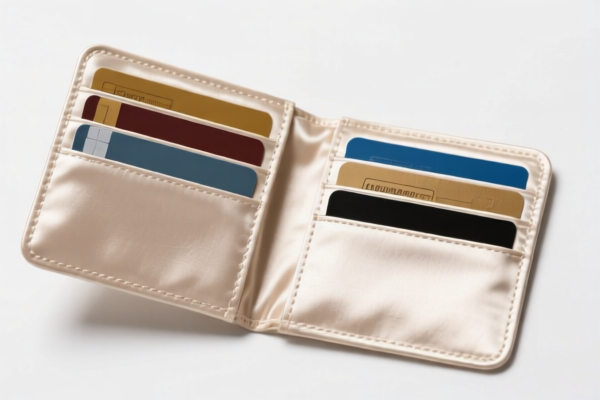
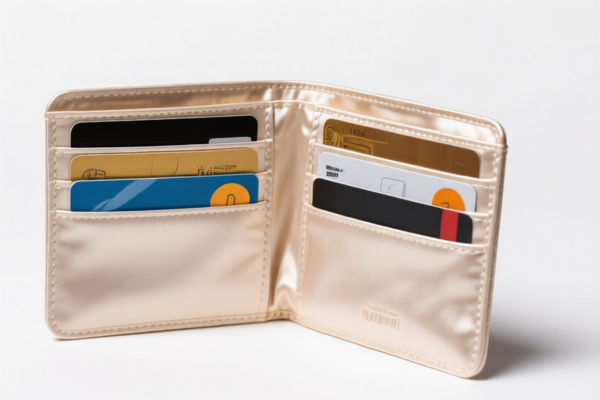
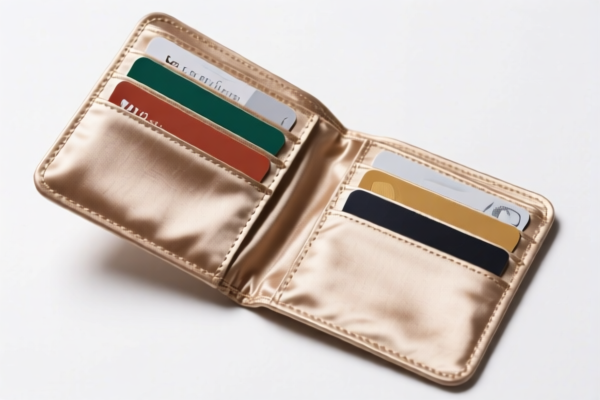
A "Multi-Card Silk Wallet" is typically a slim accessory made of silk fabric, designed to hold multiple credit cards, ID cards, or business cards. It lacks the complex locking mechanisms, zippers, or extensive compartments found in traditional leather wallets.
In international trade, the classification depends heavily on material composition and functionality:
- Textile-Based Wallets: If the primary material is silk (even if lined with other fabrics), it is generally classified under Section XI (Textiles and Textile Articles).
- Specialized Card Cases: If it is explicitly designed only for cards and has no currency compartment, it may fall under 4202 (Trunks, suitcases, vanity cases...) or 4207 (Articles of leather or composition leather...). However, silk usually pushes it to 4205 or 4207 depending on lining, OR strictly to 6307 if considered a "made-up textile article."
⚠️ Key Distinction:
- If it contains leather accents (e.g., leather trim, zipper pulls) making up >50% of surface area or value, it may be misclassified as leather goods (4202).
- If it is pure silk or silk-blend textile without significant leather components, it belongs to 4205.00 (Other articles of leather) is incorrect; it belongs to 6307.90 or 4202.92 only if considered a "pouch."
- Most Accurate Classification for Pure Silk: 6307.90 (Made-up articles of other textiles) OR 4202.92 (If considered a "pouch" or "wallet" with textile outer surface).
Note: The US ITA often classifies textile wallets/purses under 4202.92 if they are "pouches" or "wallets," but pure textile cardholders without complex structure often go to 6307.90 or 5609 (if decorative). However, for "Wallet" purposes, 4202.92.90 is common if marketed as a wallet.📌 Critical Warning:
If the product is marketed as a "Wallet" but is 100% silk, Customs may scrutinize whether it fits 4202 (which typically implies leather/plastic sheeting) or 6307 (other made-up textile articles). 4202.92 is often accepted for "textile wallets" if they mimic the function and form of a wallet.
📦 II. HS Code Classification Details (2026 Latest Tariff Authority Comparison)
| HS Code | Product Description | Application Scenario | Material Dominance |
|---|---|---|---|
4202.92.90.00 |
Other wallets, purses, card cases, etc., with outer surface of textile materials | Silk card holders, textile wallets, fabric pouches | ✅ Textile (Silk) |
6307.90.98.85 |
Other made-up textile articles (not elsewhere specified) | Simple silk card sleeves, decorative textile holders | ✅ Textile (No specific wallet function) |
4205.00.00.00 |
Other articles of leather | Incorrect if no leather content | ❌ No |
3926.90.90.90 |
Other articles of plastics | Incorrect unless coated heavily | ❌ No |
🔍 Important Note:
- 4202.92.90.00 is the most common classification for textile-based wallets/cardholders in the US. It covers "pouches" and "wallets" with textile outer surfaces.
- If the item is extremely simple (just a sleeve with no stitching or structure), Customs may argue for 6307.90. However, if it has multiple slots, it is functionally a "wallet" and 4202 is preferred.
- Do not use 4205 or 4202.21/22 (leather codes) unless the silk is merely a trim and the main body is leather.
💰 III. 2026 Latest Tariff Rate Details (Including Surtaxes, Policy Add-ons)
✅ Applicable Country: United States (US)
✅ Country of Origin: China (CN)
✅ Effective Date: From November 10, 2025 (including subsequent imports)
🎯 1. 4202.92.90.00 – Textile Wallets / Silk Card Holders
| Item | Content |
|---|---|
| Base Duty Rate | 12% (ad valorem) |
| USITC Surtax (Section 301) | +7.5% (Footnote 9903.88.01 applies to many textile/leather goods; verify specific footnote for 4202) |
| IEEPA Surtax | +10% (Against Chinese/Hong Kong products, effective Nov 10, 2025) |
| Total Rate | 29.5% |
| Tax Calculation | CIF Value × 29.5% |
| De Minimis Eligibility | ❌ No (Most textile wallets under 4202 are subject to duties; Section 321 de minimis does not apply to restricted goods) |
| Legal Basis Path | IEEPA:9903.01.24 → USITC:4202.92.90.00 → FOOTNOTE:9903.88.01 (Check latest USITC list for 4202 surtax status) |
📌 Explanation:
- Base duty for textile wallets is generally 12%.
- Section 301 Surtax: Many textile articles of foreign origin are subject to an additional 7.5% or 25% surtax. For HS 4202.92, the surtax is often 7.5% (verify current ITA list).
- IEEPA 10%: Applies to all Chinese-origin goods subject to tariffs.
- Total: 12% + 7.5% + 10% = 29.5%.⚠️ Note: If the silk is considered a "luxury textile" or if the product is classified under 6307.90, the base duty might be lower (e.g., 7-10%), but the Section 301 and IEEPA surtaxes still apply, keeping the total rate similar or slightly lower.
🛠️ IV. Customs Clearance Practical Advice (Battle-Tested Pitfall Guide)
✅ 1. Required Documents List (Non-negotiable)
| Document | Mandatory | Description |
|---|---|---|
| ✅ Product Specification Sheet | ✔️ | Details fabric composition (e.g., 100% Silk, or Silk/Cotton blend), dimensions, number of card slots |
| ✅ Fabric Composition Certificate | ✔️ | Must specify % of silk, lining material, and any leather/plastic components |
| ✅ Product Photos | ✔️ | Show all sides, especially card slots, any zippers, and labels |
| ✅ Commercial Invoice | ✔️ | Clearly state "Silk Card Holder" or "Textile Wallet," not generic "Gift" |
| ✅ Packing List | ✔️ | Detail quantities and weights |
| ✅ Origin Certificate | ✔️ | Required for IEEPA assessment |
✅ 2. Declaration Tips (Key Mantra)
🔥 "Textile Wallet, Not Leather, Declare 4202.92, Avoid 301 Pitfalls!"
| Scenario | Correct Declaration | Wrong Practice |
|---|---|---|
| Pure Silk Card Holder | 4202.92.90.00 |
Misdeclare as 6307.90 to avoid duty → Risk of penalty |
| Silk with Leather Trim | 4202.92.90.00 (if textile dominates) |
Declare as Leather (4202.21) → Higher duty & scrutiny |
| Simple Silk Pouch | 6307.90.98.85 |
If it functions as a wallet, use 4202 |
| Mixed Material (Silk + Plastic Coating) | Check ITA Rules | If plastic is main, may be 3926 → Different rates |
✅ 3. Special Case Handling
| Situation | Handling Advice |
|---|---|
| OEM Custom Silk Wallets | Provide design files and composition breakdown. Ensure "Silk" is accurately declared. |
| Gift Packaging Included | If the silk wallet is packaged in a box, the box is usually ignored unless it's the primary product. Declare wallet as main item. |
| Sample Imports | Mark as "Sample" but ensure value is below $800 if using de minimis (though 4202 may still be scrutinized). |
| Luxury Brand Goods | If branded, ensure IP authorization documents are ready if entering US market to avoid seizure. |
🌍 V. Global Market Customs Comparison (2026 Latest)
| Country/Region | Recommended HS Code | Duty Rate | Certification Requirements | Notes |
|---|---|---|---|---|
| 🇺🇸 USA | 4202.92.90.00 |
~29.5% (China) | None specific | High surtax due to Section 301 + IEEPA |
| 🇨🇳 China | 4202.92.90.00 |
10-15% | N/A | Import duty applies |
| 🇪🇺 EU | 4202.92.00 |
12% | CE (if functional) | No IEEPA, but anti-dumping checks |
| 🇬🇧 UK | 4202.92.00 |
12% | UKCA (if applicable) | Post-Brexit tariffs apply |
| 🇦🇺 Australia | 4202.92.00 |
5% | N/A | Lower baseline duty |
| 🇯🇵 Japan | 4202.92.00 |
10% | N/A | Moderate duty |
📌 Conclusion:
- USA remains the most expensive market due to Section 301 and IEEPA surtaxes.
- EU/UK/Australia have lower baseline duties but may require stricter compliance for textile imports.
- China as an import market has moderate duties.
📌 VI. Common Mistakes & Pitfalls (Blood-Soaked Lessons)
❌ Mistake 1: Declaring "Silk Wallet" as "Leather Pouch"
👉 Consequence: Customs verifies material, finds 100% silk, reclassifies to 4202/6307, imposes fines and back taxes.
❌ Mistake 2: Ignoring IEEPA Surtax
👉 Consequence: Underpayment by 10% on CIF value → Seizure of goods.
❌ Mistake 3: Using Generic Description "Textile Accessory"
👉 Consequence: Customs cannot determine function, leads to delayed inspection or assignment of highest duty rate.
❌ Mistake 4: Not Declaring Silk Content Accurately
👉 Consequence: If labeled "Cotton" but is Silk, it may be subject to fiber-specific restrictions or mislabeling penalties.
✅ Correct Practice:
"Silk Multi-Card Holder, 100% Silk, Textile Material, No Leather, Model XYZ, Designed for Credit Cards"
🎯 VII. Conclusion: Precision in Classification Saves Money!
🎯 Remember the Mantra:
🔹 "Silk is Textile, Not Leather, Use 4202.92, Watch Surtaxes!"
🔹 "De Minimis is Dead for Restricted Goods, Declare Accurately!"
📌 Pro Tip:
If your silk wallet is imported from Vietnam, Malaysia, or Thailand, check for IEEPA Exemptions or FTA Benefits. The duty rate could drop to 0-5%.
Recommend Advance Ruling from CBP if the product is new or uniquely structured.
📣 Immediate Action:
📞 Contact a licensed customs broker + Provide fabric composition certificate + Apply for HS Code Advance Ruling
🚀 Let your silk wallet, clear customs smoothly, maximize profit, and expand globally!
✨ Professional Customs Clearance Starts with Accurate Classification!
💼 Every cent of cost deserves precise calculation!
Customer Reviews
About HS Code Classification
The Harmonized System (HS) is an internationally standardized nomenclature developed by the World Customs Organization (WCO) to classify traded products. Over 200 countries use the HS system as the basis for customs tariffs, trade statistics, and import/export regulations.
Each HS code follows a hierarchical structure:
- Chapter (2 digits) — Broad category of goods (e.g., Chapter 84: Machinery and Mechanical Appliances)
- Heading (4 digits) — More specific grouping within the chapter
- Subheading (6 digits) — Internationally standardized breakdown, used by all WCO member countries
- National subdivisions (8-10 digits) — Country-specific extensions for further classification, such as US HTSUS 10-digit codes
Correct HS code classification is essential for smooth customs clearance, accurate duty payment, and compliance with trade regulations. Misclassification can lead to customs delays, overpayment of duties, or penalties.
When importing from CN to US, the applicable tariff rates may include:
- Most-Favored-Nation (MFN) rate — The standard duty rate applied to WTO members
- General rate — Applied to countries without trade agreements
- Trade remedy duties — Additional tariffs such as Section 301 (anti-dumping), Section 232 (national security), or countervailing duties
The information provided on this page is for reference purposes only. For official classification, please consult with your local customs authority or a licensed customs broker.