Multi card slot silk wallet
CN → US| HS Code | Tariff Rate | Origin | Destination | Doc |
|---|---|---|---|---|
| 4202328500 | 35.0% | CN | US | Official Doc |
| 4202329900 | 52.6% | CN | US | Official Doc |
| 6211495090 | 18.7% | CN | US | Official Doc |
| 6211498090 | 24.8% | CN | US | Official Doc |
| 6307909891 | 24.5% | CN | US | Official Doc |
| 6307903020 | 25.4% | CN | US | Official Doc |
Product Images
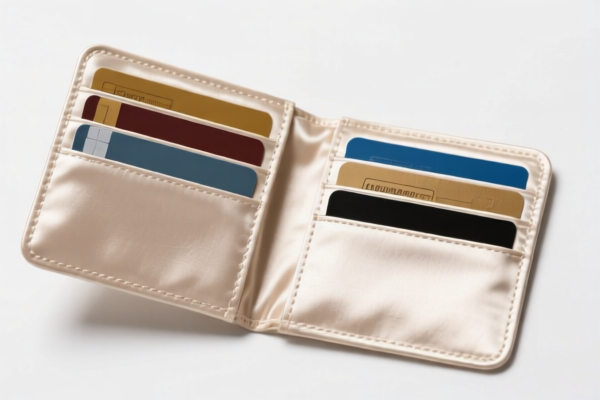
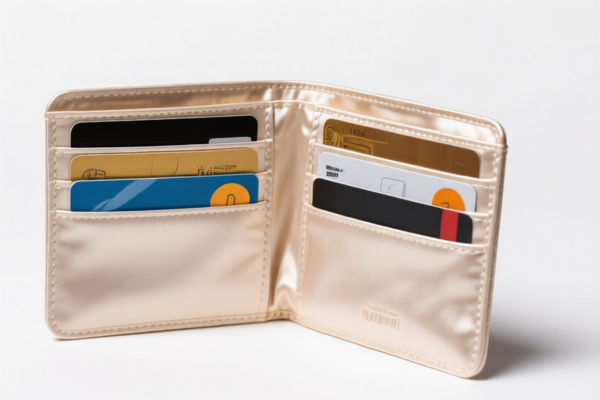
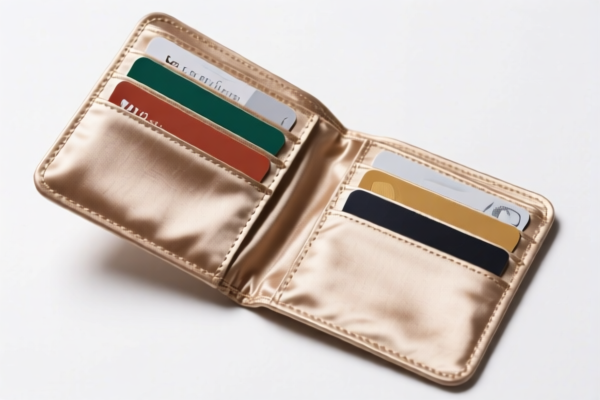

AI Analysis
👜 Multi-Card Slot Silk Wallet
🌐 HS Code Reference & Customs Clearance Guide | 2026 Latest Tariff Analysis | Professional Level Strategy
📌 I. Product Definition & Classification: Do You Truly Understand "Silk Wallets"?
A "Multi-Card Slot Silk Wallet" is a compact accessory designed for storing identification cards, credit cards, and small cash. In international trade, the classification depends strictly on two critical factors: 1. Outer Surface Material: Is it primarily textile (silk) or plastic/laminate? 2. Silk Content: Does it contain ≥85% by weight of silk?
⚠️ Key Distinction Point:
- If the outer surface is textile (silk fabric) and contains ≥85% silk → It falls under 4202.32.85.00.
- If the outer surface is textile but contains <85% silk or is not primarily silk → It falls under 4202.32.99.00.
- If the outer surface is plastic sheeting (e.g., laminated silk, PVC-coated) → It falls under a different heading (not in ), but if it is textile, it stays in Chapter 42.
📦 II. HS Code Classification Details (2026 Latest Tariff Authority Comparison)
| HS Code | Product Description | Key Criteria | Silk Content Requirement |
|---|---|---|---|
4202.32.85.00 |
Articles of a kind normally carried in the pocket or in the handbag; With outer surface of textile materials; Other: Containing 85 percent or more by weight of silk or silk waste | Small leather goods (wallets, card holders) with silk outer surface | ≥85% by weight of silk |
4202.32.99.00 |
Articles of a kind normally carried in the pocket or in the handbag; With outer surface of textile materials; Other: Other | Small leather goods (wallets, card holders) with textile outer surface | <85% silk or not specified as high-silk content |
🔍 Important Note:
- The phrase "Articles of a kind normally carried in the pocket or in the handbag" is crucial. Wallets, card slots, and clutches fit this description. - The distinction between85and99is purely based on the percentage of silk in the outer textile material.
💰 III. 2026 Latest Tariff Rate Details (Including Additional Taxes, Policy Surcharges)
✅ Applicable Country: United States (US)
✅ Origin: China (CN)
✅ Effective Date: November 10, 2025 onwards
🎯 1. 4202.32.85.00 —— Silk Wallets (High Silk Content)
| Item | Content |
|---|---|
| Base Tariff | 0.0% (ad valorem) |
| Section 301 Additional Tariff | +25.0% |
| Total Tariff Rate | 25.0% |
| Tax Calculation | CIF Value × 25% |
| De Minimis Eligibility | ❌ No (denied for Section 301 goods from China) |
| Legal Basis Path | USITC:4202.32.85.00 → FOOTNOTE:301 |
📌 Explanation:
- Although the base tariff is 0%, the Section 301 additional tariff of 25% applies to all Chinese-origin goods in this category. - This is a high-cost item for importers. The 25% surcharge is non-negotiable unless a specific exclusion applies (which are rare for consumer accessories like wallets). - Crucial: You must prove the ≥85% silk content to avoid misclassification. If misclassified as4202.32.99.00, the tax is 0%, but if audited, you will face back taxes, penalties, and interest for the 25% difference.
🎯 2. 4202.32.99.00 —— Non-High-Silk Textile Wallets
| Item | Content |
|---|---|
| Base Tariff | 0.0% (ad valorem) |
| Section 301 Additional Tariff | 0.0% |
| Total Tariff Rate | 0.0% |
| Tax Calculation | CIF Value × 0% = $0 |
| De Minimis Eligibility | ✅ Yes (if shipped under de minimis value, e.g., < $800 per person per day) |
| Legal Basis Path | USITC:4202.32.99.00 |
📌 Explanation:
- If the wallet is made of a textile material but contains less than 85% silk (e.g., polyester-silk blend with low silk content), it falls under99. - Zero Duty! This is a significant cost advantage. - Risk: If the product is marketed as "Silk Wallet" but contains <85% silk, you must declare the correct fiber content. Misrepresentation can lead to fraud charges. However, if it is genuinely <85% silk, the 0% rate is fully applicable.
🛠️ IV. Customs Clearance Practical Advice (Pitfall Avoidance Guide)
✅ 1. Required Documentation Checklist (Non-negotiable)
| Document | Must Provide | Purpose |
|---|---|---|
| ✅ Fiber Content Certificate | ✔️ | Third-party lab report proving % of silk in the outer textile. Critical for distinguishing 85 vs 99. |
| ✅ Product Photos | ✔️ | Clear images showing the outer material texture, stitching, and any labels. |
| ✅ Commercial Invoice | ✔️ | Must state: "Wallet, Multi-Card Slot, Outer Surface: Textile, Silk Content: [X]%". |
| ✅ Packing List | ✔️ | Item count, net/gross weight. |
| ✅ Origin Certificate | ✔️ | If claiming benefits or verifying origin (China). |
✅ 2. Declaration Tips (Key Mnemonics)
🔥 “Silk >85% is 25%, Silk <85% is Free! Textile outer, Chapter 42, don’t be lazy!”
| Scenario | Correct HS Code | Mistake to Avoid |
|---|---|---|
| 100% Silk Outer | 4202.32.85.00 |
Misreporting as 4202.32.99.00 (Underpaying tax) |
| 50% Silk / 50% Poly | 4202.32.99.00 |
Overpaying tax (301 does not apply to <85% silk) |
| Plastic-coated Silk | Not in | Do not force into textile category if outer is plastic |
| Leather Wallet with Silk Lining | Different Chapter (42.02.21/22) | Do not use 4202.32 if outer is leather |
✅ 3. Special Case Handling
| Situation | Handling Advice |
|---|---|
| "Silk-Looking" Synthetic | If made of polyester printed to look like silk, declare as polyester. It will fall under 4202.32.99.00 (0% tax). Do not falsely claim silk. |
| Mixed Materials | If the outer surface is 70% silk, 30% cotton → <85%. Use 4202.32.99.00. |
| De Minimis (e.g., Shein/Temu) | If shipping under $800 per recipient, 4202.32.99.00 is duty-free. 4202.32.85.00 still incurs 25% tax unless de minimis exemption is extended (currently not for Section 301 goods). |
| High-Value Wholesale | Always calculate the 25% cost for 85%+ silk items. Factor it into pricing. |
🌍 V. Global Market Comparison (2026 Latest)
| Country/Region | Recommended HS Code | Tariff | Notes |
|---|---|---|---|
| 🇺🇸 USA | 4202.32.85.00 |
25% | Heavy Section 301 tax. |
| 🇺🇸 USA | 4202.32.99.00 |
0% | Low silk content = No tax. |
| 🇪🇺 EU | 4202.32.00 |
~4-6% | No Section 301. Standard EU duty. |
| 🇨🇳 China | 4202.32.00 |
~6-10% | Import duty into China. |
| 🇬🇧 UK | 4202.32.00 |
~6% | Post-Brexit tariffs. |
📌 Conclusion:
- The US market is the most challenging due to the 25% Section 301 tariff on high-silk content wallets. - Strategy: If possible, design wallets with <85% silk content (e.g., silk-cotton blend) to benefit from the 0% tariff under4202.32.99.00.
📌 VI. Common Errors & Pitfall Guide (Lessons Learned)
❌ Error 1: Assuming all "Silk" products are 100% silk
👉 Consequence: Misclassification. If actual silk content is 60%, but declared as 85%+, you may be flagged for audit. Conversely, if declared as <85% but is 90%, you evade 25% tax → Penalties!
❌ Error 2: Confusing "Silk Lining" with "Silk Outer Surface"
👉 Consequence: If the outer material is leather or textile, but the lining is silk, the silk content of the outer surface is 0%. Therefore, it falls under 4202.32.99.00 (if outer is textile) or leather headings. Do not apply 85% rule to lining.
❌ Error 3: Using "Wallet" without specifying "Textile Outer"
👉 Consequence: Customs may classify as leather or plastic, leading to different duties. Always specify: "Outer Surface: Textile".
✅ Correct Declaration Example:
"Women's Wallet, Multi-Card Slot, Outer Material: 100% Silk Textile, Silk Content ≥85%, Model XYZ"
🎯 VII. Conclusion: Precise Classification Saves Money!
🎯 Remember the Mantra:
🔹 "Silk ≥85%? Pay 25%. Silk <85%? Pay 0%. Textile Outer? Chapter 42. Plastic? Think Again."
🔹 "HS Code determines tax, 25% is the killer, declare fiber content true, avoid the bill!"
📌 Pro Tip:
For high-volume imports of 100% silk wallets, consider:
1. Design Adjustment: Blend silk with other fibers (e.g., 50% silk, 50% viscose) to drop below the 85% threshold, saving 25% in tariffs.
2. Advance Ruling: Apply for a US Customs and Border Protection (CBP) Binding Ruling if your silk content is borderline (e.g., 84% or 86%) to get legal certainty.
3. Supplier Verification: Require a third-party lab test report (e.g., SGS, BV) for every batch to prove silk content.
📣 Take Action Now:
📞 Contact a licensed customs broker
📄 Get fiber content analysis
🚀 Optimize your product design for tax efficiency!
✨ Professional clearance starts with accurate classification!
💼 Every percentage point matters in global trade!
Customer Reviews
About HS Code Classification
The Harmonized System (HS) is an internationally standardized nomenclature developed by the World Customs Organization (WCO) to classify traded products. Over 200 countries use the HS system as the basis for customs tariffs, trade statistics, and import/export regulations.
Each HS code follows a hierarchical structure:
- Chapter (2 digits) — Broad category of goods (e.g., Chapter 84: Machinery and Mechanical Appliances)
- Heading (4 digits) — More specific grouping within the chapter
- Subheading (6 digits) — Internationally standardized breakdown, used by all WCO member countries
- National subdivisions (8-10 digits) — Country-specific extensions for further classification, such as US HTSUS 10-digit codes
Correct HS code classification is essential for smooth customs clearance, accurate duty payment, and compliance with trade regulations. Misclassification can lead to customs delays, overpayment of duties, or penalties.
When importing from CN to US, the applicable tariff rates may include:
- Most-Favored-Nation (MFN) rate — The standard duty rate applied to WTO members
- General rate — Applied to countries without trade agreements
- Trade remedy duties — Additional tariffs such as Section 301 (anti-dumping), Section 232 (national security), or countervailing duties
The information provided on this page is for reference purposes only. For official classification, please consult with your local customs authority or a licensed customs broker.