Multi contact Wedge Block
CN → US| HS Code | Tariff Rate | Origin | Destination | Doc |
|---|---|---|---|---|
| 7326908630 | 87.9% | CN | US | Official Doc |
| 8538908160 | 38.5% | CN | US | Official Doc |
| 8538908180 | 38.5% | CN | US | Official Doc |
| 8466208040 | 38.7% | CN | US | Official Doc |
| 7326908635 | 87.9% | CN | US | Official Doc |
Product Images
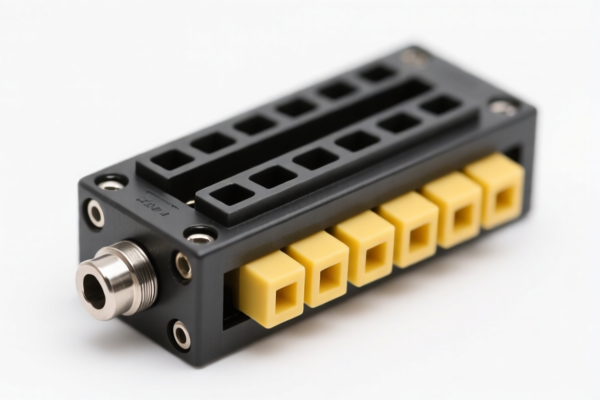
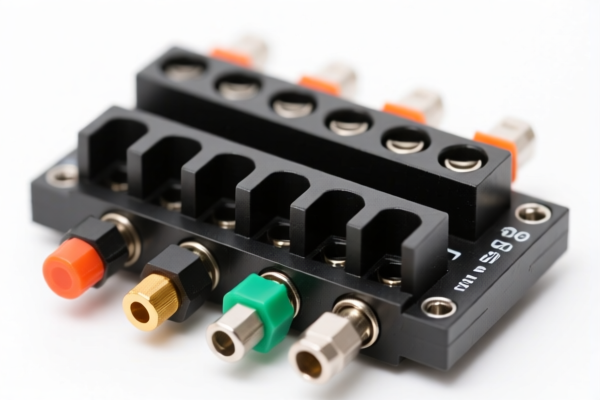
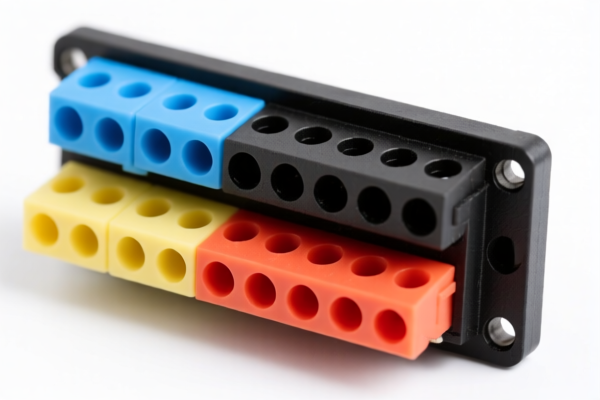
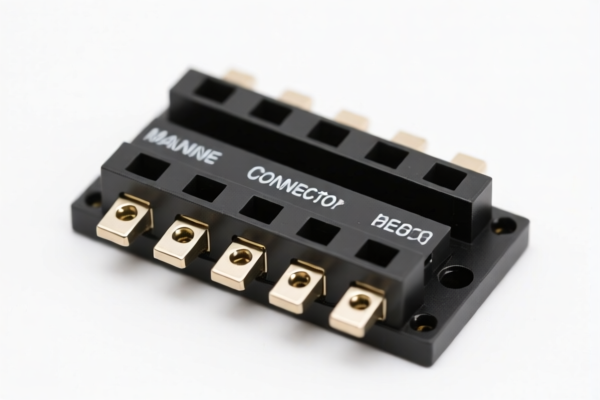
AI Analysis
🧱 Multi-Contact Wedge Block (Industrial Hardware & Electrical Components)
🌐 HS Code Reference & Customs Clearance Guide | 2026 Latest Tariff Analysis | Professional Compliance Strategy
📌 I. Product Definition & Classification: What Exactly is a "Wedge Block"?
A Wedge Block is a versatile mechanical component, typically made of metal (steel, iron, or aluminum). Its function varies significantly based on its application, leading to different HS Code classifications. In international trade, it is broadly categorized into two main logical groups:
1. Mechanical Support/Fixing Components: Used as structural parts to support, fix, or anchor equipment (similar to brackets, hangers, or clamps). 2. Electrical Control Equipment Parts: Used as structural components within switchgear, control panels, or distribution boxes (specifically for multi-contact systems). 3. Machine Tool Accessories: Used as work-holding devices (clamps/jaws) in machining centers or lathes.
⚠️ Critical Distinction Point:
- If used for structural support/fixing (metal brackets/hangers) →归入 7326.90.86.30 / 7326.90.86.35
- If used as a part of electrical control gear (switchboards/panels) → 归入 8538.90.81.60 / 8538.90.81.80
- If used as a work clamp/jaw for machinery → 归入 8466.20.80.40
📦 II. HS Code Classification Details (2026 Latest Tariff Authoritative Comparison)
| HS Code | Product Description | Application Scenario | Material Assumption |
|---|---|---|---|
7326.90.86.30 |
Other articles of iron or steel, specifically support/fixing structures (brackets/hangers) | Structural supports, anchor wedges, fixing brackets for industrial equipment | 🛡️ Metal (Steel/Iron) |
7326.90.86.35 |
Other articles of iron or steel, miscellaneous spare parts/components | Generic metal wedge blocks, miscellaneous structural components | 🛡️ Metal (Steel/Iron) |
8538.90.81.60 |
Parts suitable for use solely or principally with the apparatus of heading 8537 (Switchboards, control panels) | Structural wedges/clamps inside electrical control cabinets, multi-contact switchgear parts | 🛡️ Metal (Steel/Copper) |
8538.90.81.80 |
Other parts of the apparatus of heading 8537 | Generic electrical equipment components, backup classification for control gear parts | 🛡️ Metal (Steel) |
8466.20.80.40 |
Other work holding devices (clamps, jaws, chucks, collets, etc.) | Workholding wedges, clamping jaws for lathes, milling machines, or CNC equipment | 🛡️ Metal (Steel) |
🔍 Key Reminder:
- Electrical Context: If the wedge block is inside a control panel or switchboard, it must be classified under 8538, not as a generic metal part. - Mechanical Context: If it is a standalone bracket or anchor, it falls under 7326 (Other articles of iron/steel). - Machining Context: If it is actively used to hold a workpiece, it is a Work Holding Device under 8466.
💰 III. 2026 Latest Tariff Rate Breakdown (Including Additional Taxes & Policy Surcharges)
✅ Applicable Country: United States (US)
✅ Origin: China (CN)
✅ Effective Date: 2025/2026 (Current Import Regulations)
🎯 1. 7326.90.86.30 & 7326.90.86.35 — Metal Support/Fixing Structures (Steel/Iron)
These codes attract the highest tariff burden due to Section 232 (Steel/Aluminum) and Section 301 surcharges.
| Item | Content |
|---|---|
| Base Duty | 2.9% (ad valorem) |
| Section 301 (Trade War) | +25.0% |
| Section 232 (Steel/Aluminum) | +50.0% (Specific to Steel/Aluminum/Copper products under Section 232) |
| Total Tax Rate | 87.9% |
| Tax Calculation | CIF Value × 87.9% |
| De Minimis Eligibility | ❌ Not Eligible (High duty exemption does not apply) |
| Legal Basis Path | HTS:7326.90.86.30 → USITC Footnote: Steel/Aluminum Surcharge → EO: Steel/Aluminum Tariffs |
📌 Explanation:
- The 2.9% is the standard Most Favored Nation (MFN) rate. - The 25% is the Section 301 tariff targeting Chinese goods. - The 50% is the Section 232 tariff specifically applied to steel and aluminum articles. Since wedge blocks in this category are assumed to be metal (steel), this massive surcharge applies. - Total: 87.9%. This is extremely high. Misclassification here can destroy profit margins.
🎯 2. 8538.90.81.60 & 8538.90.81.80 — Parts for Electrical Control Apparatus
These codes are for components used in switchboards, control panels, and distribution systems.
| Item | Content |
|---|---|
| Base Duty | 3.5% (for 8538.90.81.60) / 3.7% (for 8538.90.81.80) |
| Section 301 (Trade War) | +25.0% |
| Section 232 (Steel/Aluminum) | NOT APPLICABLE (This category is primarily electrical apparatus parts, not raw steel articles) |
| Total Tax Rate | 38.5% (for 81.60) / 38.7% (for 81.80) |
| Tax Calculation | CIF Value × 38.5%~38.7% |
| De Minimis Eligibility | ❌ Not Eligible |
| Legal Basis Path | HTS:8538.90.81.xx → USITC Footnote: Section 301 → EO: Electrical Equipment Tariffs |
📌 Explanation:
- No Section 232 Surcharge: Unlike general steel articles, parts specifically designed for electrical apparatus (Chapter 85) are generally exempt from the 50% Section 232 steel tariff, focusing instead on the 25% Section 301 tariff. - Total ~38.5-38.7%. This is significantly lower than the 87.9% for general steel articles. Correct classification is crucial to save nearly 50% in duties!
🎯 3. 8466.20.80.40 — Work Holding Devices (Machine Tool Accessories)
These codes cover clamps, jaws, and wedges used to hold workpieces in machining centers.
| Item | Content |
|---|---|
| Base Duty | 3.7% (ad valorem) |
| Section 301 (Trade War) | +25.0% |
| Section 232 (Steel/Aluminum) | NOT APPLICABLE (Machine tool accessories are not subject to Section 232 steel tariffs) |
| Total Tax Rate | 38.7% |
| Tax Calculation | CIF Value × 38.7% |
| De Minimis Eligibility | ❌ Not Eligible |
| Legal Basis Path | HTS:8466.20.80.40 → USITC Footnote: Section 301 → EO: Machine Tool Accessories |
📌 Explanation:
- Similar to electrical parts, machine tool accessories are excluded from the heavy Section 232 steel tariffs. - Total: 38.7%. Again, significantly cheaper than the 87.9% rate for general steel structures.
🛠️ IV. Customs Clearance Practical Advice (Battle-Tested Pitfall Avoidance)
✅ 1. Documentation Checklist (Non-Negotiable)
| Document | Required? | Explanation |
|---|---|---|
| ✅ Product Specification Sheet | ✔️ | Must clearly state function: Is it a bracket? A clamp? A switchgear part? |
| ✅ Technical Drawing | ✔️ | Critical to prove if it’s a "work holding device" (8466) or a "structural support" (7326). |
| ✅ Product Photos | ✔️ | Show installation context. Is it inside an electrical panel? Or hanging on a wall? |
| ✅ Commercial Invoice | ✔️ | Description must match the HS Code logic (e.g., "Wedge Clamp for CNC Lathe" vs. "Steel Support Bracket"). |
| ✅ Bill of Lading/Packing List | ✔️ | Standard customs requirement. |
✅ 2. Declaration Strategy (Key Mnemonic)
🔥 “Function Defines Code: Structure=Steel(88%), Electric=Control(38%), Clamp=Tool(38%)!”
| Scenario | Correct HS Code | Wrong Code | Consequence of Error |
|---|---|---|---|
| Wedge Block as a Wall Bracket/Anchor | 7326.90.86.30 |
8538.90.81.60 |
Underpaid Tax → Penalty + Back Duty (38.5% vs 87.9%!) |
| Wedge Block Inside a Control Panel | 8538.90.81.60 |
7326.90.86.30 |
Overpaid Tax → Loss of profit (38.5% vs 87.9%) |
| Wedge Clamp for Machining | 8466.20.80.40 |
7326.90.86.30 |
Overpaid Tax → Loss of profit (38.7% vs 87.9%) |
✅ 3. Special Situations & Solutions
| Situation | Handling Advice |
|---|---|
| Composite Function (Support + Electrical) | If it serves BOTH, argue for the Electrical Part (8538) classification if it’s primarily for switchgear, as it avoids Section 232. |
| Non-Metal Wedge (Plastic/Ceramic) | If the wedge is NOT metal, Section 232 (50%) does NOT apply. Reclassify to plastics/ceramics chapter. |
| OEM Custom Parts | Provide OEM contracts and design drawings to prove specific end-use (e.g., specific machine tool or electrical panel). |
| Small Sample Imports | No De Minimis Exemption for China-origin goods under current Section 301/232 rules. Do not use 804.34a for these codes. |
🌍 V. Global Market Clearance Comparison (2026 Update)
| Country/Region | Recommended HS Code | Duty Rate | Key Certifications | Notes |
|---|---|---|---|---|
| 🇺🇸 USA | See above | 38.5%~87.9% | N/A | Section 232 & 301 apply. High risk. |
| 🇨🇳 China | 7326.90.90.00 / 8538.90.90.90 |
~2%~5% | N/A | Low duty, no US surcharges. |
| 🇪🇺 EU | 7326.90.98 / 8538.90.99 |
~2.7%~5% | CE (if electrical) | No Section 232 equivalent. |
| 🇦🇺 Australia | 7326.90.90 / 8538.90.90 |
~5% | RCM (if electrical) | No US-style surcharges. |
📌 Conclusion:
- The USA is the only major market with the Section 232 (50%) Steel Tariff and Section 301 (25%) China Tariff combined.
- Cost Savings Opportunity: If the wedge block is an electrical part or machine tool accessory, ensure it is NOT declared as a general "Steel Article." This can save ~49% in duties (from 87.9% to ~38.5%).
📌 VI. Common Errors & Pitfalls (Lessons Learned from Tears)
❌ Error 1: Declaring an electrical control panel part as a "Steel Bracket" (7326.90...)
👉 Result: Tax jumps from 38.5% to 87.9%. Loss of ~49% revenue.
❌ Error 2: Declaring a machine tool clamp as a "Steel Part" (7326.90...)
👉 Result: Tax jumps from 38.7% to 87.9%. Loss of ~49% revenue.
❌ Error 3: Claiming "De Minimis" (Section 321) for shipments under $800
👉 Result: Customs Seizure! Section 301 and 232 tariffs apply to de minimis shipments from China.
❌ Error 4: Vague Description "Wedge Block"
👉 Result: Customs exam, delay, or reclassification with penalties.
✅ Correct Approach:
“Multi-Contact Wedge Block for Electrical Switchgear, Model XYZ, Part No. 123”
OR
“Steel Workholding Wedge Clamp for CNC Lathe, Model ABC”
🎯 VII. Conclusion: Precise Classification, Maximize Profit!
🎯 Remember the Mantra:
🔹 “Electrical/Machine Parts = 38.5% (Save 49%)! Steel Structures = 87.9% (Pay More!)”
🔹 “Don’t let ‘Steel’ trigger the 50% Surcharge if it’s a Specific Part!”
📌 Pro Tip:
If your wedge block is plastic or composite, ensure the HS Code reflects the non-metal material to avoid the 50% Section 232 Steel Tariff entirely.
Request an Advance Ruling from US Customs if the function is ambiguous.
📣 Immediate Action:
📞 Consult a Customs Broker + Provide Technical Drawings + Confirm End-Use
🚀 Ensure your wedge block is classified correctly to avoid the 87.9% penalty rate!
✨ Professional Clearance Starts with Accurate Classification!
💼 Every Percent Saved is Pure Profit!
Customer Reviews
About HS Code Classification
The Harmonized System (HS) is an internationally standardized nomenclature developed by the World Customs Organization (WCO) to classify traded products. Over 200 countries use the HS system as the basis for customs tariffs, trade statistics, and import/export regulations.
Each HS code follows a hierarchical structure:
- Chapter (2 digits) — Broad category of goods (e.g., Chapter 84: Machinery and Mechanical Appliances)
- Heading (4 digits) — More specific grouping within the chapter
- Subheading (6 digits) — Internationally standardized breakdown, used by all WCO member countries
- National subdivisions (8-10 digits) — Country-specific extensions for further classification, such as US HTSUS 10-digit codes
Correct HS code classification is essential for smooth customs clearance, accurate duty payment, and compliance with trade regulations. Misclassification can lead to customs delays, overpayment of duties, or penalties.
When importing from CN to US, the applicable tariff rates may include:
- Most-Favored-Nation (MFN) rate — The standard duty rate applied to WTO members
- General rate — Applied to countries without trade agreements
- Trade remedy duties — Additional tariffs such as Section 301 (anti-dumping), Section 232 (national security), or countervailing duties
The information provided on this page is for reference purposes only. For official classification, please consult with your local customs authority or a licensed customs broker.