Multi function Notebook
CN → US| HS Code | Tariff Rate | Origin | Destination | Doc |
|---|---|---|---|---|
| 4820102010 | 35.0% | CN | US | Official Doc |
| 8471300100 | 10.0% | CN | US | Official Doc |
| 4820102060 | 35.0% | CN | US | Official Doc |
Product Images
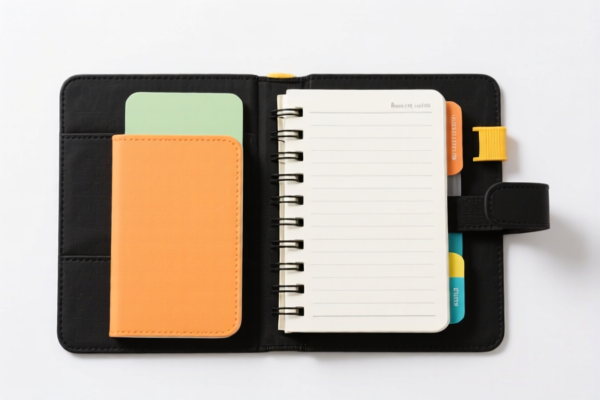
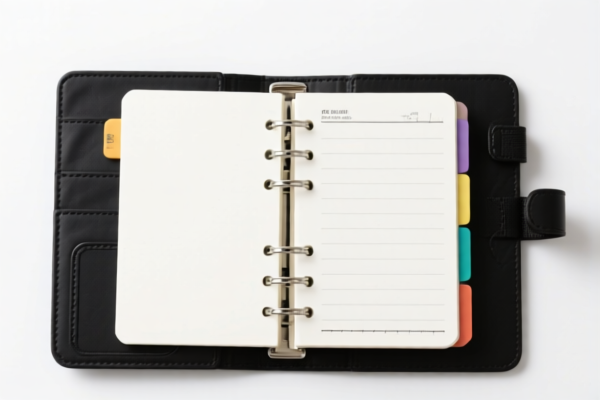
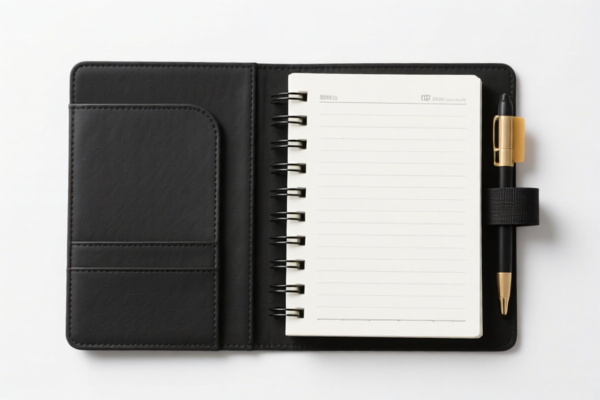
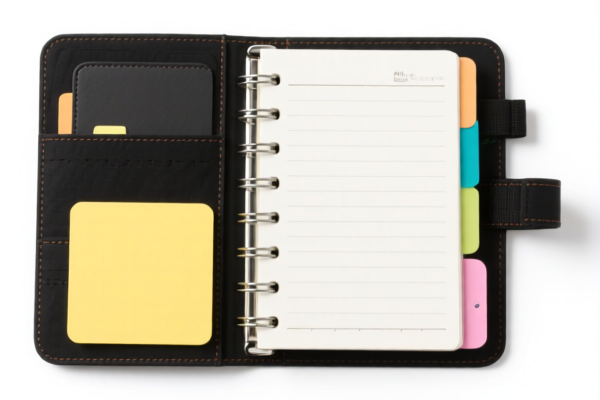
AI Analysis
📓 Multi-Function Notebook: The Great Divide – Analog vs. Digital
🌐 HS Code Reference & Customs Clearance Guide | 2026 Latest Tariff Analysis | Professional Level Clearance Strategy
📌 I. Product Definition & Classification: Do You Really Understand a "Multi-Function Notebook"?
The term "Multi-Function Notebook" is a major pitfall in international trade because it is ambiguous. It generally falls into two completely different categories based on whether it is a physical paper product or an electronic device. Misclassification leads to significant tariff differences, clearance delays, and potential penalties.
In international trade, you must distinguish between: 1. Analog Paper Notebooks: Traditional stationery made of paper/paperboard, possibly with rings or multiple organizational functions. 2. Digital Electronic Notebooks: Tablet-like devices powered by electricity, equipped with displays, CPUs, and storage, designed for data processing and note-taking.
⚠️ Critical Distinction Point:
- If it requires no electricity, uses pen on paper, and has no screen → Chapter 48 (Stationery)
- If it has a screen, battery, processor, or connects to a network → Chapter 84 or 85 (Electronics)
📦 II. HS Code Classification Details (2026 Latest Tariff Authority Comparison)
| HS Code | Product Description | Application Scenario | Power Source | Contains Driver/CPU? |
|---|---|---|---|---|
4820.10.20.10 |
Diaries, notebooks, and address books, bound; memorandum pads, letter pads and similar articles. | Physical diaries, bound notebooks, address books with paper pages. | ❌ No | ❌ No |
4820.10.20.60 |
Diaries, notebooks, and address books, bound; memorandum pads, letter pads and similar articles: Other. | Other paper-based notebooks, unbound or non-standard formats. | ❌ No | ❌ No |
4820.20 |
Notebooks, bound in covers of paper or paperboard, with or without ring binders, for writing/drawing. | General office/educational paper notebooks, multi-functional paper organizers. | ❌ No | ❌ No |
8517.62 |
Electronic devices with multiple functions, such as digital notebooks or tablet-like devices. | Smart Notebooks: E-ink tablets, digital stylus devices, cloud-syncing note-takers. | ✅ Yes (Electric) | ✅ Yes (Data Processing) |
8471.30.01.00 |
Portable automatic data processing machines, weighing ≤ 10 kg, with CPU, keyboard, display. | Full Tablets/Laptops: iPad, Samsung Galaxy Tab, Windows tablets used as notebooks. | ✅ Yes (Electric) | ✅ Yes (Full CPU) |
8471.41.01.10 |
Other automatic data processing machines: in same housing CPU + I/O unit. | All-in-One Mini PCs or specialized data processors that resemble notebooks but are complex computers. | ✅ Yes (Electric) | ✅ Yes (Complex CPU) |
🔍 Key Reminder:
- If the "multi-function" feature refers to organizing notes, drawing, and writing on paper, it is Stationery (HS 48).
- If the "multi-function" feature refers to digital recording, syncing to cloud, erasing, and processing data, it is Electronics (HS 84/85).
- Do not mix them! Customs will reject ambiguous descriptions.
💰 III. 2026 Latest Tariff Rate Details (Including Surcharge & Policy Surcharge)
✅ Applicable Country: United States (US)
✅ Origin: China (CN)
✅ Effective Date: 2025-11-10 onwards (including subsequent imports)
🎯 1. Analog Paper Notebooks (4820.10.20.10 & 4820.10.20.60)
| Item | Content |
|---|---|
| Base Tariff | 0.0% (ad valorem) |
| USITC Additional Tariff | +25.0% (from USITC Footnote regarding Section 301) |
| IEEPA Additional Tariff | Not explicitly listed in data, but Section 301 25% is the dominant factor for these codes from China. |
| Total Tax Rate | 25.0% |
| Tax Calculation | CIF Value × 25% |
| De Minimis Eligibility | ❌ No (Section 301 duties usually apply regardless of value threshold for these categories) |
| Legal Basis Path | USITC:4820.10.20.10 → FOOTNOTE:9903.88.01 (Section 301) |
📌 Explanation:
- Although the base duty is 0%, the 25% additional tariff under Section 301 applies to these paper products from China.
- This is a fixed high duty for stationery imports from China to the US.
🎯 2. Bound Paper Notebooks (General) (4820.20)
| Item | Content |
|---|---|
| Base Tariff | 0.0% (Standard HS Code) |
| USITC Additional Tariff | Failed to retrieve (Likely subject to Section 301, but data shows "Error") |
| Total Tax Rate | Error / Unknown |
| Recommendation | Verify with Customs Broker. Likely subject to 25% if from China, but needs confirmation. |
🎯 3. Digital/Smart Notebooks (8517.62)
| Item | Content |
|---|---|
| Base Tariff | 0.0% (Typically for communication equipment parts/devices) |
| USITC Additional Tariff | Failed to retrieve (Data shows "Error") |
| Total Tax Rate | Error / Unknown |
| Recommendation | Critical Risk Area. Digital notebooks may be classified as "Telecommunications Equipment" or "Data Processing". If classified under Section 301 lists, it could be 7.5% - 25%. Must verify. |
🎯 4. Portable Data Processing Machines (8471.30.01.00)
| Item | Content |
|---|---|
| Base Tariff | 0.0% |
| USITC Additional Tariff | 0.0% |
| IEEPA Additional Tariff | 0.0% |
| Total Tax Rate | 0.0% |
| Tax Calculation | CIF Value × 0% |
| De Minimis Eligibility | ❓ Check specific rules for Section 301 exclusions on computing machines. |
| Legal Basis Path | USITC:8471.30.01.00 → FOOTNOTE:0.0% |
📌 Note:
- Surprisingly low tariff (0%) for standard portable computers (tablets/laptops) under this specific subheading.
- However, ensure the device is strictly a "Portable Automatic Data Processing Machine." If it's a specialized "Smart Notebook" with limited OS, it might shift to8517.62or8471.41, which have different risks.
🎯 5. Other ADP Machines (8471.41.01.10)
| Item | Content |
|---|---|
| Base Tariff | 0.0% |
| USITC Additional Tariff | 7.5% |
| Total Tax Rate | 7.5% |
| Tax Calculation | CIF Value × 7.5% |
| De Minimis Eligibility | ❌ No |
| Legal Basis Path | USITC:8471.41.01.10 → FOOTNOTE:7.5% |
📌 Note:
- If the device is more complex (e.g., a small workstation or non-portable unit classified as "Other ADP"), the duty is 7.5%.
🛠️ IV. Customs Clearance Practical Advice (Battle-Tested Pitfall Guide)
✅ 1. Preparation Checklist (Non-Negotiable)
| Document | Must Provide | Explanation |
|---|---|---|
| ✅ Product Specifications | ✔️ | Clearly state: Paper (Material, Binding Type) OR Electronic (OS, Battery Capacity, Screen Type, Connectivity). |
| ✅ Product Photos | ✔️ | Show the item powered off and powered on. If electronic, show the menu/interface. If paper, show the binding. |
| ✅ Circuit Diagram/Structure | ✔️ | For electronic devices, prove whether it has a CPU, RAM, and storage. Crucial for distinguishing 48xx from 84xx/85xx. |
| ✅ Commercial Invoice | ✔️ | Description must be precise. - GOOD: "Paper Notebook, Bound, 100 Sheets, A5 Size" - BAD: "Multi-Function Notebook" (Ambiguous!) |
| ✅ FCC Certification | ✔️ | Mandatory for all electronic devices (8517.62, 8471.x0). Without it, customs will seize the shipment. |
| ✅ Battery Report | ✔️ | If electronic, provide MSDS and UN38.3 for lithium batteries. |
✅ 2. Declaration Skills (Key Mantra)
🔥 "Paper is 25%, Electric is 0-7.5%, Ambiguity is Seizure!"
| Scenario | Correct Declaration | Wrong Practice |
|---|---|---|
| Physical Paper Notebook | "Paper Notebook, Bound, Stationery" → 4820.10.20.10 |
Calling it "Smart Notebook" without power → Delay/Seizure |
| Digital Tablet-like Notebook | "Portable Data Processing Machine, Tablet, 8-inch, WiFi" → 8471.30.01.00 |
Calling it "Notebook" without mentioning CPU/OS → Misclassification Risk |
| E-Ink Smart Notebook | "Electronic Notebook, E-Ink Display, Stylus Input" → 8517.62 |
Calling it "Paper Notebook" → High Duty Risk (0% vs 25%) |
| Hybrid Device | "Digital Notepad with Cloud Sync" → 8517.62 or 8471.41 |
Vague "Multi-Function" → Customs Uncertainty |
✅ 3. Special Situations Handling
| Situation | Handling Advice |
|---|---|
| "Multi-Function" Paper Notebook (e.g., with pockets, ruler, calculator on cover) | Still HS 48. The calculator on the cover does not make it electronic if it's non-battery powered. |
| Digital Notebook with Cloud Sync | Must have FCC. If it runs Android/iOS, it may be 8471.30.01.00. If it has a proprietary OS for note-taking only, it may be 8517.62. |
| Kit: Paper Notebook + Pen + Charger | If the charger is for a digital device, the whole kit is Electronic. If the pen is regular, it's Stationery. |
| Sample Shipments | Even for samples, if it's electronic, FCC is required. Paper samples can declare value as low as possible, but 25% duty still applies. |
🌍 V. Global Major Market Clearance Comparison (2026 Latest)
| Country/Region | Recommended HS Code | Tariff (China Origin) | Certification Requirements | Notes |
|---|---|---|---|---|
| 🇺🇸 USA | 4820.10.20.10 (Paper) 8471.30.01.00 (Digital) |
25% (Paper) 0% (Digital ADP) |
FCC (Digital) | Biggest Duty Gap: Paper is 25%, Digital is 0%. Strategic Opportunity: Move to digital? |
| 🇨🇳 China | 4820.10.20.10 8471.30.01.00 |
0-10% (Varies) | CCC (Digital) | No Section 301 surcharge. |
| 🇪🇺 EU | 4820.10.10 (Paper) 8471.30.00 (Digital) |
~3.5% (Paper) 0% (Digital) |
CE, RoHS (Digital) | Lower than US, but still requires strict compliance. |
| 🇯🇵 Japan | 4820.10.000 8471.30.000 |
3-5% (Paper) 0% (Digital) |
PSE, VCCI (Digital) | No major surcharges, but strict labeling. |
📌 Conclusion:
- USA is the most expensive market for Paper Notebooks (25%).
- USA is the cheapest market for Digital Notebooks (0-7.5%).
- Strategy: If possible, pivot from physical stationery to digital/electronic notebooks for the US market to avoid the 25% tariff.
📌 VI. Common Mistakes & Pitfalls (Lessons from Blood & Tears)
❌ Mistake 1: Using "Multi-Function Notebook" as the HS Code Description
👉 Consequence: Customs rejects the entry, requests clarification, delays shipment by 2-4 weeks.
👉 Fix: Be specific: "Paper" or "Electronic".
❌ Mistake 2: Declaring Digital Notebook as 4820 (Stationery) to Avoid 25% Duty
👉 Consequence: Customs inspection finds battery/screen, reclassifies to 8471 or 8517, imposes penalties + back taxes.
👉 Fix: Declare accurately. If digital, use correct electronic HS Code.
❌ Mistake 3: Ignoring FCC for Digital Notebooks
👉 Consequence: Seizure by CBP. Product destroyed or returned.
👉 Fix: Obtain FCC ID before shipping.
❌ Mistake 4: Assuming All Electronics are 0% Duty
👉 Consequence: Some electronic notebooks (8517.62) or non-portable ADPs (8471.41) may have 7.5% or higher duties.
👉 Fix: Verify the specific subheading's duty rate.
✅ Correct Practice:
"Paper Notebook, 100 Sheets, Wire Bound, A5 Size, For Office Use" →
4820.10.20.10
OR
"Tablet Computer, 10-inch, Android OS, WiFi, For Digital Note-Taking" →8471.30.01.00
🎯 VII. Conclusion: Precise Classification, Cost Optimization!
🎯 Remember the Mantra:
🔹 "Paper is 25%, Digital is Cheap, Ambiguity is Disaster!"
🔹 "If it plugs in, declare Electronics. If it doesn't, declare Stationery."
🔹 "FCC is Mandatory for Digital, Don't Skip It!"
📌 Pro Tip:
If you are exporting Physical Notebooks to the US, consider:
1. Supply Chain Adjustment: Source paper materials from non-China countries if possible to avoid Section 301.
2. Product Pivot: Develop Digital Notebooks (E-Ink/Tablets) which have 0-7.5% duty in the US, offering a massive cost advantage.
📣 Immediate Action:
📞 Contact Customs Broker + Provide Product Photos + Confirm Power Source
🚀 Get HS Code Advance Ruling if unsure.
Clear Customs Smoothly, Maximize Profits!
✨ Professional Customs Clearance Starts with Accurate Classification!
💼 Every Cent of Tax Matters!
Customer Reviews
About HS Code Classification
The Harmonized System (HS) is an internationally standardized nomenclature developed by the World Customs Organization (WCO) to classify traded products. Over 200 countries use the HS system as the basis for customs tariffs, trade statistics, and import/export regulations.
Each HS code follows a hierarchical structure:
- Chapter (2 digits) — Broad category of goods (e.g., Chapter 84: Machinery and Mechanical Appliances)
- Heading (4 digits) — More specific grouping within the chapter
- Subheading (6 digits) — Internationally standardized breakdown, used by all WCO member countries
- National subdivisions (8-10 digits) — Country-specific extensions for further classification, such as US HTSUS 10-digit codes
Correct HS code classification is essential for smooth customs clearance, accurate duty payment, and compliance with trade regulations. Misclassification can lead to customs delays, overpayment of duties, or penalties.
When importing from CN to US, the applicable tariff rates may include:
- Most-Favored-Nation (MFN) rate — The standard duty rate applied to WTO members
- General rate — Applied to countries without trade agreements
- Trade remedy duties — Additional tariffs such as Section 301 (anti-dumping), Section 232 (national security), or countervailing duties
The information provided on this page is for reference purposes only. For official classification, please consult with your local customs authority or a licensed customs broker.