Multi function Power Socket
CN → US| HS Code | Tariff Rate | Origin | Destination | Doc |
|---|---|---|---|---|
| 8537109150 | 37.7% | CN | US | Official Doc |
| 8536698000 | 37.7% | CN | US | Official Doc |
| 8536694020 | 35.0% | CN | US | Official Doc |
| 8537109170 | 37.7% | CN | US | Official Doc |
| 8544429010 | 87.6% | CN | US | Official Doc |
Product Images
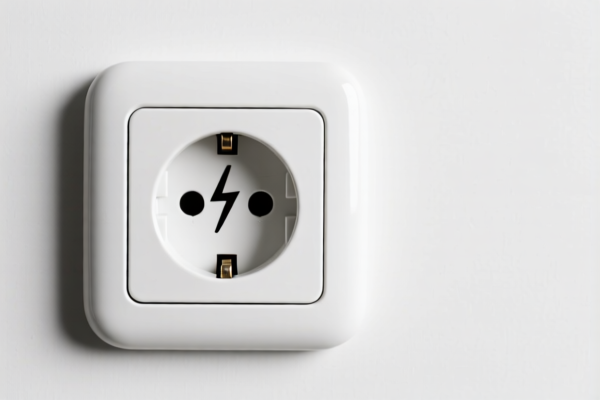
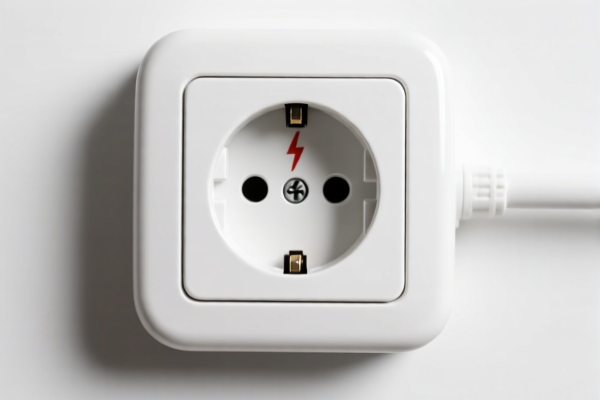
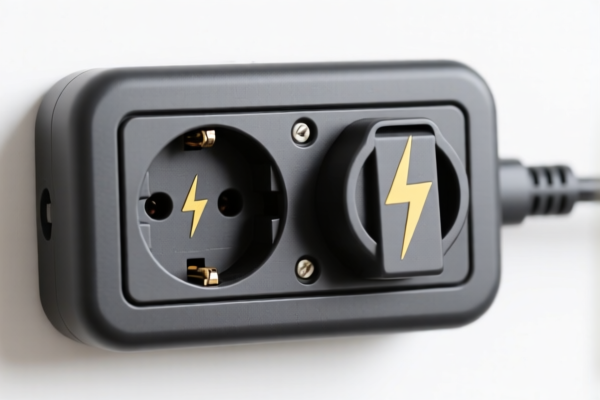
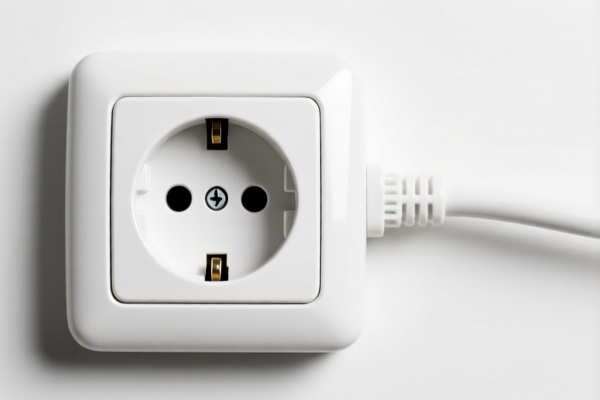
AI Analysis
⚡ Multi-Function Power Socket: HS Code Classification & Tax Strategy (2026 Guide)
🌐 HS Code Reference & Customs Clearance Guide | 2026 Latest Tariff Full Analysis | Professional Customs Strategy
📌 I. Product Definition & Classification: Do You Really Understand "Multi-Function Power Socket"?
A Multi-Function Power Socket is a critical electrical accessory used for distributing and controlling power in residential, commercial, and industrial settings. In international trade, its classification depends heavily on its internal structure, voltage rating, and control functionality.
It is generally categorized into two main groups:
- Power Distribution/Control Devices (8537 Series): Sockets equipped with switches, circuit breakers, surge protection, or intelligent control modules. These are considered part of the "electrical circuit control" system.
- Connectors/Outlets (8536 Series): Simple sockets without active control components, functioning merely as connection points for voltage up to 1,000V.
⚠️ Key Distinction Point:
- If the device includes switches, breakers, or complex control logic for power distribution → Classify under 8537.
- If it is a simple connection point (passive outlet) → Classify under 8536.
- If it is purely a cable/conductor assembly (e.g., extension cords with minimal housing) → Classify under 8544.
📦 II. HS Code Classification Details (2026 Latest Tariff Authority Comparison)
| HS Code | Product Description | Application Scenario | Control Functionality |
|---|---|---|---|
8537.10.91.50 |
Multiswitch Panels & Circuit Control Equipment | Panels with multiple outlets + switches/circuit breakers | ✅ Active Control |
8536.69.80.00 |
Other Outlets (Voltage ≤ 1,000V) | Standard passive sockets, simple wall plugs | ❌ Passive |
8536.69.40.20 |
Cylindrical Multi-Core Connectors (Outlets) | Industrial plugs/sockets, heavy-duty connectors | ⚠️ Connector Type |
8537.10.91.70 |
Electric Apparatus for Control (Power Distribution) | Smart sockets, panels with voltage regulation/dist | ✅ Active Control |
8544.42.90.10 |
Insulated Wires & Cables (Conductors) | Extension cords, power strips where cable is primary | ❌ Conductor Only |
🔍 Critical Reminder:
- All smart sockets or power strips with circuit breakers must be classified under 8537 to reflect their control function. Misclassifying as simple connectors (8536) may lead to customs audits.
- 8544 is only applicable if the product is essentially a cable with minimal termination. If it has a robust socket housing, 8544 is often rejected.
💰 III. 2026 Latest Tariff Rate Breakdown (Including Surcharges & Policy Add-ons)
✅ Applicable Country: United States (US)
✅ Origin: China (CN)
✅ Effective Date: From November 10, 2025 onwards (including subsequent imports)
🎯 1. 8537.10.91.50 & 8537.10.91.70 — Power Distribution/Control Devices
| Item | Content |
|---|---|
| Basic Tariff | 2.7% (ad valorem) |
| Section 301 Tariff (Added) | +25.0% |
| Section 122 Tariff (Added) | +10.0% |
| Total Effective Rate | 37.7% |
| Tax Calculation | CIF Value × 37.7% |
| De Minimis Exemption | ❌ Not Eligible (deny_de_minimis) |
| Legal Basis Path | Base Tariff: 2.7% + Section 301: 25.0% + Section 122: 10.0% |
📌 Explanation:
- The 2.7% is the standard Most Favored Nation (MFN) rate for electrical control apparatus.
- The 25% is the additional tariff under US Trade Law Section 301 against Chinese goods.
- The 10% is an additional duty under Section 122 (often related to specific strategic or emergency provisions).
- Total 37.7% is a high-cost item. Importers must budget carefully.
🎯 2. 8536.69.80.00 — Other Outlets
| Item | Content |
|---|---|
| Basic Tariff | 2.7% (ad valorem) |
| Section 301 Tariff (Added) | +25.0% |
| Section 122 Tariff (Added) | +10.0% |
| Total Effective Rate | 37.7% |
| Tax Calculation | CIF Value × 37.7% |
| De Minimis Exemption | ❌ Not Eligible (deny_de_minimis) |
| Legal Basis Path | Base Tariff: 2.7% + Section 301: 25.0% + Section 122: 10.0% |
📌 Note:
- Despite being a "simple" socket, it faces the same total tariff rate (37.7%) as complex control devices due to the heavy surcharges on Chinese-origin electrical components.
- Classification as 8536 does not reduce the tariff burden in this context.
🎯 3. 8536.69.40.20 — Cylindrical Multi-Core Connectors
| Item | Content |
|---|---|
| Basic Tariff | 0.0% (ad valorem) |
| Section 301 Tariff (Added) | +25.0% |
| Section 122 Tariff (Added) | +10.0% |
| Total Effective Rate | 35.0% |
| Tax Calculation | CIF Value × 35.0% |
| De Minimis Exemption | ❌ Not Eligible (deny_de_minimis) |
| Legal Basis Path | Base Tariff: 0.0% + Section 301: 25.0% + Section 122: 10.0% |
📌 Insight:
- This is the lowest tariff option (35.0%) among the valid classifications for this product type.
- However, this code is strictly for cylindrical multi-core connectors (industrial plugs/sockets). Misclassifying a standard household power strip as this connector can lead to fraud accusations and severe penalties. Use only if the product genuinely fits this industrial connector definition.
🎯 4. 8544.42.90.10 — Insulated Wires & Cables
| Item | Content |
|---|---|
| Basic Tariff | 2.6% (ad valorem) |
| Section 301 Tariff (Added) | +25.0% |
| Section 122 Tariff (Added) | +10.0% |
| Steel/Aluminum/Copper Products Surcharge | +50.0% (Specific to material type) |
| Total Effective Rate | 87.6% (Highly Penalized) |
| Tax Calculation | CIF Value × 87.6% |
| De Minimis Exemption | ❌ Not Eligible (deny_de_minimis) |
| Legal Basis Path | Base Tariff: 2.6% + Section 301: 25.0% + Section 122: 10.0% + Special Material Surcharge: 50.0% |
📌 Warning:
- This classification is extremely costly (87.6%).
- It applies if the product is deemed primarily a conductor with specific material compositions (e.g., significant copper/steel content subject to the extra 50% surcharge).
- Do not use this code for standard power sockets unless you are importing bare cables with minimal terminations. It is generally not recommended for finished power strip products due to the prohibitive tax rate.
🛠️ IV. Customs Clearance Practical Advice (Real-World Pitfall Avoidance)
✅ 1. Documentation Checklist (Non-Negotiable)
| Document | Required? | Description |
|---|---|---|
| ✅ Product Specifications | ✔️ | Must detail voltage, amperage, number of outlets, and presence of switches/breakers. |
| ✅ Internal Structure Diagram | ✔️ | Crucial to prove if it contains control circuits (8537) or is passive (8536). |
| ✅ Product Photos (with Label) | ✔️ | Clear view of inlet, outlets, switches, and any safety certifications (UL, ETL, CE). |
| ✅ Third-Party Test Report | ✔️ | UL, ETL, or FCC reports are mandatory for electrical safety compliance. |
| ✅ Commercial Invoice | ✔️ | Clearly describe as "Power Strip with Circuit Breaker" or "Multi-Function Outlet," not just "Socket." |
| ✅ Certificate of Origin (CO) | ✔️ | Essential for proving Chinese origin and applying/avoiding specific surcharges. |
| ✅ Packing List | ✔️ | Detail the contents to ensure no missing accessories that might trigger re-inspection. |
✅ 2. Declaration Strategy (Key Mantra)
🔥 "Control Defines Code, Accuracy Prevents Penalty!"
| Scenario | Correct Declaration | Incorrect Action |
|---|---|---|
| Power Strip with Switches/Breakers | 8537.10.91.50 or 8537.10.91.70 |
Misdeclare as 8536.69.80.00 → Risk of audit & fines |
| Simple Passive Socket | 8536.69.80.00 |
Misdeclare as 8544 → Rejected as incomplete |
| Industrial Circular Plug | 8536.69.40.20 |
Misdeclare as household socket → Wrong code usage |
| Extension Cord (Cable Focus) | 8544.42.90.10 (Avoid if possible) |
Use only if truly cable-heavy; otherwise, face 87.6% tax |
✅ 3. Special Situation Handling
| Situation | Handling Advice |
|---|---|
| OEM/Custom Designs | Provide design drawings to customs broker to prove function. If it has a switch, it’s 8537. |
| Smart Sockets (Wi-Fi/Bluetooth) | Must declare as Control Devices (8537) because of the embedded processing unit. |
| Products with Surge Protection | Often classified under 8537 due to the protective circuit, even if no switch is present. |
| Mixed Imports (Sockets + Cables) | Do not split shipments to save tax. Customs may consolidate and assess higher rates. Declare as a single functional unit. |
🌍 V. Global Market Clearance Comparison (2026 Latest)
| Country/Region | Recommended HS Code | Tariff Rate (China Origin) | Certification Requirements | Notes |
|---|---|---|---|---|
| 🇺🇸 USA | 8537.10.91.50 / 8536.69.80.00 |
37.7% (Standard) 35.0% (Connector type*) |
UL/ETL + FCC (if wireless) | High tariffs due to Section 301 & 122. |
| 🇨🇳 China | 8537.10.91.50 |
5% - 10% | CCC | No additional surcharges. |
| 🇪🇺 EU | 8537.10.91.50 |
0% - 2.7% | CE + RoHS | Lower base tariffs, but strict safety standards. |
| 🇬🇧 UK | 8537.10.91.50 |
0% - 2.7% | UKCA + BS Standards | Post-Brexit regulations apply. |
| 🇯🇵 Japan | 8537.10.91.50 |
0% - 2.5% | PSE + JIS | PSE marking is mandatory. |
📌 Conclusion:
- USA remains the most challenging market due to 37.7% effective tariff.
- European and Asian markets offer significantly lower base tariffs, but compliance costs (certifications) can be high.
- Strategy: For US-bound goods, consider supply chain diversification (e.g., Vietnam, Mexico) to mitigate Section 301 tariffs, as domestic products may not be subject to the same surcharges.
📌 VI. Common Errors & Pitfalls (Lessons Learned)
❌ Error 1: Classifying a switched power strip as a simple outlet (8536)
👉 Consequence: Customs may classify it as 8537, leading to retroactive tax assessments and penalties if the difference is found. However, in this specific tax regime, both are ~37.7%, so the main risk is classification accuracy and potential delays.
❌ Error 2: Using 8544 (Cables) for a finished power strip
👉 Consequence: 87.6% tariff. This is the most expensive mistake. Avoid unless it’s a raw cable assembly.
❌ Error 3: Ignoring Smart Features
👉 Consequence: If you declare a Wi-Fi socket as 8536, customs may reclassify it as 8537 or even 8517 (Telecom devices), leading to complex compliance issues and higher scrutiny.
❌ Error 4: Incomplete Documentation
👉 Consequence: Without a circuit diagram, customs cannot verify if the product contains control elements. This leads to detention, storage fees, and potential de minimis revocation.
✅ Correct Practice:
"Multi-Function Power Strip, 15A, 125V, with 4 Outlets and Circuit Breaker, Surge Protection, UL Certified, Model XYZ"
🎯 VII. Conclusion: Precision in Classification, Savings in Logistics
🎯 Remember the Mantra:
🔹 "Control Means 8537, Passive Means 8536, Connector Means 35%, Cable Means 87.6%!"
🔹 "In the US, All Chinese Electricals Hurt: Prepare for ~37.7% Tax!"
📌 Pro Tip:
If your products are originating from Vietnam, Mexico, or Thailand, you may exempt from Section 301/122 surcharges, reducing the effective tariff to the base rate (0% - 2.7%).
We strongly recommend Applying for an Advance Ruling from US Customs and Border Protection (CBP) to confirm the correct HS Code before shipping.
📣 Immediate Action Required:
📞 Consult with a licensed Customs Broker + Provide Product Specs + Request HS Code Advance Ruling
🚀 Ensure smooth clearance, minimize costs, and maximize your profit margins!
✨ Professional Clearance Starts with Precise Classification!
💼 Every Cent of Your Cost Deserves Accurate Calculation!
Customer Reviews
About HS Code Classification
The Harmonized System (HS) is an internationally standardized nomenclature developed by the World Customs Organization (WCO) to classify traded products. Over 200 countries use the HS system as the basis for customs tariffs, trade statistics, and import/export regulations.
Each HS code follows a hierarchical structure:
- Chapter (2 digits) — Broad category of goods (e.g., Chapter 84: Machinery and Mechanical Appliances)
- Heading (4 digits) — More specific grouping within the chapter
- Subheading (6 digits) — Internationally standardized breakdown, used by all WCO member countries
- National subdivisions (8-10 digits) — Country-specific extensions for further classification, such as US HTSUS 10-digit codes
Correct HS code classification is essential for smooth customs clearance, accurate duty payment, and compliance with trade regulations. Misclassification can lead to customs delays, overpayment of duties, or penalties.
When importing from CN to US, the applicable tariff rates may include:
- Most-Favored-Nation (MFN) rate — The standard duty rate applied to WTO members
- General rate — Applied to countries without trade agreements
- Trade remedy duties — Additional tariffs such as Section 301 (anti-dumping), Section 232 (national security), or countervailing duties
The information provided on this page is for reference purposes only. For official classification, please consult with your local customs authority or a licensed customs broker.