Multi function Sample Book
CN → US| HS Code | Tariff Rate | Origin | Destination | Doc |
|---|---|---|---|---|
| 490199 | 0.0% | CN | US | Official Doc |
| 490399 | 0.0% | CN | US | Official Doc |
| 4820500000 | 35.0% | CN | US | Official Doc |
| 4820900000 | 35.0% | CN | US | Official Doc |
| 4911100080 | 17.5% | CN | US | Official Doc |
| 4911914040 | 17.5% | CN | US | Official Doc |
Product Images
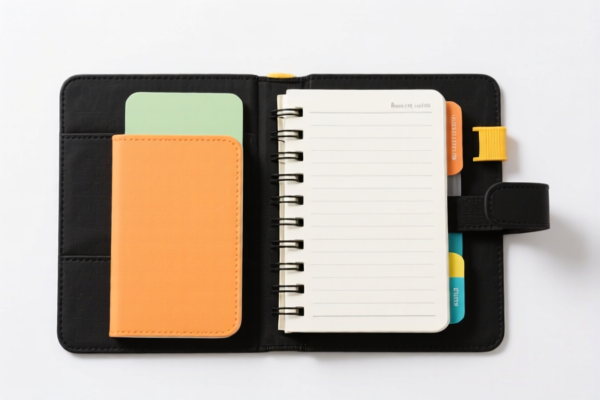
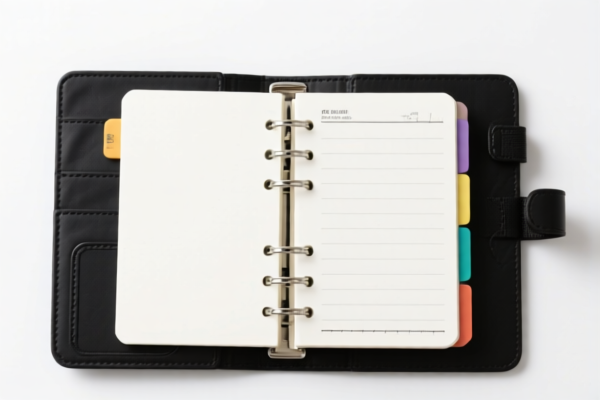
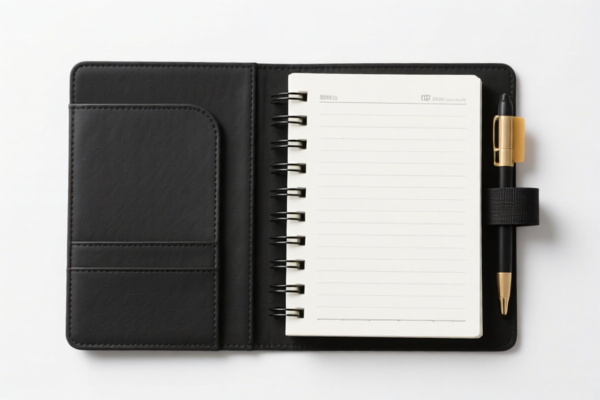
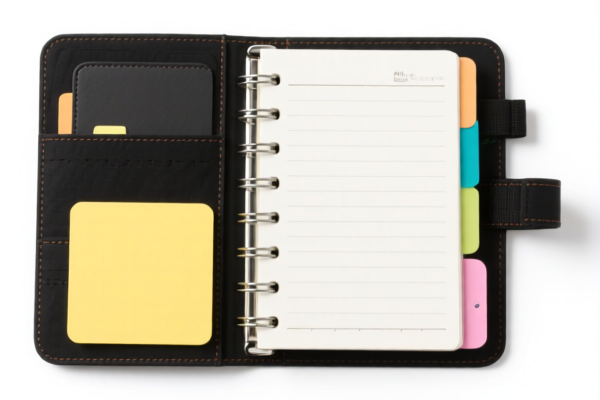
AI Analysis
📚 Multi-function Sample Book (Catalogs, Albums & Stationery)
🌐 HS Code Reference & Clearance Guide | 2026 Latest Tariff Analysis | Professional Customs Strategy
📌 Part I: Product Definition & Classification: What Exactly is a "Multi-function Sample Book"?
A "Multi-function Sample Book" is a versatile printed product used in trade, manufacturing, and design industries. It serves multiple purposes: displaying product samples (fabric, swatches, materials), holding business cards, serving as a corporate brochure, or acting as a high-end notebook.
In international trade, it is not a single unified HS Code. Instead, it is classified based on its primary function and structure:
- Sample Albums/Collections: Designed to hold physical samples (e.g., fabric swatches, leather patches, paint chips).
- Category: Stationery/Books for samples.
- Commercial Catalogs/Brochures: Printed matter advertising goods or containing detailed product listings.
- Category: Printed matter/Trade advertising.
- Notebooks/Registers: Empty or ruled pages for writing, with covers for branding.
- Category: Stationery/Notebooks.
⚠️ Key Distinction Point:
- If it is primarily a book of physical samples (holes, pockets, adhesives for attaching materials) → 4820.90.00.00
- If it is primarily a printed catalog (text/images describing products) → 4911.10.00.80
- If it is a generic notebook with a branded cover → 4820.90.00.00 (or 4820.10 if specific)
📦 Part II: HS Code Classification Matrix (2026 Latest Tariff Authority)
| HS Code | Product Description | Applicable Scenario | Primary Function |
|---|---|---|---|
4820.50.00.00 |
Registers, account books, notebooks... Albums for samples or for collections (Specific Subheading) | Dedicated sample albums, sketchbooks, photo albums | Holding Samples/Sketches |
4820.90.00.00 |
Albums for samples or for collections and book covers... Other | General stationery, generic notebooks, non-specific binders | General Stationery/Binding |
4911.10.00.80 |
Other printed matter: Trade advertising material, commercial catalogs and the like | Product catalogs, brochures, price lists, trade show handouts | Printed Advertising/Info |
4911.91.40.40 |
Other printed matter: Pictures, designs, photographs (Printed ≤20 years) | High-quality design portfolios, art catalogs, vintage sample prints | Printed Pictures/Designs |
4901.99 |
Printed books, brochures... not elsewhere specified | Generic printed matter without specific classification | Generic Printed Matter |
4903.99 |
Other printed books... intended for display or promotional purposes | Promotional display books, kids' activity books | Promotional Display |
🔍 Critical Reminder:
- Do not confuse "Sample Albums" (Ch 48) with "Printed Catalogs" (Ch 49).
- If the item contains physical pockets/handles for samples, it belongs in Chapter 48 (Paper Articles).
- If it is purely printed pages (text/images) without physical sample attachment mechanisms, it belongs in Chapter 49 (Printed Matter).
💰 Part III: 2026 Latest Tariff Rate Details (Including Additional Duties)
✅ Applicable Country: USA (US)
✅ Country of Origin: China (CN)
✅ Effective Date: 2025/2026 Tariff Schedule (Subject to current trade policy)
🎯 1. 4820.50.00.00 / 4820.90.00.00 —— Sample Albums & Stationery (Ch 48)
| Item | Content |
|---|---|
| Base Tariff | 0.0% (Most Chapter 48 items have 0% base duty) |
| Section 301 Additional Tariff | +25.0% (Retaliatory tariff on Chinese goods) |
| Total Tariff Rate | 25.0% |
| Tax Calculation | CIF Value × 25% |
| De Minimis Exemption? | ❌ No (Not eligible for de minimis under current rules) |
| Legal Basis | HTSUS 4820.50.00.00 / 4820.90.00.00 + Section 301 List 4 |
📌 Explanation:
- Paper-based sample books and albums are heavily scrutinized. Even though the base duty is 0%, the 25% Section 301 tariff makes them expensive to import into the US. - Risk: Customs may challenge the classification if the album is deemed "printed matter" (Ch 49) instead of "stationery" (Ch 48), but both currently face significant tariffs.
🎯 2. 4911.10.00.80 —— Trade Advertising Material / Catalogs (Ch 49)
| Item | Content |
|---|---|
| Base Tariff | 0.0% |
| Section 301 Additional Tariff | +7.5% |
| Total Tariff Rate | 7.5% |
| Tax Calculation | CIF Value × 7.5% |
| De Minimis Exemption? | ❌ No |
| Legal Basis | HTSUS 4911.10.00.80 + Section 301 List 4A |
📌 Explanation:
- Commercial catalogs and trade advertising materials have a lower additional tariff (7.5%) compared to sample albums (25%). - Strategy: If the product is primarily a printed catalog rather than a physical sample holder, classify it under 4911.10.00.80 to save 17.5% in duties!
🎯 3. 4901.99 / 4903.99 —— Other Printed Matter (Error/Retrieval Failure in Source)
| Item | Content |
|---|---|
| Base Tariff | N/A (See specific subheadings) |
| Additional Tariff | Error/Failed to Retrieve |
| Total Tariff Rate | Error |
| Recommendation | Avoid using these generic codes if possible. They lack specificity and may trigger manual review by CBP (Customs and Border Protection). |
📌 Warning:
- Generic codes like4901.99are often flagged for manual examination because they are too broad. - Always try to specify: Is it a catalog (4911.10)? A design print (4911.91)? - If the tax data is unavailable, assume the worst-case scenario (25%) for planning purposes unless you have an official Ruling.
🛠️ Part IV: Customs Clearance Practical Advice (Pitfall Avoidance Guide)
✅ 1. Documentation Checklist (Non-Negotiable)
| Document | Must Provide | Description |
|---|---|---|
| ✅ Product Photos | ✔️ | Show the inside: Are there pockets for samples? Or just printed text? |
| ✅ Commercial Invoice | ✔️ | Clearly describe as: "Sample Book, Paper, With Plastic Pockets, No Goods Inside" OR "Printed Catalog, 50 Pages" |
| ✅ Function Statement | ✔️ | State primary use: "For displaying fabric swatches" vs "For displaying product specifications" |
| ✅ Material Composition | ✔️ | Paper type, binding type (spiral, glue, plastic), cover material |
✅ 2. Classification Strategy (Key Logic)
🔥 "Sample Holder = Ch 48 (25%); Printed Catalog = Ch 49 (7.5%)"
| Scenario | Correct HS Code | Tariff Impact | Why? |
|---|---|---|---|
| Book with holes/pockets to attach fabric swatches | 4820.50.00.00 / 4820.90.00.00 |
25% | It is a "Stationery/Album" for samples |
| Book with printed pages showing product images/text | 4911.10.00.80 |
7.5% | It is "Trade Advertising Material" |
| Blank notebook with logo printed on cover | 4820.90.00.00 |
25% | It is a "Notebook/Stationery" |
| Portfolio of art prints/designs | 4911.91.40.40 |
7.5% | It is "Printed Pictures/Designs" |
📌 Critical Tip:
- If you sell a "Sample Book" that is essentially a catalog (you print your products in it), classify it as 4911.10.00.80.
- Do NOT classify a printed catalog as a "Sample Album" (4820) just because it's called a "Sample Book" in your marketing. Customs looks at function, not name.
✅ 3. Special Cases
| Case | Handling Advice |
|---|---|
| Mixed Product (e.g., Catalog + Attached Swatch) | CBP may classify based on principal function. If swatches are integral, it may go to Ch 48. If swatches are optional/add-on, keep Ch 49. |
| Empty vs. Filled | Ensure the invoice states "Empty" or "No Sample Goods". If filled with samples, the samples themselves may be dutiable separately! |
| Promotional Free Goods | If sent as free samples, still declare value. Duty applies based on value. |
🌍 Part V: Global Market Comparison (2026 Latest)
| Country/Region | Recommended HS Code | Tariff (China Origin) | Certification | Notes |
|---|---|---|---|---|
| 🇺🇸 USA | 4820.90.00.00 / 4911.10.00.80 |
25% (Ch 48) / 7.5% (Ch 49) | N/A | High Tax Risk! Choose Ch 49 if possible. |
| 🇨🇳 China | 4820.90.00.00 |
5% - 9% | N/A | Standard import duty. |
| 🇪🇺 EU | 4820.90.00.00 |
5% | CE (if electronics involved) | No Section 301 equivalent. |
| 🇦🇺 Australia | 4820.90.00.00 |
5% | N/A | Low duty. |
| 🇯🇵 Japan | 4820.90.00.00 |
0% - 3% | N/A | Favorable rates. |
📌 Conclusion:
- USA is the most expensive market due to Section 301 tariffs.
- Optimization Strategy: For the US market, aggressively classify printed catalogs as4911.10.00.80(7.5%) instead of "Sample Albums" (4820- 25%). This saves 17.5% in duties.
📌 Part VI: Common Errors & Pitfalls (Blood Tears Lesson)
❌ Error 1: Classifying a printed catalog as a "Sample Album" (4820)
👉 Consequence: Pay 25% instead of 7.5%. Overpaid 17.5%!
❌ Error 2: Using generic code 4901.99 without specific description
👉 Consequence: CBP manual review, delay in clearance, potential reclassification with penalties.
❌ Error 3: Shipping sample books filled with actual products
👉 Consequence: The products inside are also dutiable. Misdeclaring as "empty book" is fraud.
✅ Correct Practice:
"Paper Sample Book, Empty, With Plastic Pockets, For Displaying Fabric Swatches" →
4820.90.00.00(25%)
"Printed Product Catalog, 100 Pages, Glossy Paper" →4911.10.00.80(7.5%)
🎯 Part VII: Conclusion: Precision Saves Money!
🎯 Remember the Mantra:
🔹 "Pockets for Samples = 25% (Ch 48)"
🔹 "Pages for Info = 7.5% (Ch 49)"
🔹 "Don't let the name fool you; let the function guide you!"
📌 Pro Tip:
If your product is a hybrid (e.g., a catalog with a small sample card included), consider declaring them separately:
1. Catalog: 4911.10.00.80 (7.5%)
2. Sample Card: 4820.90.00.00 (25%)
This may optimize total duty if the volume of printed material is higher than the physical sample.
📣 Immediate Action:
📞 Consult with a Customs Broker to confirm the primary function of your product.
🚀 Save 17.5% in US Duties by correct classification!
✨ Professional Clearance Starts with Accurate Classification!
💼 Every Dollar Saved is Pure Profit!
Customer Reviews
About HS Code Classification
The Harmonized System (HS) is an internationally standardized nomenclature developed by the World Customs Organization (WCO) to classify traded products. Over 200 countries use the HS system as the basis for customs tariffs, trade statistics, and import/export regulations.
Each HS code follows a hierarchical structure:
- Chapter (2 digits) — Broad category of goods (e.g., Chapter 84: Machinery and Mechanical Appliances)
- Heading (4 digits) — More specific grouping within the chapter
- Subheading (6 digits) — Internationally standardized breakdown, used by all WCO member countries
- National subdivisions (8-10 digits) — Country-specific extensions for further classification, such as US HTSUS 10-digit codes
Correct HS code classification is essential for smooth customs clearance, accurate duty payment, and compliance with trade regulations. Misclassification can lead to customs delays, overpayment of duties, or penalties.
When importing from CN to US, the applicable tariff rates may include:
- Most-Favored-Nation (MFN) rate — The standard duty rate applied to WTO members
- General rate — Applied to countries without trade agreements
- Trade remedy duties — Additional tariffs such as Section 301 (anti-dumping), Section 232 (national security), or countervailing duties
The information provided on this page is for reference purposes only. For official classification, please consult with your local customs authority or a licensed customs broker.