Multi function Socket
CN → US| HS Code | Tariff Rate | Origin | Destination | Doc |
|---|---|---|---|---|
| 8537109170 | 37.7% | CN | US | Official Doc |
| 8544429010 | 87.6% | CN | US | Official Doc |
| 8537109150 | 37.7% | CN | US | Official Doc |
| 8536698000 | 37.7% | CN | US | Official Doc |
| 8536694020 | 35.0% | CN | US | Official Doc |
Product Images
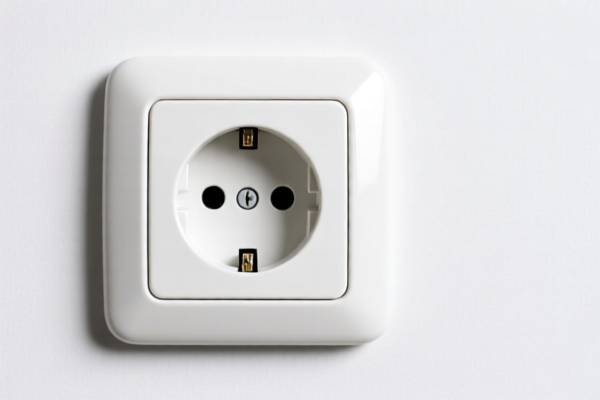
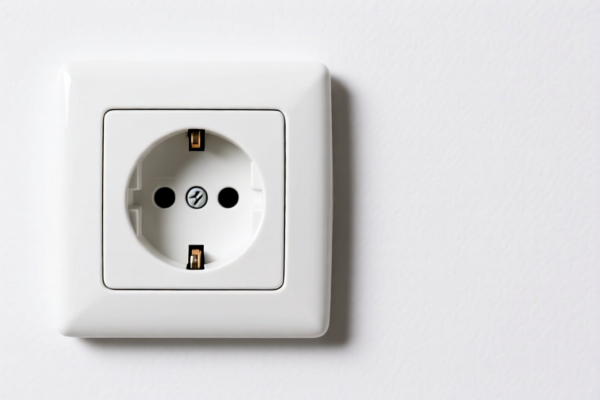
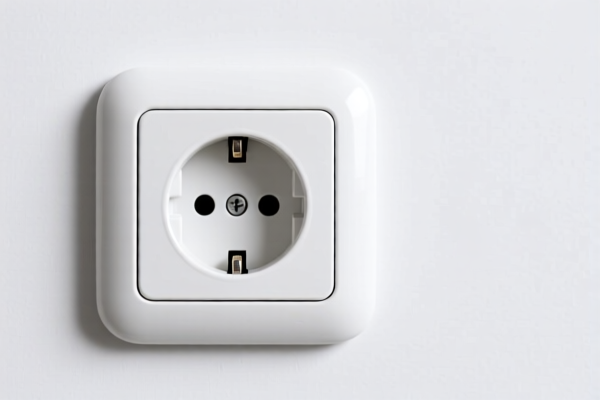
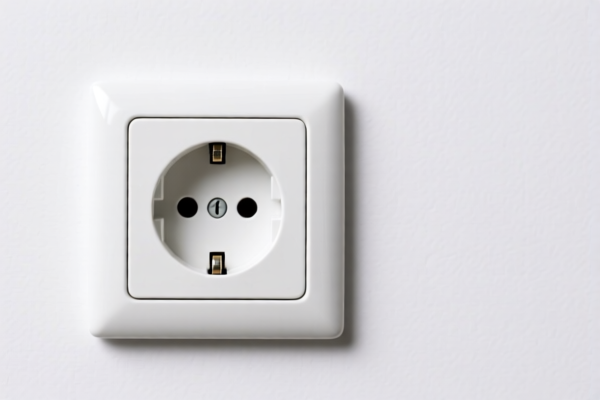
AI Analysis
🌟 Multi-function Socket / Power Strip (The Ultimate Guide to US Customs Classification)
🌐 HS Code Reference & Customs Clearance Guide | 2024/2025 Tax Code Analysis | Strategic Compliance Strategies
📌 Part 1: Product Definition & Classification – Do You Really Understand the "Multi-function Socket"?
A "Multi-function Socket" (often referred to as a Power Strip, Extension Cord, or Outlet Block) is a critical electrical accessory for distributing power in homes, offices, and industrial settings. In international trade, these products are often misunderstood, leading to significant tariff risks. They are generally categorized into two main groups based on their internal circuitry and voltage capabilities:
1. Circuit Control & Distribution Boards (HS Chapter 8537): - These include sockets with switches, overload protection, surge protection, or USB charging modules. - They are considered "boards, panels, consoles, desks, cabinets, and other bases" for electrical control or distribution. - Key Feature: The primary function is distribution and control, not just physical connection.
2. Simple Connectors & Outlets (HS Chapter 8536/8544): - These are basic plugs, sockets, and connectors without complex control circuitry. - They fall under "apparatus for making connections to or in electrical circuits" or "insulated wires, cables, and other insulated electric conductors." - Key Feature: Pure physical electrical connection for voltages ≤ 1,000V.
⚠️ Critical Distinction:
- If the socket has USB ports, smart chips, surge protectors, or main switches → It is likely 8537 (Distribution/Control).
- If it is a basic dumb socket (just metal contacts inside plastic) → It is likely 8536 (Connector) or 8544 (Cable/Conductor).
- Misclassification Risk: Declaring a smart power strip as a simple connector can lead to severe penalties because the tax rates and regulatory requirements differ vastly.
📦 Part 2: Detailed HS Code Classification (Based on Provided Data)
The following table breaks down the specific HS Codes derived from your input data, explaining why each code applies and the associated tax implications.
| HS Code | Classification Logic & Summary | Product Type |
|---|---|---|
8537.10.91.50 |
Logic: "Multi-function" implies circuit control. This code fits the category of distribution/control boards. It covers devices that manage power flow (e.g., via switches or protection circuits) rather than just passing current. | Smart Power Strips, Surge Protector Boards, Industrial Control Sockets |
8536.69.80.00 |
Logic: Direct mapping to "Sockets". This falls under electrical apparatus for making connections (voltage ≤ 1,000V). It is the standard "Other" category for plugs and sockets that do not have the complex distribution features of 8537. | Standard Wall Sockets, Basic Extension Cords, Plug Sockets |
8536.69.40.20 |
Logic: Classified as an electrical connection device functionally consistent with cylindrical multi-core connectors. This is a more specific subset of connectors, often used for industrial or specialized cylindrical plug-and-socket systems. | Industrial Plugs, Cylindrical Connectors, Heavy-Duty Sockets |
8537.10.91.70 |
Logic: Similar to 91.50, this is inferred as power distribution/control equipment for voltages ≤ 1,000V. The shape suggests a distribution panel or a complex multi-outlet unit with some level of circuit management. |
Complex Outlet Blocks, Multi-Port Distribution Units |
8544.42.90.10 |
Logic: Classified as an electric conductor (insulated wire/cable with connectors). This applies if the product is primarily viewed as a "cord set" or "power cable with attached plugs/sockets" where the conductor aspect is dominant. | Power Cords with Integrated Sockets, Extension Cords (Cable-Heavy) |
💰 Part 3: 2024/2025 Tax Rate Breakdown (US Import from China)
✅ Country of Origin: United States (US)
✅ Originating Country: China (CN)
✅ Effective Period: Current Trade War Tariffs (Section 301 & IEEPA)
🎯 1. 8537.10.91.50 & 8537.10.91.70 (Distribution/Control Category)
| Item | Detail |
|---|---|
| Base Tariff Rate | 2.7% |
| Section 301 Tariff (Add-on) | +25.0% |
| IEEPA / Section 122 Tariff | +10.0% |
| Total Effective Tax Rate | 37.7% |
| Tax Calculation Base | CIF Value (Cost, Insurance, Freight) |
| De Minimis Exemption? | ❌ NO. These goods are explicitly listed under the high-tariff lists. |
| Legal Reference | 301:8537.10.91 + IEEPA:9903.01.10 |
📌 Explanation:
- The 25% Section 301 tariff is the primary hit for Chinese-made electrical equipment.
- The 10% IEEPA tariff is an additional layer for specific Chinese imports.
- Total 37.7% is a significant cost driver. Ensure your FOB price accounts for this.
🎯 2. 8536.69.80.00 (Basic Socket Category)
| Item | Detail |
|---|---|
| Base Tariff Rate | 2.7% |
| Section 301 Tariff (Add-on) | +25.0% |
| IEEPA / Section 122 Tariff | +10.0% |
| Total Effective Tax Rate | 37.7% |
| Tax Calculation Base | CIF Value |
| De Minimis Exemption? | ❌ NO. |
📌 Note:
- Surprisingly, basic sockets often face the same effective rate (37.7%) as complex distribution boards due to the blanket Section 301 tariffs on electrical apparatus from China.
- Do not assume "simpler" = "cheaper tariff."
🎯 3. 8536.69.40.20 (Specific Connector Category)
| Item | Detail |
|---|---|
| Base Tariff Rate | 0.0% |
| Section 301 Tariff (Add-on) | +25.0% |
| IEEPA / Section 122 Tariff | +10.0% |
| Total Effective Tax Rate | 35.0% |
| Tax Calculation Base | CIF Value |
| De Minimis Exemption? | ❌ NO. |
📌 Advantage:
- This code has a 0% base tariff, making it 2.7% cheaper than the 8537/8536.80.00 codes.
- Strategic Tip: If your product qualifies as a "cylindrical multi-core connector" or specific industrial connector, use this code to save ~2.7% on the duty base. However, ensure it meets the technical definition of69.40.
🎯 4. 8544.42.90.10 (Electric Conductor/Cable Category)
| Item | Detail |
|---|---|
| Base Tariff Rate | 2.6% |
| Section 301 Tariff (Add-on) | +25.0% |
| IEEPA / Section 122 Tariff | +10.0% |
| Additional Metal Tariff | +50.0% (If made of Steel, Aluminum, or Copper) |
| Total Effective Tax Rate | 87.6% (Base+301+IEEPA) + 50% Metal Surcharge |
| Tax Calculation Base | CIF Value |
| De Minimis Exemption? | ❌ NO. |
🚨 WARNING:
- This code is EXTREMELY DANGEROUS for cost purposes.
- The 50% additional tariff on steel/aluminum/copper products (Section 232 or similar metal tariffs) applies on top of the 37.6% base load.
- Result: 87.6% + 50% = Over 130% Total Tax!
- Recommendation: Avoid this classification unless the product is essentially just a cable with no plug housing. For multi-function sockets, this is usually incorrect and highly penalized.
🛠️ Part 4: Customs Clearance Practical Advice
✅ 1. Documentation Checklist (Mandatory)
| Document | Requirement | Why It Matters |
|---|---|---|
| Product Specification Sheet | Must detail: Voltage, Amperage, Plug Type, Presence of USB/Surge Protection | Determines if it is 8537 (Control) vs 8536 (Connection). |
| Circuit Diagram (if applicable) | Required for 8537 classification to prove "distribution/control" function | Without it, CBP may reclassify to a higher-tariff or different code. |
| Photos (Plug & Socket End) | Clear view of contacts, grounding pin, and any switches/LEDs | Proves physical characteristics (e.g., cylindrical vs flat pins). |
| Material Declaration | Explicitly state materials of connectors (Copper, Silver, Plastic) | Avoids the 50% metal surcharge under 8544 if misclassified. |
| Commercial Invoice | Must state "Multi-function Socket" or "Power Strip" | Generic terms like "Electrical Part" can lead to audits. |
✅ 2. Classification Strategy & Risk Mitigation
| Scenario | Recommended HS Code | Reasoning | Tax Risk |
|---|---|---|---|
| Smart Power Strip (USB + Surge + Switch) | 8537.10.91.50 |
Has control circuitry (surge/switch). Fits "Distribution Board". | Medium (37.7%). Clear definition. |
| Basic Extension Cord (No USB, No Surge) | 8536.69.80.00 |
Simple connection. Fits "Other Connectors". | Medium (37.7%). Standard. |
| Industrial Cylindrical Connector | 8536.69.40.20 |
Specific shape/function. Lower base rate. | Low (35%). Best rate if compliant. |
| Cable with Integrated Plug (Heavy Metal) | 8544.42.90.10 |
AVOID. High risk of 50% metal penalty. | HIGH (>130%). Do not use unless 100% justified. |
🔥 Pro Tip:
- Do NOT declare simple sockets as8544(Conductors) just to see if it fits. The 50% additional tariff for metal products makes this a financial disaster.
- Do NOT declare complex smart strips as8536(Simple Connectors). If CBP finds circuitry, they will reclassify to8537and assess penalties for underpayment (though rates are similar, the legal risk is high).
✅ 3. Special Considerations for "Multi-function"
- USB Ports: If your socket has USB ports, it must be declared with the voltage/current specs of the USB output. This pushes it firmly into
8537(8537.10) because it involves voltage conversion/management, not just AC distribution. - Surge Protection: If it has MOVs (Metal Oxide Varistors) or gas tubes, it is a control device. Use
8537. - Origin Labeling: Ensure all products are marked "Made in China". Failure to mark origin can lead to seizure or fines under the Marking Act, regardless of HS code.
🌍 Part 5: Global Market Comparison (2024/2025)
| Market | Typical HS Code | Base Tariff | Section 301 / Add-on | Total Est. Tax | Notes |
|---|---|---|---|---|---|
| 🇺🇸 USA | 8537.10.91.50 / 8536.69.80.00 |
2.7% | +25% + 10% | 37.7% | High barrier. Requires FCC certification for USB/Smart models. |
| 🇨🇳 China (Import) | 8537.10.91 |
~20% | None | ~20% | Lower base, but less relevant for export planning. |
| 🇪🇺 EU | 8536.69 |
2.7% - 4.5% | None (usually) | ~4.5% | Requires CE + RoHS. No punitive tariffs. |
| 🇬🇧 UK | 8536.69 |
4.0% | None | ~4.0% | Post-Brexit standards apply (UKCA). |
📌 Conclusion:
- The US market is the most expensive for multi-function sockets due to the 37.7% combined tariff.
- EU/UK are much more favorable for cost, but have stricter CE/UKCA safety and EMC compliance requirements.
📌 Part 6: Common Mistakes & Pitfalls (Learn from Others' Errors)
❌ Mistake 1: Using 8544 (Cables) for a Socket with a Housing.
👉 Consequence: 87.6% + 50% Metal Surcharge. You will lose almost all profit margin.
✅ Fix: Classify as 8536 or 8537 based on functionality.
❌ Mistake 2: Ignoring USB Ports.
👉 Consequence: If you declare a USB-embedded strip as a basic socket (8536), CBP may flag it for lacking proper power supply classification, leading to detention.
✅ Fix: Always include "USB Output: 5V/2.4A" in the description and use 8537.
❌ Mistake 3: Assuming "Same Rate" means "Same Risk".
👉 Consequence: Even if 8536 and 8537 have similar totals (37.7%), the legal definition differs. Misclassification can lead to fraud allegations if intent is proven.
✅ Fix: Be precise. Use technical data sheets to justify the code.
🎯 Part 7: Final Recommendations for Clearing
- Choose
8536.69.40.20if possible: If your product is a specialized cylindrical connector, this saves 2.7% on the base rate. It is the most cost-effective legal option. - Use
8537.10.91.50for Smart/Surge Devices: If you have switches, USB, or surge protection, this is the correct code. Accept the 37.7% cost. - Avoid
8544entirely: The 50% metal surcharge makes it a financial trap. - Pre-裁定 (Pre-Ruling): For large shipments, consider applying for a CBP Binding Ruling to lock in your HS code and avoid surprise audits.
- Certifications are Key:
- USA: Must have UL, ETL, or CET certification for safety. FCC for any electronic components (USB/Smart).
- Without these, goods will be rejected at the border regardless of the correct HS code.
📣 Immediate Action Plan:
- Audit your BOM: Does it have USB/Surge/Switch? → Use
8537.- Check Material: Is it purely plastic/copper contacts? → Use
8536.- Calculate Landed Cost: Add 37.7% (or 35.0%) to your CIF value.
- Secure Certifications: UL/ETL is non-negotiable for US import.
✨ Precision in Classification = Profit in the Pocket!
💼 Don't let a wrong digit cost you 50% more.
Customer Reviews
About HS Code Classification
The Harmonized System (HS) is an internationally standardized nomenclature developed by the World Customs Organization (WCO) to classify traded products. Over 200 countries use the HS system as the basis for customs tariffs, trade statistics, and import/export regulations.
Each HS code follows a hierarchical structure:
- Chapter (2 digits) — Broad category of goods (e.g., Chapter 84: Machinery and Mechanical Appliances)
- Heading (4 digits) — More specific grouping within the chapter
- Subheading (6 digits) — Internationally standardized breakdown, used by all WCO member countries
- National subdivisions (8-10 digits) — Country-specific extensions for further classification, such as US HTSUS 10-digit codes
Correct HS code classification is essential for smooth customs clearance, accurate duty payment, and compliance with trade regulations. Misclassification can lead to customs delays, overpayment of duties, or penalties.
When importing from CN to US, the applicable tariff rates may include:
- Most-Favored-Nation (MFN) rate — The standard duty rate applied to WTO members
- General rate — Applied to countries without trade agreements
- Trade remedy duties — Additional tariffs such as Section 301 (anti-dumping), Section 232 (national security), or countervailing duties
The information provided on this page is for reference purposes only. For official classification, please consult with your local customs authority or a licensed customs broker.