Multi layer Composite Label Paper
CN → US| HS Code | Tariff Rate | Origin | Destination | Doc |
|---|---|---|---|---|
| 4821902000 | 35.0% | CN | US | Official Doc |
| 4821904000 | 35.0% | CN | US | Official Doc |
| 4821902000 | 35.0% | CN | US | Official Doc |
| 4821904000 | 35.0% | CN | US | Official Doc |
| 4821904000 | 35.0% | CN | US | Official Doc |
Product Images
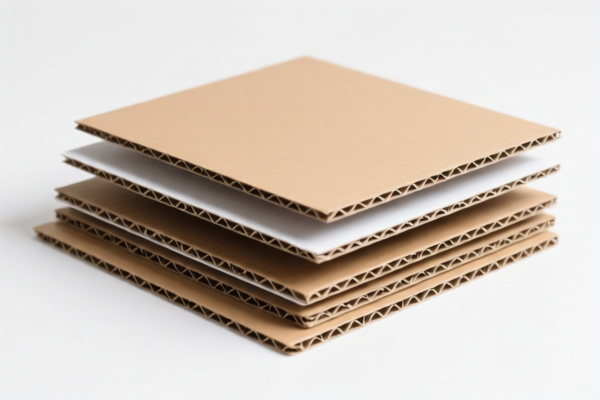
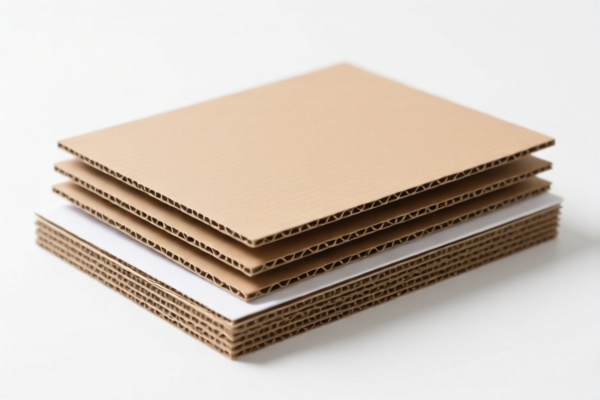

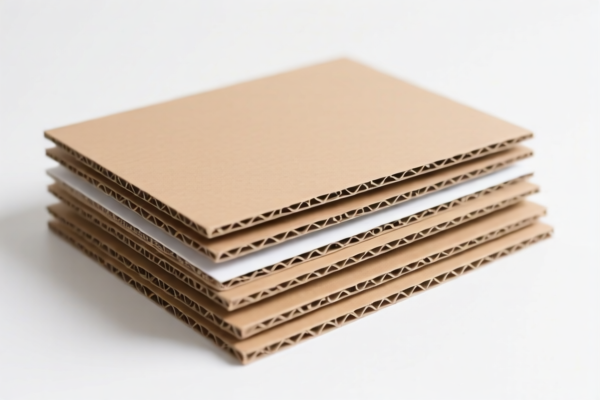
AI Analysis
🏷️ Multi-Layer Composite Label Paper & Paper Seals
🌐 HS Code Reference & Customs Clearance Guide | 2026 Latest Tariff Analysis | Professional Strategy for Labeling Materials
📌 I. Product Definition & Classification: Do You Really Understand "Composite Labels"?
Multi-layer composite label paper is a specialized packaging material widely used in logistics, retail, and industrial applications. It is not a single sheet of paper but a structured composite designed for durability, adhesion, and printability. In international trade, it is categorized based on its structure (coated vs. uncoated) and specific end-use (seals vs. general labels).
Key Distinction Points: * General Composite Label Paper: Multi-layer structures intended for general labeling, printing, or adhesive application. These typically fall under Chapter 48, Heading 4821 or 4823. * Paper Seals/Gaskets: If the product is specifically cut into gaskets, washers, or seals (often made of paper pulp or paperboard), it is strictly classified under Heading 4823.
⚠️ Critical Classification Trap:
- If the item is a general label roll/sheet used for printing addresses or logos → Look at 4821.90 or 4823.90 (depending on coating).
- If the item is specifically a Gasket, Washer, or Seal (even if made of paper/paperboard) → It MUST be classified under 4823.90.
- Coating Matters: If the paper is coated with materials other than paper itself (e.g., clay, polymers for printability), it may influence the sub-heading under 4823 (specifically 4823.90.60 for coated paper seals).
📦 II. HS Code Classification Details (2026 Authoritative Reference)
Based on the provided data, here are the specific HS Codes and their corresponding descriptions. Note that "Multi-layer Composite Label Paper" generally maps to 4823.90 or 4821.90, but if it serves as a seal/gasket, it narrows down to specific 8-digit codes.
| HS Code | Product Description | Key Characteristics | Tax Status |
|---|---|---|---|
4823.90.80.00 |
Other articles of paper pulp, paper, paperboard... Other: Gaskets, washers and other seals | Uncoated or generic paper seals; general purpose paper goods not specified elsewhere. | ✅ Base: 0%, Additional: 25% (Total: 25%) |
4823.90.60.00 |
Other articles of paper pulp... Of coated paper or paperboard: Gaskets, washers and other seals | Paper seals/gaskets where the paper board is coated (e.g., for moisture resistance or printability). | ✅ Base: 0%, Additional: 25% (Total: 25%) |
4823.90 |
Other paper and paperboard... including multi-layer composite label paper, used for labeling purposes | General multi-layer composite label paper not specifically cut as a seal/gasket. | ⚠️ Error: Failed to retrieve tax info |
4821.90 |
Paper and paperboard... coated or covered... multi-layer composite label paper designed for printing and labeling | Coated composite labels where the structure includes layers suitable for adhesive application. | ⚠️ Error: Failed to retrieve tax info |
🔍 Analysis of "Error" Codes:
The HS codes4823.90and4821.90are 6-digit headings, not full 8-digit tariff lines. In most customs systems (like US HTS), you must specify the full 10-digit code to get an accurate tax rate. The "Failed to retrieve" status indicates that specific tariff data for these broad categories is unavailable in the current snippet. However, the 8-digit sub-categories (4823.90.80.00and4823.90.60.00) provide clear tax data.
💰 III. 2026 Latest Tariff Rate Details (US Market Focus)
✅ Applicable Country: United States (US)
✅ Origin: China (CN)
✅ Effective Time: Current regulations apply (25% additional tariff likely under Section 301)
🎯 1. 4823.90.80.00 – Uncoated/General Paper Seals & Gaskets
| Item | Content |
|---|---|
| Base Duty Rate | 0% (Free) |
| Additional Duty (Section 301) | +25% |
| Total Tax Rate | 25.0% |
| Tax Base | CIF Value (Cost, Insurance, Freight) |
| De Minimis Exemption | ❌ Not Eligible (Section 301 duties generally apply to all imports >$800 for China, though rules vary by enforcement. Caution: Assume liable for full tax.) |
| Legal Basis | HTSUS 4823.90.80.00 + USITC Footnote 9903.88.01 (General 301 List 4) |
📌 Explanation:
- Even though the base duty is 0%, the 25% additional tariff is significant.
- This applies to all paper seals, gaskets, and washers imported from China, regardless of whether they are coated or not (see below for coated nuance).
🎯 2. 4823.90.60.00 – Coated Paper Seals & Gaskets
| Item | Content |
|---|---|
| Base Duty Rate | 0% (Free) |
| Additional Duty (Section 301) | +25% |
| Total Tax Rate | 25.0% |
| Tax Base | CIF Value |
| De Minimis Exemption | ❌ Not Eligible |
| Legal Basis | HTSUS 4823.90.60.00 + USITC Footnote 9903.88.01 |
📌 Explanation:
- Coating does not exempt you from the 25% tariff.
- The distinction between4823.90.80.00(uncoated) and4823.90.60.00(coated) is primarily for statistical and product specificity, not for tax rate differentiation in this case. Both attract 25%.
⚠️ Handling 4823.90 and 4821.90 (General Labels)
Since tax info is "Error" for the broader headings:
1. Do not declare as 4823.90 or 4821.90 alone. Customs systems will reject or flag this as incomplete.
2. If it is a label (not a seal/gasket): You must determine if it falls under 4821 (Printed/Composite Labels) or 4823 (Cut to size).
* Strategy: If the label is a "composite label" with adhesive, it is often considered an "article of paper" cut to size. Check if it qualifies as a "Gasket/Seal" (4823) or a "General Label" (4821).
* Risk: If classified as 4821.90 and no specific 8-digit code is available in your source, you may face higher tariffs or re-classification by customs. Consult a customs broker for the specific 8-digit subheading under 4821 (e.g., 4821.90.00) to check for any alternative rates. However, based strictly on the provided data, only the 4823 seal codes have clear tax data.
🛠️ IV. Customs Clearance Practical Advice (Real-World Pitfall Guide)
✅ 1. Preparation Checklist (Non-Negotiable)
| Document | Mandatory? | Notes |
|---|---|---|
| ✅ Product Specification Sheet | ✔️ | Must detail: Layers, coating type (if any), adhesive type, dimensions, and end-use (Label vs. Seal). |
| ✅ Physical Samples | ✔️ | Customs may request physical inspection to distinguish between "Label" (4821) and "Seal/Gasket" (4823). |
| ✅ Commercial Invoice | ✔️ | Clearly state: "Multi-Layer Composite Label Paper" OR "Paper Gaskets/Washers". Do not use vague terms like "Paper Product". |
| ✅ Packing List | ✔️ | List gross/net weight accurately. Paper products are often heavy relative to volume. |
| ✅ HS Code Validation | ✔️ | Confirm if the product is a Seal/Gasket (Use 4823.90.xxxx) or General Label (Use 4821.xxxx or 4823.90.xxxx generic). |
✅ 2. Declaration Strategy (Key Mnemonics)
🔥 "Labels are 4821, Seals are 4823. Coating doesn't save you from the 25% tax!"
| Scenario | Correct HS Code | Tax Rate | Wrong Action |
|---|---|---|---|
| Paper used as a Gasket/Seal/Washer | 4823.90.80.00 (Uncoated) or 4823.90.60.00 (Coated) |
25% | Declaring as "Label Paper" (4821) to avoid 25% → High Risk of Penalty |
| Multi-Layer Label for Printing (Not a Seal) | 4821.90 (Broader) or specific 4821 subheading |
Check Broker (Likely 25%+ if Chinese origin) | Declaring as "Seal" to get 0% base → Misclassification |
| General Paper Board Cut to Size | 4823.90.80.00 |
25% | Using 6-digit code 4823.90 → Customs Rejection |
✅ 3. Special Case Handling
| Situation | Handling Advice |
|---|---|
| Product is both a Label AND a Seal? | If it has adhesive AND is used to seal containers, argue for 4823.90 if it fits the definition of a "seal." If it's purely for identification, use 4821. |
| Coated vs. Uncoated? | If the label is coated with silicone, polymer, or clay for printability, use 4823.90.60.00. If it's plain kraft paper, use 4823.90.80.00. Tax rate is the same (25%), so accuracy is for compliance, not savings. |
| Importing Small Samples? | Even for samples, Section 301 duties may apply. Do not assume de minimis exemption without verifying current CBP enforcement levels for Chinese paper goods. |
🌍 V. Global Market Comparison (2026 Snapshot)
| Market | Recommended HS Code | Tariff (China Origin) | Notes |
|---|---|---|---|
| 🇺🇸 USA | 4823.90.80.00 / 4823.90.60.00 |
25% Additional | Base 0%. High Risk. Must be precise. |
| 🇨🇳 China | 4823.90.80.00 / 4823.90.60.00 |
Low/0% | Import into China may have different incentives. |
| 🇪🇺 EU | 4823.90 | Varies (Often 0-6.5%) | No Section 301 equivalent. Check local VAT. |
| 🇬🇧 UK | 4823.90 | Varies | Post-Brexit tariffs may differ from EU. |
📌 Conclusion:
- The USA is the most critical market for these goods due to the 25% additional tariff.
- Misclassification (e.g., labeling a gasket as a generic label to avoid the "Seal" heading) can lead to severe penalties and retroactive duty payments.
- Accuracy is more important than optimization when tax rates are identical (0% base + 25% add-on).
📌 VI. Common Errors & Pitfalls (Lessons Learned)
❌ Error 1: Using the 6-digit code 4823.90 for declaration.
👉 Consequence: Customs rejection, delay, and potential fines for incomplete data. Always use 8-digit codes.
❌ Error 2: Declaring "Multi-layer Composite Label" as 4823.90.60.00 (Coated Seal) when it is actually a general label.
👉 Consequence: If audited, customs may reclassify it as 4821.xxxx, potentially leading to different duty rates or anti-dumping duties if applicable. Ensure description matches actual use.
❌ Error 3: Assuming "Coated" paper gets a better tax rate.
👉 Consequence: In this specific data set, both coated and uncoated seals have the same 25% total tax. Do not over-engineer classification for tax savings if the rate is identical.
❌ Error 4: Ignoring the "Seal/Gasket" definition.
👉 Consequence: If the product is physically a gasket, labeling it as "Label Paper" is a false declaration. Customs exams often involve physical inspection.
✅ Correct Declaration Example:
"Paper Gaskets, Coated, Multi-Layer, Cut to Shape, 100% Paper Pulp, For Industrial Sealing Use" → HS: 4823.90.60.00
🎯 VII. Conclusion: Precision Pays Off!
🎯 Remember the Golden Rule:
🔹 "Seals are 25%, Labels are 25% (Likely), But Codes Must Match!"
🔹 "Base 0% is a Trap, The 25% is Real, Don't Try to Be Clever!"
📌 Pro Tip:
If your composite label paper is NOT used as a seal/gasket, but as a standard printing label:
1. Try to find the specific 8-digit code under 4821 (e.g., 4821.90.00.00 or similar) in your full HTSUS database.
2. If tax data is unavailable for 4821 in your system, consult a customs broker immediately. The 25% tariff often applies to all paper products from China under Section 301, so the cost may be similar, but the compliance risk of guessing is high.
📣 Immediate Action:
📞 Verify Product End-Use: Is it a Label or a Seal?
📦 Use 8-Digit Codes Only: Never declare 6-digit4823.90.
🚀 Prepare for 25% Tariff: Budget accordingly for US imports.
✨ Professional Clearance Starts with Accurate Classification!
💼 Your Margin Depends on Your HS Code!
Customer Reviews
About HS Code Classification
The Harmonized System (HS) is an internationally standardized nomenclature developed by the World Customs Organization (WCO) to classify traded products. Over 200 countries use the HS system as the basis for customs tariffs, trade statistics, and import/export regulations.
Each HS code follows a hierarchical structure:
- Chapter (2 digits) — Broad category of goods (e.g., Chapter 84: Machinery and Mechanical Appliances)
- Heading (4 digits) — More specific grouping within the chapter
- Subheading (6 digits) — Internationally standardized breakdown, used by all WCO member countries
- National subdivisions (8-10 digits) — Country-specific extensions for further classification, such as US HTSUS 10-digit codes
Correct HS code classification is essential for smooth customs clearance, accurate duty payment, and compliance with trade regulations. Misclassification can lead to customs delays, overpayment of duties, or penalties.
When importing from CN to US, the applicable tariff rates may include:
- Most-Favored-Nation (MFN) rate — The standard duty rate applied to WTO members
- General rate — Applied to countries without trade agreements
- Trade remedy duties — Additional tariffs such as Section 301 (anti-dumping), Section 232 (national security), or countervailing duties
The information provided on this page is for reference purposes only. For official classification, please consult with your local customs authority or a licensed customs broker.