Multi layer Document Bag
CN → US| HS Code | Tariff Rate | Origin | Destination | Doc |
|---|---|---|---|---|
| 4202329900 | 52.6% | CN | US | Official Doc |
| 3926908700 | 40.3% | CN | US | Official Doc |
| 3926909989 | 22.8% | CN | US | Official Doc |
| 4820300040 | 35.0% | CN | US | Official Doc |
| 4202329300 | 52.6% | CN | US | Official Doc |
Product Images
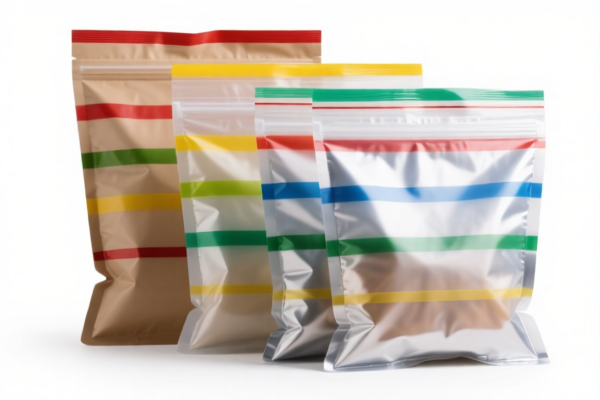
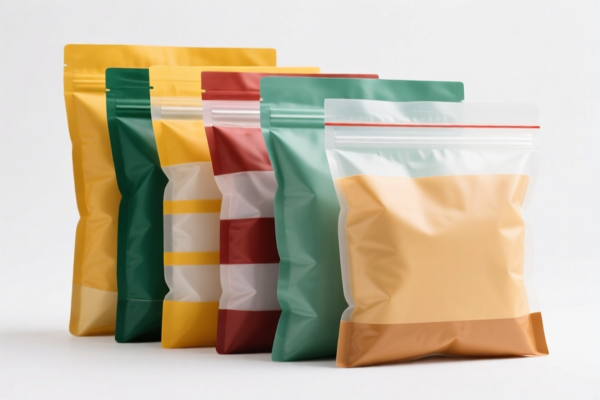
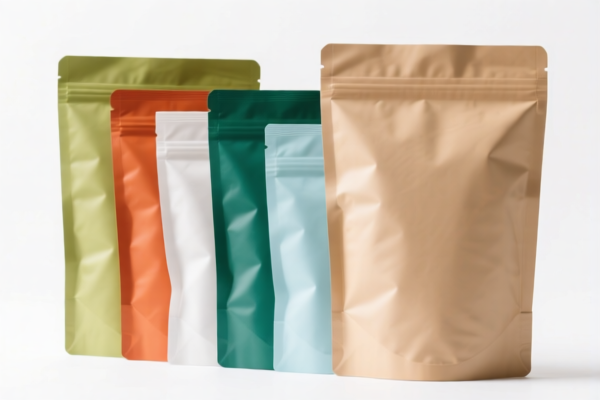
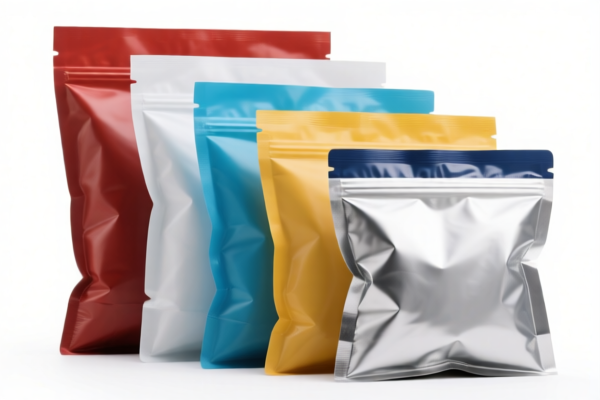
AI Analysis
📂 Multi-Layer Document Bag (Files & Pouches)
🌐 HS Code Reference & Customs Clearance Guide | 2026 Latest Tariff Analysis | Professional Clearance Strategy
📌 I. Product Definition & Classification: What is a "Multi-Layer Document Bag"?
A Multi-Layer Document Bag is a container used for carrying, organizing, and protecting documents, files, or stationery. In international trade, its classification heavily depends on material composition and specific form (e.g., soft pouch vs. rigid folder).
Key Distinctions: - Plastic/Flexible Material: Typically falls under Chapter 39 (Plastics) or Chapter 42 (Articles of Leather/Plastic). - Paper/Cardboard Material: Falls under Chapter 48 (Paper/Paperboard). - Textile Material: Falls under Chapter 42 if used as a carrier, or Chapter 63 if not specifically listed.
⚠️ Critical Identification Point:
- If made of flexible plastic sheets (like ziplock-style or translucent sleeves) → Often 3926.90 or 4202.32.
- If made of paper/cardboard with dividers → Often 4820.30.
- If made of fabric/textile with plastic lining → Often 4202.32.
📦 II. HS Code Classification Details (2026 Latest Tariff Alignment)
Based on the provided data, here are the 5 possible HS Codes for a "Multi-Layer Document Bag," categorized by material and structure:
| HS Code | Product Description | Material Inference | Application Scenario |
|---|---|---|---|
4202.32.99.00 |
Containers (File Pouches), Other | Plastic sheets or Textile materials | High-end document sleeves, zippered file bags |
3926.90.87.00 |
Other Articles of Plastic | Flexible Plastic | Plastic document binders, accordion files made of plastic |
3926.90.99.89 |
Other Plastic Articles | Plastic (Unlisted) | Generic plastic document organizers not specifically named |
4820.30.00.40 |
Folders, File Cases | Paper or Cardboard | Traditional paper folders, cardboard document holders |
4202.32.93.00 |
Containers (Other) | Plastic sheets or Textile materials | Similar to 4202.32.99 but specific sub-category for plastic/textile carriers |
🔍 Key Insight:
- Plastic vs. Paper: The biggest cost driver is the material. Plastic items often face higher "Additional Tariffs" (Section 301/122) compared to paper items in some contexts, but 4202 items (Plastic/Textile carriers) face the highest total tax burden due to higher base tariffs. - Specificity:3926.90.87.00is specifically noted as matching "document binder" uses, making it a strong candidate for plastic folders.
💰 III. 2026 Latest Tariff Rate Breakdown (Including Surcharges & Policy Add-ons)
✅ Applicable Country: United States (US)
✅ Origin: China (CN) (Implied by "122 Clause" and "Add-on Tariff" structure typical of US-China trade)
✅ Effective Date: Current Trade Policy (2026 Context)
🎯 1. 4202.32.99.00 & 4202.32.93.00 —— Plastic/Textile File Pouches (Highest Tax Burden)
| Item | Content |
|---|---|
| Base Tariff | 17.6% |
| Section 301 Add-on Tariff | +25.0% |
| Section 122 Tariff | +10.0% |
| Total Effective Rate | 52.6% |
| Tax Calculation | CIF Value × 52.6% |
| De Minimis Exemption | ❌ Not Eligible (High value items usually excluded) |
| Legal Path | HTSUS:4202.32 → USITC Footnotes → IEEPA:122 → Section 301 |
📌 Explanation:
- These codes classify items as "containers" made of plastic or textile.
- They attract three layers of taxes: Base + 301 + 122.
- Total 52.6% makes this option extremely expensive for cost-sensitive shipments.
- Recommendation: Avoid this classification unless the product is high-value fashion accessories where cost is secondary.
🎯 2. 3926.90.87.00 —— Flexible Plastic Document Binders (Moderate Tax)
| Item | Content |
|---|---|
| Base Tariff | 5.3% |
| Section 301 Add-on Tariff | +25.0% |
| Section 122 Tariff | +10.0% |
| Total Effective Rate | 40.3% |
| Tax Calculation | CIF Value × 40.3% |
| De Minimis Exemption | ❌ Not Eligible |
| Legal Path | HTSUS:3926.90 → USITC → IEEPA:122 → Section 301 |
📌 Explanation:
- Specifically matches "document binder" use with flexible plastic material.
- 40.3% is significantly lower than the 52.6% code, offering savings of ~12.3%.
- This is a strong candidate if the product is clearly a plastic binder/folder.
🎯 3. 3926.90.99.89 —— Other Plastic Articles (Lowest Plastic Tax)
| Item | Content |
|---|---|
| Base Tariff | 5.3% |
| Section 301 Add-on Tariff | +7.5% (Note: Lower 301 rate!) |
| Section 122 Tariff | +10.0% |
| Total Effective Rate | 22.8% |
| Tax Calculation | CIF Value × 22.8% |
| De Minimis Exemption | ❌ Not Eligible |
| Legal Path | HTSUS:3926.90 → USITC → IEEPA:122 → Section 301 (7.5%) |
📌 Explanation:
- Classified as "unlisted other plastic articles."
- Crucial Advantage: Only 7.5% Section 301 tariff instead of 25%.
- Total 22.8% is the lowest among all plastic options.
- Risk: Must ensure the product does not fit more specific descriptions (like 3926.90.87) to avoid misclassification penalties. If it is a standard file, customs may argue for 3926.90.87.
🎯 4. 4820.30.00.40 —— Paper/Cardboard Folders (No Base Tax, High Surcharges)
| Item | Content |
|---|---|
| Base Tariff | 0.0% |
| Section 301 Add-on Tariff | +25.0% |
| Section 122 Tariff | +10.0% |
| Total Effective Rate | 35.0% |
| Tax Calculation | CIF Value × 35.0% |
| De Minimis Exemption | ❌ Not Eligible |
| Legal Path | HTSUS:4820.30 → USITC → IEEPA:122 → Section 301 |
📌 Explanation:
- Paper-based folders have 0% base tariff.
- However, they still face 35% total due to surcharges.
- This is cheaper than plastic binders (40.3%) but more expensive than generic plastic (22.8%).
- Recommendation: Good if the product is definitively paper-based.
🛠️ IV. Customs Clearance Practical Advice (Pitfall Avoidance Guide)
✅ 1. Documentation Checklist (Non-Negotiable)
| Document | Required | Notes |
|---|---|---|
| ✅ Product Specification Sheet | ✔️ | Must clearly state material (e.g., "PVC Plastic," "Cardboard," "Polyester") and structure (e.g., "Accordion Fold," "Zippered"). |
| ✅ High-Resolution Photos | ✔️ | Show the item from all angles. Highlight seams, zippers, and material texture. |
| ✅ Commercial Invoice | ✔️ | Description must be specific: "Plastic Document Folder, Flexible, for Office Use" NOT just "Bag." |
| ✅ Packing List | ✔️ | Detail contents to prove no mixed materials (e.g., metal hinges that might change classification). |
| ✅ Material Declaration | ✔️ | Explicitly declare "% Plastic," "% Paper," or "% Textile." |
✅ 2. Classification Strategy & Wording Tips
🔥 “Material First, Function Second, Code Precision Wins!”
| Scenario | Recommended HS Code | Wording for Invoice |
|---|---|---|
| Flexible Plastic Folders | 3926.90.99.89 (22.8%) |
"Flexible Plastic Document Organizer, Unspecified Type, Office Supplies" |
| Specific Plastic Binders | 3926.90.87.00 (40.3%) |
"Plastic Document Binder, Accordion Style, for Files" |
| Paper/Cardboard Folders | 4820.30.00.40 (35.0%) |
"Cardboard Document Folder, Multi-Layer, with Dividers" |
| Textile/Plastic Pouches | 4202.32.93.00 (52.6%) |
"Textile Document Pouch with Plastic Lining, Zippered" |
⚠️ Warning:
- Do NOT use vague terms like "Bag" or "Container" without specifying material.
- If you declare "Plastic Bag" but it’s actually a "Binder," customs may reclassify to a higher-tax code.
-3926.90.99.89is the smartest choice for plastic items if structurally defensible, as it saves 17.5% compared to the 4202 codes.
✅ 3. Special Cases & Mitigation
| Situation | Advice |
|---|---|
| Mixed Material (e.g., Plastic + Fabric) | Classify based on essential character. If plastic dominates, use 3926. If fabric dominates, use 4202. Provide material ratio. |
| Sample Shipments | Even samples are subject to tax. Ensure DDP/DAP terms are clear. |
| High-Value Items | If CIF > $800, de minimis doesn’t apply. Plan for full 22.8%-52.6% tax. |
| Origin Change | If manufactured in Vietnam/Malaysia, check for IEEPA Exemptions or lower 301 rates. This could reduce tax from 22.8% to 0-7.5%. |
🌍 V. Global Market Comparison (2026 Context)
| Country | Preferred HS Code (Plastic) | Approx. Total Tax | Notes |
|---|---|---|---|
| 🇺🇸 USA | 3926.90.99.89 |
22.8% | Includes 301 (7.5%) + 122 (10%) + Base (5.3%) |
| 🇨🇳 China | 3926.90.99.99 |
~5-8% | No Section 301/122. Lower duty. |
| 🇪🇺 EU | 3926.90.97 |
~4-6% | No Section 301/122. Standard duty applies. |
| 🇬🇧 UK | 3926.90.97 |
~4-6% | Post-Brexit rules, generally favorable. |
📌 Conclusion:
- The US market is the most expensive due to layered surcharges (301 + 122).
-3926.90.99.89is the optimal US HS code for plastic document bags to minimize tax impact.
-4202.32codes should be avoided for simple document bags due to the 52.6% tax rate.
📌 VI. Common Mistakes & Pitfalls (Lessons Learned)
❌ Mistake 1: Using 4202.32 for a simple plastic folder.
👉 Result: Paying 52.6% instead of 22.8%. Loss: 29.8% of value.
❌ Mistake 2: Declaring "Plastic Bag" when it’s a "Binder."
👉 Result: Customs may reject the classification or reclassify to a higher tax code. Delay + Penalties.
❌ Mistake 3: Ignoring the "122 Clause" tariff.
👉 Result: Underestimating landed cost by 10%. Profit Margin Erosion.
❌ Mistake 4: Using vague descriptions like "Office Accessories."
👉 Result: Customs holds the shipment for classification review. Clearance Delay.
✅ Correct Approach:
"Plastic Document Folder, Flexible, Multi-Layer, 100% PVC, For Office Use, Model XYZ"
🎯 VII. Conclusion: Optimize Classification, Maximize Profit!
🎯 Key Takeaway:
🔹 Plastic Document Bags → Aim for
3926.90.99.89(22.8%).
🔹 Paper Folders → Use4820.30.00.40(35.0%).
🔹 Textile/Leather Pouches → Avoid if possible (52.6%).🔹 "Code Selection Determines Cost. Precision Saves Money."
🔹 "Check Material, Check Function, Check Surcharge."
📌 Pro Tip:
If your supplier can switch to Vietnamese or Malaysian origin, you may qualify for IEEPA Exemptions, potentially reducing the US tariff on 3926.90.99.89 from 22.8% to 0-7.5%. This is a massive saving.
📣 Action Plan:
📞 Step 1: Confirm material composition (Plastic vs. Paper vs. Textile).
📞 Step 2: Select3926.90.99.89for plastic,4820.30.00.40for paper.
📞 Step 3: Provide detailed specs to your customs broker.
🚀 Result: Smooth clearance, lower duties, higher margins.
✨ Expert Customs Classification, From Here!
💼 Every Percent Saved is Pure Profit!
Customer Reviews
About HS Code Classification
The Harmonized System (HS) is an internationally standardized nomenclature developed by the World Customs Organization (WCO) to classify traded products. Over 200 countries use the HS system as the basis for customs tariffs, trade statistics, and import/export regulations.
Each HS code follows a hierarchical structure:
- Chapter (2 digits) — Broad category of goods (e.g., Chapter 84: Machinery and Mechanical Appliances)
- Heading (4 digits) — More specific grouping within the chapter
- Subheading (6 digits) — Internationally standardized breakdown, used by all WCO member countries
- National subdivisions (8-10 digits) — Country-specific extensions for further classification, such as US HTSUS 10-digit codes
Correct HS code classification is essential for smooth customs clearance, accurate duty payment, and compliance with trade regulations. Misclassification can lead to customs delays, overpayment of duties, or penalties.
When importing from CN to US, the applicable tariff rates may include:
- Most-Favored-Nation (MFN) rate — The standard duty rate applied to WTO members
- General rate — Applied to countries without trade agreements
- Trade remedy duties — Additional tariffs such as Section 301 (anti-dumping), Section 232 (national security), or countervailing duties
The information provided on this page is for reference purposes only. For official classification, please consult with your local customs authority or a licensed customs broker.