Multi page Carbonless Paper
CN → US| HS Code | Tariff Rate | Origin | Destination | Doc |
|---|---|---|---|---|
| 4820400000 | 35.0% | CN | US | Official Doc |
| 4811908050 | 35.0% | CN | US | Official Doc |
| 4819200040 | 35.0% | CN | US | Official Doc |
| 4820104000 | 10.0% | CN | US | Official Doc |
| 4811904090 | 35.0% | CN | US | Official Doc |
Product Images
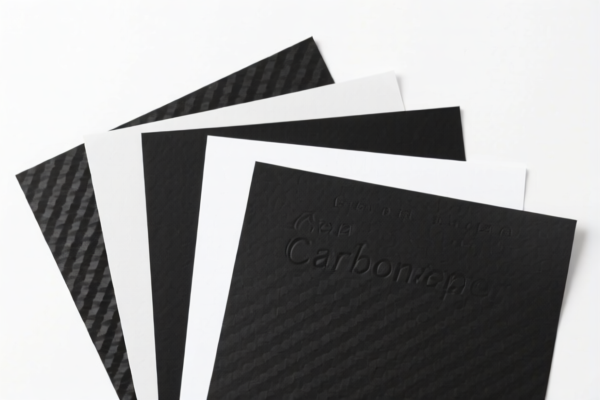
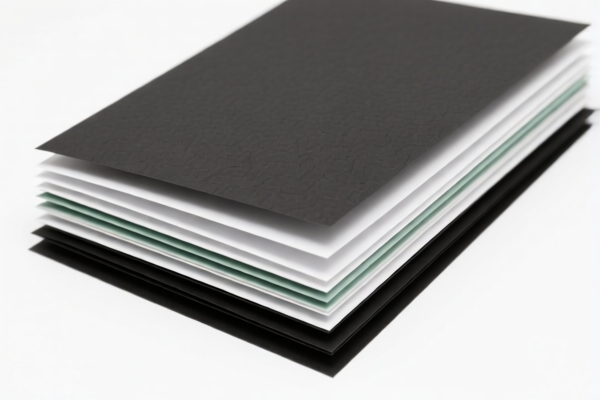
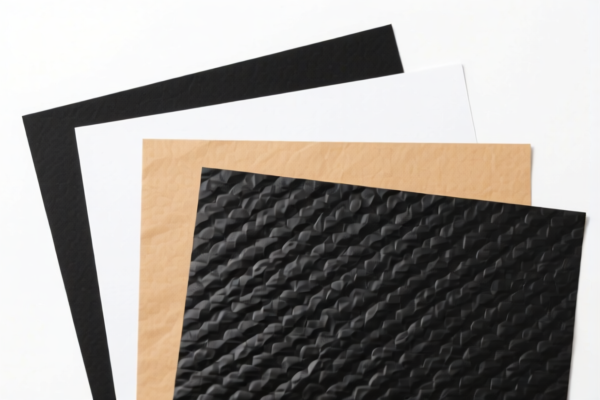
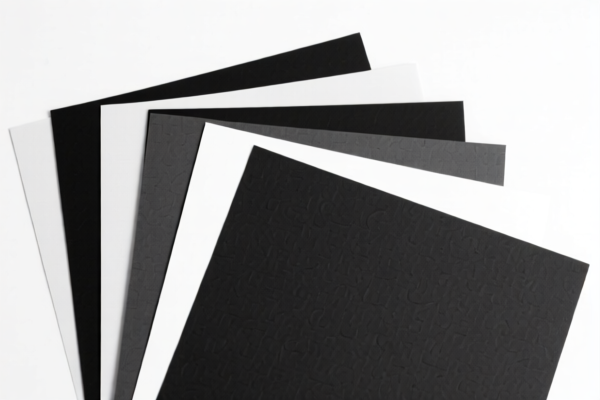
AI Analysis
📝 Multi-page Carbonless Paper (NCR Paper / Carbonless Copy Paper)
🌐 HS Code Reference & Customs Clearance Guide | 2026 Latest Tariff Analysis | Professional Clearance Strategy
📌 I. Product Definition & Classification: What Exactly Is "Multi-page Carbonless Paper"?
Multi-page Carbonless Paper (often referred to as NCR Paper – No Carbon Required) is a specialized stationery product used for creating multiple copies of documents simultaneously without the need for carbon paper sheets. It relies on micro-encapsulated dye in the coating of the paper layers.
In international trade, it is categorized based on its physical form and intended use: * Stationery/Form Books: If bound, folded, or assembled into notebooks, receipt books, or invoice pads → Classified under Chapter 48.20 (Notebooks, ruled or otherwise lined pad paper; Letter pads; Blank books). * Processed Paper Products: If sold as loose sheets, rolls, or specific coated paper products not yet assembled into final stationery items → Classified under Chapter 48.11/48.19 (Paper, paperboard, cellulose wadding and articles of paper pulp; Paper containers/other paper products).
⚠️ Key Distinction Point:
- If the product is a bound notebook, receipt book, or assembled form →归入 4820.40.00.00 or 4820.10.40.00
- If the product is loose sheets, rolls, or unbound coated paper →归入 4811.90.80.50, 4811.90.40.90, or 4819.20.00.40
📦 II. HS Code Classification Details (2026 Latest Tariff Authority Comparison)
| HS Code | Product Description | Application Scenario | Classification Logic |
|---|---|---|---|
4820.40.00.00 |
Carbonless pads, stationery, stationery or office supplies; other | Multi-part business forms, receipt books, invoice pads | ✅ Finished Stationery: Bound/assembled multi-part forms |
4811.90.80.50 |
Carbonless pads, other paper articles; coated/printed paper | Loose carbonless sheets, coated paper rolls, industrial paper substrates | ✅ Raw/Coated Paper: Not yet assembled into final stationery items |
4819.20.00.40 |
Carbonless pads, folding or cartridge boxes of paper; stationary | Folded or bound paper containers/stationery, office supply formats | ✅ Stationery/Container: Folded or assembled paper goods |
4820.10.40.00 |
Carbonless pads, notebooks, exercise books, letter pads, diaries | Standard notebooks, diaries, ledger books (carbonless variety) | ✅ Notebooks: Bound books not specifically for multi-part forms |
4811.90.40.90 |
Carbonless pads, other paper articles; coated/printed paper | Traditional carbon paper or treated paper substrates | ✅ Treated Paper: Specifically treated/coated paper products |
🔍 Critical Reminder:
- Bound/Assembled multi-part forms (like receipt books) must be declared under 4820.40.00.00.
- Loose sheets or rolls of carbonless paper must be declared under 4811 or 4819 series codes, NOT as stationery.
- Misclassification can lead to significant duty discrepancies due to different USITC footnote applications.
💰 III. 2026 Latest Tariff Rate Details (Including Additional Duties & Policy Surcharges)
✅ Applicable Country: United States (US)
✅ Origin: China (CN)
✅ Effective Date: From November 10, 2025 (for imports thereafter)
🎯 1. 4820.40.00.00 — Carbonless Pads / Stationery Forms (Finished Goods)
| Item | Content |
|---|---|
| Base Duty Rate | 0% (ad valorem) |
| USITC Additional Duty | +25% (under USITC Footnote 9903.88.01) |
| IEEPA Additional Duty | +10% (针对中国/香港产品, effective from Nov 10, 2025) |
| Total Tax Rate | 35.0% |
| Tax Calculation | CIF Value × 35% |
| De Minimis Exemption | ❌ Not Eligible (deny_de_minimis) |
| Legal Basis Path | IEEPA:9903.01.25 → IEEPA:9903.01.24 → USITC:4820.40.00.00 → FOOTNOTE:9903.88.01 |
📌 Explanation:
- The "25% USITC duty" is imposed under Section 301 of the Trade Act against Chinese goods.
- The "10% IEEPA duty" is an additional surcharge under the International Emergency Economic Powers Act targeting specific Chinese imports.
- Total 35% is a high tariff rate, requiring strict compliance and advance planning.
🎯 2. 4811.90.80.50 — Coated/Printed Paper Products (Loose Sheets/Rolls)
| Item | Content |
|---|---|
| Base Duty Rate | 0% |
| USITC Additional Duty | +25% |
| IEEPA Additional Duty | +10% |
| Total Tax Rate | 35.0% |
| Tax Calculation | CIF × 35% |
| De Minimis Exemption | ❌ Not Eligible |
| Legal Basis Path | IEEPA:9903.01.25 → IEEPA:9903.01.24 → USITC:4811.90.80.50 → FOOTNOTE:9903.88.01 |
📌 Note:
- Same tariff structure as finished stationery.
- Applies to carbonless paper rolls, loose multi-part sheets, or treated paper substrates.
- Must clearly distinguish from "notebooks" to ensure correct subheading usage.
🎯 3. 4819.20.00.40 — Folding/Cartridge Boxes or Stationery Containers
| Item | Content |
|---|---|
| Base Duty Rate | 0% |
| USITC Additional Duty | +25% |
| IEEPA Additional Duty | +10% |
| Total Tax Rate | 35.0% |
| Tax Calculation | CIF × 35% |
| De Minimis Exemption | ❌ Not Eligible |
| Legal Basis Path | IEEPA:9903.01.25 → IEEPA:9903.01.24 → USITC:4819.20.00.40 → FOOTNOTE:9903.88.01 |
📌 Note:
- Applies to folded or assembled paper stationery items that do not fit strictly into "notebooks" or "forms."
- Commonly used for custom-printed carbonless pads or folded office supply kits.
🎯 4. 4820.10.40.00 — Notebooks, Exercise Books, Letter Pads
| Item | Content |
|---|---|
| Base Duty Rate | 0% |
| USITC Additional Duty | 0% |
| IEEPA Additional Duty | +10% |
| Total Tax Rate | 10.0% |
| Tax Calculation | CIF × 10% |
| De Minimis Exemption | ❌ Not Eligible |
| Legal Basis Path | IEEPA:9903.01.24 → USITC:4820.10.40.00 → FOOTNOTE:9903.88.01 |
📌 Important:
- Only 10% Total Duty! This is the lowest tariff option if the product can be classified as a standard notebook or letter pad.
- Crucial: This applies ONLY to standard notebooks/pads, NOT multi-part business forms (which are 35%).
- Misclassifying multi-part forms as notebooks to save duty is a high-risk violation.
🎯 5. 4811.90.40.90 — Other Coated/Printed Paper Articles
| Item | Content |
|---|---|
| Base Duty Rate | 0% |
| USITC Additional Duty | +25% |
| IEEPA Additional Duty | +10% |
| Total Tax Rate | 35.0% |
| Tax Calculation | CIF × 35% |
| De Minimis Exemption | ❌ Not Eligible |
| Legal Basis Path | IEEPA:9903.01.25 → IEEPA:9903.01.24 → USITC:4811.90.40.90 → FOOTNOTE:9903.88.01 |
📌 Note:
- Applies to treated paper products, including traditional carbon paper or specialized coated papers.
- High tariff due to USITC and IEEPA surcharges.
🛠️ IV. Customs Clearance Practical Advice (Battle-Tested Pitfall Guide)
✅ 1. Required Documentation Checklist (No Exceptions)
| Document | Mandatory | Description |
|---|---|---|
| ✅ Product Specification Sheet | ✔️ | Includes paper weight, coating type, number of parts, dimensions |
| ✅ Product Photos (with Label) | ✔️ | Clear images showing brand, model, "Carbonless/NCR" labeling |
| ✅ Commercial Invoice | ✔️ | Must explicitly state "Carbonless Multi-Part Forms" or "Coated Paper" |
| ✅ Packing List | ✔️ | Detail units (reams, pads, boxes) to avoid confusion |
| ✅ Third-Party Test Report | ✔️ | If applicable (e.g., FDA compliance for food-related forms) |
| ✅ Certificate of Origin (CO) | ✔️ | For origin verification; does NOT provide tariff exemption for US/China |
✅ 2. Declaration Tips (Key Mantras)
🔥 "Correct Form, Correct Code, Avoid 35% Penalty!"
| Scenario | Correct Declaration | Wrong Action |
|---|---|---|
| Bound Receipt Book / Multi-Part Form | 4820.40.00.00 |
Misdeclared as "Notebook" → Risk of audit & back-taxes |
| Loose Carbonless Sheets / Rolls | 4811.90.80.50 |
Misdeclared as "Stationery" → Incorrect HS Code |
| Standard Notebook (Non-Multi-Part) | 4820.10.40.00 |
✅ Correct for 10% Rate |
| Folded Carbonless Pad | 4819.20.00.40 |
Misdeclared as "Notebook" → 35% instead of potential 10%? No, still 35% if multi-part |
📌 Key Insight:
- If you can classify the product as a standard notebook (4820.10.40.00), you pay 10%.
- If it is a multi-part form/receipt book, it is 35%.
- Do not force a multi-part form into a notebook classification unless it is structurally identical and not designed for multi-part duplication.
✅ 3. Special Case Handling
| Situation | Handling Advice |
|---|---|
| OEM Custom Forms | Provide client design specs. If it’s a unique multi-part format, use 4820.40.00.00. |
| Carbonless Paper Rolls | Declare as 4811.90.80.50. Do NOT declare as stationery. |
| Mixed Shipments (Notebooks + Forms) | Split Declaration! Declare notebooks under 4820.10.40.00 (10%) and forms under 4820.40.00.00 (35%). Do NOT bundle. |
| Food-Grade Carbonless Paper | Ensure FDA compliance documentation is attached. HS Code remains the same, but additional regulatory review applies. |
🌍 V. Global Market Comparison (2026 Latest)
| Country/Region | Recommended HS Code | Tariff (China Origin) | Certification Required | Notes |
|---|---|---|---|---|
| 🇺🇸 United States | 4820.40.00.00 |
35% | No special certs | 10% for notebooks; 35% for forms/loose sheets |
| 🇨🇳 China | 4820.40.00.00 |
0-6% | CCC (if applicable) | No additional surcharges |
| 🇪🇺 European Union | 4820.40.00.00 |
0-6.5% | REACH Compliance | No Section 301 tariffs |
| 🇬🇧 United Kingdom | 4820.40.00.00 |
0-6.5% | UKCA | Post-Brexit rules apply |
| 🇦🇺 Australia | 4820.40.00.00 |
5% | ACMA (if electronic components) | No major surcharges |
📌 Conclusion:
- The US is the ONLY major market with high additional duties (25% USITC + 10% IEEPA) for Chinese-origin paper products.
- For US imports, classification accuracy is critical: Notebooks (10%) vs. Multi-part Forms/Loose Paper (35%).
- Consider supply chain diversification (e.g., sourcing from Vietnam, Thailand, or Mexico) to mitigate US tariff risks.
📌 VI. Common Errors & Pitfall Guide (Lessons from Experience)
❌ Error 1: Declaring multi-part carbonless forms as "Notebooks" to get 10% duty
👉 Consequence: Customs audit, back-taxes of 25%, penalties, and potential cargo seizure.
❌ Error 2: Bundling notebooks and carbonless forms in one shipment without separate line items
👉 Consequence: If the whole shipment is flagged, the higher 35% rate may apply to the entire value.
❌ Error 3: Using vague descriptions like "Paper Products"
👉 Consequence: Customs delays, requests for more info, and potential reclassification to higher duty codes.
❌ Error 4: Ignoring the "Loose Sheet" vs. "Bound Book" distinction
👉 Consequence: Loose sheets must go under 4811, not 4820. Wrong code = Wrong duty.
✅ Correct Practice:
"Multi-Part Carbonless Receipt Book, 3-Ply, 5.5" x 8.5", Bound, Model XYZ, For Office Use Only"
🎯 VII. Conclusion: Precise Classification Saves Money!
🎯 Remember the Mantra:
🔹 "Bound Forms = 35%, Standard Notebooks = 10%, Loose Sheets = 35%"
🔹 "HS Code Dictates Cost, 25% Difference is Huge, Misclassification Costs More Than Duty!"
📌 Pro Tip:
If your carbonless paper products are originating from Vietnam, Mexico, Thailand, or Malaysia, you may qualify for IEEPA Exemptions, reducing the tariff to 0%~5%.
Recommend Advance Ruling (Pre-classification) with US Customs and Border Protection (CBP) to secure the correct HS Code and avoid post-clearance surprises.
📣 Immediate Action:
📞 Consult a Professional Customs Broker + Provide Product Samples + Apply for HS Code Advance Ruling
🚀 Ensure Your Carbonless Paper Cleared Smoothly, Efficiently, and Profitably!
✨ Professional Clearance Starts with Accurate Classification!
💼 Every Penny of Duty Saved is Pure Profit!
Customer Reviews
About HS Code Classification
The Harmonized System (HS) is an internationally standardized nomenclature developed by the World Customs Organization (WCO) to classify traded products. Over 200 countries use the HS system as the basis for customs tariffs, trade statistics, and import/export regulations.
Each HS code follows a hierarchical structure:
- Chapter (2 digits) — Broad category of goods (e.g., Chapter 84: Machinery and Mechanical Appliances)
- Heading (4 digits) — More specific grouping within the chapter
- Subheading (6 digits) — Internationally standardized breakdown, used by all WCO member countries
- National subdivisions (8-10 digits) — Country-specific extensions for further classification, such as US HTSUS 10-digit codes
Correct HS code classification is essential for smooth customs clearance, accurate duty payment, and compliance with trade regulations. Misclassification can lead to customs delays, overpayment of duties, or penalties.
When importing from CN to US, the applicable tariff rates may include:
- Most-Favored-Nation (MFN) rate — The standard duty rate applied to WTO members
- General rate — Applied to countries without trade agreements
- Trade remedy duties — Additional tariffs such as Section 301 (anti-dumping), Section 232 (national security), or countervailing duties
The information provided on this page is for reference purposes only. For official classification, please consult with your local customs authority or a licensed customs broker.