Multi pocket Cotton Travel Bag
CN → US| HS Code | Tariff Rate | Origin | Destination | Doc |
|---|---|---|---|---|
| 6305900000 | 23.7% | CN | US | Official Doc |
| 6305200000 | 23.7% | CN | US | Official Doc |
| 4202921500 | 41.3% | CN | US | Official Doc |
| 4202923900 | 52.6% | CN | US | Official Doc |
Product Images
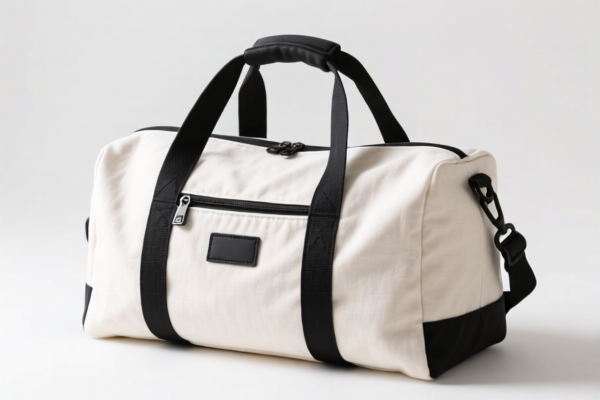
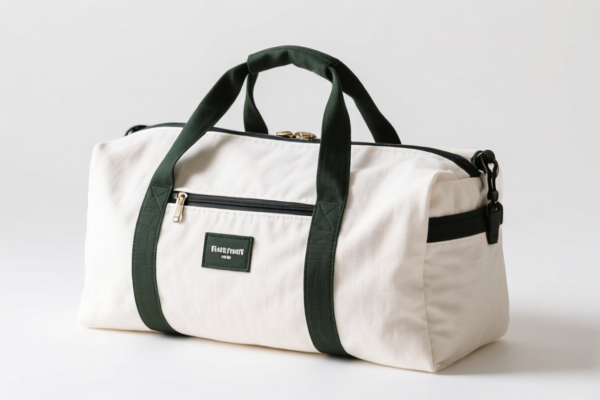
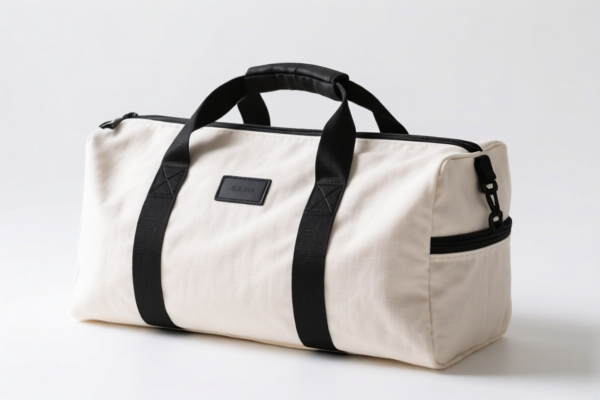
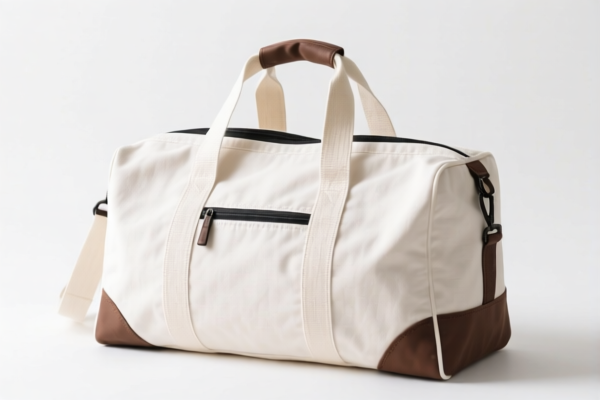
AI Analysis
🧳 Multi-Pocket Cotton Travel Bag
🌐 HS Code Reference & Customs Clearance Guide | 2026 Latest Tariff Analysis | Professional Strategy
📌 1. Product Definition & Classification: Do You Truly Understand "Cotton Travel Bags"?
A Multi-Pocket Cotton Travel Bag is a versatile luggage item designed for short trips, weekend getaways, or as a carry-on accessory. In international trade, its classification hinges on two critical factors:
1. Material Composition: Primarily cotton vs. other textile materials.
2. Function/Usage: Specifically designed for travel vs. general-purpose packaging.
Key Distinction:
- If the bag is primarily used for packaging goods (e.g., shipping cotton bales, retail packaging), it falls under Chapter 63 (Other Made-Up Articles).
- If the bag is primarily used for personal travel (e.g., holding clothes, toiletries, personal items), it falls under Chapter 42 (Articles of Leather; Saddle and Harness).
⚠️ Critical Classification Point:
- If the bag is clearly a travel accessory with handles, straps, or compartments for personal use → Chapter 42 (Higher Tax Risk).
- If the bag is a soft-sided sack used for packaging or general storage, not specifically for travel → Chapter 63 (Lower Tax Risk).
📦 2. HS Code Classification Matrix (2026 Tariff Authoritative Comparison)
| HS Code | Product Description | Applicable Scenario | Tax Rate (Total) | Key Tax Components |
|---|---|---|---|---|
6305.90.00.00 |
Cotton sacks and bags, suitable for packaging, other textile materials | General packaging, bulk storage, non-travel specific sacks | 23.7% | Base: 6.2%, Add-on: 7.5%, Sec 301: 10% |
6305.20.00.00 |
Cotton bags, fully meeting classification definitions for sacks | Retail packaging, cotton produce bags, simple cotton sacks | 23.7% | Base: 6.2%, Add-on: 7.5%, Sec 301: 10% |
4202.92.15.00 |
Cotton travel bags, meeting material and usage limitations | Personal travel bags, duffel bags, weekenders | 41.3% | Base: 6.3%, Add-on: 25.0%, Sec 301: 10% |
4202.92.39.00 |
Other travel bags, outer surface of textile materials | Fashionable travel bags, structured luggage, high-end travel accessories | 52.6% | Base: 17.6%, Add-on: 25.0%, Sec 301: 10% |
🔍 Important Reminder:
- "Travel Bag" implies personal use. If customs determines your product is for personal travel, it cannot be misclassified as "packaging sacks" (6305).
- Material matters: If the bag contains significant synthetic fibers (e.g., polyester lining, nylon straps), classification may shift, but here we assume 100% cotton or primarily cotton as per the prompt.
💰 3. 2026 Tariff Rate Breakdown (Including Additional Taxes & Policy Surcharges)
✅ Applicable Country: United States (US)
✅ Origin: China (CN)
✅ Effective Date: November 10, 2025 onwards (for subsequent imports)
🎯 1. 6305.90.00.00 & 6305.20.00.00 — Cotton Sacks/Bags (Packaging/General Use)
| Item | Details |
|---|---|
| Base Tariff | 6.2% (ad valorem) |
| USITC Additional Duty | +7.5% (Section 301 Footnote 9903.88.01) |
| IEEPA Additional Duty | +10% (for China/HK origin, effective Nov 10, 2025) |
| Total Rate | 23.7% |
| Calculation | CIF Value × 23.7% |
| De Minimis Eligibility | ❌ Not Eligible (deny_de_minimis) |
| Legal Basis Path | IEEPA:9903.01.25 → IEEPA:9903.01.24 → USITC:6305.90.00.00 → FOOTNOTE:9903.88.01 |
📌 Explanation:
- These codes apply to non-travel cotton bags used for packaging or storage.
- 23.7% is moderate but still significant.
- Misclassifying a travel bag here to save tax is a high-risk audit trigger.
🎯 2. 4202.92.15.00 — Cotton Travel Bags (Standard)
| Item | Details |
|---|---|
| Base Tariff | 6.3% (ad valorem) |
| USITC Additional Duty | +25.0% (Section 301) |
| IEEPA Additional Duty | +10% (for China/HK origin) |
| Total Rate | 41.3% |
| Calculation | CIF Value × 41.3% |
| De Minimis Eligibility | ❌ Not Eligible |
| Legal Basis Path | IEEPA:9903.01.25 → IEEPA:9903.01.24 → USITC:4202.92.15.00 → FOOTNOTE:9903.88.01 |
📌 Note:
- This is the standard rate for cotton travel bags that are not fashion-luxury items.
- The 25% USITC surcharge is the major cost driver.
- Must be clearly designed for travel (e.g., handles, zippers, multiple compartments for personal items).
🎯 3. 4202.92.39.00 — Other Travel Bags (Textile Outer Surface)
| Item | Details |
|---|---|
| Base Tariff | 17.6% (ad valorem) |
| USITC Additional Duty | +25.0% (Section 301) |
| IEEPA Additional Duty | +10% (for China/HK origin) |
| Total Rate | 52.6% |
| Calculation | CIF Value × 52.6% |
| De Minimis Eligibility | ❌ Not Eligible |
| Legal Basis Path | IEEPA:9903.01.25 → IEEPA:9903.01.24 → USITC:4202.92.39.00 → FOOTNOTE:9903.88.01 |
📌 Caution:
- This code applies to higher-end or specialized travel bags (e.g., structured, branded, or with specific luxury features).
- The base rate is 17.6%, significantly higher than standard travel bags.
- Total 52.6% is extremely high. Ensure your product does not fall into this category unless necessary.
🛠️ 4. Customs Clearance Practical Advice (Battle-Tested Pitfall Guide)
✅ 1. Documentation Checklist (Mandatory)
| Document | Required | Notes |
|---|---|---|
| ✅ Product Specification Sheet | ✔️ | Include dimensions, weight, material composition (e.g., 100% Cotton), number of pockets, closure type. |
| ✅ Photos of Product | ✔️ | Show the bag from all angles, especially handles, zippers, and interior compartments. Clearly demonstrate travel use. |
| ✅ Commercial Invoice | ✔️ | Use precise description: "Cotton Travel Bag, Model XYZ, for Personal Use." Avoid vague terms like "Cotton Bag" alone. |
| ✅ Packing List | ✔️ | Detail items included (e.g., detachable straps, dust bags). |
| ✅ Certificate of Origin (CO) | ✔️ | If applicable for non-China origin, to reduce tariffs. |
| ✅ Third-Party Test Report | ✔️ | If claimed to be organic cotton or eco-friendly, provide certification. |
✅ 2. Declaration Strategy (Key Mantra)
🔥 "Define Use, Not Just Material! Travel vs. Packaging is Key!"
| Scenario | Correct HS Code | Error to Avoid |
|---|---|---|
| Bag with handles, zippers, meant for clothes/travel | 4202.92.15.00 or 4202.92.39.00 |
Misclassifying as 6305 (23.7%) → Underpayment Risk |
| Simple cotton sack for bulk cotton/shipping | 6305.90.00.00 |
Misclassifying as travel bag → Overpayment Risk |
| Fashionable, structured cotton bag with branding | 4202.92.39.00 |
Misclassifying as simple travel bag → Underpayment Risk |
✅ 3. Special Circumstances Handling
| Situation | Handling Advice |
|---|---|
| OEM Custom Bags | Provide design drawings + client order. If it looks like a personal travel bag, declare as such. |
| Bag with Synthetic Linings | If lining is >50% synthetic, classification may change. Check HTSUS notes. |
| Bag with Detachable Parts | Declare as a single article. Do not split components. |
| Sample Shipments | Even for samples, if intended for personal use, declare correctly. |
🌍 5. Global Market Comparison (2026 Latest)
| Country/Region | Recommended HS Code | Tariff Rate | Certification | Notes |
|---|---|---|---|---|
| 🇺🇸 USA | 4202.92.15.00 |
41.3% | No special certs needed for general trade | Highest tariff risk due to Section 301 |
| 🇨🇳 China | 4202.92.15.00 |
5-10% (Import Duty) | CCC (if applicable) | Low import duty, but check VAT |
| 🇪🇺 EU | 4202.92.15.00 |
4-6% (Import Duty) | CE (if electronic features), REACH | No Section 301 equivalent |
| 🇬🇧 UK | 4202.92.15.00 |
4-6% | UKCA | Post-Brexit rules apply |
| 🇯🇵 Japan | 4202.92.15.00 |
6-10% | PSE (if electronic) | No major surcharges |
📌 Conclusion:
- USA is the most expensive market for cotton travel bags due to Section 301 and IEEPA surcharges.
- 41.3%-52.6% is the realistic cost for China-origin travel bags entering the US.
- Consider supply chain diversification (e.g., Vietnam, Mexico) if targeting the US market to avoid high tariffs.
📌 6. Common Errors & Pitfalls (Blood Lessons)
❌ Error 1: Describing a travel bag as "Cotton Sack" or "Packaging Bag" to get 23.7% tax.
👉 Consequence: Customs audit, penalty, back taxes, potential seizure. Risk is too high.
❌ Error 2: Classifying a structured, branded bag under 4202.92.15.00 instead of 4202.92.39.00.
👉 Consequence: Underpayment. If detected, you owe the difference between 41.3% and 52.6%.
❌ Error 3: Ignoring the "Travel" definition.
👉 Consequence: If the bag has no handles, no zippers, and is just a sack, it must be 6305. If it has handles/zippers, it must be 4202.
❌ Error 4: Using "De Minimis" for shipments under $800.
👉 Consequence: Not eligible! Section 301 and IEEPA duties apply regardless of value.
✅ Correct Approach:
"Cotton Travel Bag, 100% Cotton, Multi-Pocket, with Zipper and Handles, for Personal Travel Use, Model ABC"
🎯 7. Conclusion: Precision Saves Money!
🎯 Remember the Mantra:
🔹 "Travel = 4202, Packaging = 6305!"
🔹 "USA Tax = Base + 25% + 10%!"
🔹 "Don't Guess, Verify! HS Code is Life!"
📌 Pro Tip:
If your bags are manufactured in Vietnam, Mexico, or Thailand, you may qualify for lower tariffs or IEEPA exemptions.
Recommend Advance Ruling (ACE Portal) before shipment to lock in classification.
📣 Take Action Now:
📞 Consult a Licensed Customs Broker
📸 Provide High-Res Photos + Material Composition
📝 File for Pre-Ruling if shipment value is high
🚀 Clear Customs Smoothly, Boost Profits, Avoid Penalties!
✨ Professional Classification Starts Here!
💼 Every Dollar Saved is a Dollar Earned!
Customer Reviews
About HS Code Classification
The Harmonized System (HS) is an internationally standardized nomenclature developed by the World Customs Organization (WCO) to classify traded products. Over 200 countries use the HS system as the basis for customs tariffs, trade statistics, and import/export regulations.
Each HS code follows a hierarchical structure:
- Chapter (2 digits) — Broad category of goods (e.g., Chapter 84: Machinery and Mechanical Appliances)
- Heading (4 digits) — More specific grouping within the chapter
- Subheading (6 digits) — Internationally standardized breakdown, used by all WCO member countries
- National subdivisions (8-10 digits) — Country-specific extensions for further classification, such as US HTSUS 10-digit codes
Correct HS code classification is essential for smooth customs clearance, accurate duty payment, and compliance with trade regulations. Misclassification can lead to customs delays, overpayment of duties, or penalties.
When importing from CN to US, the applicable tariff rates may include:
- Most-Favored-Nation (MFN) rate — The standard duty rate applied to WTO members
- General rate — Applied to countries without trade agreements
- Trade remedy duties — Additional tariffs such as Section 301 (anti-dumping), Section 232 (national security), or countervailing duties
The information provided on this page is for reference purposes only. For official classification, please consult with your local customs authority or a licensed customs broker.