Multi way Fuse Box
CN → US| HS Code | Tariff Rate | Origin | Destination | Doc |
|---|---|---|---|---|
| 8537109150 | 37.7% | CN | US | Official Doc |
| 8538100000 | 85.0% | CN | US | Official Doc |
| 8538908160 | 38.5% | CN | US | Official Doc |
| 8536908530 | 35.0% | CN | US | Official Doc |
Product Images
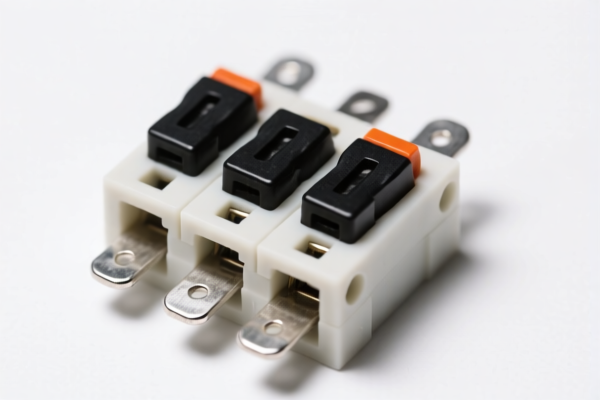
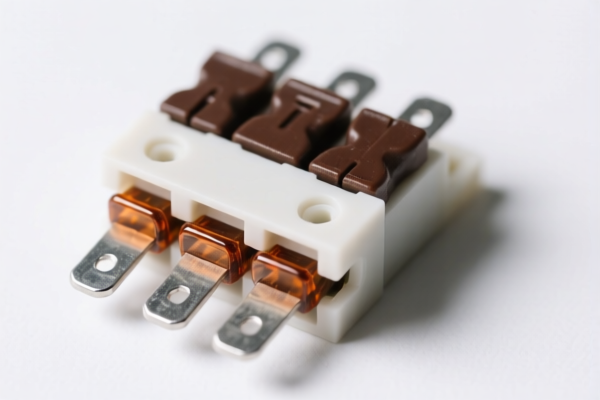
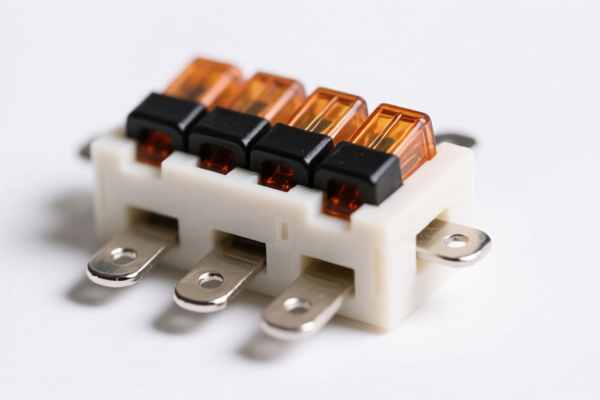
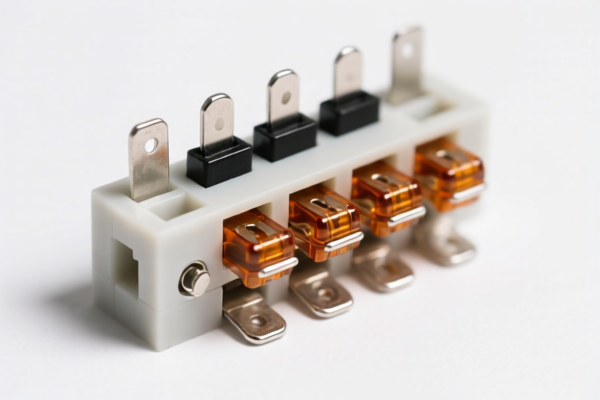
AI Analysis
🔌 Multi-Way Fuse Box (Multi-Port Fuse Distribution Units)
🌐 HS Code Classification & Customs Clearance Guide | 2026 Tariff Analysis | Strategic Compliance Strategy
📌 I. Product Definition & Classification: Is Your "Fuse Box" a Box or a Board?
A Multi-Way Fuse Box is a critical component in electrical systems, designed to distribute power and protect circuits from overcurrent. However, in international trade, the distinction between a "control panel/board" and a "part/component" is the single biggest factor determining your tariff burden.
Two Main Categories: 1. Electrical Distribution Boards (Panels): If the unit contains busbars, circuit breakers/fuses in a unified frame designed for mounting directly into a panel, it is often viewed as a Panel/Board. 2. Electrical Parts/Components: If the unit is a standalone box housing fuses, intended to be an accessory to a larger machine or circuit, it is viewed as a Part/Component.
⚠️ Key Distinction Point:
- If it functions as a control or distribution panel itself (even if small), it leans towards 8537 or 8538.10.
- If it is a protective device/box for wiring, it leans towards 8536.
- Note: 8538.90 is a "residual" category for parts not specifically listed elsewhere (like 8538.10).
📦 II. HS Code Classification Details (2026 Latest Tariff Rules)
Based on the provided data, there are four potential classifications. The difference lies in the functional interpretation of the fuse box by customs officials.
| HS Code | Product Description (Summary) | Key Classification Logic |
|---|---|---|
| 8537.10.91.50 | Distribution Device | Classified as a voltage $\le$ 1000V electrical apparatus for control/distribution. Fits the definition of a panel or switchboard. |
| 8538.10.00.00 | Fuse Box (Control/Distribution Component) | Classified strictly as a Fuse Box or part of a control board. Focuses on the "box" nature containing fuses. |
| 8538.90.81.60 | Electrical Component (Switch/Panel Part) | Classified as a part/component of switchgear or control panels. A "generic" box structure for electrical control. |
| 8536.90.85.30 | Wiring/Protection Device | Classified as a protective device for electrical circuits or a junction box. Focuses on the "protection" function. |
🔍 Critical Insight:
- 8537.10 and 8538.10 are the most competitive for "Panel-like" units.
- 8536.90 is often used for smaller, junction-box style fuse holders.
- 8538.90 is the safest fallback for "parts" but carries a higher base duty (3.5%).
💰 III. 2026 Latest Tariff Rate Breakdown (Including Surcharge Policies)
✅ Applicable Market: United States (US)
✅ Origin: China (CN)
✅ Effective Date: Ongoing (Section 301 & IEEPA tariffs apply)
🎯 1. 8537.10.91.50 —— Electrical Distribution Panel/Board
| Item | Detail |
|---|---|
| Base Duty | 2.7% |
| Section 301 Surcharge | +25.0% |
| 122 Clause Tariff | +10.0% |
| Total Tariff Rate | 37.7% |
| Tax Calculation | CIF Value × 37.7% |
| De Minimis Exemption? | ❌ No (Denied) |
| Legal Basis | HTSUS:8537.10.91.50 → Section 301: 25% → 122 Clause: 10% |
📌 Explanation:
- This classification is treated as a Panel. Panels often benefit from a slightly lower base duty (2.7%) compared to general parts, but the 37.7% total rate is still significant due to the 25%+10% surcharges.
🎯 2. 8538.10.00.00 —— Fuse Box (Control Component)
| Item | Detail |
|---|---|
| Base Duty | 0.0% |
| Section 301 Surcharge | +25.0% |
| 122 Clause Tariff | +10.0% |
| Steel/Aluminum/Copper Surcharge | +50.0% (If applicable) |
| Total Tariff Rate (Standard) | 35.0% |
| Total Tariff Rate (Metallic) | 85.0% ⚠️ |
| Tax Calculation | CIF Value × Total Rate |
| De Minimis Exemption? | ❌ No (Denied) |
| Legal Basis | HTSUS:8538.10.00.00 → Section 301: 25% → 122 Clause: 10% → Section 232 (Steel/Al): 50% |
📌 Warning:
- Base Duty is 0%, which looks attractive!
- HOWEVER, if your fuse box is made of Steel, Aluminum, or Copper, you MUST pay an additional 50% tariff.
- Plastic-only fuse boxes: 35.0% Total.
- Metal (Steel/Al) fuse boxes: 85.0% Total.
- This is the highest risk category if material composition is not declared correctly.
🎯 3. 8538.90.81.60 —— Electrical Part/Component
| Item | Detail |
|---|---|
| Base Duty | 3.5% |
| Section 301 Surcharge | +25.0% |
| 122 Clause Tariff | +10.0% |
| Total Tariff Rate | 38.5% |
| Tax Calculation | CIF Value × 38.5% |
| De Minimis Exemption? | ❌ No (Denied) |
| Legal Basis | HTSUS:8538.90.81.60 → Section 301: 25% → 122 Clause: 10% |
📌 Explanation:
- This is the "Parts" category. It has the highest base duty (3.5%) among the options, leading to the highest total rate (38.5%) for standard material boxes.
- Use this only if the unit cannot be classified as a "Fuse Box" (8538.10) or "Panel" (8537).
🎯 4. 8536.90.85.30 —— Wiring Protection/Junction Box
| Item | Detail |
|---|---|
| Base Duty | 0.0% |
| Section 301 Surcharge | +25.0% |
| 122 Clause Tariff | +10.0% |
| Total Tariff Rate | 35.0% |
| Tax Calculation | CIF Value × 35.0% |
| De Minimis Exemption? | ❌ No (Denied) |
| Legal Basis | HTSUS:8536.90.85.30 → Section 301: 25% → 122 Clause: 10% |
📌 Explanation:
- If your product is considered a Junction Box or Protective Device rather than a "Control Fuse Box," this code applies.
- Total Rate: 35.0%.
- This is a competitive rate, equal to the non-metallic 8538.10, but with a safer functional description (Protection) that might be less scrutinized for the "Steel/Aluminum" surcharge if it's primarily plastic housing.
🛠️ IV. Customs Clearance Operational Advice (Practical Pitfall Guide)
✅ 1. Documentation Checklist (Non-Negotiable)
| Document | Required? | Description |
|---|---|---|
| ✅ Product Specs | ✔️ | Must clearly state: Material (Plastic vs. Metal), Voltage, Number of Fuses, Function (Distribution vs. Protection). |
| ✅ Photos | ✔️ | Clear images of the fuse box, terminals, and internal structure. |
| ✅ Bill of Lading/Invoice | ✔️ | Must match the declared HS Code. If claiming 8538.10, name must be "Fuse Box." If 8536, name "Junction Box." |
| ✅ Material Declaration | ✔️ | CRITICAL for 8538.10: Explicitly state if made of Steel/Aluminum. If yes, budget for 85% tax. If no, confirm "Non-Metallic." |
| ✅ Origin Certificate | ✔️ | To prove CN origin (subject to tariffs). |
✅ 2. Declaration Strategy (Key Tactics)
🔥 "Material Defines Metal Tax; Function Defines Base Tax!"
| Scenario | Recommended HS Code | Risk/Note |
|---|---|---|
| Plastic Housing, Fuse Protection | 8536.90.85.30 |
Low Risk. 35% Total. Described as "Junction Box" or "Protective Cover." |
| Plastic Housing, Control Panel Function | 8537.10.91.50 |
Medium Risk. 37.7% Total. Described as "Distribution Panel." |
| Plastic Housing, Specific Fuse Box | 8538.10.00.00 |
Low Base Duty (0%). 35% Total. Avoid if any metal parts are present. |
| Metal Housing (Steel/Al) | 8538.10.00.00 |
HIGH RISK. 85% Total. Try to reclassify to 8536 if function allows, as 8536 doesn't have the 50% metal surcharge in the provided data. |
| Generic Electrical Part | 8538.90.81.60 |
Last Resort. 38.5%. Higher base duty, but no metal surcharge risk. |
📌 Pro Tip:
- If your product is mostly plastic but has metal terminals, check if customs classifies the whole unit as metallic. If yes,8538.10becomes 85%.
- Strategy: For metal-terminal fuse boxes, consider8536.90.85.30(35%) or8537.10.91.50(37.7%) to avoid the 50% metal surcharge associated with8538.10.
✅ 3. Special Case Handling
| Situation | Handling Advice |
|---|---|
| OEM Custom Fuse Boxes | Provide client design drawings. If it looks like a standard panel, 8537 is more likely. If it's a discrete unit, 8536 or 8538 is better. |
| Mixed Materials (Plastic + Metal) | Declare primary material. If >50% by value/weight is plastic, argue for non-metallic classification. |
| Low Voltage vs. High Voltage | 8537 specifies $\le$ 1000V. Ensure your invoice clearly states "Low Voltage (<1000V)" to qualify. |
🌍 V. Global Market Comparison (2026)
| Market | Recommended HS Code | Est. Total Tariff (CN Origin) | Notes |
|---|---|---|---|
| 🇺🇸 USA | 8536.90.85.30 |
35.0% | Best balance of low base duty and no metal surcharge risk. |
| 🇺🇸 USA | 8537.10.91.50 |
37.7% | Good for panel-style units. |
| 🇪🇺 EU | 8536.90 / 8538.10 |
Varies (0-4%) | No Section 301/122 tariffs. Standard MFN rates apply. |
| 🇨🇳 China | 8536.90 / 8538.10 |
0-5% | Standard import duties. |
📌 Conclusion:
- In the US, the 50% Steel/Aluminum Surcharge on8538.10is a trap for metallic components.
-8536.90.85.30(35%) and8537.10.91.50(37.7%) are generally safer and more predictable for importers.
📌 VI. Common Errors & Pitfalls (Lessons Learned)
❌ Error 1: Declaring a Metal Fuse Box as 8538.10.00.00 without noting the material.
👉 Consequence: Customs applies the 50% metal surcharge → 85% Total Tax.
👉 Fix: Pre-classify as 8536 or 8537 if function allows, to avoid the metal surcharge.
❌ Error 2: Calling a "Panel" a "Box" to get a lower duty.
👉 Consequence: Customs rejects the classification because the product has busbars and distribution features.
👉 Fix: Use accurate terminology. If it distributes power, it's likely 8537.
❌ Error 3: Ignoring the "122 Clause" (10%).
👉 Consequence: Under-calculating costs by 10%.
👉 Fix: Always include the 10% surcharge in your landed cost calculation for CN-origin electrical goods.
✅ Correct Declaration Example:
"Multi-Way Fuse Box, Plastic Housing, for Low Voltage Electrical Distribution (<1000V), Model XYZ, HS Code 8536.90.85.30"
🎯 VII. Conclusion: Precision Classification, Cost Savings!
🎯 Remember the Rules:
🔹 "Plastic? Go 8536 (35%) or 8538.10 (35%)."
🔹 "Metal? Avoid 8538.10 (85% Trap)! Use 8536 (35%) or 8537 (37.7%)."
🔹 "Panel Function? 8537 (37.7%)."
🔹 "122 Clause: +10% Always Applies to CN Electrical Goods!"
📌 Tip:
If your product is complex, consider filing a Binding Ruling with US Customs to lock in your HS Code and avoid surprise audits on material classification.
📣 Take Action Now:
📞 Consult a Customs Broker + Provide Material Breakdown + Apply for Pre-Ruling
🚀 Minimize Tariffs, Maximize Profit!
✨ Professional Classification Starts Here!
💼 Every Dollar Saved is a Dollar Earned!
Customer Reviews
About HS Code Classification
The Harmonized System (HS) is an internationally standardized nomenclature developed by the World Customs Organization (WCO) to classify traded products. Over 200 countries use the HS system as the basis for customs tariffs, trade statistics, and import/export regulations.
Each HS code follows a hierarchical structure:
- Chapter (2 digits) — Broad category of goods (e.g., Chapter 84: Machinery and Mechanical Appliances)
- Heading (4 digits) — More specific grouping within the chapter
- Subheading (6 digits) — Internationally standardized breakdown, used by all WCO member countries
- National subdivisions (8-10 digits) — Country-specific extensions for further classification, such as US HTSUS 10-digit codes
Correct HS code classification is essential for smooth customs clearance, accurate duty payment, and compliance with trade regulations. Misclassification can lead to customs delays, overpayment of duties, or penalties.
When importing from CN to US, the applicable tariff rates may include:
- Most-Favored-Nation (MFN) rate — The standard duty rate applied to WTO members
- General rate — Applied to countries without trade agreements
- Trade remedy duties — Additional tariffs such as Section 301 (anti-dumping), Section 232 (national security), or countervailing duties
The information provided on this page is for reference purposes only. For official classification, please consult with your local customs authority or a licensed customs broker.