Multiphase Catalyst Support
CN → US| HS Code | Tariff Rate | Origin | Destination | Doc |
|---|---|---|---|---|
| 3815110000 | 35.0% | CN | US | Official Doc |
| 3815190000 | 35.0% | CN | US | Official Doc |
| 2835100000 | 38.1% | CN | US | Official Doc |
| 2835295100 | 39.1% | CN | US | Official Doc |
Product Images
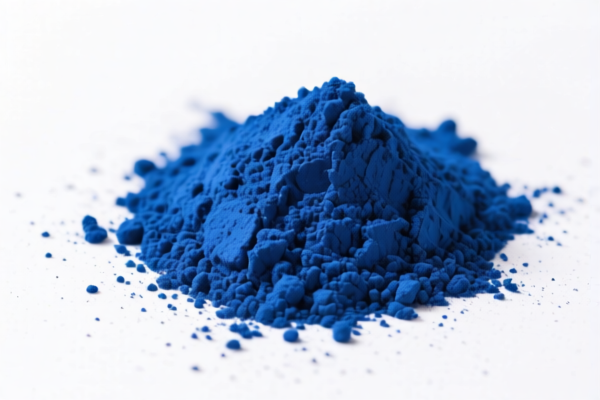
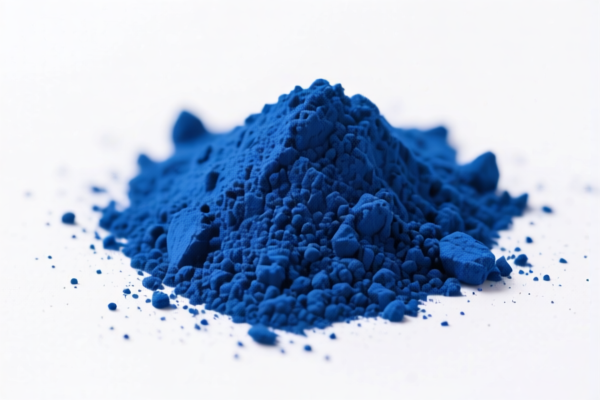
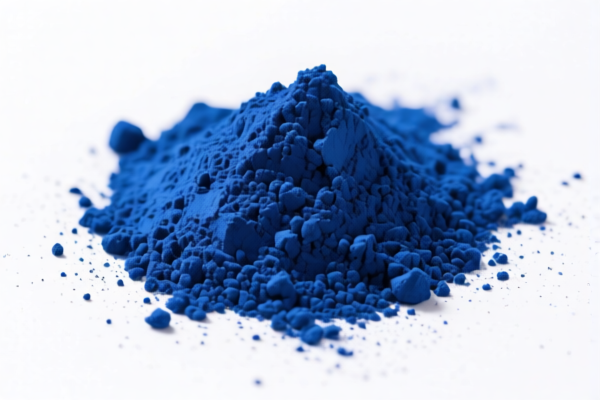
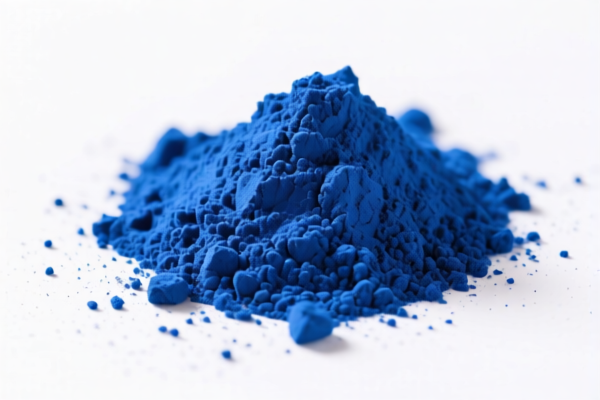
AI Analysis
🧪 Multiphase Catalyst Support (载体催化剂/支撑催化剂)
🌐 HS Code Reference & Customs Clearance Guide | 2026 Latest Tariff Analysis | Professional Clearance Strategy
📌 I. Product Definition & Classification: What is a "Multiphase Catalyst Support"?
A Catalyst Support (often referred to as "Carrier" in chemical engineering) is a porous material that provides a high surface area for the dispersion of active catalytic components. It is essentially the "skeleton" or "stage" upon which the chemical reaction occurs.
In international trade, the classification depends heavily on the stage of processing and the chemical nature of the support:
- Finished Catalyst Support/Promoter: Materials explicitly designed and treated as part of a catalytic system. These fall under Heading 3815 (Activated carbon; catalysts prepared on a support of animal, vegetable, or mineral origin).
- Chemical Precursors/Intermediates: If the material is an inorganic salt or oxide (e.g., phosphates, aluminates) in a raw or semi-processed form, it may be classified under Heading 2835 (Phosphides; phosphinates, hypophosphites, phosphonates, phosphates, pyrophosphates, metaphosphates, orthophosphates... salts thereof).
⚠️ Key Distinction:
- If the product is marketed as a "Catalyst Support" with specific porosity/surface area for catalytic use → 3815.11/19.
- If the product is a raw inorganic chemical compound (like a phosphate salt) used to make a support → 2835.
📦 II. HS Code Classification Details (2026 Latest Tariff Authority Mapping)
| HS Code | Product Description | Application Scenario | Material/State |
|---|---|---|---|
3815.11.00.00 |
Receivers for catalysts, prepared on a carrier | Matches "Multiphase Catalyst Support" as a functional component of a catalytic system. | Pre-treated carrier, specific surface area. |
3815.19.00.00 |
Other catalysts (including supports) | Covers catalysts/supports not specified elsewhere, often complex multiphase systems. | Complex inorganic support structures. |
2835.10.00.00 |
Phosphates; pyrophosphates | Raw chemical intermediate. The support is viewed as a phosphate-based precursor. | Chemical salt, primary form. |
2835.29.51.00 |
Other phosphonates, phosphinates... | Broad category for inorganic chemicals. Infers the support is made of inorganic compounds (like alumina/silica derivatives) falling under chemical salts. | Inorganic chemical intermediate. |
🔍 Critical Note:
- Heading 3815 is the most accurate for functional catalyst supports because they are "prepared" for a specific catalytic purpose.
- Heading 2835 applies only if the support is sold as a raw chemical raw material (e.g., a specific phosphate salt) without explicit catalytic preparation claims.
- No Material Conflict: The logic assumes the support is inorganic (e.g., alumina, silica, zeolites, or phosphate-based), which aligns with both chemical and catalyst headings.
💰 III. 2026 Latest Tariff Rate Breakdown (Including Surcharges & Policy Add-ons)
✅ Applicable Country: United States (US)
✅ Origin: China (CN)
✅ Effective Date: November 10, 2025 (and subsequent imports)
🎯 1. 3815.11.00.00 & 3815.19.00.00 —— Catalysts Prepared on a Carrier (Highest Priority Match)
| Item | Content |
|---|---|
| Base Tariff | 0% (ad valorem) |
| USITC Surcharge (Section 301) | +25% |
| IEEPA Surcharge | +10% (Targeting China/HK products) |
| Total Tariff | 35.0% |
| Tax Calculation | CIF Value × 35% |
| De Minimis Exemption | ❌ Not Eligible (deny_de_minimis) |
| Legal Basis Path | IEEPA:9903.01.25 → IEEPA:9903.01.24 → USITC:3815.11.00.00 → FOOTNOTE:9903.88.01 |
📌 Explanation:
- These HS codes are classified under Chapter 38 (Miscellaneous Chemical Products).
- The 25% is the standard Section 301 tariff for many chemical categories.
- The 10% is the additional IEEPA tariff for specific Chinese-origin goods.
- Total: 35% is significantly lower than the 38-39% rates for raw chemicals, making this the preferred classification if the product is a finished support.
🎯 2. 2835.10.00.00 —— Phosphates (Raw Chemical Intermediate)
| Item | Content |
|---|---|
| Base Tariff | 3.1% |
| USITC Surcharge (Section 301) | +25% |
| IEEPA Surcharge | +10% |
| Total Tariff | 38.1% |
| Tax Calculation | CIF Value × 38.1% |
| De Minimis Exemption | ❌ Not Eligible |
| Legal Basis Path | IEEPA:9903.01.25 → IEEPA:9903.01.24 → USITC:2835.10.00.00 |
📌 Explanation:
- Raw chemicals often have a small base tariff (3.1%).
- However, the surcharges push the total to 38.1%.
- This classification is risky if the product is clearly a "catalyst support" because customs may reclassify it to 3815.
🎯 3. 2835.29.51.00 —— Other Phosphonates/Phosphinates (Inorganic Chemical)
| Item | Content |
|---|---|
| Base Tariff | 4.1% |
| USITC Surcharge (Section 301) | +25% |
| IEEPA Surcharge | +10% |
| Total Tariff | 39.1% |
| Tax Calculation | CIF Value × 39.1% |
| De Minimis Exemption | ❌ Not Eligible |
| Legal Basis Path | IEEPA:9903.01.25 → IEEPA:9903.01.24 → USITC:2835.29.51.00 |
📌 Explanation:
- This is the highest tariff among the suggested codes.
- It implies the product is a complex inorganic salt, not a functional catalyst support.
- Avoid this classification if possible, as it increases cost by ~4% compared to 3815.
🛠️ IV. Customs Clearance Practical Advice (Battle-Tested Pitfall Guide)
✅ 1. Document Checklist (Mandatory)
| Document | Required | Description |
|---|---|---|
| ✅ Product Specification Sheet | ✔️ | Must detail: Surface area, pore volume, bulk density, and intended catalytic use. |
| ✅ MSDS / SDS | ✔️ | Chemical Safety Data Sheet. Check if it lists "Catalyst Support" or "Chemical Intermediate." |
| ✅ Structure Diagram | ✔️ | Show the porous structure or chemical formula. |
| ✅ Commercial Invoice | ✔️ | Critical: Use precise language: "Catalyst Support (Carrier) for Chemical Synthesis" rather than just "Powder." |
| ✅ Certificate of Origin (CO) | ✔️ | To prove CN origin for surcharge calculation. |
| ✅ Packing List | ✔️ | Detail net/gross weight. |
✅ 2. Declaration Strategy (Key Mantra)
🔥 "Function First, Chemistry Second!"
If it works as a support, declare as 3815. If it is a raw chemical, declare as 2835.
| Scenario | Correct Declaration | Wrong Declaration | Consequence |
|---|---|---|---|
| Pre-treated, porous carrier | 3815.11.00.00 (35%) |
2835.10.00.00 (38.1%) |
Overpayment of 3.1% + risk of audit. |
| Raw phosphate salt | 2835.10.00.00 (38.1%) |
3815.11.00.00 (35%) |
Under-declaration Penalty! Customs may reclassify and fine. |
| Complex inorganic mix | 2835.29.51.00 (39.1%) |
3815.19.00.00 (35%) |
Risk of reclassification to 2835 if function is unclear. |
✅ 3. Special Circumstances Handling
| Situation | Handling Advice |
|---|---|
| OEM Custom Support | Provide client orders showing "Catalyst Support" as the function. |
| Mixed Shipment | Do not mix raw chemicals with finished supports in one HS code. Split declarations. |
| Pre-Ruling | Highly Recommended: Apply for an Advance Ruling from CBP if the distinction between "raw chemical" and "prepared catalyst" is ambiguous. |
| Re-export | If re-exporting to a third country, ensure the US entry classification is defensible to avoid future liability. |
🌍 V. Global Market Clearance Comparison (2026 Latest)
| Country/Region | Recommended HS Code | Tariff (China Origin) | Certification Requirements | Notes |
|---|---|---|---|---|
| 🇺🇸 USA | 3815.11.00.00 |
35% | None specific | High tariff due to 301 + IEEPA. |
| 🇨🇳 China | 3815.11.00.00 |
~8-13% (Import Duty) | None | No US-style surcharges. |
| 🇪🇺 EU | 3815.11.00.00 |
0% (Most Free Trade) | REACH Registration | REACH compliance is critical for chemicals. |
| 🇬🇧 UK | 3815.11.00.00 |
0% | UKCA/REACH Retained | Post-Brexit rules apply. |
| 🇦🇺 Australia | 3815.11.00.00 |
5% | None | Lower tariff than US. |
📌 Conclusion:
- The US is the most expensive market due to the 35% combined tariff.
- EU/UK offer 0% if REACH is compliant, making them more attractive for low-margin catalyst supports.
- Avoid 2835 classifications if the product is functionally a catalyst support, as they are often scrutinized for evasion or misclassification.
📌 VI. Common Mistakes & Pitfalls (Blood-Stained Lessons)
❌ Mistake 1: Declaring "Catalyst Support" as "Other Chemicals" (2835) to avoid scrutiny.
👉 Consequence: Customs may audit and find it matches 3815, leading to underpayment penalties if they argue you should have paid higher base duties (though in this case, 3815 is cheaper, misdeclaration still risks fines).
❌ Mistake 2: Declaring raw phosphate powders as "Catalyst Supports" (3815).
👉 Consequence: Overpayment of ~4% and potential rejection if the product lacks catalytic preparation evidence.
❌ Mistake 3: Ignoring the IEEPA 10% surcharge.
👉 Consequence: Seizure of goods at the border if the importer fails to pay the full 35%.
❌ Mistake 4: Vague Description: "Chemical Powder".
👉 Consequence: Customs Hold for 2-4 weeks while CBP requests technical data.
✅ Correct Declaration Example:
"Multiphase Catalyst Support (Carrier), Inorganic Oxide Based, Porous Structure, For Use in Chemical Synthesis Processes, Model CP-100, Net Weight 1000kg"
🎯 VII. Conclusion: Professional Declaration, Cost Optimization!
🎯 Remember the Mantra:
🔹 "Function Dictates Code: 3815 for Support, 2835 for Raw."
🔹 "35% is the Target, 39% is the Trap."
🔹 "US Market: 35% Total, No De Minimis, Full Compliance!"
📌 Pro Tip:
If your catalyst support is originating from Vietnam, Mexico, or Thailand, you may be eligible for IEEPA Exemptions or lower Section 301 rates.
Recommendation: Apply for an Advance Ruling before the first shipment to the US.
📣 Immediate Action:
📞 Engage a Customs Broker + Provide SDS + Submit HS Code Advance Ruling Request
🚀 Ensure Smooth Clearance, Lower Costs, and Faster Turnaround!
✨ Professional Clearance Starts with Precise Classification!
💼 Every Percentage Point Saved is Pure Profit!
Customer Reviews
About HS Code Classification
The Harmonized System (HS) is an internationally standardized nomenclature developed by the World Customs Organization (WCO) to classify traded products. Over 200 countries use the HS system as the basis for customs tariffs, trade statistics, and import/export regulations.
Each HS code follows a hierarchical structure:
- Chapter (2 digits) — Broad category of goods (e.g., Chapter 84: Machinery and Mechanical Appliances)
- Heading (4 digits) — More specific grouping within the chapter
- Subheading (6 digits) — Internationally standardized breakdown, used by all WCO member countries
- National subdivisions (8-10 digits) — Country-specific extensions for further classification, such as US HTSUS 10-digit codes
Correct HS code classification is essential for smooth customs clearance, accurate duty payment, and compliance with trade regulations. Misclassification can lead to customs delays, overpayment of duties, or penalties.
When importing from CN to US, the applicable tariff rates may include:
- Most-Favored-Nation (MFN) rate — The standard duty rate applied to WTO members
- General rate — Applied to countries without trade agreements
- Trade remedy duties — Additional tariffs such as Section 301 (anti-dumping), Section 232 (national security), or countervailing duties
The information provided on this page is for reference purposes only. For official classification, please consult with your local customs authority or a licensed customs broker.