Music Mat
CN → US| HS Code | Tariff Rate | Origin | Destination | Doc |
|---|---|---|---|---|
| 9504909080 | 17.5% | CN | US | Official Doc |
| 5705002030 | 38.3% | CN | US | Official Doc |
| 5705002090 | 38.3% | CN | US | Official Doc |
Product Images
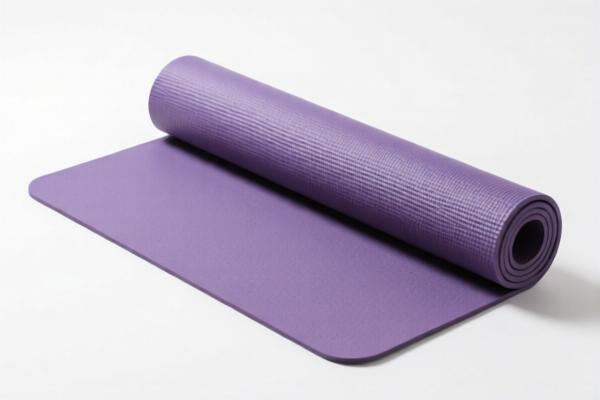

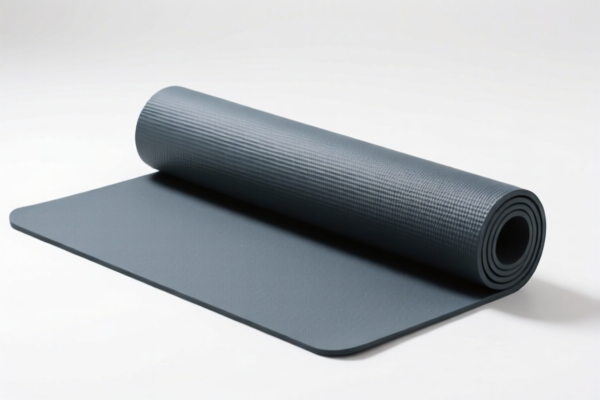
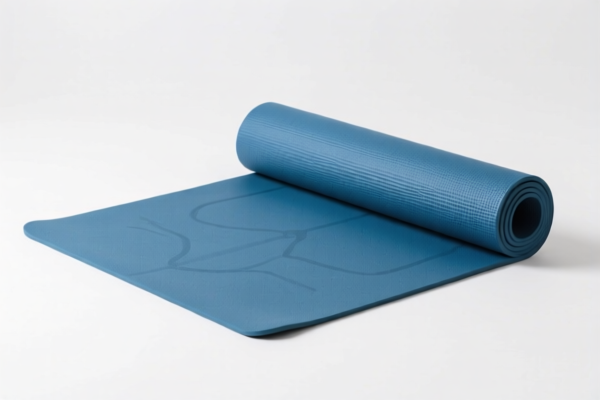
AI Analysis
🎹 Music Mat (Interactive Musical Floor Mat)
🌐 HS Code Reference & Clearance Guide | 2026 Latest Tariff Analysis | Professional Clearance Strategy
📌 I. Product Definition and Classification: Do You Really Understand the "Music Mat"?
The Music Mat is an interactive electronic entertainment device designed for children or educational purposes, where stepping on specific areas triggers musical notes, sounds, or lights. In international trade, its classification depends heavily on its primary function: is it purely an electronic game/entertainment device, or is it fundamentally a textile/floor covering?
Electronic Interactive Feature: Integrated with sound modules, sensors, and microchips to produce audio/visual feedback upon interaction.
Textile/Floor Feature: Made of fabric, foam, or synthetic fibers (PP, PE, etc.) to be laid on the floor.
⚠️ Key Distinction Point:
- If the electronic interactive function is the primary characteristic (i.e., the core value is the gaming/entertainment aspect), it is classified as an electronic game console/device.
- If it is primarily a textile floor covering with minimal or non-interactive electronic features (e.g., simple lighting without complex interactivity), it might be classified as a carpet/footwear textile.
📦 II. HS Code Classification Details (2026 Latest Official Correspondence)
Based on the provided data, here are the two possible classifications:
| HS Code | Product Description | Application Scenario | Electronic vs. Textile Priority |
|---|---|---|---|
9504.90.90.80 |
Electronic interactive devices with entertainment attributes, falling under the category of other video game consoles and amusement machines. | Interactive music mats with sound chips, sensors, and gaming functionality. | ✅ Primary: Electronic Entertainment |
5705.00.20.30 |
Carpets and other floor coverings of textile materials, made of man-made fibers such as PP, PE, etc. | Textile mats with minimal/no complex electronics, primarily for floor covering. | ❌ Primary: Textile/Floor Covering |
5705.00.20.90 |
Other textile floor coverings, fitting the category of other carpets and other textile floor coverings. | General textile mats without specific man-made fiber specification or complex structure. | ❌ Primary: Textile/Floor Covering |
🔍 Key Reminder:
- If the music mat has interactive sensors, sound modules, and gaming logic, it MUST be classified under9504.90.90.80. Misclassifying it as a carpet could lead to customs rejection or penalties for false declaration.
- If it is a simple passive mat with no electronic components, it falls under5705.00.20.30or5705.00.20.90.
💰 III. 2026 Latest Tariff Rate Breakdown (Including Additional Taxes & Policy Surcharges)
✅ Applicable Country: United States (US)
✅ Country of Origin: China (CN)
✅ Effective Date: As of current trade policies (including Section 301 and IEEPA surcharges)
🎯 1. 9504.90.90.80 —— Electronic Interactive Entertainment Device (Music Mat with Gaming Features)
| Item | Detail |
|---|---|
| Base Tariff Rate | 0.0% (Ad Valorem) |
| Section 301 Additional Tariff | +7.5% |
| IEEPA Section 122 Additional Tariff | +10.0% (Specific to China-origin goods under current enforcement) |
| Total Tariff Rate | 17.5% |
| Tax Calculation | CIF Value × 17.5% |
| De Minimis Exemption Eligible? | ❌ No (Denied for Section 301/IEEPA goods) |
| Legal Basis Path | USITC:9504.90.90.80 → Section 301: Footnote 9903.88.01 → IEEPA:9903.01.25 |
📌 Explanation:
- The 0% base rate reflects the low traditional duty for video game accessories/devices.
- However, the 7.5% Section 301 and 10% IEEPA 122 surcharges significantly increase the cost.
- Total 17.5% is moderately high compared to base rates but much lower than textile products.
- Critical: This classification benefits from a lower total tariff than textile alternatives, despite the electronic nature.
🎯 2. 5705.00.20.30 & 5705.00.20.90 —— Textile Floor Coverings (Carpets/Mats)
| Item | Detail |
|---|---|
| Base Tariff Rate | 3.3% (Ad Valorem) |
| Section 301 Additional Tariff | +25.0% |
| IEEPA Section 122 Additional Tariff | +10.0% |
| Total Tariff Rate | 38.3% |
| Tax Calculation | CIF Value × 38.3% |
| De Minimis Exemption Eligible? | ❌ No (Denied for Section 301/IEEPA goods) |
| Legal Basis Path | USITC:5705.00.20.30/90 → Section 301: Footnote 9903.88.01 → IEEPA:9903.01.25 |
📌 Explanation:
- Textile products face a 25% Section 301 tariff, which is the highest surcharge tier for many Chinese imports.
- Combined with 3.3% base and 10% IEEPA, the total 38.3% is more than double the electronic classification.
- Critical: Misclassifying an electronic music mat as a carpet results in paying 20.8% more tax unnecessarily.
🛠️ IV. Practical Clearance Recommendations (Best Practices & Pitfall Avoidance)
✅ 1. Document Preparation Checklist (All Required)
| Document | Required | Notes |
|---|---|---|
| ✅ Product Specification Sheet | ✔️ | Must detail electronic components (chip type, sensor function, power source). |
| ✅ Circuit Diagram/Block Diagram | ✔️ | Proves the presence of interactive electronic logic (key for 9504.90.90.80). |
| ✅ Product Photos (Including Label) | ✔️ | Show buttons, sensors, sound modules, and model number. |
| ✅ Third-Party Test Reports | ✔️ | FCC, CE, RoHS, CPSIA (if for children). |
| ✅ Commercial Invoice | ✔️ | Clearly state: "Interactive Electronic Music Mat for Gaming/Entertainment." |
| ✅ Packing List | ✔️ | Include all electronic accessories (power adapter, cables). |
✅ 2. Declaration Strategy (Key Mnemonic)
🔥 "Electronics First, Textile Second: If It Plays, Declare As Gaming!"
| Scenario | Correct HS Code | Risk of Misclassification |
|---|---|---|
| Music mat with sound, sensors, buttons | 9504.90.90.80 |
17.5% |
| Music mat with only LEDs, no sound/interaction | Consider 5705.00.20.30 |
38.3% (Higher cost) |
| Simple fabric mat with no electronics | 5705.00.20.30 |
38.3% |
📌 Critical Advice:
- If your product has any interactive electronic function (sound, light sync, pressure sensors), always declare under9504.90.90.80.
- Declaring an electronic product as a textile (5705.00.20.30) is not only costly (38.3% vs. 17.5%) but also risks customs penalties for incorrect classification.
✅ 3. Special Cases
| Case | Recommendation |
|---|---|
| OEM Custom Music Mat | Provide design specs showing electronic integration. |
| Children’s Educational Mat | Ensure CPSIA compliance; still classify as 9504.90.90.80 if interactive. |
| Mat with Removeable Electronic Module | If the electronic part can be removed and the textile remains, consider splitting declaration (complex, seek expert advice). |
| Mat Sold as "Toy" vs. "Home Decor" | If marketed as a toy/game, 9504.90.90.80 is mandatory. |
🌍 V. Global Market Comparison (2026 Overview)
| Country/Region | Recommended HS Code | Tariff (China Origin) | Notes |
|---|---|---|---|
| 🇺🇸 USA | 9504.90.90.80 |
17.5% | Lower than textile (38.3%). Best for interactive mats. |
| 🇺🇸 USA | 5705.00.20.30 |
38.3% | Only for non-electronic textile mats. |
| 🇨🇳 China | 9504.90.90.80 |
~5-10% | No additional US surcharges apply domestically. |
| 🇪🇺 EU | 9503.00.00 |
0% | No Section 301/IEEPA equivalents. Generally favorable. |
📌 Conclusion:
- USA is the only major market where misclassification has severe financial consequences due to high Section 301 and IEEPA tariffs on textiles.
- Correctly classifying as an electronic game device (9504.90.90.80) saves ~20.8% in tariffs compared to textile classification.
📌 VI. Common Mistakes & Pitfall Guide (Lessons Learned)
❌ Mistake 1: Declaring an interactive music mat as a "carpet" to avoid electronics scrutiny.
👉 Result: Pay 38.3% tariff instead of 17.5%, losing 20.8% in profit.
❌ Mistake 2: Failing to provide circuit diagrams or specs.
👉 Result: Customs may force reclassification to the higher-tax textile category or delay clearance.
❌ Mistake 3: Using vague descriptions like "Toy Mat" or "Floor Rug."
👉 Result: Ambiguity leads to customs audit and potential penalties.
✅ Correct Declaration Example:
"Interactive Electronic Musical Mat, Model XYZ, with Pressure Sensors and Sound Module, for Educational Entertainment, FCC Certified."
🎯 VII. Conclusion: Precise Classification = Maximum Savings
🎯 Remember the Key Takeaway:
🔹 "If it Beeps, Clicks, or Lights Up in Response → It’s a Game (
9504.90.90.80)."
🔹 "If it’s Just Fabric → It’s a Carpet (5705.00.20.30)."
🔹 "Electronics Save You ~20% in Tariffs vs. Textiles in the US Market!"
📌 Pro Tip:
- Always include electronic specs in your declaration.
- Consider applying for an Advance Ruling from US Customs if the product’s classification is borderline.
- For large shipments, audit your HS Code annually as trade policies may change.
📣 Action Required:
📞 Consult a licensed customs broker.
📄 Prepare detailed electronic product specifications.
🚀 Declare as9504.90.90.80for Interactive Mats to Save Costs!
✨ Professional Clearance Starts with Accurate Classification!
💼 Every Percent of Tariff Saved is Pure Profit!
Customer Reviews
About HS Code Classification
The Harmonized System (HS) is an internationally standardized nomenclature developed by the World Customs Organization (WCO) to classify traded products. Over 200 countries use the HS system as the basis for customs tariffs, trade statistics, and import/export regulations.
Each HS code follows a hierarchical structure:
- Chapter (2 digits) — Broad category of goods (e.g., Chapter 84: Machinery and Mechanical Appliances)
- Heading (4 digits) — More specific grouping within the chapter
- Subheading (6 digits) — Internationally standardized breakdown, used by all WCO member countries
- National subdivisions (8-10 digits) — Country-specific extensions for further classification, such as US HTSUS 10-digit codes
Correct HS code classification is essential for smooth customs clearance, accurate duty payment, and compliance with trade regulations. Misclassification can lead to customs delays, overpayment of duties, or penalties.
When importing from CN to US, the applicable tariff rates may include:
- Most-Favored-Nation (MFN) rate — The standard duty rate applied to WTO members
- General rate — Applied to countries without trade agreements
- Trade remedy duties — Additional tariffs such as Section 301 (anti-dumping), Section 232 (national security), or countervailing duties
The information provided on this page is for reference purposes only. For official classification, please consult with your local customs authority or a licensed customs broker.