Music Stick
CN → US| HS Code | Tariff Rate | Origin | Destination | Doc |
|---|---|---|---|---|
| 9206008000 | 22.8% | CN | US | Official Doc |
| 9209991000 | 23.2% | CN | US | Official Doc |
| 9206002000 | 22.3% | CN | US | Official Doc |
| 9209998000 | 22.8% | CN | US | Official Doc |
| 9503000090 | 10.0% | CN | US | Official Doc |
| 9503000073 | 10.0% | CN | US | Official Doc |
Product Images

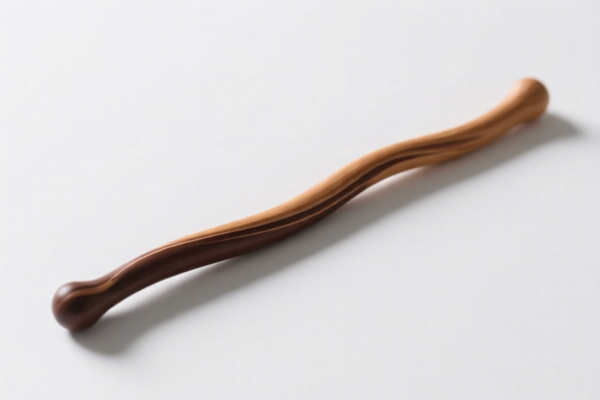
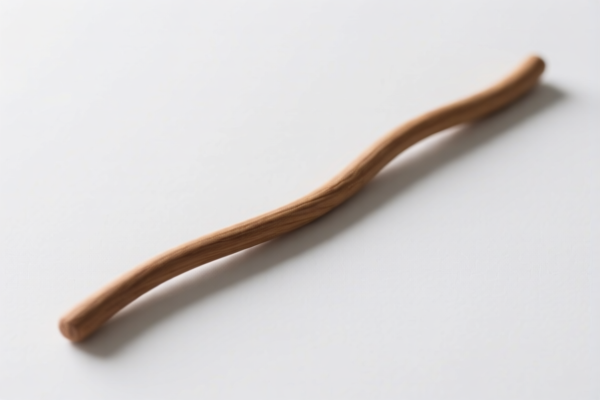

AI Analysis
🪄 Music Stick: The Ultimate HS Code & Tax Strategy Guide (2026)
🌐 Global Customs Classification | Smart Tariff Optimization | 122 Clauses Decoded
📌 Welcome to the Definitive Guide for "Music Stick" Imports
Is your "Music Stick" a musical instrument or a children's toy? In the eyes of Customs, this distinction can cost you 12% extra tax or save you 20% in duties. Let's break down the data, understand the tax mechanics, and secure your supply chain!
🎭 I. Product Identity: Instrument or Toy?
The Music Stick is a versatile item. Its classification depends entirely on its design intent, material, and complexity:
-
As a Musical Instrument (打击乐器/配件)
- Characteristics: Designed for serious performance, precise pitch control, and durable construction.
- Classification Path: Chapter 92 (Musical Instruments).
- Risk: Higher base tariffs, but NO "Toy" restrictions.
-
As a Toy (电子玩具)
- Characteristics: Simple electronic sounds, plastic casing, low durability, marketed for children (ages 3+).
- Classification Path: Chapter 95 (Toys).
- Benefit: 0% Base Duty (often), but subject to strict safety testing (CPC).
⚠️ Critical Insight: Misclassifying a Toy as an Instrument to avoid "Toy" safety tests is a major Customs violation. Conversely, misclassifying an Instrument as a Toy invites a ~12% tax surprise (see below).
📦 II. HS Code Classification Matrix (Data Analysis)
Based on the provided data, here is the breakdown of the Music Stick into its potential categories:
🎻 Category A: Musical Instruments (Chapter 92)
For professional or semi-professional percussion tools.
| HS Code | Product Definition (Summary) | Application Scenario |
|---|---|---|
| 9206.00.80.00 | Percussion Instrument (Music stick as a percussion instrument) |
Match to percussion category; used for rhythmic playing. |
| 9209.99.10.00 | Instrument Accessories (Music stick as instrument part) |
Fits the scope of instrument accessories/attachments. |
| 9206.00.20.00 | Plucking/Striking Tool (Music stick for plucking or striking) |
Matches percussion range; used for playing string/percussion. |
| 9209.99.80.00 | Other Accessories (Music stick as accessory/tube) |
Matches "Other instrument accessories" or sound tube products. |
🧸 Category B: Toys (Chapter 95)
For children, beginners, or novelty items.
| HS Code | Product Definition (Summary) | Application Scenario |
|---|---|---|
| 9503.00.00.90 | Electronic Toy (Music stick as electronic toy) |
Fits "Other electronic toys" category. |
| 9503.00.00.73 | Electronic/Plastic Toy (Music stick as electronic/plastic) |
Fits "Other toys" made of electronic/plastic materials. |
💰 III. 2026 Tax Rate Deep Dive & "122 Clauses" Explained
Applicable to US Imports from China. All rates include Base Duty + Section 301 (Add-on) + Section 122 (Countermeasures).
🚨 Scenario 1: The "Instrument" Route (High Tax)
HS Codes: 9206.00.80, 9209.99.10, 9206.00.20, 9209.99.80
| Tax Component | Breakdown Details | Contribution to Total |
|---|---|---|
| Base Duty | Varies by sub-code (4.8% – 5.7%) | Low |
| Section 301 (Add-on) | Fixed at 7.5% (Standard punitive tariff) | Medium |
| Section 122 | Fixed at 10% (New "Countermeasures" clause) | High |
| TOTAL TAX RATE | 22.3% – 23.2% | 🔴 HIGH |
📝 Detailed Tax Logic:
- Base: 4.8% to 5.7% depending on the specific sub-category.
- Add-on: 7.5% applies to almost all Chinese musical goods.
- Clause 122: A new 10% tariff layer (often referred to as "Countermeasures" or "Section 122") is applied on top of the base.
- Result: A base of ~5% + 7.5% + 10% = ~22.5% to 23.2%.
- Impact: This makes the Instrument classification expensive.
✅ Scenario 2: The "Toy" Route (Low Tax)
HS Codes: 9503.00.00.90, 9503.00.00.73
| Tax Component | Breakdown Details | Contribution to Total |
|---|---|---|
| Base Duty | 0.0% | Free |
| Section 301 (Add-on) | 0.0% | Free |
| Section 122 | 10% | Medium |
| TOTAL TAX RATE | 10.0% | 🟢 LOW |
📝 Detailed Tax Logic:
- Base: Toys (9503) are often duty-free (0%).
- Add-on: Many toy classifications are exempt from the Section 301 7.5% add-on (Check specific sub-code exemptions).
- Clause 122: Even for toys, the 10% Clause 122 applies.
- Result: 0% + 0% + 10% = 10.0%.
- Impact: Massive savings! You pay ~13% less than the instrument route.
🛠️ IV. Customs Clearance Strategy: How to Win?
🎯 1. The "Toy" Strategy (Recommended for Cost)
If your Music Stick is:
- Made of plastic.
- Has simple electronic sounds (no complex music theory).
- Marketed to children (ages 3+).
- Sold in toy stores or toy aisles.
👉 Action: Declare as 9503.00.00.xx (Toy).
✅ Benefit: 10.0% Total Tax (vs. ~23%).
⚠️ Risk: You MUST pass CPSC (Consumer Product Safety Commission) tests (e.g., ASTM F963, Lead, Phthalates, CPC Certificate).
🚫 Warning: Do NOT declare as an instrument if it clearly looks like a toy; Customs will re-classify and charge the difference + penalties.
🎻 2. The "Instrument" Strategy (For Professionals)
If your Music Stick is:
- High-quality wood/metal.
- Tunable or pitch-specific.
- Used in orchestras, marching bands, or professional teaching.
- Sold in music stores.
👉 Action: Declare as 9206.00.xx or 9209.99.xx (Instrument).
✅ Benefit: No "Toy" safety testing (though safety standards still apply).
⚠️ Cost: You pay 22.3% - 23.2% in taxes.
📋 V. Clearance Documentation Checklist
| Document | Requirement for Toy (9503) | Requirement for Instrument (9206/9209) |
|---|---|---|
| Commercial Invoice | Must state "Toy for Children" | Must state "Musical Instrument / Percussion Tool" |
| Material Analysis | Plastic/Electronic composition | Wood/Metal composition |
| Function Test | Simple sound generation | Pitch control, tuning capability |
| Safety Certs | CPC / ASTM F963 / UL (Mandatory) | No CPC needed (standard product safety only) |
| Packaging | Child-safe packaging, warning labels | Standard protective packaging |
| Origin Proof | CO (China) | CO (China) |
🚀 VI. Pro Tips & Final Verdict
💡 The "10% vs 23%" Rule
"If it's a toy, save 13% tax by declaring 9503. If it's a pro tool, pay 23% tax but avoid CPC testing."
- Don't Guess: If the stick has a complex melody chip and looks like a drumstick, declare as 9206. If it has a simple "beep-beep" and bright colors, declare as 9503.
- Clause 122 is King: Notice that even the "Toy" route pays 10%. This is the Section 122 Countermeasure. It applies to almost all Chinese imports now.
- Avoid Split Shipping: Do not split the shipment to try to bypass the 10%. One declaration per shipment.
- Labeling: Ensure the box clearly states the intended age group. "Ages 3-8" = Toy (9503). "Professional Percussion" = Instrument (9206).
🌟 Conclusion
The Music Stick is a classic "Dual-Identity" product.
- Optimize for Cost? → Prove it's a Toy (9503.00.00.73/90) → 10% Tax.
- Optimize for Brand/Quality? → Prove it's an Instrument (9206.00.20/80 or 9209.99.10/80) → 22.3-23.2% Tax.
🔥 Final Advice: If you can pass the safety tests, always choose the Toy classification to maximize profit margins. The 13% difference is pure bottom-line gain!
Disclaimer: This guide is based on the provided 2026 data. Customs regulations change frequently. Always consult with a licensed Customs Broker for your specific shipment.
🚀 Clearer Goods, Faster Clearance, Higher Profits!
Customer Reviews
About HS Code Classification
The Harmonized System (HS) is an internationally standardized nomenclature developed by the World Customs Organization (WCO) to classify traded products. Over 200 countries use the HS system as the basis for customs tariffs, trade statistics, and import/export regulations.
Each HS code follows a hierarchical structure:
- Chapter (2 digits) — Broad category of goods (e.g., Chapter 84: Machinery and Mechanical Appliances)
- Heading (4 digits) — More specific grouping within the chapter
- Subheading (6 digits) — Internationally standardized breakdown, used by all WCO member countries
- National subdivisions (8-10 digits) — Country-specific extensions for further classification, such as US HTSUS 10-digit codes
Correct HS code classification is essential for smooth customs clearance, accurate duty payment, and compliance with trade regulations. Misclassification can lead to customs delays, overpayment of duties, or penalties.
When importing from CN to US, the applicable tariff rates may include:
- Most-Favored-Nation (MFN) rate — The standard duty rate applied to WTO members
- General rate — Applied to countries without trade agreements
- Trade remedy duties — Additional tariffs such as Section 301 (anti-dumping), Section 232 (national security), or countervailing duties
The information provided on this page is for reference purposes only. For official classification, please consult with your local customs authority or a licensed customs broker.