Mute for Musical Instruments
CN → US| HS Code | Tariff Rate | Origin | Destination | Doc |
|---|---|---|---|---|
| 8531809041 | 17.5% | CN | US | Official Doc |
| 9209991000 | 23.2% | CN | US | Official Doc |
| 8531801500 | 11.3% | CN | US | Official Doc |
| 9209922000 | 13.9% | CN | US | Official Doc |
| 8306290000 | 10.0% | CN | US | Official Doc |
Product Images
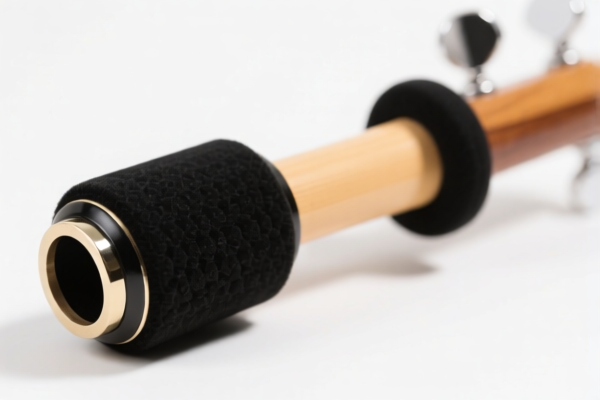
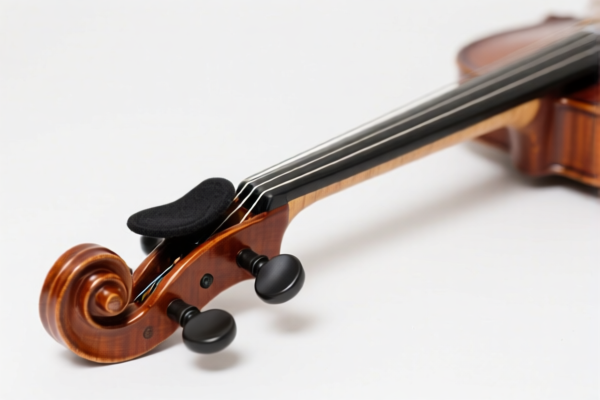
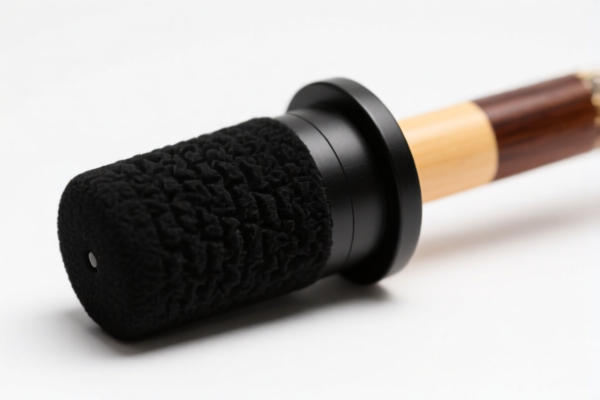
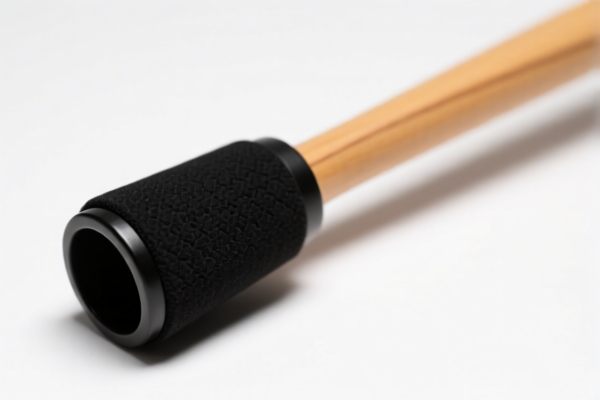
AI Analysis
🎻 Mute for Musical Instruments: HS Code Classification & US Customs Clearance Guide (2026)
🌐 HS Code Reference & Clearance Strategy | 2026 Latest Tariff Analysis | Professional Level Compliance
📌 I. Product Definition & Logic: What Exactly is a "Musical Instrument Mute"?
A Mute for Musical Instruments (often simply called a "mute") is an accessory designed to alter or reduce the volume and change the timbre of a musical instrument. It is widely used in orchestral, jazz, and practice scenarios.
In international trade classification (HS Code), mutes are primarily classified based on their function and structural relationship with the instrument. The two most common categories are:
- Acoustic/Signal Control Devices: If the mute is considered part of an electronic signal chain or acoustic control system (e.g., electric violins, electronic trumpets with integrated dampening logic).
- Instrument Accessories: If the mute is a physical attachment specifically designed for acoustic instruments (e.g., brass, strings), it falls under the "Parts and Accessories of Musical Instruments" chapter.
⚠️ Key Distinction Point:
- If the mute is purely mechanical/acoustic (brass, string, woodwind) → Look at Chapter 92 (Musical Instruments).
- If the mute involves electronic signal regulation (electronic amps, digital audio control) → Look at Chapter 85 (Electrical Machinery).
- If the mute is a decorative/non-functional fitting made of base metal → Look at Chapter 83.
📦 II. HS Code Classification Details (2026 Authorized Codes from Data)
Based on the provided data, here are the five valid HS Codes for "Mutes for Musical Instruments," along with their specific classification logic and tax implications.
| HS Code | Product Description & Classification Logic | Total Tax Rate (China Origin) | Tax Breakdown (Base + Add. + Sec. 301/122) |
|---|---|---|---|
| 8531.80.90.41 | Acoustic Control Device: Classified as a component of acoustic/light acoustic alarm devices. Logic: It regulates acoustic signals within an electrical or optical alarm system. | 17.5% | Base: 0.0% Additional (Trade War): 7.5% Sec. 301/122: 10% |
| 9209.99.10.00 | Instrument Accessory (Primary): Classified as parts/accessories of musical instruments. Logic: Semantically and functionally identical to "instrument silencers." This is the most direct classification for standard acoustic mutes. | 23.2% | Base: 5.7% Additional (Trade War): 7.5% Sec. 301/122: 10% |
| 8531.80.15.00 | Electronic Signal Device Part: Classified as part of electric signal equipment (doorbells, buzzers). Logic: Matches the category of doorbells/buzzers where mute functionality is part of the signal logic. | 11.3% | Base: 1.3% Additional (Trade War): 0.0% Sec. 301/122: 10% |
| 9209.92.20.00 | Instrument Part (Alternative): Classified under specific musical instrument parts. Logic: Semantic consistency with "silencers" in the musical instrument chapter. | 13.9% | Base: 3.9% Additional (Trade War): 0.0% Sec. 301/122: 10% |
| 8306.29.00.00 | Base Metal Accessory/Decoration: Inferred as made of base metal, classified as parts of ornaments, bells, or gongs. Logic: Assumes the item is a decorative or structural fitting rather than a functional acoustic tool. | 10.0% | Base: 0.0% Additional (Trade War): 0.0% Sec. 301/122: 10% |
🔍 Critical Note:
- HS Code 9209.99.10.00 is the most standard choice for pure musical instrument mutes (brass/string).
- HS Code 8531.80.90.41 applies if the mute is integrated into an electronic/alarm system.
- HS Code 8306.29.00.00 is the lowest tax option but requires proving the item is decorative or a "bell part," which may risk audit if it’s a functional acoustic mute.
💰 III. Detailed Tariff Rate Analysis (2026 US Imports from China)
✅ Applicable Country: United States (US)
✅ Origin: China (CN)
✅ Effective Date: Post-2025 Policies (Including Section 301 & IEEPA provisions)
🎯 1. 8531.80.90.41 — Acoustic Control Device (Alarm/Signal Logic)
| Item | Content |
|---|---|
| Base Rate | 0.0% |
| Additional Tax | +7.5% (Section 301 / Trade War) |
| 122-Clause Tax | +10% (Specific Tariff Measure) |
| Total Rate | 17.5% |
| Calculation | CIF Value × 17.5% |
| De Minimis Exemption | ❌ Not Eligible |
| Legal Path | IEEPA:9903.01.25 → USITC:8531.80.90.41 → FOOTNOTE:122 |
📌 Explanation:
- This code treats the mute as an electrical/acoustic control component, not a pure musical part.
- It avoids the base tariff but incurs both the 7.5% trade war tax and the 10% Section 122 tax.
🎯 2. 9209.99.10.00 — Musical Instrument Accessory (Standard Mute)
| Item | Content |
|---|---|
| Base Rate | 5.7% |
| Additional Tax | +7.5% (Section 301 / Trade War) |
| 122-Clause Tax | +10% (Specific Tariff Measure) |
| Total Rate | 23.2% |
| Calculation | CIF Value × 23.2% |
| De Minimis Exemption | ❌ Not Eligible |
| Legal Path | IEEPA:9903.01.25 → USITC:9209.99.10.00 → FOOTNOTE:122 |
📌 Explanation:
- This is the most accurate classification for standard acoustic mutes (brass, strings, woodwinds).
- It has the highest base rate (5.7%) among the options, plus the two surcharges.
- Risk: High compliance risk if misdeclared as decorative (8306) to save tax.
🎯 3. 8531.80.15.00 — Electric Signal Equipment Part (Buzzer/Doorbell Logic)
| Item | Content |
|---|---|
| Base Rate | 1.3% |
| Additional Tax | 0.0% |
| 122-Clause Tax | +10% |
| Total Rate | 11.3% |
| Calculation | CIF Value × 11.3% |
| De Minimis Exemption | ❌ Not Eligible |
| Legal Path | IEEPA:9903.01.25 → USITC:8531.80.15.00 → FOOTNOTE:122 |
📌 Explanation:
- Lowest Total Tax (11.3%).
- However, this code is for doorbells, buzzers, and similar electric signal devices.
- Warning: Using this for a musical instrument mute may lead to customs rejection unless the mute is explicitly part of an electric instrument signal chain (e.g., an electronic mute box for an electric violin).
🎯 4. 9209.92.20.00 — Musical Instrument Part (Alternative)
| Item | Content |
|---|---|
| Base Rate | 3.9% |
| Additional Tax | 0.0% |
| 122-Clause Tax | +10% |
| Total Rate | 13.9% |
| Calculation | CIF Value × 13.9% |
| De Minimis Exemption | ❌ Not Eligible |
| Legal Path | IEEPA:9903.01.25 → USITC:9209.92.20.00 → FOOTNOTE:122 |
📌 Explanation:
- Middle Ground (13.9%).
- Also a Chapter 92 code (Musical Instruments), so semantically correct.
- Avoids the 7.5% additional tax, resulting in a lower total rate than 9209.99.10.00.
- Recommendation: Consider this if 9209.99.10.00 is not available or if customs allows this subheading for "silencers."
🎯 5. 8306.29.00.00 — Base Metal Ornament/Bell Part (Lowest Tax)
| Item | Content |
|---|---|
| Base Rate | 0.0% |
| Additional Tax | 0.0% |
| 122-Clause Tax | +10% |
| Total Rate | 10.0% |
| Calculation | CIF Value × 10.0% |
| De Minimis Exemption | ❌ Not Eligible |
| Legal Path | IEEPA:9903.01.25 → USITC:8306.29.00.00 → FOOTNOTE:122 |
📌 Explanation:
- Lowest Total Tax (10.0%).
- This code is for base metal ornaments, bells, or gongs.
- High Risk: Customs may flag this as misclassification if the item is clearly a functional acoustic mute for a trumpet or violin. Only use if the mute is decorative or explicitly marketed as a bell accessory (e.g., for church bells or large orchestral bells).
🛠️ IV. Clearance Practical Advice (Avoiding Pitfalls)
✅ 1. Documentation Checklist (Essential)
| Document | Required | Notes |
|---|---|---|
| ✅ Product Specifications | ✔️ | Must specify: Material, Instrument Type (Brass/Strings), Function (Acoustic/Electronic). |
| ✅ Product Photos | ✔️ | Clear images showing how the mute attaches to the instrument. |
| ✅ Commercial Invoice | ✔️ | Accurate description: "Mute for Musical Instruments, Brass, Acoustic" or "Electronic Mute for Electric Violin." |
| ✅ HS Code Justification | ✔️ | Provide a brief explanation linking the product to the chosen HS Code logic. |
| ✅ Origin Certificate | ✔️ | To confirm CN origin and apply applicable surcharges. |
✅ 2. Declaration Tips (Key Rules)
🔥 "Function Defines Code, Material Defines Risk"
| Scenario | Recommended HS Code | Reason |
|---|---|---|
| Standard Acoustic Mute (Brass/String) | 9209.99.10.00 or 9209.92.20.00 |
Most accurate for musical instruments. |
| Electronic Mute (Signal Control) | 8531.80.90.41 |
If it regulates electrical/acoustic signals. |
| Decorative/Non-Functional Mute | 8306.29.00.00 |
If made of base metal and used as ornament/bell part. |
| Mute for Electric Signal Device (Buzzer) | 8531.80.15.00 |
Only if used in doorbells/buzzers, not instruments. |
⚠️ Warning:
- Do not declare a functional acoustic mute as8306.29.00.00unless it is truly decorative. Customs may assess penalties for misclassification.
- Do not use8531.80.15.00for musical instruments unless it is part of an electric signal system.
✅ 3. Special Cases
| Case | Advice |
|---|---|
| OEM/Custom Mutes | Provide design drawings to prove intended use (instrument vs. decoration). |
| Mixed Shipments | Declare mutes separately from instruments. Do not bundle unless they are sold as a kit. |
| Material Ambiguity | If the mute is plastic/carbon fiber, 8306.29.00.00 is invalid. Use 9209 or 8531. |
🌍 V. Global Market Comparison (2026)
| Country/Region | Recommended HS Code | Tax (China Origin) | Notes |
|---|---|---|---|
| 🇺🇸 USA | 9209.99.10.00 |
23.2% | Highest due to base + 7.5% + 10%. |
| 🇺🇸 USA | 8531.80.15.00 |
11.3% | Lower, but risk of misclassification if not electronic. |
| 🇺🇸 USA | 8306.29.00.00 |
10.0% | Lowest, but high audit risk for functional mutes. |
| 🇨🇳 China | 9209.99.10.00 |
~5% (Import Duty) | Lower than US, no Section 301. |
| 🇪🇺 EU | 9209.99.10.00 |
0-2% (Duty) | No major surcharges. |
📌 Conclusion:
- The US is the most costly market for musical instrument mutes due to Section 301 and IEEPA taxes.
- Strategy: For US imports, consider pre-ruling with CBP to confirm if9209.92.20.00(13.9%) or8531.80.15.00(11.3%) is acceptable for your specific product to save on taxes.
📌 VI. Common Mistakes & Pitfalls
❌ Mistake 1: Declaring all mutes as 9209.99.10.00 without checking for electronic components.
👉 Result: If it’s electronic, CBP may reclassify to 8531 and adjust duties.
❌ Mistake 2: Using 8306.29.00.00 for functional acoustic mutes.
👉 Result: High risk of misclassification penalty (up to 40% of duty underpaid).
❌ Mistake 3: Ignoring the 10% Section 122/IEEPA tax.
👉 Result: Underpayment of duties, leading to holds, fines, or seizure.
✅ Correct Approach:
"Acoustic Mute for Trumpet, Brass, Model XYZ, Made in China" → HS 9209.99.10.00
"Electronic Mute Controller for Electric Violin" → HS 8531.80.90.41
🎯 VII. Final Recommendations
🎯 Key Takeaway:
🔹 Standard Acoustic Mute:
9209.99.10.00(23.2%) — Safest & Most Accurate
🔹 Electronic/Special Mute:8531.80.90.41(17.5%) — Good for Signal Control
🔹 Low-Risk Tax Strategy:8531.80.15.00(11.3%) or8306.29.00.00(10.0%) — Only if legally justifiable
📌 Pro Tip:
If you are importing large volumes, apply for a Binding Tariff Information (BTI) or CBP Ruling before shipment. This locks in the HS Code and tax rate, protecting you from future audits or policy changes.
📣 Act Now:
📞 Consult with a licensed customs broker.
📄 Prepare accurate product descriptions and technical specs.
🚀 Ensure smooth clearance and optimal tax efficiency!
✨ Professional Clearance Starts with Accurate Classification!
💼 Every dollar saved in duties is profit earned!
Customer Reviews
About HS Code Classification
The Harmonized System (HS) is an internationally standardized nomenclature developed by the World Customs Organization (WCO) to classify traded products. Over 200 countries use the HS system as the basis for customs tariffs, trade statistics, and import/export regulations.
Each HS code follows a hierarchical structure:
- Chapter (2 digits) — Broad category of goods (e.g., Chapter 84: Machinery and Mechanical Appliances)
- Heading (4 digits) — More specific grouping within the chapter
- Subheading (6 digits) — Internationally standardized breakdown, used by all WCO member countries
- National subdivisions (8-10 digits) — Country-specific extensions for further classification, such as US HTSUS 10-digit codes
Correct HS code classification is essential for smooth customs clearance, accurate duty payment, and compliance with trade regulations. Misclassification can lead to customs delays, overpayment of duties, or penalties.
When importing from CN to US, the applicable tariff rates may include:
- Most-Favored-Nation (MFN) rate — The standard duty rate applied to WTO members
- General rate — Applied to countries without trade agreements
- Trade remedy duties — Additional tariffs such as Section 301 (anti-dumping), Section 232 (national security), or countervailing duties
The information provided on this page is for reference purposes only. For official classification, please consult with your local customs authority or a licensed customs broker.