Myclobutanil Wettable Powder
CN → US| HS Code | Tariff Rate | Origin | Destination | Doc |
|---|---|---|---|---|
| 3808921500 | 41.5% | CN | US | Official Doc |
| 3808922400 | 35.0% | CN | US | Official Doc |
Product Images
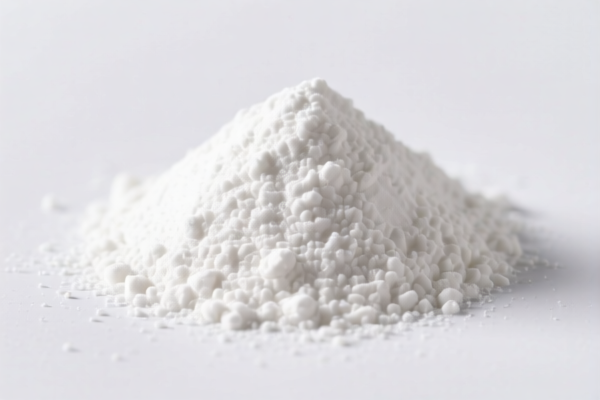
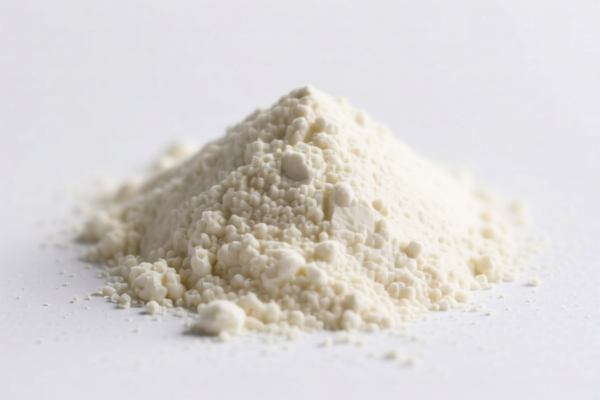
AI Analysis
🧪 Myclobutanil Wettable Powder ( fungicide formulation )
🌐 HS Code Reference & Customs Clearance Guide | 2026 Latest Tariff Analysis | Professional Clearance Strategy
📌 1. Product Definition & Classification: Do You Really Understand "Myclobutanil Wettable Powder"?
Myclobutanil is a systemic fungicide belonging to the triazole class, widely used in agriculture to control powdery mildew and other fungal diseases on fruits, vegetables, ornamentals, and turf. In international trade, Wettable Powder (WP) is a solid pesticide formulation that dissolves or suspends in water to form a sprayable liquid.
Depending on how customs authorities interpret the chemical nature vs. the final formulation purpose, Myclobutanil WP can fall into three distinct HS Code categories:
⚠️ Key Distinction Points:
- If classified as a preparation/formulation for direct agricultural use → HS 3808 (Pesticides)
- If classified as an aromatic fungicide preparation → HS 3808.92
- If classified as a raw chemical ingredient (heterocyclic compound) → HS 2933 (Organic Chemicals)
📦 2. HS Code Classification Details (2026 Latest Tariff Authority Comparison)
| HS Code | Product Description | Application Scenario | Taxation Logic |
|---|---|---|---|
3808.91.50.01 |
Myclobutanil Wettable Powder classified as Insecticide/Fungicide Preparation | General agricultural fungicide WP | Higher tax (40%) due to general pesticide classification |
3808.92.15.00 |
Myclobutanil Wettable Powder classified as Aromatic Fungicide Preparation | Specific aromatic-based fungicides | Moderate-High tax (41.5%) due to aromatic classification |
2933.99.22.00 |
Myclobutanil Wettable Powder classified as Nitrogen Heterocyclic Compound Pesticide | Chemical ingredient classification | Lower tax (16.5%) if treated as chemical raw material |
2933.99.75.00 |
Myclobutanil Smoke Fumigant classified as Nitrogen Heterocyclic Agricultural Chemical | Specialized fumigant forms | Lower tax (16.5%) if treated as chemical raw material |
2933.39.27.00 |
Myclobutanil Smoke Fumigant classified as Nitrogen Heterocyclic Pesticide Ingredient | Chemical ingredient classification | Lower tax (16.5%) if treated as chemical raw material |
🔍 Key Reminder:
- Preparations (HS 3808) are subject to higher tariffs because they are ready-to-use agricultural products.
- Chemicals (HS 2933) are classified as raw materials and enjoy lower tariffs, but require proof that the product is not a formulated pesticide (e.g., pure active ingredient, no adjuvants).
- Misclassification Risk: Declaring a formulated WP as a pure chemical (HS 2933) may lead to customs audits, fines, or cargo detention.
💰 3. 2026 Latest Tariff Rate Breakdown (Including Surtaxes, Policy Add-ons)
✅ Applicable Country: United States (US)
✅ Origin: China (CN)
✅ Effective Date: November 10, 2025 onwards (including subsequent imports)
🎯 1. 3808.91.50.01 —— Myclobutanil WP Classified as General Pesticide Preparation
| Item | Content |
|---|---|
| Base Tariff | 5.0% (ad valorem) |
| USITC Surtax (Section 301) | +25.0% |
| 122 Clause Surtax | +10.0% |
| Total Tax Rate | 40.0% |
| Tax Calculation | CIF Value × 40% |
| De Minimis Eligibility | ❌ Not Eligible (deny_de_minimis) |
| Legal Basis Path | Base Tariff → USITC:3808.91.50.01 → Footnote:122 |
📌 Explanation:
- The 25% surtax is applied under Section 301 of the Trade Act against Chinese-origin goods.
- The 10% surtax is added under the "122 Clause" (likely referring to specific trade enforcement measures).
- Total 40% is a high-cost scenario for formulated pesticides.
🎯 2. 3808.92.15.00 —— Myclobutanil WP Classified as Aromatic Fungicide Preparation
| Item | Content |
|---|---|
| Base Tariff | 6.5% (ad valorem) |
| USITC Surtax (Section 301) | +25.0% |
| 122 Clause Surtax | +10.0% |
| Total Tax Rate | 41.5% |
| Tax Calculation | CIF Value × 41.5% |
| De Minimis Eligibility | ❌ Not Eligible (deny_de_minimis) |
| Legal Basis Path | Base Tariff → USITC:3808.92.15.00 → Footnote:122 |
📌 Note:
- This classification assumes Myclobutanil is viewed strictly as an aromatic compound formulation.
- The 0.5% higher total rate compared to3808.91.50.01is due to a higher base tariff (6.5% vs 5.0%), even though surtaxes are identical.
🎯 3. 2933.99.22.00 / 2933.99.75.00 / 2933.39.27.00 —— Classified as Nitrogen Heterocyclic Chemicals
| Item | Content |
|---|---|
| Base Tariff | 6.5% (ad valorem) |
| USITC Surtax (Section 301) | 0.0% |
| 122 Clause Surtax | +10.0% |
| Total Tax Rate | 16.5% |
| Tax Calculation | CIF Value × 16.5% |
| De Minimis Eligibility | ❌ Not Eligible (deny_de_minimis) |
| Legal Basis Path | Base Tariff → USITC:2933.xxxx → Footnote:122 |
📌 Key Advantage:
- Significant Savings: Compared to HS 3808 codes, the 16.5% rate saves 23.5–25% in total tax.
- Condition: This classification applies only if the product is not a formulated pesticide but rather a chemical intermediate or active ingredient without agricultural additives.
- Risk: If customs determines the product is a finished pesticide (WP formulation), they may reclassify it under HS 3808, leading to back-taxes and penalties.
🛠️ 4. Customs Clearance Practical Advice (Avoid Pitfalls)
✅ 1. Required Documentation Checklist (Non-negotiable)
| Document | Must Provide | Description |
|---|---|---|
| ✅ Product Specification Sheet | ✔️ | Must clearly state: "Myclobutanil Wettable Powder," concentration, physical form, and NO adjuvants/surfactants if declaring as HS 2933. |
| ✅ Certificate of Analysis (COA) | ✔️ | Proves purity level and chemical structure (Triazole ring). |
| ✅ Product Photos | ✔️ | Clear label showing "For Industrial/Chemical Use" vs "For Agricultural Use." |
| ✅ Commercial Invoice | ✔️ | Must accurately reflect the declared HS Code and purpose. |
| ✅ Original Packing List | ✔️ | Shows packaging type (bags, drums) consistent with chemical vs. pesticide formulations. |
| ✅ Third-Party Test Report | ✔️ | If claiming HS 2933, provide proof that no agricultural adjuvants are present. |
✅ 2. Declaration Tips (Critical Rules)
🔥 "Pesticide = HS 3808, Chemical = HS 2933, Mismatch = Penalty!"
| Scenario | Correct Declaration | Incorrect Practice |
|---|---|---|
| Finished WP Formulation (with fillers, wetting agents) | 3808.91.50.01 or 3808.92.15.00 |
Declare as HS 2933 → Customs Rejection/Fine |
| Pure Active Ingredient (No additives) | 2933.99.22.00 |
Declare as HS 3808 → Overpaying Tax |
| Smoke Fumigant Form | 2933.99.75.00 or 2933.39.27.00 |
Declare as WP → Mismatch in Description |
| Bulk Powder for Further Formulation | 2933.99.22.00 |
Declare as 3808 → Unnecessary 40%+ Tax |
✅ 3. Special Handling Cases
| Case | Handling Advice |
|---|---|
| OEM Private Label | Provide supplier declaration confirming if it’s a raw chemical or finished pesticide. |
| Mixed Shipments | Do not mix HS 3808 and HS 2933 items in one entry unless clearly separated and documented. |
| Customs Audit Trigger | If declaring HS 2933, be prepared to prove the absence of agricultural adjuvants (e.g., via COA or lab test). |
| Change in Product Form | If switching from WP to liquid emulsion, re-evaluate HS code (may still be 3808 but different subheading). |
🌍 5. Global Market Clearance Comparison (2026 Latest)
| Country/Region | Recommended HS Code | Tariff Rate | Certification Requirement | Notes |
|---|---|---|---|---|
| 🇺🇸 USA | 3808.91.50.01 or 2933.99.22.00 |
16.5%–41.5% | EPA Registration (if 3808) | High surtaxes for 3808; savings for 2933 if compliant |
| 🇨🇳 China | 3808.91.50.01 or 2933.99.22.00 |
5%–6.5% | Pesticide Registration | No US-style surtaxes; standard WTO rates |
| 🇪🇺 EU | 3808.91.50.01 or 2933.99.22.00 |
6.5% | EFSA Approval | No 301/122 surtaxes; lower base tariffs in some cases |
| 🇦🇺 Australia | 3808.91.50.01 |
5%–6% | APVMA Registration | Moderate tariffs; strict labeling laws |
| 🇯🇵 Japan | 3808.91.50.01 |
5%–6% | MHLW Approval | Low base tariffs; no punitive surtaxes |
📌 Conclusion:
- USA has the highest total cost for formulated pesticides (40–41.5%) due to Section 301 and 122 clause surtaxes.
- China and EU are more favorable for raw chemical imports (HS 2933) if regulatory approvals are in place.
- Strategic Recommendation: If possible, import Myclobutanil Active Ingredient (HS 2933) and formulate locally in the destination country to save 25% in tariffs.
📌 6. Common Errors & Pitfall Guide (Lessons Learned)
❌ Error 1: Declaring Wettable Powder as a raw chemical (HS 2933) when it contains adjuvants
👉 Consequence: Customs reclassifies to HS 3808 → Back-taxes + 25% surtax + 10% penalty
❌ Error 2: Using generic names like "Fungicide" without specifying formulation type
👉 Consequence: Customs delays for clarification → Storage fees + Demurrage charges
❌ Error 3: Mixing HS 3808 and HS 2933 in one shipment without separate entries
👉 Consequence: Entire shipment held for audit → Clearance delays up to 30 days
❌ Error 4: Ignoring the 122 Clause surtax
👉 Consequence: Under-declared duties → Seizure of goods + Legal action
✅ Correct Approach:
"Myclobutanil [98% Min], Wettable Powder, For Use as Agricultural Pesticide, HS 3808.91.50.01, EPA Reg. No. XXXXX"
🎯 7. Conclusion: Precision Classification Saves Millions!
🎯 Remember the Mantra:
🔹 "WP = Pesticide = HS 3808 = High Tax"
🔹 "Pure Active Ingredient = Chemical = HS 2933 = Low Tax"
🔹 "Adjuvants Present = Must Declare HS 3808!"
📌 Pro Tip:
If your product is 98%+ pure Myclobutanil with no agricultural additives, strongly consider declaring under HS 2933 to reduce tariffs from 41.5% to 16.5%. However, ensure your Certificate of Analysis and Supplier Declaration explicitly state "No Adjuvants, No Fillers, Industrial Use Only."
📣 Immediate Action:
📞 Consult with a licensed customs broker + Provide COA + Apply for Advance Ruling from US Customs
🚀 Optimize your supply chain by importing raw chemicals and formulating locally to avoid punitive US tariffs.
✨ Professional clearance starts with accurate classification!
💼 Every percentage point saved is pure profit!
Customer Reviews
About HS Code Classification
The Harmonized System (HS) is an internationally standardized nomenclature developed by the World Customs Organization (WCO) to classify traded products. Over 200 countries use the HS system as the basis for customs tariffs, trade statistics, and import/export regulations.
Each HS code follows a hierarchical structure:
- Chapter (2 digits) — Broad category of goods (e.g., Chapter 84: Machinery and Mechanical Appliances)
- Heading (4 digits) — More specific grouping within the chapter
- Subheading (6 digits) — Internationally standardized breakdown, used by all WCO member countries
- National subdivisions (8-10 digits) — Country-specific extensions for further classification, such as US HTSUS 10-digit codes
Correct HS code classification is essential for smooth customs clearance, accurate duty payment, and compliance with trade regulations. Misclassification can lead to customs delays, overpayment of duties, or penalties.
When importing from CN to US, the applicable tariff rates may include:
- Most-Favored-Nation (MFN) rate — The standard duty rate applied to WTO members
- General rate — Applied to countries without trade agreements
- Trade remedy duties — Additional tariffs such as Section 301 (anti-dumping), Section 232 (national security), or countervailing duties
The information provided on this page is for reference purposes only. For official classification, please consult with your local customs authority or a licensed customs broker.