NFC Module
CN → US| HS Code | Tariff Rate | Origin | Destination | Doc |
|---|---|---|---|---|
| 8542390010 | 60.0% | CN | US | Official Doc |
| 8542390090 | 60.0% | CN | US | Official Doc |
| 8543709860 | 37.6% | CN | US | Official Doc |
| 8543706000 | 35.0% | CN | US | Official Doc |
| 8517790000 | 67.5% | CN | US | Official Doc |
| 8517620090 | 35.0% | CN | US | Official Doc |
Product Images
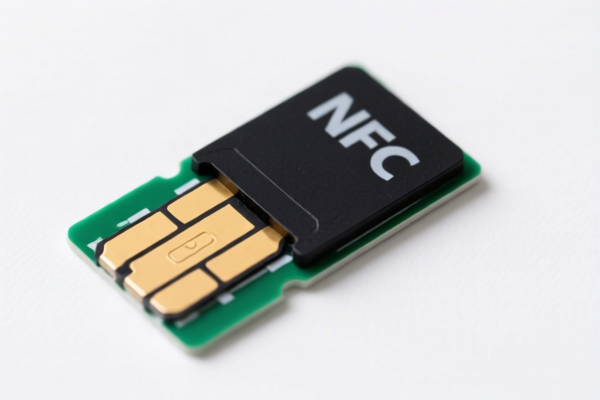
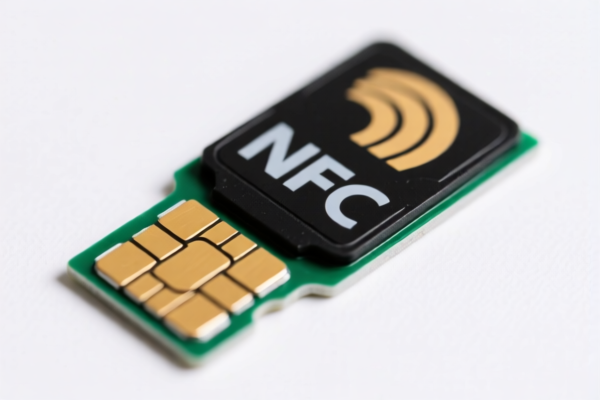
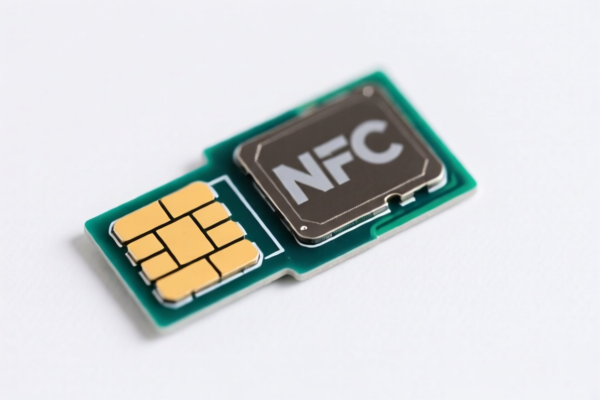

AI Analysis
📡 NFC Module: Global Trade Classification & Taxation Master Guide (2026)
🌐 HS Code Classification & Customs Clearance Strategy | Comprehensive Tax Breakdown | Professional Export/Import Protocol
📌 I. Product Definition & Functional Logic: What Exactly is an "NFC Module"?
The NFC (Near Field Communication) Module is a critical component in the modern IoT, payment, and smart access ecosystems. It enables short-range wireless data exchange (typically <10cm) between devices. In international trade, its classification hinges on a single, pivotal question: Is it a "Silicon Chip" (Integrated Circuit) or a "Finished Functional Device"?
The Two Distinct Paths: * Path A: Electronic Integrated Circuit (The "Chip" Logic): If the module is viewed primarily as a semiconductor component designed to be soldered onto a motherboard (like a standard IC), it falls under Heading 8542. This is common for raw NFC chips or modules sold strictly as component parts. * Path B: Independent Functional Device (The "System" Logic): If the module contains its own enclosure, antenna integration, power regulation, or interface logic to function as a standalone unit or a specific communication device, it falls under Heading 8543 (Other Machines) or 8517 (Telecommunication Apparatus).
⚠️ Critical Distinction: * Integrated Circuit (8542): Pure silicon logic, no independent function without a host board. → High Risk Tax: 60.0% / 67.5% * Functional Device (8543/8517): Self-contained,具有独立功能. → Lower Risk Tax: 35.0% / 37.6%
📦 II. HS Code Classification Matrix (2026 Official Data)
Based on the authoritative trade data, here is the precise breakdown for NFC Modules.
| HS Code | Product Description (Function) | Logic Classification | Total Tax Rate |
|---|---|---|---|
8542.39.00.10 |
NFC Module as Electronic Integrated Circuit: Defined by its RF communication function, fitting the "RF Transceiver" definition strictly. | IC / Chip | 60.0% |
8542.39.00.90 |
NFC Module as IC Component: Logically inferred as a part of electronic integrated circuits, no specific "other" definition met. | IC / Component | 60.0% |
8543.70.98.60 |
NFC Module as Independent Device: Has an independent function; fits the definition of "Other Machines & Apparatus." | Functional Device | 37.6% |
8543.70.60.00 |
NFC Module as Communication Component: Designed specifically to connect to a certain network or instrument. | Functional Component | 35.0% |
8517.79.00.00 |
NFC Module as Wireless Network Part: A part of a wireless data transmission communication device. | Part of Comm. Device | 67.5% ⚠️ |
8517.62.00.90 |
NFC Module as Data Device Component: Component for data reception, conversion, and transmission (Telecom). | Telecom Component | 35.0% |
💰 III. 2026 Tax Rate Deep Dive & Policy Analysis
✅ Applicable Jurisdiction: USA (US Customs & CBP)
✅ Origin: China (CN)
✅ Regulatory Context: Section 301 Tariffs, Section 122, and Base Rates.
🎯 Scenario 1: The "Integrated Circuit" Trap (8542.39.00.10 & .90)
📉 Total Tax: 60.0% This is the highest risk classification if the module is perceived merely as a chip.
| Tax Component | Rate | Legal Basis / Explanation |
|---|---|---|
| Base Duty | 0.0% | Standard MFN rate for Integrated Circuits. |
| Section 301 (Add-on) | 50.0% | "Made in China" specific surcharge for electronics/semiconductors. |
| Section 122 Duty | 10.0% | Specific levy for certain semiconductor-related products. |
| TOTAL | 60.0% | High Burden |
📌 Why? Customs interprets "NFC Module" as a semiconductor if it lacks a casing or independent power management, triggering the heavy Section 301 penalty.
🎯 Scenario 2: The "Independent Function" Sweet Spot (8543.70.60.00 & .98.60)
📉 Total Tax: 35.0% - 37.6% The most strategic classification for modules with casing, antenna, or specific interface logic.
A. 8543.70.60.00 (The Sweet Spot - 35.0%)
- Description: Electronic communication component designed for specific network/instrument connection.
- Breakdown:
- Base Duty: 0.0%
- Section 301 Add-on: 25.0% (Lower than the 50% on ICs!)
- Section 122 Duty: 10.0%
- Total: 35.0%
B. 8543.70.98.60 (General Machine - 37.6%)
- Description: Independent electronic device/machine.
- Breakdown:
- Base Duty: 2.6%
- Section 301 Add-on: 25.0%
- Section 122 Duty: 10.0%
- Total: 37.6%
🚨 Scenario 3: The "Wireless Part" Risk (8517.79.00.00)
📉 Total Tax: 67.5% * Description: Part of wireless data transmission equipment (e.g., Wi-Fi routers, cellular modems). * Breakdown: * Base Duty: 0.0% * Section 301 Add-on: 7.5% * Section 122 Duty: 10.0% * Special Metal Surcharge: +50% (If the module contains Steel, Aluminum, or Copper components). * Total: 67.5% (Base 17.5% + Metal 50% = 67.5%) * ⚠️ Warning: If your NFC module has a metal casing or shield, this classification could trigger the 50% metal surcharge, making it the most expensive option.
🎯 Scenario 4: Telecom Data Component (8517.62.00.90)
📉 Total Tax: 35.0% * Description: Component for data reception/conversion. * Breakdown: * Base Duty: 0.0% * Section 301 Add-on: 25.0% * Section 122 Duty: 10.0% * Total: 35.0%
🛠️ IV. Customs Clearance Strategy & Actionable Advice
✅ 1. Classification Strategy: "Function Over Form"
To minimize tax liability, avoid classifying under 8542 (IC) or 8517 (Parts with metal) if your product has independent functionality.
* Target HS Code: 8543.70.60.00 (35.0%) or 8543.70.98.60 (37.6%).
* Why? These classify the NFC module as a "Functional Device" rather than a raw "Chip" or "Wireless Part", drastically reducing the Section 301 add-on from 50% to 25%.
✅ 2. Declaration Documentation Checklist
To justify the lower tax bracket (35-37%), your documentation must prove independence: * Product Technical Sheet: Must explicitly state: "Self-contained NFC module with integrated antenna and interface logic." * Schematic Diagram: Highlight the presence of any external power regulation or interface chips that make it a "device," not just a chip. * Marketing Materials: Show the module being plugged into a system as a standalone unit (e.g., "Plug-and-Play NFC Reader"). * Bill of Materials (BOM): Ensure no heavy reliance on steel/aluminum components if trying to avoid the 8517 metal surcharge.
✅ 3. Pitfalls to Avoid (The "Gotchas")
| ❌ Mistake | ⚡ Consequence | 🛡️ Fix |
|---|---|---|
| Declaring as "NFC Chip" | Tax jumps to 60.0% (8542) | Use "NFC Communication Module" terminology. |
| Declaring as "Wireless Part" | Tax jumps to 67.5% (Metal Surcharge) | Avoid "Part" language; emphasize "Device." |
| Ignoring Metal Content | Unplanned 50% metal tariff | Check BOM for copper/steel shielding; use plastic casing. |
| Misdeclaring "General IC" | Audit risk + Back taxes | Provide functional tests proving independent operation. |
🌍 V. Strategic Conclusion: The "35% Advantage"
The Golden Rule for NFC Modules:
"Do not sell as a Chip; sell as a Smart Component."
By classifying your NFC Module under 8543.70.60.00 (Electronic Communication Component) or 8543.70.98.60 (Independent Machine), you secure a 35.0% - 37.6% total tax rate.
* Savings: 25% reduction compared to the "Integrated Circuit" path (60.0%).
* Savings: 32.5% reduction compared to the "Wireless Part with Metal" path (67.5%).
💡 Pro Tip: If your module contains significant copper or steel, explicitly design the casing to be non-metallic (plastic) or ensure the declaration focuses on the electronic function (
8543) rather than the structural metal content (8517) to avoid the catastrophic 50% metal surcharge.
🚀 Ready to Ship? Review your technical datasheet today. If it says "Module" and "Function," push for 8543.70.60.00. Save 25% on every unit, instantly!
Disclaimer: Customs regulations are subject to change. Always consult with a licensed customs broker for the final classification decision.
Customer Reviews
About HS Code Classification
The Harmonized System (HS) is an internationally standardized nomenclature developed by the World Customs Organization (WCO) to classify traded products. Over 200 countries use the HS system as the basis for customs tariffs, trade statistics, and import/export regulations.
Each HS code follows a hierarchical structure:
- Chapter (2 digits) — Broad category of goods (e.g., Chapter 84: Machinery and Mechanical Appliances)
- Heading (4 digits) — More specific grouping within the chapter
- Subheading (6 digits) — Internationally standardized breakdown, used by all WCO member countries
- National subdivisions (8-10 digits) — Country-specific extensions for further classification, such as US HTSUS 10-digit codes
Correct HS code classification is essential for smooth customs clearance, accurate duty payment, and compliance with trade regulations. Misclassification can lead to customs delays, overpayment of duties, or penalties.
When importing from CN to US, the applicable tariff rates may include:
- Most-Favored-Nation (MFN) rate — The standard duty rate applied to WTO members
- General rate — Applied to countries without trade agreements
- Trade remedy duties — Additional tariffs such as Section 301 (anti-dumping), Section 232 (national security), or countervailing duties
The information provided on this page is for reference purposes only. For official classification, please consult with your local customs authority or a licensed customs broker.