Nail Art Desk Lamp
CN → US| HS Code | Tariff Rate | Origin | Destination | Doc |
|---|---|---|---|---|
| 8516908500 | 38.9% | CN | US | Official Doc |
| 9405214010 | 38.7% | CN | US | Official Doc |
| 9405214020 | 38.7% | CN | US | Official Doc |
| 8516909000 | 38.9% | CN | US | Official Doc |
| 8543707100 | 37.0% | CN | US | Official Doc |
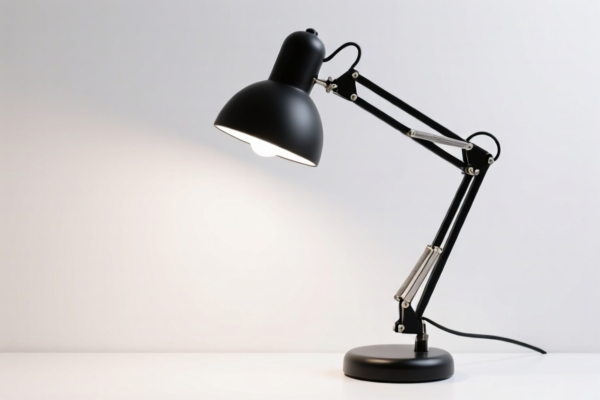
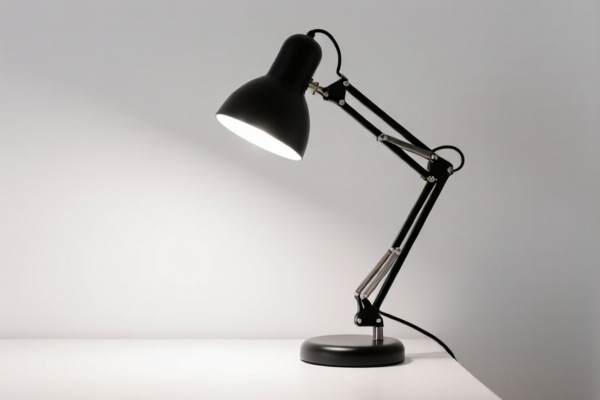
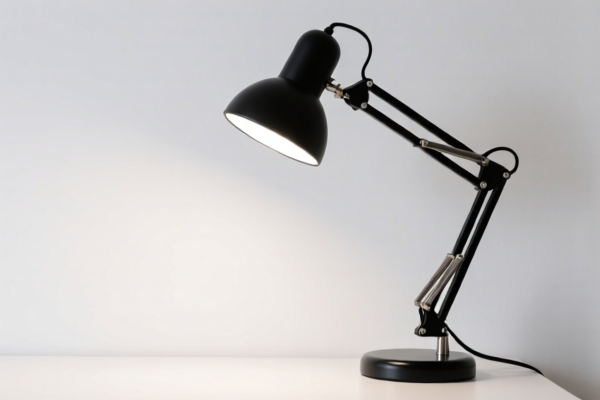
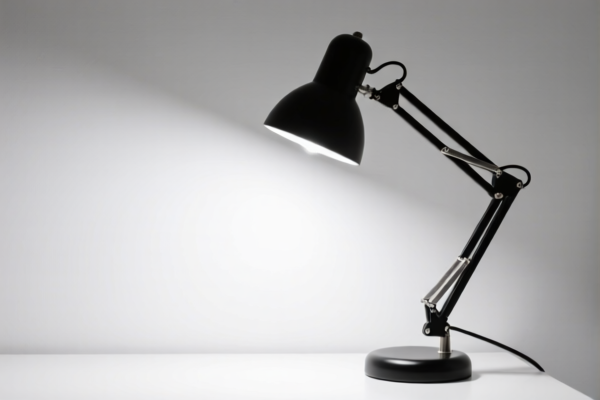
Product Images
AI Analysis
💅 Nail Art Desk Lamp (Professional UV/LED Curing Lamps)
🌐 HS Code Reference & Customs Clearance Guide | 2026 Latest Tariff Analysis | Professional Entry Strategies
📌 I. Product Definition & Classification: What Exactly is a "Nail Art Lamp"?
A Nail Art Desk Lamp is not merely a light source; it is a specialized beauty device used to cure (harden) gel nail polish. In international trade, its classification hinges on its primary function and internal components:
Option A: Electrical Heating/Lighting Appliance (Most Common for "Curing" Devices)
Devices primarily designed to emit UV/LED light for curing are often viewed as electrical appliances for domestic use. If the focus is on the heating/curing aspect or if it's a general utility lamp, it falls under Chapter 85 (Electrical Machinery and Equipment).
Option B: Lamp Fitting (Lighting Article)
If the device is strictly defined as a table lamp with specific LED components without complex curing controls, it may be classified under Chapter 94 (Articles of Bedding, Furniture, Lighting Fittings).
⚠️ Critical Distinction:
- If the device is marketed primarily as a "Curing Lamp" with specific wavelengths (365nm/405nm) for chemistry hardening → Lean towards 8516 (Electric heating appliances) or 8543 (Electrical machines with specific functions).
- If the device is marketed primarily as a "Table Lamp" that also cures nails → Lean towards 9405 (Lamps and lighting fittings).
- Customs authorities often scrutinize the "essential character" of the good.
📦 II. HS Code Classification Details (2026 Latest Tariff Authority Alignment)
Based on the provided data structure for US imports (implied by the "122 Clause" and specific tax breakdowns), here are the five potential classifications:
| HS Code | Product Description | Key Justification from Data | Tax Rate |
|---|---|---|---|
| 8516.90.85.00 | Electric Heating Appliance / Parts | "Household electric heating/lighting appliances. Function aligns with electric heating appliances and related household appliances." | 38.9% |
| 9405.21.40.10 | LED Table Lamp (Metal/Plastic) | "Form and usage match: Designed specifically for LED light sources, type: Table lamp. Material likely metal or plastic." | 38.7% |
| 9405.21.40.20 | Lamp Fitting (Table Lamp) | "Form is a lamp (table lamp), usage matches lighting category. Material may include metal or base metal." | 38.7% |
| 8516.90.90.00 | Parts of Electric Heating Appliances | "Household electric/lighting appliances containing electric heating or lighting components. Classified as parts of other electric heating appliances." | 38.9% |
| 8543.70.71.00 | Electrical Machine with Specific Function | "Electronic device with specific light-emitting function. Fits attributes of electrical machines with independent functions or electric lamp tubes." | 37.0% |
🔍 Key Insight:
- 8543.70.71.00 offers the lowest total tax rate (37.0%) in this dataset because its base tariff is lower (2.0% vs 3.7-3.9%). - 9405.21.40.10/20 and 8516.90.85/90 have similar high rates (~38.7-38.9%). - The "122 Clause" (Section 301/IEEPA penalties) applies heavily to all, adding ~35% on top of base rates.
💰 III. 2026 Latest Tariff Rate Breakdown (Including Surcharges)
✅ Applicable Country: United States (US)
✅ Origin: China (CN)
✅ Effective Date: From Nov 10, 2025 (including subsequent imports)
The total tax is calculated as: Base Duty + 301 Duty (25%) + IEEPA 122 Clause (10%).
🎯 1. 8543.70.71.00 —— Electrical Machines with Specific Functions (Lowest Tax Option)
| Item | Detail |
|---|---|
| Base Duty | 2.0% (Ad Valorem) |
| Section 301 Duty | +25% |
| IEEPA 122 Clause | +10% |
| Total Effective Rate | 37.0% |
| Calculation | CIF Value × 37.0% |
| De Minimis Exemption | ❌ Not Applicable (Denied) |
| Legal Basis Path | IEEPA:9903.01.25 → Section 301: 8543.70 → HTSUS: 8543.70.71.00 |
📌 Explanation:
- This classification argues the lamp is a "machine" with a specific function (curing) rather than just a light fixture.
- Savings: Compared to the 9405 class, this saves 1.7% on the CIF value. For large shipments, this is significant.
🎯 2. 9405.21.40.10 & 9405.21.40.20 —— LED Table Lamps
| Item | Detail |
|---|---|
| Base Duty | 3.7% (Ad Valorem) |
| Section 301 Duty | +25% |
| IEEPA 122 Clause | +10% |
| Total Effective Rate | 38.7% |
| Calculation | CIF Value × 38.7% |
| De Minimis Exemption | ❌ Not Applicable |
📌 Explanation:
- Classified as furniture/lighting.
- Slightly higher base duty than 8543.
- Justification: The product is physically a "table lamp" used for beauty purposes.
🎯 3. 8516.90.85.00 & 8516.90.90.00 —— Electric Heating/Lighting Appliances
| Item | Detail |
|---|---|
| Base Duty | 3.9% (Ad Valorem) |
| Section 301 Duty | +25% |
| IEEPA 122 Clause | +10% |
| Total Effective Rate | 38.9% |
| Calculation | CIF Value × 38.9% |
| De Minimis Exemption | ❌ Not Applicable |
📌 Explanation:
- Classified as electric appliances.
- Highest base duty in this dataset.
- Justification: The curing process involves heat/energy conversion similar to other electric home appliances.
🛠️ IV. Customs Clearance Practical Advice (Pitfall Avoidance Guide)
✅ 1. Document Checklist (Must-Haves)
| Document | Required? | Notes |
|---|---|---|
| ✅ Product Specs Sheet | ✔️ | Must specify: Wavelengths (e.g., 365nm/405nm), Power (W), Voltage (V), Input/Output. |
| ✅ Circuit Diagram | ✔️ | Crucial for proving if it has "independent function" (8543) vs. simple lighting (9405). |
| ✅ Product Photos | ✔️ | Include branding, model number, and port labels. |
| ✅ Commercial Invoice | ✔️ | Description must be precise (see section V). |
| ✅ FDA/Certification | ✔️ | While UV nail lamps are generally low-risk, some US states require safety certifications. CE/FCC helps. |
✅ 2. Declaration Strategy (Key Mantra)
🔥 "Function Defines Code, Details Save Money, Precision Prevents Delays!"
| Scenario | Recommended HS Code | Why? |
|---|---|---|
| High-end Smart Lamp (App-controlled, specific curing modes) | 8543.70.71.00 | Highlights "Independent Electrical Function" → Lowest Tax (37.0%). |
| Standard Table Lamp (Basic design, simple on/off) | 9405.21.40.10 | Fits "Table Lamp" description clearly. |
| Bulky Industrial Curing Unit | 8516.90.85.00 | If it resembles household heating appliances. |
✅ 3. Special Considerations
- Avoid "De Minimis" Abuse: Do not try to split shipments into small packages to bypass tariffs. US Customs (CBP) aggressively monitors this for Section 301/IEEPA goods. All shipments are subject to the 35-39% total tariff.
- Description Accuracy:
- BAD: "Nail Lamp" (Too vague).
- GOOD: "LED UV Nail Curing Lamp, Tabletop, 36W, 365nm/405nm Wavelength, Model XYZ, FCC Certified."
- Material Matters: If the body is primarily plastic, 9405.21.40.10 is safer. If it has significant electronic control boards, 8543 is stronger.
🌍 V. Global Market Comparison (2026 Update)
| Market | Recommended HS Code | Estimated Total Duty | Notes |
|---|---|---|---|
| 🇺🇸 USA | 8543.70.71.00 | 37.0% | Best rate among options. Watch out for "122 Clause" enforcement. |
| 🇺🇸 USA | 9405.21.40.10 |
38.7% | Safer if "lamp" argument is stronger. |
| 🇨🇳 China | 9405.21.40.00 |
~5-10% | Standard import duty for lighting fixtures. No extra surcharges. |
| 🇪🇺 EU | 9405.42.90 |
0-14% | Varies by member state. Low base duty, but VAT applies. |
| 🇬🇧 UK | 9405.42.90 |
0-14% | Post-Brexit rules apply. Check UK Global Tariff. |
📌 Conclusion for US Importers:
- The 37.0% rate for 8543.70.71.00 is the most cost-effective option in the provided data.
- Ensure your product documentation emphasizes electronic control and specific function (curing) over general illumination to support this classification.
📌 VI. Common Errors & Pitfalls (Lessons Learned)
❌ Error 1: Misclassifying as "Gift Item" or "Toy"
👉 Consequence: Incorrect code, potential seizure, and back-tariffs.
❌ Error 2: Using "LED Light" only in description
👉 Consequence: Customs may assign a higher duty code if they deem it a simple light, missing the specific "curing" function that might justify 8543.
❌ Error 3: Ignoring the "122 Clause"
👉 Consequence: Unexpected tax increases. The 10% IEEPA surcharge is mandatory for Chinese-origin electronic lighting/appliances.
❌ Error 4: Inconsistent Invoicing vs. Documentation
👉 Consequence: CBP holds shipments for "Request for Information" (RFI), causing delays and storage fees.
✅ Correct Approach:
"LED Nail Curing Lamp, Desktop, 36W, 365/405nm, Model N-100, with Timer Function, FCC ID: XYZ123"
🎯 VII. Conclusion: Professional Clearance, Cost Efficiency
🎯 Remember the Key Takeaway:
🔹 "8543 is King (37.0%), 9405 is Queen (38.7%), 8516 is Noble (38.9%). Choose based on Electronic Complexity vs. Physical Form."
🔹 "Always declare the specific curing wavelengths and control functions to support the 8543 classification."
📌 Pro Tip:
If your supplier offers Dual-Use products (e.g., a lamp that is both a nail light and a general LED reading light), argue for 8543.70.71.00 by providing a user manual that highlights the technical curing process as the primary function. This can save you 1.7-1.9% in tariffs.
📣 Immediate Action Required:
📞 Consult a licensed customs broker to file a Pre-Ruling Application if your shipment volume is high.
🚀 Optimize your supply chain to absorb or mitigate the ~37% total landed cost impact.
✨ Precision in Classification, Profit in Clearance!
💼 Your Bottom Line Depends on the Right HS Code!
Customer Reviews
About HS Code Classification
The Harmonized System (HS) is an internationally standardized nomenclature developed by the World Customs Organization (WCO) to classify traded products. Over 200 countries use the HS system as the basis for customs tariffs, trade statistics, and import/export regulations.
Each HS code follows a hierarchical structure:
- Chapter (2 digits) — Broad category of goods (e.g., Chapter 84: Machinery and Mechanical Appliances)
- Heading (4 digits) — More specific grouping within the chapter
- Subheading (6 digits) — Internationally standardized breakdown, used by all WCO member countries
- National subdivisions (8-10 digits) — Country-specific extensions for further classification, such as US HTSUS 10-digit codes
Correct HS code classification is essential for smooth customs clearance, accurate duty payment, and compliance with trade regulations. Misclassification can lead to customs delays, overpayment of duties, or penalties.
When importing from CN to US, the applicable tariff rates may include:
- Most-Favored-Nation (MFN) rate — The standard duty rate applied to WTO members
- General rate — Applied to countries without trade agreements
- Trade remedy duties — Additional tariffs such as Section 301 (anti-dumping), Section 232 (national security), or countervailing duties
The information provided on this page is for reference purposes only. For official classification, please consult with your local customs authority or a licensed customs broker.