Nail Art Rhinestones
CN → US| HS Code | Tariff Rate | Origin | Destination | Doc |
|---|---|---|---|---|
| 7117199000 | 28.5% | CN | US | Official Doc |
| 7117909000 | 28.5% | CN | US | Official Doc |
Product Images
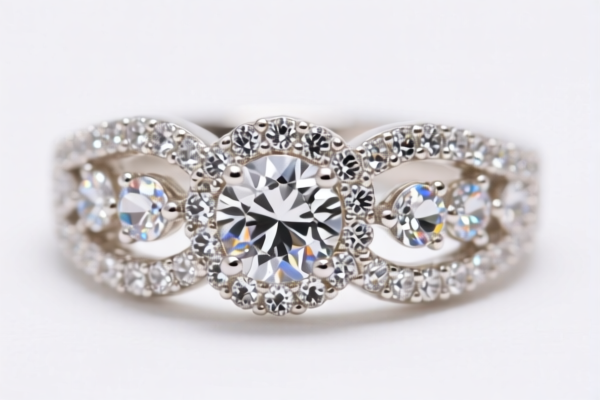


AI Analysis
💎 Nail Art Rhinestones (Imitation Jewelry)
🌐 HS Code Reference & Customs Clearance Guide | 2026 Latest Tariff Analysis | Strategic Compliance Strategy
📌 I. Product Definition & Classification: Do You Really Understand "Nail Art Rhinestones"?
Nail Art Rhinestones, commonly used in manicures and beauty trends, fall under the international trade classification of Imitation Jewelry. Specifically, they are classified as goods of base metal, whether or not plated with precious metal. In customs terms, they are not "precious jewelry" but rather decorative accessories valued by volume rather than material worth.
⚠️ Key Distinction Point:
- If the rhinestones are valued over 20 cents per dozen pieces or parts, they fall under the general "Other" category for imitation jewelry (HS 7117.90.90.00).
- If they are valued at 20 cents or less per dozen, they might fall under different sub-headings (not listed in the provided data, but typically lower risk).
- For the purposes of this analysis, we assume standard commercial nail art rhinestones which often exceed the low-value threshold due to packaging, quality, or specific designs, leading to the higher tariff classification.
📦 II. HS Code Classification Details (2026 Latest Tariff Authority Comparison)
Based on the provided data, Nail Art Rhinestones are categorized under Chapter 71 (Natural or Cultured Pearls, Precious or Semi-Precious Stones, Precious Metals, Metals Clad with Precious Metal, and Articles Thereof; Imitation Jewelry; Coin).
| HS Code | Product Description | Applicable Scenario | Valuation Criteria |
|---|---|---|---|
7117.19.90.00 |
Imitation jewelry: Of base metal, whether or not plated with precious metal: Other: Other: Other | General imitation jewelry items not meeting specific low-value thresholds | ❌ Not Applicable here (Likely low-value or different category) |
7117.90.90.00 |
Imitation jewelry: Other: Other: Valued over 20 cents per dozen pieces or parts: Other: Other | Nail Art Rhinestones (assuming commercial value > $0.20/doz) | ✅ Applicable |
🔍 Critical Insight:
- Why7117.90.90.00?
Nail art rhinestones are often sold in bulk but have a unit value that, when calculated per dozen, exceeds the $0.20 threshold. This pushes them into the "Valued over 20 cents" bucket, resulting in a higher tax rate.
- Why NOT7117.19.90.00?
The provided data shows7117.19.90.00has 0% tax. This is typically for low-value imitation jewelry. If your rhinestones are high-quality, plated, or sold at a premium, they will NOT qualify for this zero-tax rate. Verify your unit price per dozen!
💰 III. 2026 Latest Tariff Rate Details (Including Surcharge & Policy Add-ons)
✅ Applicable Country: United States (US)
✅ Origin: China (CN) (Note: Tax rates in data imply US-China trade context due to "Additional Tariff" field)
✅ Effective Time: Current 2026 Tariff Schedule
🎯 1. 7117.19.90.00 —— Imitation Jewelry (Base Metal, Other)
| Item | Content |
|---|---|
| Base Tariff | 0% (ad valorem) |
| Additional Tariff | 0% |
| Total Tariff | 0.0% |
| Tax Calculation | CIF Value × 0% = $0 |
| De Minimis Eligibility | ✅ Yes (Potentially, if value <$800) |
| Legal Basis | Standard HTSUS for low-value imitation jewelry |
📌 Explanation:
- This code offers zero tariff. It is ideal for low-cost, unbranded, or bulk imitation jewelry.
- Warning: Only use this if your product clearly falls under "Other" and is NOT valued over $0.20/dozen. Misclassification here can lead to audits.
🎯 2. 7117.90.90.00 —— Imitation Jewelry (Valued Over 20 Cents/Doz)
| Item | Content |
|---|---|
| Base Tariff | 11.0% (ad valorem) |
| Additional Tariff | 7.5% |
| Total Tariff | 18.5% |
| Tax Calculation | CIF Value × 18.5% |
| De Minimis Eligibility | ✅ Yes (if value <$800, no tax paid; if >$800, 18.5% applies) |
| Legal Basis | HTSUS 7117.90 + Trade Policy Surcharges |
📌 Explanation:
- Base 11.0%: Standard US import duty for most imitation jewelry.
- Additional 7.5%: Likely reflects Section 301 or specific US-China trade surcharges on imitation accessories.
- Total 18.5%: A significant cost increase. For a $1,000 shipment, you pay $185 in duties.
- Key Risk: If your rhinestones are high-quality (e.g., Swarovski-style, gold-plated), customs may argue they exceed the $0.20/dozen value, forcing this higher rate.
🛠️ IV. Customs Clearance Operational Advice (Practical Pitfall Guide)
✅ 1. Documentation Checklist (Must-Haves)
| Document | Required? | Notes |
|---|---|---|
| ✅ Commercial Invoice | ✔️ | Must clearly state: "Nail Art Rhinestones, Imitation Jewelry, Base Metal" |
| ✅ Product Photos | ✔️ | Show rhinestones clearly (no packaging obscuring the item) |
| ✅ Value Declaration | ✔️ | Declare price per dozen or per piece to justify HS Code |
| ✅ Material Composition | ✔️ | Specify: "Base Metal, Glass Crystal, Gold/Silver Plating" |
| ✅ Packing List | ✔️ | Include total quantity (in dozens/pieces) and gross weight |
✅ 2. Classification Strategy (Key Rules)
🔥 "Check Value Per Dozen, Classify Correctly, Avoid 18.5% Shock!"
| Scenario | Correct HS Code | Tax Rate | Risk Level |
|---|---|---|---|
| Bulk Rhinestones (Low cost, >$0.20/doz) | 7117.90.90.00 |
18.5% | ⚠️ High (Verify valuation) |
| Premium Rhinestones (High quality, >$0.20/doz) | 7117.90.90.00 |
18.5% | ⚠️ High |
| Low-Value Rhinestones (<$0.20/doz) | 7117.19.90.00 |
0.0% | ✅ Low (Prove low value) |
| Mixed Shipment | Split Declaration | Mixed | ⚠️ Complex |
📌 Critical Tip:
- Do NOT declare as "Jewelry" generally. Use "Imitation Jewelry."
- Do NOT omit the "per dozen" value. Customs may assess this automatically.
- If your product is under $800 (de minimis), you may pay $0 tax regardless of HS Code. Plan shipments accordingly!
✅ 3. Special Cases Handling
| Scenario | Handling Advice |
|---|---|
| OEM/Custom Designs | Provide design files to prove "imitation" nature (not precious stones) |
| Gold-Plated Rhinestones | Still "Imitation Jewelry" if base is not precious metal. Declare base material clearly. |
| High-Value Sets | If a set is worth >$0.20/dozen, use 7117.90.90.00. |
| Dropshipping | Ensure supplier declares correct value. Low invoice values may trigger audits. |
🌍 V. Global Market Comparison (2026 Latest)
| Country/Region | Recommended HS Code | Tariff Rate | Notes |
|---|---|---|---|
| 🇺🇸 USA | 7117.90.90.00 |
18.5% | Highest cost due to additional tariffs |
| 🇪🇺 EU | 7117.19 or 7117.90 | ~2.5% - 4.0% | No additional surcharges like US |
| 🇨🇳 China | 7117.19 or 7117.90 | 0% - 10% | Import duties vary by origin |
| 🇬🇧 UK | 7117.90 | ~4.0% | Post-Brexit tariffs apply |
| 🇨🇦 Canada | 7117.90 | 0% (if FTA) | Check origin for exemptions |
📌 Conclusion:
- USA is the most expensive market for nail art rhinestones due to the 18.5% total tariff.
- EU and Canada are more tariff-friendly.
- Strategy: If targeting US, consider de minimis shipping (packages <$800) to avoid duties entirely.
📌 VI. Common Errors & Pitfall Guide (Lessons Learned)
❌ Error 1: Declaring as "Jewelry" without specifying "Imitation"
👉 Consequence: Customs may misclassify or delay for inspection.
✅ Fix: Always use "Imitation Jewelry" in description.
❌ Error 2: Under-declaring value to stay under $0.20/doz threshold
👉 Consequence: Audit, penalty, and forced payment of 18.5% + fines.
✅ Fix: Declare accurate market value. Use de minimis ($800) strategy instead.
❌ Error 3: Not separating high-value vs. low-value items
👉 Consequence: Mixed valuation errors.
✅ Fix: Split shipments if possible, or declare accurately per HS subheading.
❌ Error 4: Ignoring "Additional Tariff" in HS 7117.90.90.00
👉 Consequence: Budget shortfalls (18.5% vs. 11%).
✅ Fix: Include 18.5% in cost calculations for US-bound goods.
🎯 VII. Conclusion: Professional Classification, Cost Optimization!
🎯 Remember the Rule:
🔹 "Under $800? No Tax! Over $800? Check Value Per Doz!
Under $0.20/doz? 0% Tax! Over $0.20/doz? 18.5% Tax!"🔹 "HS Code Determines Cost, Value Determines Duty, Declaration Determines Speed!"
📌 Pro Tip:
For US imports, structure shipments under $800 per recipient to utilize Section 321 De Minimis. This allows duty-free entry regardless of HS Code, saving you the 18.5% tariff.
For larger B2B shipments, pre-classify with a customs broker and consider duty drawback or tariff engineering if applicable.
📣 Take Action Now:
📞 Consult a licensed customs broker for advance ruling.
📄 Prepare detailed product descriptions with unit value per dozen.
🚀 Optimize shipping strategy to leverage de minimis thresholds.
✨ Smart Classification Saves Money!
💼 Every percentage point counts in international trade!
Customer Reviews
About HS Code Classification
The Harmonized System (HS) is an internationally standardized nomenclature developed by the World Customs Organization (WCO) to classify traded products. Over 200 countries use the HS system as the basis for customs tariffs, trade statistics, and import/export regulations.
Each HS code follows a hierarchical structure:
- Chapter (2 digits) — Broad category of goods (e.g., Chapter 84: Machinery and Mechanical Appliances)
- Heading (4 digits) — More specific grouping within the chapter
- Subheading (6 digits) — Internationally standardized breakdown, used by all WCO member countries
- National subdivisions (8-10 digits) — Country-specific extensions for further classification, such as US HTSUS 10-digit codes
Correct HS code classification is essential for smooth customs clearance, accurate duty payment, and compliance with trade regulations. Misclassification can lead to customs delays, overpayment of duties, or penalties.
When importing from CN to US, the applicable tariff rates may include:
- Most-Favored-Nation (MFN) rate — The standard duty rate applied to WTO members
- General rate — Applied to countries without trade agreements
- Trade remedy duties — Additional tariffs such as Section 301 (anti-dumping), Section 232 (national security), or countervailing duties
The information provided on this page is for reference purposes only. For official classification, please consult with your local customs authority or a licensed customs broker.