Nail Chrome
CN → US| HS Code | Tariff Rate | Origin | Destination | Doc |
|---|---|---|---|---|
| 3304300000 | 35.0% | CN | US | Official Doc |
| 3206491000 | 40.9% | CN | US | Official Doc |
| 3206496010 | 38.1% | CN | US | Official Doc |
| 3304910050 | 35.0% | CN | US | Official Doc |
Product Images

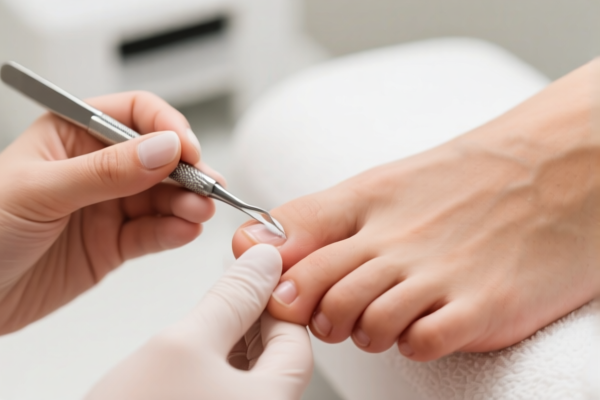
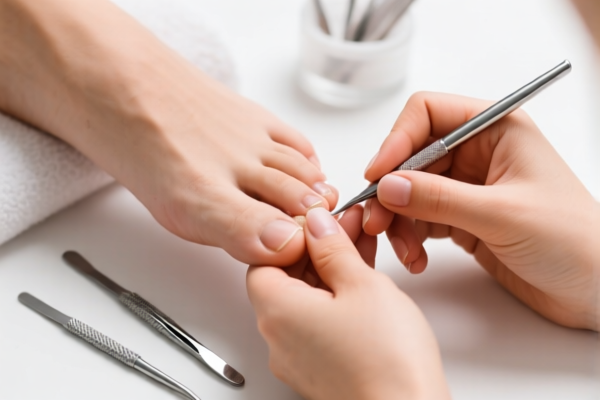
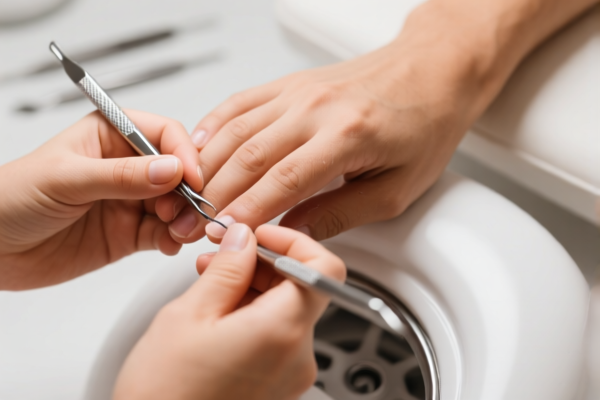
AI Analysis
💅 Nail Chrome (Nail Powder / Nail Glitter)
🌐 HS Code Reference & Customs Clearance Guide | 2026 Latest Tariff Analysis | Professional Clearance Strategy
📌 I. Product Definition and Classification: Do You Really Understand "Nail Chrome"?
"Nail Chrome" (often referred to as Nail Powder, Chrome Powder, or Mirror Powder) is a cosmetic product used to create a metallic, mirror-like finish on artificial nails (acrylics, gels, or tips). In international trade, its classification depends heavily on its chemical composition and intended use.
Key Distinction:
- If it is primarily a cosmetic preparation for nail care/manicure → It falls under Chapter 33.
- If it is primarily a pigment dispersion (chemical colorant) used for decoration → It falls under Chapter 32.
⚠️ Critical Classification Point:
- If the product is marketed as a "manicure preparation" or "nail care agent" (powder form) →归类 to 3304.30.00.00 or 3304.91.00.50.
- If the product is marketed as a "pigment," "coloring agent," or "concentrated dispersion" (chemical formulation) → 归类 to 3206.49.10.00 or 3206.49.60.10.
📦 II. HS Code Classification Details (2026 Latest Tariff Authority Comparison)
| HS Code | Product Description | Applicable Scenario | Basis for Classification |
|---|---|---|---|
3304.30.00.00 |
Manicure or pedicure preparations | Powder form specifically for nail enhancement/care | "Nail care preparation" |
3304.91.00.50 |
Other beauty or make-up preparations and preparations for the maintenance of the eyelashes or eyebrows; other preparations | Powder form matching "powder" shape; "nail chrome" matches "manicure preparation" use | "Beauty preparation" + "Powder shape" |
3206.49.10.00 |
Other coloring matter and preparations based on one or more dyestuffs or other coloring matter specified in heading 32.04; preparations specified in Note 3 to this chapter; paints and enamels based on synthetic polymers; other paint and enamel; water pigments; other preparations for use as "glazes" or as opacity-imparting agents or as similar preparations, used mainly in the ceramics industry | Pigment powder or colored granules; concentrated dispersion of pigments in plastic materials | "Concentrated dispersion of pigments" |
3206.49.60.10 |
Other coloring matter and preparations... | Color decoration material; consistent with the use of compound-based pigment preparations | "Color decoration material" |
🔍 Key Reminder:
- 3304 Codes: Focus on "Cosmetic/Manicure Utility". If the label says "Nail Art," "Manicure Powder," or "Gel Top Coat Powder," Customs often leans here.
- 3206 Codes: Focus on "Chemical/Pigment Composition". If the material is primarily inorganic pigments, metal flakes, or chemical dispersants without explicit cosmetic claims, Customs may classify it here.
- Misclassification Risk: Declaring a cosmetic powder as a "plastic pigment" (3206) can lead to audits if the product packaging explicitly states "for nails" or "makeup." Conversely, declaring a raw industrial pigment as a "cosmetic" may trigger FDA (if USA) or safety compliance issues.
💰 III. 2026 Latest Tariff Rate Details (Including Surtaxes, Policy Additions)
✅ Applicable Country: United States (US)
✅ Country of Origin: China (CN)
✅ Effective Date: November 10, 2025 (and subsequent imports)
🎯 1. 3304.30.00.00 —— Manicure Preparations (Powder)
| Item | Content |
|---|---|
| Base Tariff | 0% (ad valorem) |
| USITC Surtax (Section 301) | +25% |
| IEEPA Surtax (Section 122/China-specific) | +10% |
| Total Tariff Rate | 35.0% |
| Tax Calculation | CIF Value × 35.0% |
| De Minimis Eligibility | ❌ No (deny_de_minimis) |
| Legal Basis Path | IEEPA:9903.01.25 → USITC:3304.30.00.00 → FOOTNOTE:301.88.01 |
📌 Explanation:
- Although the base tariff is 0%, the 25% Section 301 duty applies to most Chinese-origin consumer goods.
- The additional 10% IEEPA duty further increases the cost.
- Total 35% is a significant cost burden. Accurate description is crucial to avoid disputes over the base rate (though base is 0%, the surtaxes are fixed).
🎯 2. 3304.91.00.50 —— Other Beauty Preparations (Powder)
| Item | Content |
|---|---|
| Base Tariff | 0% (ad valorem) |
| USITC Surtax (Section 301) | +25% |
| IEEPA Surtax (Section 122/China-specific) | +10% |
| Total Tariff Rate | 35.0% |
| Tax Calculation | CIF Value × 35.0% |
| De Minimis Eligibility | ❌ No (deny_de_minimis) |
| Legal Basis Path | IEEPA:9903.01.25 → USITC:3304.91.00.50 → FOOTNOTE:301.88.01 |
📌 Note:
- This code is often used when the powder does not fit neatly into "manicure preparations" (3304.30) but is still clearly a beauty product.
- The tariff structure is identical to3304.30.00.00.
- Key Phrase for Declaration: "Nail Chrome Powder, for Manicure Use."
🎯 3. 3206.49.10.00 —— Pigment Dispersion (Concentrated)
| Item | Content |
|---|---|
| Base Tariff | 5.9% (ad valorem) |
| USITC Surtax (Section 301) | +25% |
| IEEPA Surtax (Section 122/China-specific) | +10% |
| Total Tariff Rate | 40.9% |
| Tax Calculation | CIF Value × 40.9% |
| De Minimis Eligibility | ❌ No (deny_de_minimis) |
| Legal Basis Path | IEEPA:9903.01.25 → USITC:3206.49.10.00 → FOOTNOTE:301.88.01 |
📌 Explanation:
- If Customs classifies the product as a chemical pigment rather than a cosmetic, the base tariff jumps to 5.9%.
- Combined with the 25% and 10% surtaxes, the total rate becomes 40.9%.
- Risk: This is 5.9% higher than the cosmetic classification. You must justify why it is not a cosmetic (e.g., industrial use, lack of cosmetic safety data).
🎯 4. 3206.49.60.10 —— Other Coloring Preparations (Decoration)
| Item | Content |
|---|---|
| Base Tariff | 3.1% (ad valorem) |
| USITC Surtax (Section 301) | +25% |
| IEEPA Surtax (Section 122/China-specific) | +10% |
| Total Tariff Rate | 38.1% |
| Tax Calculation | CIF Value × 38.1% |
| De Minimis Eligibility | ❌ No (deny_de_minimis) |
| Legal Basis Path | IEEPA:9903.01.25 → USITC:3206.49.60.10 → FOOTNOTE:301.88.01 |
📌 Note:
- This code is used for color decoration materials that are based on compound pigments.
- Total rate is 38.1%, which is lower than the pigment dispersion code (40.9%) but higher than the cosmetic codes (35.0%).
- This classification is often a "middle ground" if the product is a decorative powder but not clearly a standard manicure product.
🛠️ IV. Customs Clearance Practical Advice (Battle-Tested Pitfall Guide)
✅ 1. Required Documentation Checklist (All Are Mandatory)
| Document | Must Provide | Description |
|---|---|---|
| ✅ Product Specification Sheet | ✔️ | Composition (e.g., Mica, Titanium Dioxide, Iron Oxide), Particle Size, Net Weight |
| ✅ Product Photos (Clear Label) | ✔️ | Must show "For Nail Use," "Manicure Powder," or "Cosmetic" if claiming 3304 |
| ✅ Ingredient List (INCI) | ✔️ | If declaring as cosmetic (3304), INCI list is often required for FDA compliance |
| ✅ Commercial Invoice | ✔️ | Clear description: "Nail Chrome Powder, Cosmetic Use" vs. "Titanium Dioxide Pigment, Industrial Use" |
| ✅ Packing List | ✔️ | Detail the quantity and weight per package |
| ✅ Certificate of Origin (CO) | ✔️ | Essential for determining US origin status and applying surtaxes correctly |
✅ 2. Declaration Strategy (Key Mantra)
🔥 "Cosmetic Use = 3304 (35%) | Pigment Use = 3206 (38-41%) | Be Consistent!"
| Scenario | Correct Declaration | Wrong Practice |
|---|---|---|
| Product sold in beauty stores, labeled "Nail Art" | 3304.30.00.00 or 3304.91.00.50 |
Declare as "Industrial Pigment" → Audit Risk |
| Raw metal flakes sold to factories for resin decoration | 3206.49.10.00 or 3206.49.60.10 |
Declare as "Manicure Powder" → FDA/Compliance Issue |
| Mixed batch (some for nails, some for art) | Separate Shipments | Mixed HS Code → Confusion & Delays |
| Unlabeled bulk powder | Provide Full Composition + Intended Use Proof | Vague Description ("Colored Powder") → High Duty Penalty |
✅ 3. Special Case Handling
| Situation | Handling Advice |
|---|---|
| "Chrome" vs. "Glitter" | "Chrome" implies a fine powder for mirror finish (often 3304). "Glitter" implies larger flakes (may still be 3304, but check particle size). |
| Packaging Matters | If packaging says "For Professional Nail Use," Customs will likely assign 3304. If it says "For Resin Casting," they may assign 3206. |
| FDA Compliance (USA) | If declared as 3304, the product is subject to FDA regulation. Ensure you have a US Agent and Facility Registration. Failure to comply can lead to refusal of entry, not just duty issues. |
| Pre-Ruling (Advance Ruling) | If the product is ambiguous (e.g., used for both nails and general craft art), apply for a Customs Advance Ruling before shipment. This locks in the HS Code and avoids disputes. |
🌍 V. Global Market Comparison (2026 Latest)
| Country/Region | Recommended HS Code | Tariff Rate (China Origin) | Certification Requirement | Notes |
|---|---|---|---|---|
| 🇺🇸 USA | 3304.30.00.00 / 3304.91.00.50 |
35.0% (Total) | FDA Registration + Cosmetic Labeling | High duty; strict cosmetic compliance |
| 🇺🇸 USA | 3206.49.10.00 |
40.9% (Total) | None (if industrial) | Higher duty; no FDA needed if not cosmetic |
| 🇨🇳 China | 3304.30.00.00 |
0% - 5% | None | Low duty; export-friendly |
| 🇪🇺 EU | 3304.91.00.00 |
~5.0% | CPNP Notification + INCI | No Section 301 equivalent; lower total cost |
| 🇬🇧 UK | 3304.91.00.00 |
~5.0% | UK CPNP | Post-Brexit alignment with EU mostly |
📌 Conclusion:
- USA is the most expensive market due to Section 301 and IEEPA surtaxes (35-41%).
- EU/UK/China have significantly lower total duty burdens.
- Strategy: If shipping to the US, ensure the highest value-added service is provided to offset the 35%+ duty, or consider sourcing from non-China origins if possible to avoid surtaxes (if applicable).
📌 VI. Common Mistakes & Pitfall Guide (Blood-and-Tears Lessons)
❌ Mistake 1: Declaring "Nail Chrome" as "Plastic Pigment" to get a lower base rate
👉 Consequence: If Customs inspects and finds "Nail" in the name, they may impose fines, penalties, and force re-classification to 3206 (40.9%) or even higher penalties for misdeclaration.
❌ Mistake 2: Not providing FDA Registration when declaring as 3304
👉 Consequence: Shipment held or destroyed by FDA, regardless of duty payment.
❌ Mistake 3: Using vague terms like "Cosmetic Powder" or "Makeup"
👉 Consequence: Customs may ask for additional documentation (Ingredient List, Safety Data Sheet), causing delivery delays.
❌ Mistake 4: Assuming "De Minimis" (Section 321) applies
👉 Consequence: No! Chinese-origin goods under Section 301 are excluded from de minimis exemption. Even small packages are subject to duties.
✅ Correct Practice:
"Nail Chrome Powder, Mica/Titanium Dioxide based, for Cosmetic Manicure Use, HS Code 3304.30.00.00, FDA Registered Facility"
🎯 VII. Conclusion: Professional Declaration, Save Time, Save Money!
🎯 Remember the Mantra:
🔹 "Cosmetic Name = 3304 (35%) | Pigment Name = 3206 (38-41%) | FDA Required for 3304!"
🔹 "HS Code Defines Duty, Misdeclaration Defines Penalty!"
📌 Pro Tip:
- If your nail chrome powder is shipped from Vietnam, Malaysia, or Thailand, check if it qualifies for preferential tariffs under USMCA or ASEAN agreements, which may reduce or eliminate the 25% Section 301 duty.
- Apply for a Customs Advance Ruling if your product has dual-use (e.g., nails and resin crafts) to avoid post-clearance audits.
📣 Immediate Action:
📞 Contact a licensed Customs Broker + Provide Product Labeling + Check FDA Status
🚀 Ensure your Nail Chrome products clear customs smoothly, avoid penalties, and protect your profit margins!
✨ Professional Clearance Starts with Accurate Classification!
💼 Every Percent of Duty Saved is Pure Profit!
Customer Reviews
About HS Code Classification
The Harmonized System (HS) is an internationally standardized nomenclature developed by the World Customs Organization (WCO) to classify traded products. Over 200 countries use the HS system as the basis for customs tariffs, trade statistics, and import/export regulations.
Each HS code follows a hierarchical structure:
- Chapter (2 digits) — Broad category of goods (e.g., Chapter 84: Machinery and Mechanical Appliances)
- Heading (4 digits) — More specific grouping within the chapter
- Subheading (6 digits) — Internationally standardized breakdown, used by all WCO member countries
- National subdivisions (8-10 digits) — Country-specific extensions for further classification, such as US HTSUS 10-digit codes
Correct HS code classification is essential for smooth customs clearance, accurate duty payment, and compliance with trade regulations. Misclassification can lead to customs delays, overpayment of duties, or penalties.
When importing from CN to US, the applicable tariff rates may include:
- Most-Favored-Nation (MFN) rate — The standard duty rate applied to WTO members
- General rate — Applied to countries without trade agreements
- Trade remedy duties — Additional tariffs such as Section 301 (anti-dumping), Section 232 (national security), or countervailing duties
The information provided on this page is for reference purposes only. For official classification, please consult with your local customs authority or a licensed customs broker.