Nail Desk Lamp
CN → US| HS Code | Tariff Rate | Origin | Destination | Doc |
|---|---|---|---|---|
| 8516908500 | 38.9% | CN | US | Official Doc |
| 9405214010 | 13.7% | CN | US | Official Doc |
| 9405214020 | 38.7% | CN | US | Official Doc |
| 8516909000 | 38.9% | CN | US | Official Doc |
| 8543707100 | 37.0% | CN | US | Official Doc |
Product Images
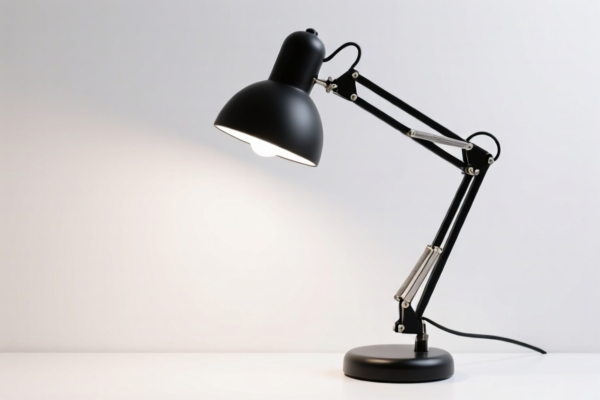
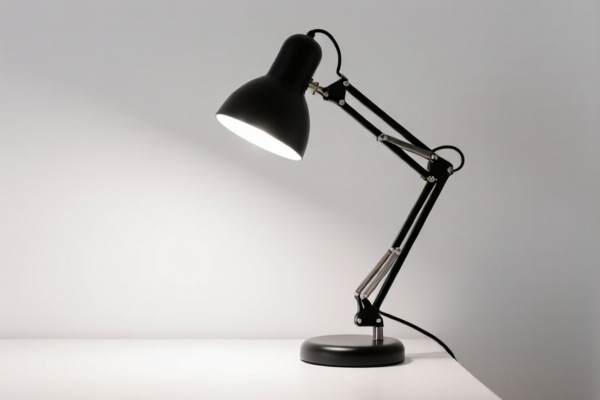
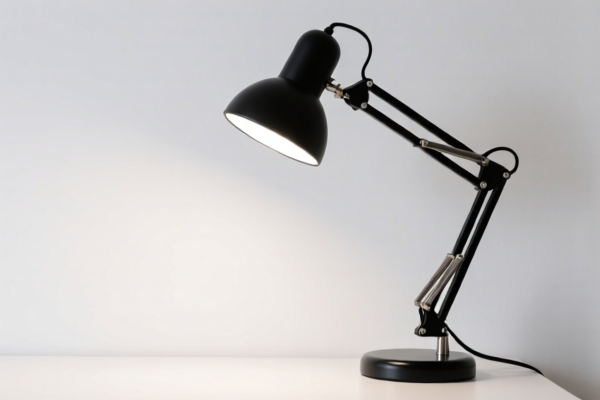
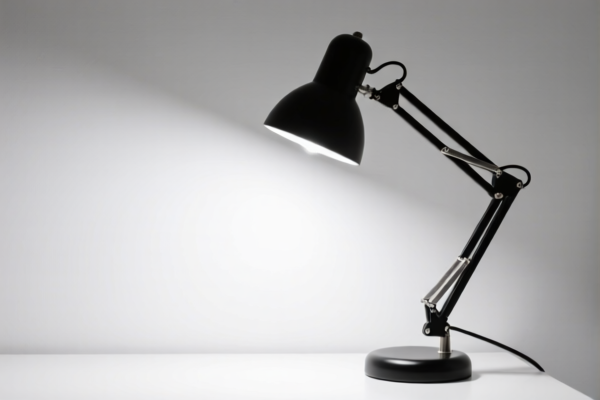
AI Analysis
💅 Nail Desk Lamp (UV/LED Nail Curing Light)
🌐 HS Code Reference & Customs Clearance Guide | 2026 Latest Tariff Analysis | Professional Entry Strategy
📌 I. Product Definition & Classification: What Exactly is a "Nail Desk Lamp"?
A Nail Desk Lamp (often called a UV/LED Nail Lamp) is a specialized beauty tool designed to cure (harden) gel polish on fingernails. It typically uses LED or UV light sources to emit specific wavelengths that trigger polymerization in gel coatings.
In international trade, its classification is highly contested because it straddles two main categories: 1. Lighting Fixtures (Chapter 94): Because it is a lamp/fixture used for illumination (albeit specific curing light). 2. Electrical Heating/Illuminating Appliances (Chapter 85): Because it emits heat/light for a specific household purpose and contains electronic components.
⚠️ Key Classification Distinction:
- If classified as a Lighting Fixture (9405): It is treated as a consumer lighting product. Lower Base Duty, but subject to specific add-on tariffs. - If classified as an Electrical Appliance/Part (8516, 8543): It is treated as a household electrical device or a specific electronic apparatus. Higher Base Duty, heavily impacted by Section 301 tariffs.
📦 II. HS Code Classification Details (2026 Latest Tariff Reference)
Below are the 5 possible HS Codes provided in the data, categorized by their logic and tax implications.
🟢 Category A: Classified as Lighting Fixtures (9405 Series)
Generally preferred for lower base duties, but subject to specific "122" clause tariffs.
| HS Code | Product Description & Logic | Total Tax Rate | Tax Detail Breakdown |
|---|---|---|---|
| 9405.21.40.10 | Form: Table Lamp. Designed specifically for LED light sources. Material inferred as metal or plastic. | 13.7% | Base: 3.7% Add-on: 0.0% Clause 122: 10.0% |
| 9405.21.40.20 | Form: Lamp (Table). Function fits lighting category. Material inferred to include metal/noble metals. | 38.7% | Base: 3.7% Add-on: 25.0% Clause 122: 10.0% |
🔍 Analysis for 9405:
-9405.21.40.10is the most cost-effective option if the customs authority accepts it as a standard LED table lamp. The total tax is only 13.7%. -9405.21.40.20incurs the full 25% Section 301 tariff (likely due to material composition or specific country-of-origin restrictions), resulting in 38.7%.
🔴 Category B: Classified as Electrical/Heating Appliances (8516 Series)
Treated as household electrical goods or parts thereof.
| HS Code | Product Description & Logic | Total Tax Rate | Tax Detail Breakdown |
|---|---|---|---|
| 8516.90.90.00 | Summary: Matches the scope of electric heating appliances and their parts. | 38.9% | Base: 3.9% Add-on: 25.0% Clause 122: 10.0% |
| 8516.90.85.00 | Summary: Household electric/illuminating appliance. Function consistent with heating/electrical appliances. | 38.9% | Base: 3.9% Add-on: 25.0% Clause 122: 10.0% |
🔍 Analysis for 8516:
- Both codes result in a high 38.9% total tax. - This classification assumes the device is primarily an "electric heating appliance" or a "household electrical tool," ignoring its primary function as a light source fixture. - Subject to full Section 301 (25%) + Clause 122 (10%).
🟡 Category C: Classified as Specific Electronic Equipment (8543 Series)
Treated as an apparatus with independent function.
| HS Code | Product Description & Logic | Total Tax Rate | Tax Detail Breakdown |
|---|---|---|---|
| 8543.70.71.00 | Summary: Electronic device with specific light-emitting function. Fits attributes of independent function motor/equipment devices. | 37.0% | Base: 2.0% Add-on: 25.0% Clause 122: 10.0% |
🔍 Analysis for 8543:
- 37.0% total tax. - Lower base duty (2.0%) compared to Chapter 85/94, but still hits the full 25% Section 301 and 10% Clause 122. - Useful if the lamp is considered a "specific function apparatus" rather than a general lamp or heater.
💰 III. 2026 Latest Tariff Rate Breakdown (Policy Deep Dive)
✅ Applicable Region: United States (US)
✅ Origin: China (CN)
✅ Key Tariff Components: 1. Base Duty: Standard MFN (Most Favored Nation) rate based on HS Code. 2. Section 301 Duty (25%): Additional tariff imposed on Chinese goods under Trade Act of 1974, Section 301. 3. Clause 122 (10%): Additional tariff under specific trade provisions (often related to retaliation or specific product exclusions).
🎯 1. Best Case: 9405.21.40.10 (LED Table Lamp)
| Item | Content |
|---|---|
| Base Duty | 3.7% |
| Section 301 | 0.0% (Exempt or not applicable for this specific subheading/material) |
| Clause 122 | 10.0% |
| Total Rate | 13.7% |
| Verdict | ✅ Optimal for Cost Savings. Requires proving it is a standard LED fixture. |
🎯 2. Worst Case: 8516.90.90.00 / 8516.90.85.00 (Heating/Appliance)
| Item | Content |
|---|---|
| Base Duty | 3.9% |
| Section 301 | 25.0% |
| Clause 122 | 10.0% |
| Total Rate | 38.9% |
| Verdict | ❌ High Cost. Avoid if possible. |
🎯 3. Middle Ground: 9405.21.40.20 (Metal Lamp) & 8543.70.71.00 (Electronics)
| HS Code | Total Rate | Key Difference |
|---|---|---|
9405.21.40.20 |
38.7% | Subject to 25% S301 due to metal content/origin rules. |
8543.70.71.00 |
37.0% | Slightly lower base (2.0%), but still hits 25% S301 + 10% C122. |
📌 Critical Insight:
The 13.7% vs 38.9% difference is $25.2 per $100 value.
Correctly arguing that the product is a "LED Table Lamp" (9405.21.40.10) rather than an "Electric Heater" or "Electronic Apparatus" can save significant money.
🛠️ IV. Customs Clearance Operational Advice (Practical Pitfall Guide)
✅ 1. Preparation Checklist (Non-Negotiable)
| Document | Required | Reason |
|---|---|---|
| Product Specs | ✔️ | Must specify: LED type, Wattage, Voltage, Function (Curing). |
| Product Photos | ✔️ | Show it looks like a "Lamp" (stand, shade, light source) not just a "box". |
| Function Description | ✔️ | Clearly state: "Used for curing gel nail polish via LED light." |
| Material Declaration | ✔️ | Crucial for 9405.21.40.10 vs .20. If mostly plastic, argue for .10. If heavy metal, risk .20. |
| Certificate of Origin | ✔️ | Confirm CN origin to apply correct S301/Clause 122 logic. |
✅ 2. Declaration Strategy (The "Golden Rules")
🔥 Rule: "Light Source First, Heat Second"
| Scenario | Recommended HS Code | Reasoning | Risk |
|---|---|---|---|
| Standard LED Nail Lamp | 9405.21.40.10 | It emits light (LED). It sits on a desk. It is a fixture. | Low. Requires strong visual argument that it is a "Lamp". |
| Heavy Metal / Industrial Cure Light | 9405.21.40.20 | If made primarily of metal, customs may default to .20. | High Tax (38.7%). |
| Device with Complex Electronics | 8543.70.71.00 | If it has timers, sensors, and complex PCBs, might be seen as "Apparatus". | Medium Tax (37.0%). |
| Generic "Beauty Appliance" | 8516.90.90.00 | ❌ Avoid. Customs will see "Electrical Heating" and apply S301. | Highest Tax (38.9%). |
✅ 3. Special Handling Tips
- Avoid the Word "Heater": Even though the lamp emits heat, never describe it as a "heater" in invoices. Use "LED Light Source", "Curing Lamp", or "Illumination Device".
- Highlight "LED": Emphasize that the primary function is light emission for curing, not heat generation for drying (like a hair dryer). This supports Chapter 94.
- Material Matters: If the body is plastic, strongly push for
9405.21.40.10. If it is all-metal,9405.21.40.20is more likely, but still better than Chapter 85.
🌍 V. Global Market Comparison (2026 Snapshot)
| Market | Recommended HS Code | Est. Duty | Notes |
|---|---|---|---|
| 🇺🇸 USA | 9405.21.40.10 | 13.7% | Best Option. Avoid 8516/8543 due to 25% S301. |
| 🇨🇳 China (Import) | 9405.21.40.10 | ~3.7% | Low base duty. No S301. |
| 🇪🇺 EU | 9405.21.00 | ~4.0% | Generally lower duties. Check for anti-dumping if from CN. |
| 🇬🇧 UK | 9405.21.00 | ~4.0% | Post-Brexit tariffs similar to EU. |
📌 Conclusion:
The USA is the only market where this distinction is financially critical due to Section 301 tariffs.
Goal: Get classified as 9405.21.40.10 (LED Table Lamp).
📌 VI. Common Errors & Pitfalls (Lessons Learned)
❌ Error 1: Declaring as "Electric Beauty Appliance" (Chapter 85)
👉 Result: 38.9% Tax.
👉 Fix: Emphasize it is a Lamp/Fixture (Chapter 94).
❌ Error 2: Ignoring "Clause 122"
👉 Result: Unexpected 10% charge.
👉 Fix: Factor Clause 122 into all cost calculations, even for Chapter 94.
❌ Error 3: Using "UV Lamp" terminology only
👉 Result: Customs may classify as "Heating/Industrial" if UV is dominant.
👉 Fix: Use "LED Nail Curing Light" to highlight visible light/fixture nature.
✅ Correct Declaration Example:
"LED Table Lamp for Nail Curing, Plastic Housing, 24W, Model XYZ, FCC Certified."
🎯 VII. Conclusion: Smart Classification Saves Money!
🎯 Remember:
🔹 "It's a Lamp, Not a Heater" → Push for 9405.21.40.10.
🔹 "Plastic Body helps" → Avoids the 25% S301 hit on metal goods (.20).
🔹 "Total Cost: 13.7% vs 38.9%" → The difference is 25.2%.
📌 Pro Tip:
If your product is not made in China (e.g., Vietnam, USA, EU), you may be exempt from Section 301 (25%) and Clause 122 (10%), reducing the tax to just the Base Duty (3.7%).
Always check Country of Origin rules!
📣 Immediate Action:
📞 Contact your customs broker.
📄 Submit Photos showing it as a Lamp.
📝 Use the term "LED Table Lamp" in commercial invoices.
🚀 Secure the 13.7% rate, not the 38.9% penalty!
✨ Precision Classification = Maximum Profit!
💼 Don't let incorrect HS Codes burn your margins!
Customer Reviews
About HS Code Classification
The Harmonized System (HS) is an internationally standardized nomenclature developed by the World Customs Organization (WCO) to classify traded products. Over 200 countries use the HS system as the basis for customs tariffs, trade statistics, and import/export regulations.
Each HS code follows a hierarchical structure:
- Chapter (2 digits) — Broad category of goods (e.g., Chapter 84: Machinery and Mechanical Appliances)
- Heading (4 digits) — More specific grouping within the chapter
- Subheading (6 digits) — Internationally standardized breakdown, used by all WCO member countries
- National subdivisions (8-10 digits) — Country-specific extensions for further classification, such as US HTSUS 10-digit codes
Correct HS code classification is essential for smooth customs clearance, accurate duty payment, and compliance with trade regulations. Misclassification can lead to customs delays, overpayment of duties, or penalties.
When importing from CN to US, the applicable tariff rates may include:
- Most-Favored-Nation (MFN) rate — The standard duty rate applied to WTO members
- General rate — Applied to countries without trade agreements
- Trade remedy duties — Additional tariffs such as Section 301 (anti-dumping), Section 232 (national security), or countervailing duties
The information provided on this page is for reference purposes only. For official classification, please consult with your local customs authority or a licensed customs broker.