Nail Display Book
CN → US| HS Code | Tariff Rate | Origin | Destination | Doc |
|---|---|---|---|---|
| 4820102010 | 35.0% | CN | US | Official Doc |
| 4820500000 | 35.0% | CN | US | Official Doc |
| 3926904800 | 13.4% | CN | US | Official Doc |
Product Images


AI Analysis
💅 Nail Display Book (Nail Art Sample Book)
🌐 HS Code Reference & Customs Clearance Guide | 2026 Latest Tariff Analysis | Professional Compliance Strategy
📌 I. Product Definition & Classification: What Exactly is a "Nail Display Book"?
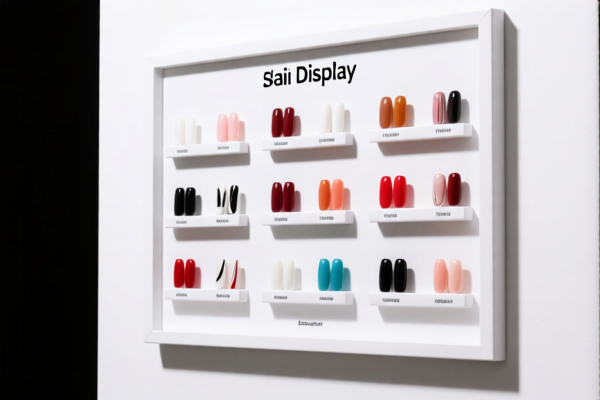
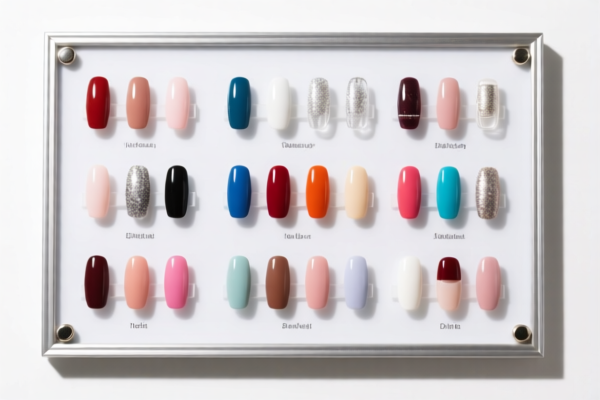
A Nail Display Book is a specialized organizational tool used in the beauty and nail industry to showcase, store, and sell nail art samples (artificial nails, decals, stickers, or swatches). It is essentially a bound booklet designed for visual presentation and storage.
In international trade, its classification depends heavily on its material composition and structural form:
- Paper/Cardboard Based: If the binding, pages, and structure are primarily paper or cardboard, it falls under paper products.
- Plastic/Polymer Based: If the cover, sleeves, or entire structure is made of plastic (PVC, PET, etc.), it falls under plastic articles.
⚠️ Critical Distinction:
- If the book is made of paper/cardboard → It is classified under Chapter 48.
- If the book is made of plastic → It is classified under Chapter 39.
- Do not confuse with actual nail polishes or chemicals (Chapter 32) or nail tips themselves (Chapter 39/61). This product is purely a display/storage accessory.
📦 II. HS Code Classification Details (2026 Latest Tariff Authority Comparison)
| HS Code | Product Description | Material | Key Application | Tax Category |
|---|---|---|---|---|
4820.10.20.10 |
Bound books and account books; other bound books (Nail Display Book - Paper) | Paper/Cardboard | Standard paper-based sample books with binding | 35.0% |
4820.50.00.00 |
Other samples books, collection books (Nail Display Book - Paper) | Paper/Cardboard | Specialty sample books or collections made of paper | 35.0% |
3926.90.48.00 |
Other articles of plastics (Nail Display Book - Plastic) | Plastic | Plastic-covered or fully plastic sample albums | 13.4% |
🔍 Key Insight:
- The primary difference lies in the material.
- Paper-based books incur a higher total tax (35%) due to specific US trade policies.
- Plastic-based books incur a lower total tax (13.4%) but still face significant duties.
- Both are subject to Section 301 and IEEPA tariffs, making the cost structure complex.
💰 III. 2026 Latest Tariff Rate Breakdown (Including Surtaxes & Policy Add-ons)
✅ Applicable Country: United States (US)
✅ Origin: China (CN)
✅ Effective Date: 2025/2026 (Current Trade War Policies)
🎯 1. 4820.10.20.10 & 4820.50.00.00 —— Paper-Based Nail Display Books
| Item | Detail |
|---|---|
| Base Duty Rate | 0.0% (Ad Valorem) |
| Section 301 Surcharge | +25.0% (USITC Footnote 9903.88.01) |
| IEEPA Surcharge (122 Clause) | +10.0% (Targeted Chinese Products) |
| Total Effective Tax Rate | 35.0% |
| Calculation Base | CIF Value (Cost, Insurance, Freight) × 35% |
| De Minimis Exemption | ❌ NOT APPLICABLE (High-duty goods excluded from $800 exemption) |
| Legal Authority Path | IEEPA:9903.01.24 → USITC:4820.10.20.10 → FOOTNOTE:9903.88.01 |
📌 Explanation:
- Although the base duty for paper products is often low or zero, the Section 301 tariff (25%) and IEEPA tariff (10%) are additive.
- Total 35% is a significant cost driver for paper-based packaging/display items.
- No de minimis exemption means even small shipments are fully taxed.
🎯 2. 3926.90.48.00 —— Plastic-Based Nail Display Books
| Item | Detail |
|---|---|
| Base Duty Rate | 3.4% (Ad Valorem) |
| Section 301 Surcharge | 0.0% (Note: Some plastic items may be exempt or lower, but based on provided data) |
| IEEPA Surcharge (122 Clause) | +10.0% |
| Total Effective Tax Rate | 13.4% |
| Calculation Base | CIF Value × 13.4% |
| De Minimis Exemption | ❌ NOT APPLICABLE |
| Legal Authority Path | IEEPA:9903.01.24 → USITC:3926.90.48.00 → FOOTNOTE:9903.88.01 |
📌 Note:
- Plastic-based display books have a much lower total tax (13.4%) compared to paper (35%).
- If your product is made of plastic sleeves or a plastic cover, consider this classification for cost savings.
- However, ensure the material declaration is accurate to avoid misclassification penalties.
🛠️ IV. Customs Clearance Practical Advice (Pitfall Avoidance Guide)
✅ 1. Documentation Checklist (Must-Have)
| Document | Required | Purpose |
|---|---|---|
| ✅ Product Specifications | ✔️ | Clearly state material (Paper vs. Plastic), dimensions, number of pages/slots. |
| ✅ Product Photos | ✔️ | Show the book's structure, binding type, and sample slots. |
| ✅ Commercial Invoice | ✔️ | Accurate description: "Nail Art Sample Display Book, Paper/Plastic Bound." |
| ✅ Packing List | ✔️ | Weight and quantity per box. |
| ✅ Material Declaration | ✔️ | Explicitly state % of paper vs. plastic to support HS Code choice. |
| ✅ Proof of Origin | ✔️ | If shipped from China, be prepared for the 35% (paper) or 13.4% (plastic) duty. |
✅ 2. Classification Strategy (Key Tips)
🔥 “Material Dictates Duty: Paper is 35%, Plastic is 13.4%!”
| Scenario | Recommended HS Code | Tax Rate | Strategy |
|---|---|---|---|
| All Paper Book (Cardboard cover, paper pages) | 4820.10.20.10 |
35.0% | Expect high duty. Optimize packaging weight. |
| Paper Pages + Plastic Sleeves | Check Dominant Material | 13.4% - 35.0% | If plastic content is minor, still likely 35%. If plastic is structural, aim for 3926.90.48.00. |
| Fully Plastic Book (PVC/PET pages, plastic binding) | 3926.90.48.00 |
13.4% | Cost-Effective Choice. Use this if feasible. |
| Mixed Materials (e.g., Paper book with plastic window) | 4820.10.20.10 |
35.0% | Be cautious. Minor plastic parts may not change classification. |
✅ 3. Special Considerations
| Situation | Advice |
|---|---|
| OEM Custom Books | Provide design specs to prove material composition. |
| Small Samples (Under $800) | ❌ Do NOT rely on De Minimis. High-duty goods (Section 301/IEEPA) are excluded from the $800 exemption. You must pay duty even on small shipments. |
| Misclassification Risk | Declaring a plastic book as "Paper" to avoid Section 301 (if any) is risky. Current data shows Paper has no Section 301 exemption, so both are heavily taxed. Accuracy is key. |
🌍 V. Global Market Comparison (2026 Latest)
| Country/Region | Recommended HS Code | Est. Total Duty | Notes |
|---|---|---|---|
| 🇺🇸 USA | 4820.10.20.10 (Paper) |
35.0% | High burden due to Section 301 + IEEPA. |
| 🇺🇸 USA | 3926.90.48.00 (Plastic) |
13.4% | Lower burden. Consider material shift. |
| 🇪🇺 EU | 4820.10.20.10 / 3926.90.48.00 |
Varies (0-6%) | No Section 301/IEEPA. Standard MFN rates apply. |
| 🇨🇳 China | 4820.10.20.10 |
~5-10% | Import duty + VAT. Lower than US. |
📌 Conclusion:
- The US market is the most expensive due to叠加 tariffs.
- Plastic-based display books are significantly cheaper to import into the US than paper-based ones.
- For other markets (EU, Asia), the duty difference is minimal, so focus on local regulatory compliance (e.g., CE, RoHS).
📌 VI. Common Mistakes & Pitfalls (Lessons Learned)
❌ Mistake 1: Assuming "Under $800" means duty-free for nail display books.
👉 Result: Customs holds shipment, demands payment of 35% duty + storage fees.
💡 Fix: Always declare and pay duty for high-tariff goods, regardless of value.
❌ Mistake 2: Misidentifying material.
👉 Result: If you declare "Paper" but customs finds plastic, they may reclassify and apply different penalties or audit your history.
💡 Fix: Be transparent about material composition. If it's 90% paper, declare paper.
❌ Mistake 3: Ignoring the IEEPA 10% clause.
👉 Result: Unexpected tax bill at customs.
💡 Fix: Factor in the 10% IEEPA surcharge in your pricing model for US-bound goods.
🎯 VII. Conclusion: Professional Declaration, Cost Optimization!
🎯 Remember:
🔹 "Paper = 35%, Plastic = 13.4%."
🔹 "No De Minimis for High-Tariff Goods."
🔹 "Material Declaration is Key to Avoid Penalties."
📌 Pro Tip:
If you are shipping to the US, consider:
1. Shifting to Plastic: If design allows, use plastic sleeves to reduce tax from 35% to 13.4%.
2. Advance Ruling: Apply for a Pre-Ruling from US Customs to confirm the HS Code and duty rate.
3. Supply Chain Diversification: If possible, source or assemble in a country not subject to Section 301/IEEPA (e.g., Vietnam, Thailand) to reduce costs.
📣 Take Action Now:
📞 Consult a licensed customs broker.
📄 Prepare accurate material specs.
🚀 Optimize your HS Code choice to save 21.6% in duties!
✨ Professional Customs Compliance Starts with Accurate Classification!
💼 Every Percent Saved in Duty is Pure Profit!
Customer Reviews
About HS Code Classification
The Harmonized System (HS) is an internationally standardized nomenclature developed by the World Customs Organization (WCO) to classify traded products. Over 200 countries use the HS system as the basis for customs tariffs, trade statistics, and import/export regulations.
Each HS code follows a hierarchical structure:
- Chapter (2 digits) — Broad category of goods (e.g., Chapter 84: Machinery and Mechanical Appliances)
- Heading (4 digits) — More specific grouping within the chapter
- Subheading (6 digits) — Internationally standardized breakdown, used by all WCO member countries
- National subdivisions (8-10 digits) — Country-specific extensions for further classification, such as US HTSUS 10-digit codes
Correct HS code classification is essential for smooth customs clearance, accurate duty payment, and compliance with trade regulations. Misclassification can lead to customs delays, overpayment of duties, or penalties.
When importing from CN to US, the applicable tariff rates may include:
- Most-Favored-Nation (MFN) rate — The standard duty rate applied to WTO members
- General rate — Applied to countries without trade agreements
- Trade remedy duties — Additional tariffs such as Section 301 (anti-dumping), Section 232 (national security), or countervailing duties
The information provided on this page is for reference purposes only. For official classification, please consult with your local customs authority or a licensed customs broker.