Nail Polish Remover Pads
CN → US| HS Code | Tariff Rate | Origin | Destination | Doc |
|---|---|---|---|---|
| 3926204010 | 16.5% | CN | US | Official Doc |
| 3926201050 | 10.0% | CN | US | Official Doc |
| 330499 | 0.0% | CN | US | Official Doc |
| 340110 | 0.0% | CN | US | Official Doc |
| 3824999330 | 40.0% | CN | US | Official Doc |
| 3824999310 | 40.0% | CN | US | Official Doc |
| 6307909875 | 24.5% | CN | US | Official Doc |
| 6307909884 | 24.5% | CN | US | Official Doc |
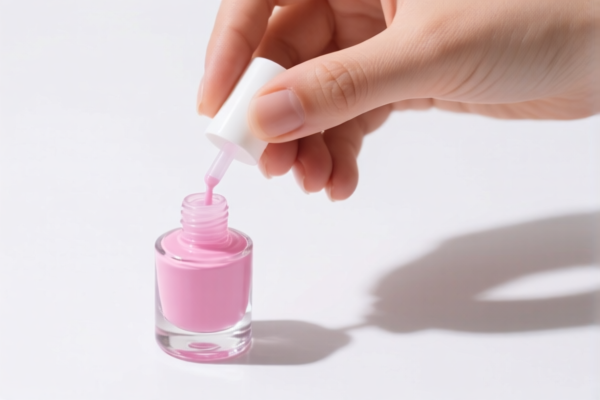
Product Images


AI Analysis
💅 Nail Polish Remover Pads: The Cosmetic vs. Chemical Trap
🌐 HS Code Reference & Customs Clearance Guide | 2026 Latest Tariff Analysis | Professional Compliance Strategy
📌 Part I: Product Definition & Classification — Is it a Cosmetic or a Chemical?
Nail polish remover pads are small, fabric or non-woven material sheets saturated with a solvent (typically acetone, ethyl acetate, or a mixture) designed for removing nail polish during personal care.
In international trade, this product sits on a critical classification boundary that drastically affects duty rates and compliance requirements:
1. Cosmetic/Preparation for Skin Care (Chapter 33):
If the product is marketed primarily as a cosmetic aid or skin care preparation, it may fall under HS 3304.99. However, the provided data indicates "Failed to retrieve tax information", suggesting high risk of ambiguity or potential errors in standard databases for this specific subheading.
2. Chemical Cleaning Preparations (Chapter 34):
If the product is classified based on its chemical function (solvents and preparations for removing or dissolving substances), it may fall under HS 3401.10. Similar to the above, the data shows "Failed to retrieve tax information", indicating this code might be incomplete, subject to frequent updates, or requires specific national interpretation.
⚠️ Critical Warning:
- Both HS 3304.99 and 3401.10 show "Error" in tax retrieval.
- This does not mean they are tax-free. It means the data is unreliable or incomplete in the current reference system.
- Do NOT rely on these codes for final duty calculation without verifying with local customs authorities.
- Misclassification can lead to significant back-taxes, penalties, or shipment delays.
📦 Part II. HS Code Classification Details (2026 Latest Reference)
Based on the provided <DATA>, only two HS codes are explicitly listed for nail polish remover pads or related items. All other items are unrelated (masks, towels, gloves, binders).
| HS Code | Product Description | Classification Rationale | Status |
|---|---|---|---|
3304.99 |
Other preparations for the care of the skin, not elsewhere specified or included; nail polish remover pads... | Classified under Chapter 33: Oils and Perfumery; Toilet Preparations. Focuses on the preparation aspect for personal care. | ❌ Tax Error (Failed to retrieve) |
3401.10 |
Solvents and other preparations for removing or dissolving nail polish... | Classified under Chapter 34: Artificial Waxes; Prepared Lubricants; Cleaning Preparations. Focuses on the solvent/cleaning function. | ❌ Tax Error (Failed to retrieve) |
🔍 Key Insight:
- The difference lies in whether customs views the product as a "toilet preparation" (33) or a "cleaning preparation/solvent" (34).
- Current Data Limitation: Neither code has valid tax data in the provided system.
- Recommendation: Do not use these codes for final declaration without confirming tax applicability. They may be subject to higher default tariffs or require manual assessment.
💰 Part III. 2026 Tariff Rate Details
✅ Applicable Country: United States (US)
✅ Origin: China (CN)
✅ Status: Tax Information Unavailable/Error for the specific HS codes listed for nail polish remover pads.
🎯 Analysis of "Error" Status
| HS Code | Tax Detail | Total Tax | Implication |
|---|---|---|---|
3304.99 |
Failed to retrieve tax information | Error | High Risk: May default to general MFN rate (~4-10%) or require specific ruling. Cannot confirm if Section 301 tariffs apply. |
3401.10 |
Failed to retrieve tax information | Error | High Risk: Same as above. Solvent-based products may face higher scrutiny or different duty rates than cosmetic ones. |
📌 Explanation:
- The "Error" status indicates that the specific HS codes3304.99and3401.10do not have pre-loaded tax data for China-origin goods in this dataset.
- This is NOT a zero-tariff status. It is a data gap.
- Default General Rate: If no specific rate is applied, the Most Favored Nation (MFN) rate for these chapters is typically 4% - 10% (base tariff).
- Section 301 Impact: If classified as a "chemical preparation" (Ch 34), it might be subject to additional 7.5%–25% tariffs depending on the exact subheading and USITC lists. However, without valid data, assume worst-case scenario:
- Base Tariff: ~5%
- Additional Tariff: Potentially 25% (if deemed subject to 301)
- Total Estimated Risk: Up to 30%+
🛠️ Part IV. Customs Clearance Practical Advice (Pitfall Avoidance Guide)
✅ 1. Required Documentation Checklist
| Document | Required | Notes |
|---|---|---|
| ✅ Product Formula | ✔️ | Must detail solvents (e.g., % of acetone, ethyl acetate). Crucial for distinguishing between Ch 33 (cosmetic) and Ch 34 (chemical). |
| ✅ Safety Data Sheet (SDS) | ✔️ | Required if solvent content exceeds certain thresholds (flammable hazardous material). |
| ✅ Product Photos | ✔️ | Show packaging, labeling, and saturation level. |
| ✅ Declaration of Cosmetic vs. Cleaning | ✔️ | Explicitly state if marketed as "cosmetic aid" or "solvent cleaner." |
| ✅ Invoice & Packing List | ✔️ | Must match product description exactly. |
✅ 2. Declaration Strategy (Key Tips)
🔥 "Define Function, Declare Accuracy, Avoid Ambiguity!"
| Scenario | Recommended Action | Risk if Incorrect |
|---|---|---|
| Marketed as Cosmetic | Attempt HS 3304.99 but request pre-ruling due to tax error. |
High risk of reclassification to Ch 34 with higher duties. |
| Market as Solvent/Cleaner | Attempt HS 3401.10 but request pre-ruling. |
High risk of reclassification to Ch 33 or other codes. |
| Unknown/Unverified | DO NOT DECLARE using these codes without verification. | Delay, seizure, or penalty for misdeclaration. |
📌 Critical Step:
- Apply for an Advance Ruling from US Customs and Border Protection (CBP) before shipment.
- Provide the formula and marketing materials.
- Ask CBP to confirm whether the product falls under3304.99or3401.10and what the correct duty rate is.
✅ 3. Special Considerations
| Case | Handling Advice |
|---|---|
| Flammable Solvents | If acetone > 24% or other flammable solvents, it may be classified as Dangerous Goods (Class 3). Requires special packaging and labeling (UN1090). |
| Packaging Type | If pads are pre-saturated, they are considered "articles impregnated with chemicals." This supports Ch 34 classification. |
| Origin | If from China, assume potential 301 tariffs until proven otherwise by CBP ruling. |
🌍 Part V. Global Market Comparison (2026 Latest)
| Country/Region | Recommended HS Code | Tariff (Est.) | Certification | Notes |
|---|---|---|---|---|
| 🇺🇸 USA | 3304.99 or 3401.10 (Requires Ruling) |
Unknown/Error → Assume 5%–30% | FDA (if cosmetic), EPA (if chemical) | High risk due to data gap. Pre-ruling essential. |
| 🇨🇳 China | 3304.99 or 3401.10 |
~4%–10% | CCC (if applicable) | Similar classification challenge. |
| 🇪🇺 EU | 3305.90 or 3402.90 |
0%–6.5% | CPNP (Cosmetic Notification) | EU has stricter cosmetic regulations. |
| 🇬🇧 UK | 3304.99 or 3402.90 |
0%–6.5% | UKCPNP | Post-Brexit rules apply. |
📌 Conclusion:
- USA is the most critical market due to the combination of tax data errors and potential 301 tariffs.
- EU/UK have more stable cosmetic classifications but require strict regulatory compliance (CPNP).
- Do not assume zero duty for nail polish remover pads from China to the US.
📌 Part VI. Common Errors & Pitfalls (Lessons Learned)
❌ Error 1: Declaring as 3304.99 without verifying tax status.
👉 Consequence: Customs may reject the declaration due to "Error" status, leading to delays and requests for additional documentation.
❌ Error 2: Assuming "Error" means "0% Duty."
👉 Consequence: Underpayment of duties → Penalties and back-taxes.
❌ Error 3: Ignoring the flammable nature of the product.
👉 Consequence: If classified as hazardous material without proper labeling, the shipment may be seized or returned.
❌ Error 4: Using generic descriptions like "Nail Care Products" without specifying composition.
👉 Consequence: Customs may assign a higher default duty rate or require manual examination.
✅ Correct Approach:
"Pre-saturated Nail Polish Remover Pads (Non-Woven Fabric, Saturated with Acetone/Ethyl Acetate, for Personal Use). Submit Formula to CBP for Pre-Ruling on HS 3304.99 vs. 3401.10."
🎯 Part VII. Conclusion: Professional Declaration, Save Cost, Ensure Compliance!
🎯 Key Takeaway:
🔹 "Nail Polish Remover Pads: Tax Error Risk!"
🔹 "Do Not Assume Zero Duty. Verify with CBP!"
🔹 "Cosmetic vs. Chemical: It’s All About the Formula and Marketing."
📌 Pro Tip:
- Apply for an Advance Ruling from US CBP.
- Prepare SDS for flammable solvents.
- Label clearly as "Cosmetic Preparation" or "Solvent Cleaner" to support your classification.
- Consult a Customs Broker to navigate the "Error" status.
📣 Immediate Action:
📞 Contact your customs broker → Submit formula for pre-ruling → Ship only after confirmation.
🚀 Ensure smooth clearance, avoid penalties, and protect your profit margin!
✨ Professional Customs Clearance Starts with Accurate Classification!
💼 Every dollar of duty saved is a dollar of profit gained!
Customer Reviews
About HS Code Classification
The Harmonized System (HS) is an internationally standardized nomenclature developed by the World Customs Organization (WCO) to classify traded products. Over 200 countries use the HS system as the basis for customs tariffs, trade statistics, and import/export regulations.
Each HS code follows a hierarchical structure:
- Chapter (2 digits) — Broad category of goods (e.g., Chapter 84: Machinery and Mechanical Appliances)
- Heading (4 digits) — More specific grouping within the chapter
- Subheading (6 digits) — Internationally standardized breakdown, used by all WCO member countries
- National subdivisions (8-10 digits) — Country-specific extensions for further classification, such as US HTSUS 10-digit codes
Correct HS code classification is essential for smooth customs clearance, accurate duty payment, and compliance with trade regulations. Misclassification can lead to customs delays, overpayment of duties, or penalties.
When importing from CN to US, the applicable tariff rates may include:
- Most-Favored-Nation (MFN) rate — The standard duty rate applied to WTO members
- General rate — Applied to countries without trade agreements
- Trade remedy duties — Additional tariffs such as Section 301 (anti-dumping), Section 232 (national security), or countervailing duties
The information provided on this page is for reference purposes only. For official classification, please consult with your local customs authority or a licensed customs broker.